Best Aluminum Camping Tables 2026: Smart Picks

Best aluminum camping tables earn their space in the gear pile by solving a simple problem that gets annoying fast: there’s rarely enough clean, level room at camp. A picnic bench might be wet, crowded, splintered, or nowhere near the stove, while balancing plates on a cooler turns dinner into a juggling act. A well-sized aluminum camping table gives cookware, food, lanterns, and small essentials a dedicated surface without adding the bulk of a household folding table. That sounds basic, but after a few trips, keeping dirty cookware off the ground and coffee away from sandy shoes feels like a pretty big win.
Weight deserves attention because every extra pound becomes more noticeable once the vehicle is packed tight or the campsite sits a short walk from parking. Aluminum keeps the frame and tabletop relatively manageable while still offering the rigid feel needed for normal camp chores. Still, lighter isn’t automatically better. Extremely thin tops can flex under heavy cookware, and narrow legs may feel twitchy on loose soil, so stability matters just as much as the number printed on the scale.
Table size can trip people up, too. A compact roll-top model packs neatly beside chairs and sleeping bags, but its usable surface may disappear quickly after adding a two-burner stove, cutting board, and ingredients. Larger folding tables give cooking gear some breathing room, yet they take up more cargo space and can feel clumsy around a small tent pad. The sweet spot depends on how much gear usually lands on the table, because buying too small often leads right back to stacking utensils on coolers and camp chairs.
Adjustable legs can make a noticeable difference on real campsites, where perfectly flat ground is more fantasy than reality. Uneven dirt, gravel, roots, and sloped pads can leave a fixed-height table rocking every time someone cuts food or sets down a mug. Independent leg adjustment helps compensate for those little terrain problems and can also raise a work surface closer to a comfortable cooking height. The tradeoff is extra hardware, which means more joints to check for grit, sticking, or looseness after repeated outdoor use.
Cleanup is another reason aluminum makes sense outdoors. Food drips, camp stove splatter, dust, pine pollen, and muddy fingerprints tend to wipe away without much fuss, and the material doesn’t soak up moisture like unfinished wood. A slatted top can be even easier to rinse, though crumbs and liquid may slip through the gaps and land underneath. Solid tops catch spills better but can hold small puddles after rain, so surface design should match how messy camp meals usually get.
Pay attention to the folding mechanism before getting hypnotized by compact packed dimensions. Some tables unfold in seconds with the legs already attached, while roll-top designs may require spreading the frame, locking braces, and clipping the top into place. Neither approach is wrong, but tired hands and late arrivals make fussy assembly feel twice as annoying. A quick setup matters most when the table gets used for short stops, tailgates, roadside lunches, or campsites where gear is packed and unpacked every day.
Wind and uneven loading expose weaknesses quickly. Aluminum tables can feel solid with dinner plates spread across the center, then become less reassuring when a heavy water jug sits near one edge. Wider leg spacing, cross-bracing, locking joints, and sensible weight distribution usually matter more than flashy extras. So, yeah, cup holders and mesh shelves are handy, but a table that stays planted while chopping vegetables earns its keep far more often.
Storage features can still be worthwhile, especially around crowded camp kitchens. A lower mesh shelf keeps paper towels, dry food, utensils, and lightweight cookware off the dirt without stealing tabletop space. Hanging organizers can tame bottles and tools, though they add pieces that need packing and can catch on brush during transport. Simple designs generally suit quick camping trips, while more elaborate kitchen-style tables make better sense for longer stays where camp gets set up once and left alone for several days.
- TLR Rank8.9
TLR Rank is a ranking system developed by TravelLuggageReviews.com. TLR Rank has no relationship or impact from any manufacturers or sales agent websites. Learn more
- BrandByliable

- TLR Rank8.0
TLR Rank is a ranking system developed by TravelLuggageReviews.com. TLR Rank has no relationship or impact from any manufacturers or sales agent websites. Learn more
- BrandByliable

- TLR Rank7.9
TLR Rank is a ranking system developed by TravelLuggageReviews.com. TLR Rank has no relationship or impact from any manufacturers or sales agent websites. Learn more
- BrandGrope
- TLR Rank9.3
TLR Rank is a ranking system developed by TravelLuggageReviews.com. TLR Rank has no relationship or impact from any manufacturers or sales agent websites. Learn more
- BrandColeman

- TLR Rank7.3
TLR Rank is a ranking system developed by TravelLuggageReviews.com. TLR Rank has no relationship or impact from any manufacturers or sales agent websites. Learn more
- BrandJoin Nature

- TLR Rank7.9
TLR Rank is a ranking system developed by TravelLuggageReviews.com. TLR Rank has no relationship or impact from any manufacturers or sales agent websites. Learn more
- BrandPortal

- TLR Rank9.7
TLR Rank is a ranking system developed by TravelLuggageReviews.com. TLR Rank has no relationship or impact from any manufacturers or sales agent websites. Learn more
- BrandAnbte

- TLR Rank7.2
TLR Rank is a ranking system developed by TravelLuggageReviews.com. TLR Rank has no relationship or impact from any manufacturers or sales agent websites. Learn more
- BrandVILLEY
Last update on 2026-08-17 / Affiliate links / Images, Product Titles, and Product Highlights from Amazon Product Advertising API
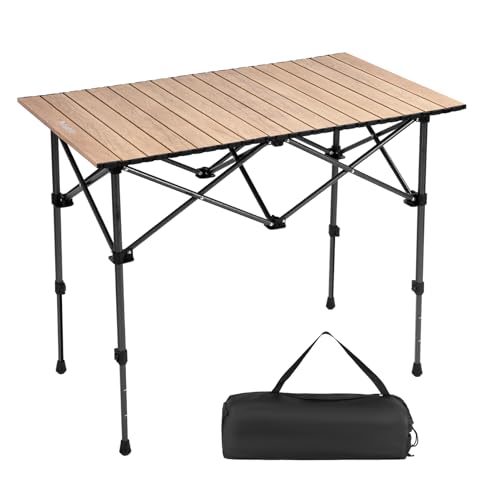
Byliable Folding Aluminum Camping Table
Camp furniture can look wonderfully simple on a product page, yet uneven dirt, limited cargo room, and a crowded cooking setup have a funny way of exposing weak designs fast. The Byliable model tackles several of those everyday headaches with a 9-pound aluminum build, a roll-up tabletop, and individually adjustable legs rather than relying on a fixed-height frame. That combination gives this entry among best aluminum camping tables a practical angle, particularly where portability and uneven terrain matter more than having a massive dining surface. Its 36.81 by 21.85-inch expanded top also leaves enough room for common camp tasks without turning the packed table into a bulky slab.
Byliable Folding Aluminum Camping Table
The first thing worth noticing is how aggressively Byliable approaches packability. At only 9 pounds, the table avoids the awkward heft that often makes full-size folding tables annoying to carry from a vehicle to a campsite, picnic area, or backyard gathering. Its tabletop rolls up, the frame folds down, and the resulting package measures about 24.8 inches long by 7.9 inches wide. Toss in the included carry bag and the whole setup becomes easier to slide beside chairs, sleeping gear, or other oddly shaped camping equipment.
That compact format does involve a tradeoff, though. A roll-top aluminum surface naturally has more moving pieces than a one-piece molded tabletop, so anyone expecting the dead-solid feel of a heavy utility table should keep expectations grounded. The upside is a much more manageable storage footprint, which matters when a trunk is already packed to the gills. For car camping, picnics, barbecues, or temporary outdoor setups, that balance between usable surface area and easy transport makes a lot of sense.
The wood-grain appearance also gives the tabletop a warmer look than bare silver aluminum, which can make it feel less like job-site equipment around a patio or backyard meal. Still, the meaningful benefit isn’t decorative. Aluminum keeps the table relatively light while offering the kind of weather-friendly construction that suits outdoor use better than materials that dislike moisture. Spills, dew, dust, and food mess are simply part of outdoor dining, so a surface built around aluminum alloy is easier to live with than something that demands constant babying.
Adjustable Legs Handle Awkward Campsites
Perfectly level ground is almost a campsite fairy tale. One leg lands on packed dirt, another sits near a root, and suddenly the coffee mug starts creeping toward the edge, which is why Byliable’s four independently adjustable legs are more useful than they may sound at first glance. Each leg can be lengthened or shortened separately, allowing the tabletop to be leveled without shoving rocks, scraps of wood, or folded cardboard underneath the feet. The buckle-style adjustment also works without tools, so correcting a wobble doesn’t become a miniature repair project.
Height flexibility adds another layer of usefulness. The table adjusts from roughly 21.7 to 29.5 inches high, giving it more range than a basic fixed-height camp table. A lower setting can suit relaxed seating or casual food service, while a taller position feels more natural for standing prep, serving dishes, or keeping frequently used items within easier reach. That adjustable working height won’t replace a dedicated kitchen station in every setup, but it helps one table cover more jobs across a weekend.
The adjustment system also makes the table less fussy about where it gets placed. Gravel, patchy grass, mildly sloped campsites, and uneven patios are all easier to deal with when each corner can be corrected independently. There is a practical limitation here: adjustable joints introduce more hardware than fixed legs, so keeping dirt and grit out of the mechanisms is sensible if the table sees frequent dusty use. Even so, terrain adaptability remains one of the clearest advantages of this design, especially compared with tables that force every leg into exactly the same position.
Stability Comes From More Than Aluminum
Low weight is handy, but a featherweight table that dances around every time someone cuts food isn’t much help. Byliable counters that risk with an X-type support structure, non-slip foot covers, and side-chain protection on both sides of the tabletop. Those details are aimed at controlling movement through the frame rather than simply adding more metal and calling it sturdy. The result, based on the supplied design information, is a table built around structural bracing instead of unnecessary bulk.
The non-slip feet deserve some credit because the contact point between the legs and the ground can make or break stability. Smooth metal ends can shift on firm surfaces, while protective foot covers create more grip and help the frame feel planted during ordinary use. The side-chain protection also supports the roll-top arrangement by helping keep the tabletop sections properly positioned. None of this means the table should be treated like a heavy-duty workbench, of course, but for meals, cookware, serving items, and everyday campsite gear, the design addresses the right weak spots.
Weight distribution still matters. A heavy object parked at the far edge of any compact folding table can create leverage that makes the setup feel less secure, so keeping heavier cookware and water containers closer to the center remains the sensible move. That’s not really a knock on Byliable so much as basic physics with portable furniture. The 36.81-inch length gives enough room to spread gear out, while the 21.85-inch width keeps the footprint manageable around tents, grills, and camp chairs.
Setup Is Built Around Tool-Free Adjustments
Late arrivals have a way of making complicated camp furniture feel ten times more irritating. Byliable keeps things straightforward by using a frame and tabletop that can be set up without tools, while the leg and base adjustments are also designed for quick manual operation. That tool-free setup is especially useful for short stops, roadside lunches, or camps where furniture gets packed away each morning instead of staying assembled for several days. Fewer setup hassles mean the table is more likely to get used rather than left buried under other gear.
The roll-up design does require a few more motions than simply unfolding a suitcase-style table, so speed depends partly on whether compact storage or instant deployment matters more. Someone who values a rigid one-piece top may prefer a different format, while tighter packing favors this roll-and-fold construction. That distinction is worth making because portable tables aren’t all solving the same problem. Byliable leans toward transport efficiency without giving up a reasonably generous working surface once assembled.
Routine outdoor gear also brings odd maintenance tasks that have nothing to do with cooking or campsites, yet they often show up before a trip. A neutral reference for one of those unrelated travel repairs appears in how to change suitcase wheels, which fits better as a separate travel-maintenance topic than as a forced connection to this table. For the Byliable itself, normal upkeep is much simpler: keep the adjustment points clean, wipe the tabletop after messy meals, and make sure the folding hardware isn’t packed away full of grit or moisture.
Where This Table Fits Best
Camping is the obvious use case, but the dimensions and adjustable legs give this table a broader role. Picnics, backyard barbecues, courtyard gatherings, and temporary serving setups can all benefit from a portable elevated surface that doesn’t demand permanent space. The included carrying bag also helps keep loose frame pieces together between outings, which sounds minor until one small component disappears into the back of a storage closet. That kind of organized portability is often what separates gear that gets used frequently from gear that becomes a nuisance.
Space-conscious campers will probably appreciate this design more than people who routinely set up elaborate outdoor kitchens. The expanded size gives room for plates, prep items, a few cooking tools, or a modest stove arrangement, but it isn’t a banquet table and shouldn’t be judged like one. Its real strength is combining adjustable height, compact packed dimensions, and a relatively light aluminum frame in one package. For two-person meals or as a secondary prep station beside a larger campsite setup, that mix feels especially practical.
The biggest strength is flexibility rather than sheer capacity. Uneven ground, limited trunk space, and the need for fast setup are exactly the sort of small annoyances that pile up during outdoor trips, and this design addresses each one without getting overly complicated. Its main weakness is equally clear: the roll-top format and lighter construction won’t satisfy someone who wants the rigid mass of a heavier fixed table. Within the category of best aluminum camping tables, though, the Byliable makes the most sense for trips where portability, leveling ability, and adaptable height matter more than maximum tabletop size.
Byliable Adjustable Aluminum Camping Table
A campsite can look flat until a table actually touches the ground, then one short leg starts rocking, drinks creep toward the edge, and food prep turns into a balancing exercise. Byliable approaches that familiar problem with four independently adjustable legs, a roll-up aluminum surface, and a frame that weighs only 9 pounds. Those traits give it a practical place among best aluminum camping tables, especially where limited cargo space and unpredictable ground conditions matter more than owning the biggest possible tabletop. The design is less about flashy extras and more about solving the small annoyances that make outdoor meals harder than they need to be.
Byliable Portable Aluminum Table
The numbers immediately explain why portability is one of the table's main strengths. At 9 pounds, it stays light enough to carry from a vehicle to a campsite without feeling like another piece of bulky patio furniture, while the folded size measures just 24.8 inches long by 7.9 inches wide. The tabletop rolls up and the base folds down, letting the entire setup fit into the included carrying bag. Packed beside camp chairs, sleeping gear, or a cooler, that narrow shape is easier to manage than a rigid tabletop that eats up half the trunk.
Compact storage does come with a tradeoff, and that's worth saying plainly. A roll-up tabletop involves more joints and moving sections than a single molded surface, so it won't have the same slab-like feel as a heavy utility table. On the flip side, the narrower packed footprint is precisely why this design makes sense for camping, picnics, and temporary outdoor setups. Anyone tired of playing cargo Tetris may appreciate that space-saving construction more than a few extra inches of rigid tabletop.
The included bag also helps keep the table from becoming a loose collection of parts in storage. Folding furniture has a knack for getting separated from its accessories between trips, particularly when a garage shelf is already crowded with tents, lanterns, and cooking gear. Keeping the frame and rolled top together makes the next setup less irritating and protects the portable format from becoming a chore. That's a small detail, sure, but outdoor equipment usually earns its keep through little conveniences like this rather than dramatic features.
Adjustable Legs Solve Uneven Ground Problems
Level ground is the exception more often than the rule outdoors. Gravel shifts, grass hides dips, and packed dirt may slope just enough to make a fixed-leg table wobble every time someone reaches for a mug. Byliable uses four adjustable-height legs that can be changed individually, so each corner can compensate for the surface beneath it. Instead of wedging stones or scraps of wood under a short leg, the table itself handles the correction.
The adjustment range runs from approximately 21.7 inches to 29.5 inches high, which changes more than just stability. Lower settings can sit more naturally beside camp chairs for drinks, cards, or casual meals, while the taller end makes food preparation and serving less awkward while standing. That height flexibility lets one table switch jobs during a trip rather than staying locked into a single role. A surface used for breakfast in the morning can become a taller prep station beside a barbecue later in the day.
Byliable uses a buckle-style mechanism to make those adjustments without tools. That's useful because leveling a table shouldn't require digging through a repair kit while dinner gets cold. The tool-free buckles let each leg or the base be adjusted according to the actual ground conditions, keeping setup straightforward even after moving the table from one spot to another. On campsites where the terrain changes every few feet, that convenience becomes much more noticeable than it sounds on paper.
Adjustable hardware brings one realistic weakness, though. More joints mean more areas where dust, grit, or dried mud can collect, so the mechanisms deserve an occasional wipe after dirty trips. Fixed legs are simpler from a maintenance standpoint, but they give up the individual leveling control that makes this table useful on irregular terrain. The tradeoff feels reasonable for outdoor use, particularly where a stable cooking or dining surface is difficult to create with standard fixed-height furniture.
The X-Frame Adds Support Without Excess Weight
Lightweight tables sometimes feel nervous under ordinary use, especially if their frames rely on thin straight legs with little bracing. Byliable uses an X-type structure beneath the tabletop, adding support without turning the entire table into a heavy steel frame. That geometry helps distribute movement through the base and gives the legs a more connected feel. Paired with the aluminum alloy construction, it aims for a sensible balance between stability and portability.
The tabletop also has side chain protection on both sides, a detail tied to the roll-up design. Since the surface isn't a single rigid slab, supporting the edges helps maintain the tabletop's shape and positioning once it is assembled. This doesn't magically turn a portable camp table into a workbench, and it shouldn't be treated like one. Still, the reinforcement addresses a meaningful weak point of segmented tops rather than pretending the flexible construction doesn't exist.
Non-slip foot covers add another layer of stability where the legs meet the ground. Bare metal feet can shift more easily on hard surfaces, while covered feet provide extra grip and help reduce unwanted movement during normal use. The non-slip contact points become especially useful on patios, compacted soil, or smoother campground pads. Combined with independent leg adjustment, they give the frame more ways to stay planted instead of relying solely on its weight.
Load placement still matters because no lightweight folding table escapes basic physics. Heavy cookware or a large water container positioned far out on one edge can create leverage, while placing weight closer to the center keeps the X-frame support working in its favor. That's less a product flaw than a normal limitation of portable furniture. The practical lesson is simple: this table is designed for camp meals, prep work, serving items, and everyday gear, not for acting like a construction bench.
Useful Surface Area Without A Bulky Footprint
Once expanded, the table measures about 36.81 inches long by 21.85 inches wide. That gives it enough room for plates, a cutting board, a compact stove, drinks, or a modest assortment of cooking supplies without taking over a small campsite. The proportions feel especially sensible for setups where space around tents and chairs is limited. Rather than chasing maximum size, Byliable keeps the surface large enough to be useful while preserving its compact packing advantage.
A larger camping kitchen could outgrow it quickly, though. Several big pots, a wide two-burner stove, condiments, utensils, and serving dishes can fill a roughly 37-inch surface faster than expected. That's the clearest capacity limitation, and anyone planning elaborate group meals may prefer a wider dedicated kitchen station. For lighter cooking, coffee preparation, snacks, or a secondary work surface, the dimensions make much more sense.
The adjustable height also changes how that surface can be used throughout the day. Set lower, it can serve as a casual dining or side table around camp chairs; raised higher, it becomes easier to use for standing tasks such as chopping ingredients or organizing supplies. That kind of multi-role flexibility is useful in a small campsite because bringing fewer pieces of furniture leaves more room for everything else. One adaptable table can often be more practical than separate low and high surfaces.
Tool-Free Setup Keeps Camp Chores Short
Furniture assembly feels especially annoying after a long drive, so the ability to put the table together without hardware is a real convenience. Byliable is designed for quick tool-free installation, allowing the frame, tabletop, legs, and base to be adjusted by hand. There's no need to carry a screwdriver just to level one corner or change the working height. That makes the table easier to use for short picnic stops and temporary events where spending ten minutes on furniture setup would be overkill.
The roll-up construction won't open as instantly as a basic suitcase-style folding table, and that's the compromise behind its narrow packed form. A few additional setup motions are required because the top and base collapse into a much smaller package. Still, the exchange is easy to understand: slightly more assembly buys better storage efficiency. Campers who pack and unpack frequently may value that difference more than someone who leaves a table standing in a backyard all season.
Outdoor trips often expose unrelated travel headaches at the same time, from awkward luggage to gear that's uncomfortable to carry over longer walks. A separate travel reference fits naturally here because packing comfort can matter just as much as campsite furniture, as discussed in best backpack for older women. The connection doesn't change how this table performs, but it reflects the broader issue of keeping carried equipment manageable. With the Byliable itself, the 9-pound weight and included bag already push the design toward easier transport.
Maintenance should stay straightforward if the folding and adjustable parts are kept reasonably clean. Dust around the buckles and leg joints can make any portable mechanism less pleasant to operate over time, so wiping those areas before storage is sensible. The aluminum surface also benefits from being cleaned and dried before returning to the bag, especially after food spills or damp-weather use. Basic care supports the table's folding hardware without turning ownership into a complicated routine.
Camping Is Only One Place It Makes Sense
The design isn't limited to sleeping under canvas. Byliable lists camping, picnics, barbecues, courtyard use, and temporary activities among the situations suited to the table, and the adjustable frame helps explain that flexibility. A patio may be flatter than a forest campsite, but height adjustment can still make serving food or arranging equipment more comfortable. The same compact storage that works in a car also helps when the table needs to disappear into a closet or garage after a backyard gathering.
Picnic use is particularly logical because carrying distance and setup speed matter more there than raw tabletop capacity. A 9-pound table that folds into a 24.8-by-7.9-inch package is easier to move across a park than a large rigid table, and the bag keeps the collapsed components together on the walk. Uneven grass is also exactly where independent legs can earn their keep. One foot can be shortened or extended instead of accepting a table that rocks through the entire meal.
Barbecue setups highlight another useful role. The table can act as a secondary prep surface for utensils, ingredients, plates, or serving items while the main grill area stays less cluttered. Raising the tabletop closer to standing height can make repeated reaching and chopping more comfortable, while dropping it later turns the same table into a lower serving station. That adaptability is more convincing than simply labeling the product suitable for many settings without explaining why.
Strengths And Weaknesses Are Easy To Read
The strongest point is the combination of independent leg adjustment, a broad height range, and a relatively low 9-pound weight. Those three features solve different problems at once: uneven terrain, uncomfortable working height, and awkward transportation. The X-style frame, non-slip feet, and side-chain protection then support the structure without abandoning portability. Taken together, those details give this model a distinct role among best aluminum camping tables built for changing outdoor conditions.
The main weakness comes directly from the portability-first construction. A roll-up aluminum top naturally has more joints than a solid one-piece table, and the folding hardware adds moving parts that deserve occasional cleaning. The 36.81-by-21.85-inch surface may also feel limited for large-group meal preparation or an elaborate outdoor kitchen. Those aren't hidden flaws so much as the price of keeping the packed table narrow and the overall weight manageable.
Another difference is how much value the table places on terrain rather than accessories. There are no supplied details suggesting elaborate storage shelves, cup holders, or organizer panels, so the design stays centered on leveling, folding, and support. That simpler approach can be refreshing if extra attachments usually end up unused or tangled in the storage bag. On the other hand, someone wanting a full camp-kitchen workstation with built-in storage would likely need a different style altogether.
Byliable's black adjustable model makes the most sense where a table needs to travel easily, adapt to rough ground, and handle several everyday outdoor roles without becoming oversized. Its 9-pound frame, 21.7-to-29.5-inch height range, and independently adjustable legs are the details doing the real work. The limitations are equally practical: modest surface area, roll-top construction, and more moving joints than a fixed table. For trips where packing space and uneven terrain are recurring headaches, those tradeoffs line up neatly with the problems the design is trying to solve.
Grope Portable Aluminum Camping Table Black-S
Small camp tables have one job that sounds easy until soft sand, uneven dirt, spilled coffee, and overloaded gear get involved: provide a dependable place to put things without becoming a burden to carry. The Grope takes a deliberately compact route, pairing a 1.88-pound aluminum build with a 15.6 × 13.6-inch tabletop and 12.5-inch height in the Small version described here. Within the broader field of best aluminum camping tables, its appeal isn't acres of workspace but a low, portable surface for the essentials that otherwise end up balanced on a chair, cooler, beach mat, or the ground. That narrow purpose is also the right lens for judging its strengths and limitations.
Grope Portable Camping Table Black-S
Portability is where the Small model makes its strongest case. At only 1.88 pounds, it weighs considerably less than the larger Medium and Large versions listed at 2.6 and 3.3 pounds, respectively. The aluminum tabletop and frame keep the construction light enough to fit the grab-and-go character of beach trips, picnics, and compact camping setups. Packed into the accompanying handbag, the table can also be placed inside a suitable backpack or tucked among other equipment without demanding the cargo space of a conventional folding table.
The compact dimensions need to be understood just as clearly as the low weight. Measuring 15.6 × 13.6 × 12.5 inches, the Small isn't trying to become a full camp kitchen or family dining station. Its surface makes more sense beside a folding stool or camping chair, where coffee, snacks, a plate, a phone, or a few cooking items need somewhere clean and elevated to sit. That's a space-saving strength for minimal setups, but it's also the obvious limitation if several dishes and pieces of cookware need to share one surface.
Three available sizes make the basic design less restrictive for different setups. The supplied dimensions list the Medium at 22 × 16 × 16 inches and the Large at 27 × 18 × 16 inches, while the Small remains the lightest and shortest option. That sizing spread matters because portability isn't simply about chasing the lowest possible weight. A tiny table that's constantly overcrowded can become more annoying than carrying a slightly larger one, so the usable surface versus packed burden tradeoff deserves some thought.
Triangular Support Gives The Frame Its Backbone
Grope doesn't rely on aluminum alone to create stability. The supplied design uses a triangular frame, sturdy joints, and stable foot caps intended to keep the legs from folding, bending, or separating during ordinary use. According to the provided specifications, the table can support up to 55 pounds. That's a substantial stated capacity relative to the Small model's 1.88-pound weight, although sensible load placement still matters on any compact table.
The foot caps are especially relevant once the table leaves a perfectly flat patio. Dirt, grass, campsite surfaces, and beach areas can all put the legs at slightly different angles, and a stable contact point helps reduce unwanted shifting. Unlike an independently adjustable-leg design, though, the Grope's supplied specifications don't describe individual leveling controls. That's an important difference: the frame is designed around stable footing and structural geometry rather than actively correcting a sloped surface.
A 55-pound stated capacity also shouldn't be mistaken for an invitation to pile weight carelessly onto one corner. A small tabletop has a compact footprint, and an off-center load can create leverage even if the frame itself is rated for considerably more weight. Centering heavier objects lets the triangular structure do the job it was designed to do while keeping the table more settled. For coffee gear, picnic food, personal items, or modest cooking equipment, that approach fits the table's proportions far better than treating it like a miniature workbench.
The sturdy joints are another practical piece of the equation because folding furniture repeatedly concentrates movement at its connection points. A light frame isn't much fun if the joints feel like they're fighting each other during setup or shifting once loaded. Grope's design description specifically pairs those joints with the triangular support system rather than relying on thin free-standing legs. Structurally, that's a sensible approach for maintaining a low carry weight without stripping away the bracing a small outdoor table needs.
Setup Is Simple Once The Sequence Makes Sense
No tools are required to assemble the table, which suits something meant to travel frequently. The process starts by unfolding the aluminum frame, pressing the two rails into their grooves, and then pressing the tabletop into place. Grope's hinge design is intended to let the table open and fold within seconds once that sequence becomes familiar. There aren't loose screws or separate tools to keep track of, so setup remains reasonably self-contained.
The rail-and-groove system does mean this isn't quite the same as a one-piece table that simply snaps open. There are a couple of deliberate connection steps before the surface is ready, and rushing those steps would defeat the purpose of the design. The payoff is compact folding, allowing the tabletop and frame to break down into a much more portable package. For gear that may move from home to car, then from car to beach or campsite, that trade makes practical sense.
The accompanying handbag adds another useful layer to the setup routine. Instead of leaving the folded frame loose in a trunk where it can snag other equipment, the table can stay contained between trips. That also makes the 1.88-pound Small model easier to carry alongside a chair or stool rather than requiring a separate awkward trip. Simple? Absolutely, and simple is often exactly what small outdoor furniture needs to be.
The Low Height Works Best Beside Camp Seating
A 12.5-inch table sits much closer to the ground than a normal dining table, and that isn't an accidental detail. The Small is positioned to work beside many camping chairs and stools, creating a low side-table arrangement rather than forcing someone to reach up toward a conventional tabletop. Coffee, snacks, a book, small cooking items, or personal gear can stay within arm's reach. Around a low beach chair or on a camping mat, that proportion feels more logical than a tall table towering over the seating area.
The same height can become a weakness for prolonged standing food preparation. Bending repeatedly toward a 12.5-inch surface isn't an appealing way to chop ingredients or organize a full meal, so the Small shouldn't be mistaken for a standing camp-kitchen station. The Medium and Large versions both reach 16 inches according to the supplied dimensions, but those are still relatively low surfaces. Grope clearly prioritizes seated and ground-level use rather than countertop-style working height.
That design direction fits beach outings particularly well. Sitting on a beach mat or low folding chair often leaves drinks and food directly on the sand, where grit has an uncanny talent for getting everywhere. A compact elevated aluminum surface creates separation without bringing bulky picnic furniture into the picture. The Small can also sit on a camping mat inside or near a tent where a taller, wider table would simply hog precious room.
Travel often involves the same tug-of-war between useful gear and limited packing space, even when the equipment itself has nothing to do with camping. A separate example of that packing problem appears in best 26 inch spinner luggage, where exterior size and practical capacity shape a different kind of travel setup. For the Grope, the equivalent consideration is straightforward: minimal carrying weight is the reward, while a deliberately small working area is the compromise. Keeping those priorities separate prevents the table from being judged against larger furniture it was never designed to replace.
Painted Aluminum Makes Messes Less Troublesome
Camp meals aren't tidy affairs. Oil splashes, coffee rings, sauce, damp sand, and muddy fingers eventually reach the tabletop, so Grope's waterproof painted finish addresses a very ordinary outdoor frustration. The supplied description states that watermarks and oil stains aren't absorbed into the surface. That means cleanup can be handled by rinsing and wiping with water rather than treating the tabletop like a material that soaks up every spill.
The manufacturer also describes the special paint process as helping the surface color resist fading over time. No independent longevity data was supplied, so it's better not to attach an invented lifespan to that claim. What can be said is that the non-absorbent surface is a practical match for food and beverage use because moisture and oily residue can be wiped away rather than left sitting in porous material. For a beach table, that same characteristic should make sand and damp mess easier to deal with after use.
Aluminum also gives the tabletop and frame a weight advantage over the wooden tables referenced in the supplied product information. The real benefit isn't that one material universally beats another, because wood can offer its own rigidity and appearance advantages. Grope instead leans into light carrying weight and straightforward cleanup, two priorities that suit furniture moved frequently rather than left permanently in one place. That's a meaningful distinction for short outings where packing effort can matter as much as tabletop size.
Where The Small Size Helps And Where It Doesn't
The Small version shines brightest as a companion surface rather than the center of an elaborate campsite. Put it beside a folding chair and the 15.6 × 13.6-inch top has a clear job: keep drinks, snacks, electronics, or personal items out of the dirt and within easy reach. Use it for a picnic and it can hold a modest spread without requiring a heavy table to be carried across a park. Its dimensions make sense once the goal is convenience rather than maximum capacity.
Cooking demands a little more restraint. Small cookware or a limited prep setup can fit, but a broad stove, multiple pots, ingredients, and serving dishes would quickly crowd the available surface. That's the table's most obvious space limitation, and no clever frame geometry can change the physical dimensions. A larger version or separate prep table makes more sense for gear-heavy camp kitchens, while the Small remains better suited to focused tasks.
Beach use brings out a different strength because low furniture and minimal carry weight matter there. At 1.88 pounds, the table adds relatively little to the load while walking with towels, chairs, bags, and other gear. Its stable foot-cap design is intended for different terrains, though loose or deeply shifting sand can still challenge any small-legged table. Setting realistic expectations matters: this is portable furniture, not a permanently anchored platform.
Its Strengths Come With Clear Tradeoffs
The most distinctive strength is the relationship between 1.88-pound weight and the supplied 55-pound support rating. Grope combines that light frame with triangular bracing, stable foot caps, sturdy joints, and an aluminum top rather than chasing portability through a bare, unsupported structure. Add the tool-free assembly and carrying bag, and the Small model stays focused on being easy to move. Among best aluminum camping tables, that's a particularly relevant combination for compact seating arrangements and short outdoor trips.
The biggest weakness is just as straightforward: limited tabletop area. A 15.6 × 13.6-inch surface can be wonderfully convenient beside one chair yet frustrating as the sole table for a larger meal. Its 12.5-inch height also favors seated use and can feel too low for extended standing prep. Those aren't minor details hidden behind marketing language; they're fundamental characteristics that determine whether this size fits the job.
The lack of specified individual leg adjustment is another distinction worth keeping in view. Stable feet and a triangular frame can help the table remain planted, but they don't offer the same terrain correction as separately adjustable legs. Campers regularly dealing with pronounced slopes may value active leveling more than the Grope's extreme lightness. On relatively manageable terrain, however, the simpler fixed geometry avoids extra adjustment hardware and keeps the setup uncomplicated.
The Black-S model ultimately favors minimal weight, compact dimensions, easy cleanup, and quick assembly over large-scale workspace. That's a sensible set of priorities for a low table paired with portable chairs, stools, beach mats, or a tent setup where every inch of room counts. The three-size lineup also leaves room to move up if the Small feels too restrictive, while retaining the same basic lightweight idea. For the Small specifically, its character is refreshingly clear: tiny to carry, deliberately low, easy to wipe down, and built for modest loads of everyday outdoor gear rather than an entire camp kitchen.
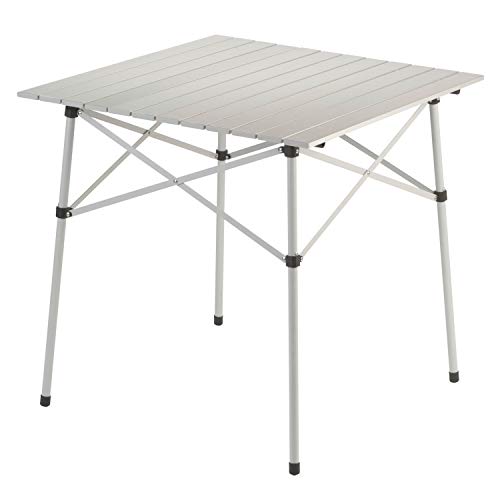
Coleman Outdoor Folding Aluminum Camping Table
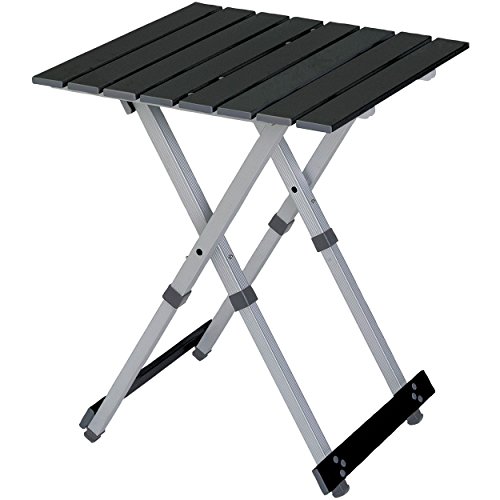
A crowded campsite can make one square foot of clean surface feel surprisingly valuable. Plates end up on coolers, utensils disappear under food bags, and somebody eventually sets a drink where a shoe was sitting five minutes earlier. The Coleman brings a straightforward answer with a 27 × 27-inch aluminum slat top, a steel frame, and enough seating space for four, giving it a practical role among best aluminum camping tables built for shared meals and uncomplicated outdoor setups. Its design is refreshingly focused: create a usable dining-height surface, break it down without a fight, and pack the pieces into one carrying bag when the meal is over.
Coleman Folding Aluminum Table
The proportions tell you right away that this isn't a tiny side table. At 27 × 27 × 27 inches, the Coleman sits at a more conventional table height while providing a square surface that can serve four people according to the supplied specifications. That shape works nicely for plates, drinks, snacks, or a simple meal because nobody is stuck reaching across a long narrow tabletop. The four-seat layout also makes better use of the footprint than a similarly sized rectangular table intended mainly for gear storage.
The square format has another practical benefit around smaller camp areas. Instead of creating a long obstacle beside a tent or vehicle, the table keeps its footprint compact in every direction while still offering enough edge space for multiple chairs. That makes space management easier at crowded campsites, tailgates, or patios where furniture needs to fit without swallowing the walking area. The tradeoff is obvious, though: a 27-inch square top can fill quickly once large cookware, serving trays, and several place settings arrive at the same time.
The supplied use cases stretch beyond camping into tailgating, grilling, hunting, and outdoor dining, and the dimensions explain why. A true table-height surface works better for a shared meal than very low camping tables designed mainly for coffee or personal gear. At the same time, the Coleman stays compact enough to avoid behaving like a full-size backyard dining table. That middle-ground footprint is probably its most useful personality trait.
Aluminum Slats Keep The Top Packable
The tabletop uses aluminum slats rather than a single rigid panel, allowing the entire surface to roll up for storage. That construction directly solves one of the biggest annoyances with portable tables: broad tops can be difficult to fit into a packed vehicle even if the legs fold neatly underneath. Rolling the slats into a narrower bundle reduces the table's storage bulk without shrinking the working surface once assembled. For car camping, that's the sort of engineering choice that pays off before the table is even used.
A slatted surface has its own quirks, naturally. Tiny crumbs or narrow objects can slip into the spaces between slats, and liquids may pass through rather than collecting on one solid panel. On the other hand, the segmented aluminum top is what makes compact rolling storage possible, so the gaps are part of the portability tradeoff rather than an accidental flaw. Anyone prioritizing a perfectly continuous prep surface may prefer a rigid tabletop, while campers short on cargo room may appreciate the roll-up format more.
Aluminum also keeps the tabletop from adding unnecessary bulk to a design that already uses a steel base. The supplied description doesn't provide the table's total weight, so attaching a made-up portability figure wouldn't be useful. What is clear is that the roll-up construction reduces the awkward dimensions associated with carrying a square rigid top. That difference matters in real packing situations, where shape can be just as frustrating as weight.
Cleanup should also be fairly straightforward from a material standpoint because the supplied top is aluminum rather than fabric or unfinished wood. The product details don't claim a special stain-resistant coating, so expectations should stay grounded rather than drifting into unsupported promises. A practical benefit remains, though: aluminum slats don't create the same bulky, moisture-sensitive feel associated with some heavier tabletop materials. For regular outdoor use, simplicity is doing a lot of the work here.
The Steel Frame Adds A Different Kind Of Strength
Coleman doesn't build the entire table from aluminum. The tabletop is aluminum, while the support structure is described as a strong steel frame, giving the design a mixed-material approach rather than chasing the lowest possible weight. Steel underneath the table makes sense where rigidity matters, especially around a square surface expected to seat four people. The tradeoff is that a steel base may feel more substantial to carry than an all-aluminum frame, although the supplied specifications don't provide enough information to quantify that difference.
The combination of materials is worth paying attention to because it reveals the table's priorities. Aluminum handles the roll-up top and keeps the large surface from becoming overly cumbersome, while steel takes on the structural job underneath. That aluminum-top and steel-frame pairing feels more focused on dependable everyday use than on becoming the lightest possible table in a gear collection. For vehicle-based trips, tailgates, or backyard setups, that balance is often more relevant than shaving every possible ounce.
There is no supplied weight-capacity figure, so the table shouldn't be assigned one based on guesswork. Plates, food, drinks, and typical dining items fit naturally with the product's stated seating purpose, while very heavy equipment belongs in a different conversation unless Coleman specifies otherwise. This is where realistic loading matters more than broad claims about toughness. A camping dining table doesn't need to impersonate a workshop bench to be useful.
Snap-Together Setup Keeps The Process Predictable
The Coleman relies on a snap-together design for setup and breakdown, which keeps the process centered on connecting the frame and tabletop rather than reaching for tools. The supplied description specifically emphasizes easy assembly and disassembly, an important detail for gear that may be put up for breakfast and packed again a few hours later. Nobody wants to spend half the morning sorting bolts and brackets at a campsite. A table that assembles through a repeatable snap system keeps the routine much cleaner.
This approach differs from one-piece folding tables that open in a single motion. The Coleman has separate structural elements because the aluminum slat top needs to roll away for compact storage, so the setup naturally involves connecting parts. The benefit is smaller packed dimensions rather than absolute instant deployment. That exchange makes sense for people who value trunk space but still want a 27-inch-square dining surface at camp.
The included carry bag helps tie that process together. Loose table pieces are easy to misplace in a garage or bury under other camping equipment, while a dedicated bag keeps the components contained between trips. The carry bag also makes a rolled tabletop and collapsed frame easier to treat as one piece of gear rather than several awkward items. It's a basic inclusion, but basic details often determine whether folding furniture remains convenient after the first season.
Travel equipment creates similar packing decisions even outside camping, where storage volume and carry convenience often pull in opposite directions. A separate example of that tradeoff appears in best hardshell large lightweight suitcase, where capacity and manageable transport have to coexist in another type of gear. The Coleman follows the same broad logic in its own category through a roll-up top and bundled storage format. The connection is simply about packing efficiency, not about forcing two unrelated products into the same use case.
Four-Person Seating Gives It A Social Side
Seating four changes how this table is likely to be used. Rather than serving as a personal side surface, the Coleman can become the center point for shared outdoor dining, card games, snacks, or meal prep that involves several people. The square shape keeps each side accessible, which is handy when chairs are arranged around the perimeter. That makes the table feel less like an accessory and more like a proper piece of campsite furniture.
The 27-inch height matters here because it supports normal seated use better than very low beach-style tables. Chairs can be positioned around the table without forcing everyone to lean toward the ground for every bite or drink. That full table-height format is useful for longer meals, tailgating spreads, and backyard gatherings where comfort matters more than shaving inches from the deployed profile. It also makes the Coleman a stronger match for dining than ultralow tables intended to sit beside camp stools.
Four seats don't mean unlimited tabletop room, though. A 27-inch square surface shared by four people leaves less personal space once larger dishes, serving bowls, or cooking equipment occupy the center. The capacity tradeoff is therefore more about surface area than seating count. For simple meals and drinks, the footprint makes sense; for elaborate camp cooking, a separate prep surface could keep the dining area from becoming cluttered.
Camping Is Only Part Of The Use Case
The supplied product description lists camping, tailgating, grilling, hunting, and outdoor dining, and the design supports those settings in practical ways. A compact square surface fits beside a grill without stretching across the entire patio, while the 27-inch height puts serving items where they're easy to reach. Tailgating benefits from the same balance because vehicle space is limited and furniture needs to disappear quickly after the event. The roll-up tabletop helps the Coleman make that transition without leaving a broad rigid panel to store.
Hunting camps may use the table differently, perhaps as a place for meals, maps, lights, or small gear rather than formal dining. The steel support frame and aluminum top keep the design straightforward enough for multipurpose outdoor use without relying on delicate decorative features. Still, the supplied details don't mention adjustable legs, built-in storage, or accessory racks. Anyone needing those extras should recognize that this model stays deliberately simple.
Grilling highlights that simplicity nicely. A clean, elevated table beside the cooking area gives plates, ingredients, utensils, or serving dishes somewhere to land without crowding the grill itself. The 27-inch-square top isn't huge, so organization matters, but the shape makes frequently used items accessible from multiple sides. For casual backyard or campsite cooking, that's often more helpful than having a massive table that dominates the available space.
Strengths And Weaknesses Stay Easy To Understand
The strongest feature is the combination of four-person seating and compact storage. Plenty of small camping tables fold down neatly but only provide enough surface for one or two people, while larger dining tables can become awkward cargo. Coleman bridges those needs with a 27 × 27-inch top that rolls up and a frame that breaks down through a snap-together system. Among best aluminum camping tables, that balance gives it a clear role for shared meals without oversized furniture.
The steel frame is another strength for anyone who values a substantial base more than an ultralight build. At the same time, the absence of a supplied total weight means it would be misleading to present this model as exceptionally light. The mixed-material construction suggests a different priority: aluminum where compact rolling storage matters and steel where frame support matters. That's a sensible arrangement, but ounce-counting backpackers aren't the obvious match for a table designed to seat four.
The main weakness is flexibility on uneven ground. The supplied specifications don't describe independently adjustable legs or a variable height system, so campers dealing with sloped or rough terrain won't get the leveling control offered by some more elaborate designs. Its 27-inch height is fixed around normal dining use, which is convenient for chairs but less adaptable for low seating or standing prep. That limitation isn't fatal, but it clearly separates the Coleman from adjustable-height alternatives.
The aluminum slat top creates another small compromise because portability and uninterrupted surface area rarely arrive together without tradeoffs. Gaps between the slats may be less convenient for tiny utensils, crumbs, or certain prep tasks, yet the same roll-up tabletop is exactly what lets the table store compactly. Add the included carrying bag and 1-year limited warranty, and the overall package stays focused on straightforward outdoor dining rather than elaborate camp-kitchen features. Its appeal is simple and specific: four seats, familiar table height, a sturdy steel base, and a top that doesn't remain a bulky square once the trip is over.
Join Nature Large Adjustable Camping Table
Meal prep gets cramped in a hurry once cookware, plates, drinks, and serving bowls all land on the same little camp surface. Join Nature takes a roomier approach, combining a 46.4 × 27.5-inch aluminum tabletop with three working heights and a steel support structure intended for heavier loads. That puts it on the larger, more substantial side of best aluminum camping tables, with enough stated space for 2 to 6 people rather than just a couple of mugs beside a camp chair. The catch is equally clear: more working room and stronger framing create a bigger packed package than an ultracompact side table.
Join Nature Adjustable Camping Table
The tabletop is the first real difference here. At 46.4 inches long and 27.5 inches wide, it offers considerably more room than the tiny personal tables commonly used beside folding chairs. Join Nature describes the surface as suitable for gatherings of 2 to 6 people, which makes sense for shared meals, food preparation, or spreading out supplies. The large working area is especially useful once several plates and cooking items need to coexist without constant rearranging.
Extra space changes the rhythm of camp cooking more than people sometimes expect. A narrow table can handle a stove or a prep board, but fitting both comfortably is another story, especially after ingredients and utensils join the party. The Join Nature gives those items more breathing room, reducing the need to use coolers and chair seats as improvised shelves. That roomier layout is one of its strongest practical benefits for longer meals or small group gatherings.
Size also creates the first meaningful tradeoff. A 46.4-inch tabletop isn't meant to disappear into the corner of a tiny tent vestibule, and the folded package measures 33 × 11 × 4.7 inches. That's still manageable for vehicle-based travel, but it's a different proposition from a little table designed to slip inside a hiking pack. The design clearly favors usable camp space over extreme minimalism.
Three Heights Change How The Table Gets Used
Fixed-height tables can feel fine for dinner and oddly uncomfortable five minutes later when they become a standing prep station. Join Nature uses telescoping legs with three specified heights of 29.9, 33.3, and 36.4 inches. That range allows the same surface to move between conventional table duties and taller working positions without adding a second piece of furniture. For a campsite where gear space is already tight, height adjustment gives one table more jobs.
The 29.9-inch setting sits closest to familiar dining-table territory. Raise the legs to 33.3 inches and the surface becomes better suited to tasks where a little extra elevation feels more comfortable, while the 36.4-inch maximum height moves it closer to a standing work surface. Different body heights will naturally change which position feels right, so having three stops is more useful than pretending one measurement suits every task. Cooking, serving, sorting equipment, and eating don't necessarily ask for the same posture.
The telescoping design isn't described as independently leveling each corner, though, so that distinction matters on rough terrain. Height selection and terrain correction are two different features, and the supplied information specifically confirms three height positions rather than individual leg leveling. A noticeably sloped campsite may therefore require more thoughtful placement than a table built with independently adjustable feet. On reasonably even ground, however, the height range provides flexibility that a fixed frame simply can't offer.
Legroom gets some attention as well. The product description pairs the adjustable legs with a triangular support structure intended to leave ample space underneath rather than filling the center with obstructive bracing. That's particularly relevant once several chairs surround the table and knees need somewhere to go. Structural support is useful, sure, but support that constantly gets kicked during dinner becomes its own problem.
Steel Underneath And Aluminum On Top
Join Nature mixes materials according to the job each part needs to perform. The frame uses high-strength painted steel tubes combined with cross-shaped support tubes, while the tabletop consists of heavy-duty aluminum sheets. Steel handles the structural work below and aluminum forms the outdoor working surface above. That construction suggests a table aimed more at strength and stability than at chasing the lowest possible carry weight.
The manufacturer states a maximum 220-pound load capacity, giving the table substantial claimed carrying ability for a folding outdoor design. The supplied description also says this figure is at least 30% higher than standard tables, but no specific comparison set or benchmark was provided, so that percentage isn't useful for ranking it against unnamed alternatives. The 220-pound specification itself is concrete and worth noting. It provides more headroom for cookware, serving equipment, food, and other campsite items than a lightly built side table would typically be expected to handle.
Load capacity still doesn't erase the need for sensible placement. Heavy items clustered at one extreme edge can affect balance differently from the same weight distributed across the center, regardless of the stated maximum. The cross-shaped support tubes and triangular structure are there to reinforce the table, but portable furniture still benefits from an even load. Keeping the heaviest equipment nearer the supported center is the common-sense move.
That sturdier construction creates a predictable tradeoff around portability. The supplied details don't state the table's total weight, so there's no honest basis for calling it ultralight or attaching an invented number. What can be said is that a painted steel frame and large aluminum top prioritize a different balance than all-aluminum minimalist furniture. Car camping, RV travel, and other vehicle-supported outings fit that design logic better than trips where every carried ounce is scrutinized.
Folding Storage Keeps The Large Size Manageable
A big tabletop becomes far less appealing if it remains big after camp is packed. Join Nature uses a folding design that reduces the table to 33 inches long, 11 inches wide, and 4.7 inches high for storage. That shape can fit into the supplied carrying bag and is specifically described for transport in a car, RV, or motorcycle. The deployed table may be roomy, but its folded profile keeps it from behaving like permanent patio furniture.
No tools are required for setup or breakdown, which matters with furniture that's expected to move frequently. Camp already comes with enough stakes, poles, clips, cords, and little pieces that vanish into grass, so avoiding another tool-dependent assembly routine is welcome. The table is designed to set up and fold quickly, keeping the focus on opening the structure and getting the surface ready rather than building furniture from scratch. That convenience becomes particularly valuable during overnight stops where everything has to disappear again the following morning.
The carrying bag handles another mundane but important problem: storage organization. A folded frame bouncing loose in the back of a vehicle can scratch neighboring gear, catch on bags, or simply become annoying to move around. Keeping the table together as one contained package makes loading and unloading more orderly. It's not glamorous, but camping equipment that packs neatly tends to cause fewer headaches trip after trip.
Travel outside the campsite creates similar questions about balancing carrying comfort with useful capacity, although the gear itself may be completely different. A separate example of that packing equation appears in best canvas tote bags for men, where usable storage and practical carrying shape the discussion in another category. Join Nature tackles its own version of the problem through folding dimensions rather than trying to make a large working table physically tiny. The distinction matters because portability here means vehicle-friendly storage, not backpack-sized minimalism.
The Tabletop Is Built Around Messy Meals
Outdoor cooking has a talent for spreading grease, sauce, dirt, and water over every available surface. Join Nature uses a painted aluminum tabletop described as waterproof, dirt-resistant, and rust-resistant, which addresses those messes without requiring delicate cleanup. Watermarks and oil stains aren't supposed to be absorbed by the surface. According to the supplied care information, the top can be rinsed and wiped directly with water.
That characteristic is particularly useful around grills and camp stoves. Oil droplets that soak into porous material can leave a surface looking rough after repeated meals, while a non-absorbing top keeps cleanup more straightforward. Spilled drinks and morning condensation are less intimidating for the same reason. Instead of protecting the table from every little splash, the surface is intended to tolerate ordinary outdoor cleanup.
The product description also states that the painted finish won't fade and that direct cleaning won't affect the table's appearance or durability. No long-term testing information was provided, so assigning a specific lifespan to the coating would go beyond the available facts. The practical point is simpler: water-resistant maintenance fits a table expected to live around food, weather, and outdoor dirt. Easy cleanup can matter just as much as load capacity once a table sees regular use.
Group Meals Are Where The Size Starts Paying Off
Two people can spread out comfortably on a 46.4 × 27.5-inch surface, while the manufacturer positions the table for groups of up to six. With more chairs around it, organization naturally becomes more important because six-person seating doesn't magically create six separate dining stations. Plates and drinks can share the perimeter while communal dishes occupy the middle, but bulky cookware will consume space quickly. That's normal for a portable table rather than a reason to expect restaurant-sized elbow room.
A smaller group can use the extra area differently. Instead of filling every edge with place settings, part of the tabletop can become a prep zone while the remaining section holds food, drinks, or utensils. That's where the larger footprint feels noticeably more forgiving than compact camp furniture. Less shuffling means fewer moments where a hot pan needs to move because somebody suddenly needs the cutting board underneath it.
The adjustable heights also broaden those group uses. A lower setting suits conventional seating, while the taller positions can turn the same table into a serving or standing work surface before everyone sits down. Backyard gatherings, RV stops, picnics, and campsite meals can all ask different things from the furniture during the same day. Three height choices give the table room to shift with those routines.
Strength And Portability Pull In Opposite Directions
The clearest strength is how much usable structure the table provides. A 220-pound stated capacity, steel tube frame, cross supports, triangular bracing, and heavy-duty aluminum top create a more substantial package than a minimalist coffee table beside a camp chair. The large surface and three height positions reinforce that same idea. Within best aluminum camping tables, Join Nature is aimed at people who need genuine workspace rather than the smallest possible object to carry.
The corresponding weakness is bulk. Even folded, the table occupies a 33 × 11 × 4.7-inch package, and the supplied specifications don't provide a total weight that would justify describing it as ultralight. That makes it less appealing for long hand-carries or trips where furniture needs to disappear into a small backpack. Its portability is better understood as car and RV friendly rather than minimalist trekking gear.
Terrain adjustment is another area where expectations should stay precise. The telescoping legs provide three working heights, but the supplied description doesn't confirm independent corner leveling. Someone regularly setting up on strongly sloped or rocky ground may care more about individual leg adjustment than maximum tabletop size. The Join Nature instead puts its emphasis on height choice, legroom, structural support, and group-friendly dimensions.
The supplied one-year manufacturer's warranty against defects adds a defined support period, and the seller states that messages sent through Amazon's mailbox receive a response within 24 hours. That service claim doesn't tell us how every case will be resolved, so it shouldn't be stretched into a guarantee beyond the provided wording. What stands out mechanically is much clearer: a large aluminum work surface, three selectable heights, a reinforced steel structure, and folding storage aimed at vehicle-based outdoor use. Those characteristics make its tradeoffs easy to read before the first chair is ever pulled up.


9 Best Travel Camping Table of 2026 For Uneven Ground
12 Best Heavy Duty Camping Table of 2026 That Will Not Wobble or Sag
8 Best Camping Table Adjustable Legs of 2026 for Uneven Ground

9 Best Adjustable Height Camping Table of 2026 For Uneven Ground
10 Best Adjustable Camping Table of 2026 For Uneven Ground
10 Best Waterproof Camping Table of 2026 For Rain-Ready Campsites

11 Best Folding Bamboo Camping Table of 2026 For Uneven Ground

7 Best Folding Car Camping Table of 2026 For Uneven Ground