Best Backpack for 12 Year Old 2026: Smart Picks

A best backpack for 12 year old needs to handle a surprisingly awkward mix of school supplies, personal gear, and rapidly changing tastes. A bag that looked fun last year can suddenly feel too childish, while an oversized hiking-style pack may become a bulky nuisance in crowded hallways. The sweet spot is a design that looks mature without feeling dull and carries daily essentials without turning into a bottomless pit. That balance matters more than flashy extras that may never leave the zipper pocket.
Comfortable shoulder straps deserve close attention because textbooks, notebooks, lunch containers, and a water bottle add weight quickly. Broad, padded straps spread pressure better than thin webbing, especially during longer walks or bus transfers. A lightly padded back panel can soften the feel of hard book corners, though thick padding may trap warmth on hot afternoons. Strap adjustment also needs to be simple enough that the bag won't hang low just because tightening it feels like a chore.
Storage should make everyday routines easier, not create more digging. A roomy main compartment works well for binders and folders, while one or two smaller sections keep pencils, chargers, keys, and headphones from disappearing beneath everything else. A padded laptop sleeve adds useful separation even when no computer is carried, since it can hold a tablet, sketchbook, or important papers. Still, too many tiny pockets can backfire, turning a quick search for a bus pass into a minor scavenger hunt.
Material choice affects both weight and durability. Dense polyester or nylon usually handles floor drops, desk scrapes, and light rain better than thin fashion fabric, yet heavier material makes the empty bag feel less forgiving. Reinforced stitching around the shoulder straps and grab handle matters because those points take the most strain. Smooth, sturdy zippers are equally important, since a strong body won't help much if the main compartment starts snagging halfway through the school year.
A practical water bottle pocket should stretch enough to grip a reusable bottle without letting it tumble out whenever the bag is set down. Deep side pockets offer better security, but they may struggle with wide insulated bottles. Reflective trim can add visibility during early morning walks without making the backpack look like safety equipment. Small details like a stable base, easy-clean lining, and a handle that doesn't bite into the fingers often prove more useful than decorative clips or dangling cords.
Size needs a reality check, too. A compact backpack may look neat but force folders to bend, while a huge model invites unnecessary clutter and feels clumsy on a smaller frame. Enough room for the normal school load, plus a sweatshirt or lunch, is usually more sensible than chasing maximum capacity. The strongest pick won't be the bag with the longest feature list; it'll be the one that fits comfortably, opens without fuss, survives ordinary rough treatment, and still feels acceptable to carry after the novelty wears off.

- TLR Rank9.6
TLR Rank is a ranking system developed by TravelLuggageReviews.com. TLR Rank has no relationship or impact from any manufacturers or sales agent websites. Learn more
- Brandmezhsa

- TLR Rank9.4
TLR Rank is a ranking system developed by TravelLuggageReviews.com. TLR Rank has no relationship or impact from any manufacturers or sales agent websites. Learn more
- Brandadidas
- TLR Rank9.4
TLR Rank is a ranking system developed by TravelLuggageReviews.com. TLR Rank has no relationship or impact from any manufacturers or sales agent websites. Learn more
- BrandSHRRADOO

- TLR Rank9.2
TLR Rank is a ranking system developed by TravelLuggageReviews.com. TLR Rank has no relationship or impact from any manufacturers or sales agent websites. Learn more
- BrandBLUEFAIRY
- TLR Rank9.2
TLR Rank is a ranking system developed by TravelLuggageReviews.com. TLR Rank has no relationship or impact from any manufacturers or sales agent websites. Learn more
- Brandbunie

- TLR Rank9.2
TLR Rank is a ranking system developed by TravelLuggageReviews.com. TLR Rank has no relationship or impact from any manufacturers or sales agent websites. Learn more
- BrandBIKROD

- TLR Rank9.0
TLR Rank is a ranking system developed by TravelLuggageReviews.com. TLR Rank has no relationship or impact from any manufacturers or sales agent websites. Learn more
- Brandrickyh style
- TLR Rank9.0
TLR Rank is a ranking system developed by TravelLuggageReviews.com. TLR Rank has no relationship or impact from any manufacturers or sales agent websites. Learn more
- BrandSisipoet

- TLR Rank8.8
TLR Rank is a ranking system developed by TravelLuggageReviews.com. TLR Rank has no relationship or impact from any manufacturers or sales agent websites. Learn more
- BrandZHANAO

- TLR Rank8.4
TLR Rank is a ranking system developed by TravelLuggageReviews.com. TLR Rank has no relationship or impact from any manufacturers or sales agent websites. Learn more
- BrandGLORIEROO
Last update on 2026-08-01 / Affiliate links / Images, Product Titles, and Product Highlights from Amazon Product Advertising API
Lightning Galaxy School Backpack Review
A school bag can look sharp on Monday and become a shoulder-digging mess by Friday once binders, lunch, chargers, and stray papers pile up. The Lightning Galaxy School Backpack tries to avoid that familiar headache with a lightweight build, reinforced carrying points, and enough room for the daily school load. Its 17-inch shape sits between a compact elementary bag and an oversized travel pack, which makes it particularly relevant to the search for the best backpack for 12 year old. The lightning print brings personality, but the practical construction is what gives this model more substance than a basic novelty bookbag.
Lightning Galaxy Backpack
The bag measures approximately 17 by 12 by 5.5 inches, giving it enough height for standard folders, notebooks, and many school binders without looking unusually tall. That size also leaves room for a sweatshirt or a modest lunch container, though packing every compartment to the limit will make the narrow 5.5-inch depth feel tighter. The shape is better suited to an ordinary school day than a weekend packed with bulky clothing. For a middle-school routine, that restraint can actually be useful because a massive interior tends to collect forgotten papers, snack wrappers, and unnecessary weight.
The lightning pattern offers a more mature look than cartoon-heavy designs while still avoiding the plain office-bag appearance that can feel dull at this age. The manufacturer describes the pattern as part of a fabric-soaking process, so the design isn't presented as a simple surface decal. Each print may vary slightly, which adds a small bit of individuality without changing the overall blue galaxy theme. Taste is personal, of course, and the energetic pattern won't suit anyone who prefers solid colors or minimal branding.
The outer shell uses nylon material described as waterproof, scratch-resistant, and wear-resistant. That wording should be understood realistically: it may help with light rain, splashes, and routine scuffing, but it doesn't mean the bag should be left in a downpour or submerged. Nylon is a sensible choice for school because it generally wipes clean more easily than canvas and doesn't absorb every minor spill. Still, dried mud and sticky drink residue should be cleaned promptly rather than left to work into the seams.
Color choices include blue, black, and pink, broadening the visual appeal beyond the pictured blue version. The product is listed for children over seven and teenagers, yet its dimensions make the most sense once the daily load includes larger folders, electronics, or several subject notebooks. Younger children may find the 17-inch height excessive, especially if the straps aren't shortened properly. The middle-school scale is where the proportions appear most natural.
Storage And Everyday School Organization
Capacity is one of the clearest strengths here. The interior is designed to hold a laptop, binders, books, clothes, chargers, pens, highlighters, and other small essentials without requiring a separate tote. That flexibility helps on days that mix classroom work with an after-school club or practice session. The catch is predictable: generous storage can encourage overpacking, and no amount of padding can make an overloaded stack of textbooks feel light.
A sturdy inner laptop sleeve gives electronics a defined place instead of letting a device slide against books and loose supplies. Even without a laptop, that sleeve can separate a tablet, thin workbook, sketchpad, or important papers from the main compartment. The padded bottom and reinforced back panel provide another layer between the device and hard floors. Protection is still limited by common sense, though, since dropping a heavily loaded bag onto concrete can damage electronics regardless of the sleeve.
Small-item storage matters more than it sounds. Pens, charging cables, earbuds, keys, and sticky notes have a habit of sinking beneath larger books, so dedicated organization can trim a few frustrating minutes from the morning rush. The supplied description promises room for those items, but it doesn't specify the exact pocket count or layout. That uncertainty means shoppers who depend on numerous labeled compartments may want to temper expectations and focus on the confirmed main capacity rather than assume an elaborate organizer panel.
Water bottles can be carried along with books and supplies, according to the product description. A full bottle adds noticeable side weight, so balanced packing becomes important, particularly when a laptop sits against the back panel. Keeping heavier books close to the rear and lighter items toward the front helps the bag feel less wobbly while walking. A loosely sealed bottle is still a risk, and the waterproof outer shell won't protect notebooks from a leak that starts inside the compartment.
The bag also doubles as a travel, camp, picnic, or weekend pack. From a practical angle, the related best travel bag 28 inch guide covers a much larger luggage category intended for longer trips and heavier packing. This backpack is better viewed as a personal-item-style companion for short outings, camp activities, or carrying entertainment and snacks. Its school-friendly dimensions don't replace the structure or volume of full-size travel luggage.
Comfort, Reinforcement, And Device Protection
The shoulder area receives more attention than many inexpensive patterned backpacks. The straps use triangular stitched reinforcement, a construction detail intended to spread stress where the straps connect to the body. Double-stitched seams add support around other high-pressure points, reducing the chance that one loose thread immediately turns into a widening split. Durability still depends on load weight and handling, so dragging the bag by one strap will test those seams faster than wearing it correctly.
A reinforced back panel helps stop book corners and hard objects from pressing directly into the spine. That can make a packed bag feel tidier and less lumpy during a walk between classes. The panel may also help the backpack maintain its shape instead of collapsing into a heap beside a desk. On warm days, however, any padded or reinforced back can hold more heat than a thin unstructured layer, so comfort involves a tradeoff between cushioning and airflow.
The padded bottom is a welcome detail because school backpacks spend plenty of time on tile, pavement, bus floors, and rough locker shelves. It provides a buffer for a laptop and keeps the base from feeling paper-thin. Still, bottom padding isn't a hard shell, and it won't prevent every dent or cracked screen after a sharp impact. A protective laptop case remains sensible for costly or school-issued devices.
The product description names SBS zippers, which is more specific than the vague hardware claims often attached to budget backpacks. Smooth zipper movement matters because a sticky main closure quickly becomes irritating during short class changes. Zippers also last longer when the compartment isn't stuffed so tightly that the teeth are pulled apart under constant tension. Fabric caught in the track should be eased out gently rather than yanked, since even branded hardware can fail under repeated rough handling.
Lightweight construction benefits anyone carrying supplies across a large campus or walking home, since the bag itself doesn't consume as much of the comfortable carrying load. Yet lightweight doesn't mean weightless, especially after a laptop, binder, and full bottle go inside. The adjustable straps should hold the pack close to the upper back rather than letting it sag near the waist. A low-hanging bag may look casual, but it usually creates more backward pull and makes the load feel clumsier.
Pros And Cons In Real School Routines
Pros: The 17-inch size offers useful room for binders, notebooks, electronics, and an extra layer without drifting into full hiking-pack territory. Reinforced straps, double stitching, a padded base, and a structured laptop sleeve address the spots that usually take the most abuse. The nylon shell should also be easier to wipe down than many fabric alternatives. For a busy school schedule, those details support function rather than merely decorating the spec list.
Pros: The galaxy lightning design gives the bag a distinct identity, and the fabric-soaked pattern is described as resistant to fading and wrinkling. Slight pattern variation may reduce the chance of every bag looking completely identical. Multiple colors offer some flexibility without changing the construction. The design feels youthful, though not locked into the kind of character theme that can become embarrassing after a few months.
Cons: The narrow depth may become restrictive if the day requires thick textbooks, a large lunch box, sports shoes, and a sweatshirt at the same time. Packing all of that could push the zippers outward and reduce carrying comfort. The product description also doesn't provide a confirmed empty weight, exact compartment count, or detailed bottle-pocket measurements. Those missing specifications make it harder to judge fit for unusually wide bottles or heavily organized school routines.
Cons: Waterproof language can create expectations that the construction may not fully support in prolonged rain. Seams, zipper tracks, and openings are common entry points even when the face fabric repels water. The bold print is another limitation for anyone whose style changes quickly or who prefers a bag that blends into both school and formal settings. A black version may feel less conspicuous, but the lightning motif still remains part of the overall design.
Best-Fit Scenario: This backpack makes the most sense for a regular middle-school load that includes books, folders, stationery, a water bottle, and a laptop or tablet. It also suits occasional camps, day trips, and sleepovers where compact packing matters more than rigid luggage structure. Extremely heavy textbook schedules may call for a bag with a sternum strap, thicker ergonomic padding, or a wider base. Used within its intended capacity, the Lightning Galaxy Backpack offers a practical mix of school organization, recognizable style, and reinforced everyday protection.
Adidas Foundation Laptop Backpack Review
School mornings have a way of exposing every weak spot in a backpack. A jammed zipper, a bottle that won’t stay upright, or a laptop sliding beneath loose notebooks can turn a simple routine into a hassle before the first bell. The adidas Foundation Backpack addresses those everyday snags with several zippered compartments, a padded device sleeve, and roomy bottle pockets. Among options tied to the best backpack for 12 year old, it stands out as a sporty, full-size bag built around practical storage rather than novelty decorations.
Adidas Foundation Backpack
The Foundation Backpack carries the familiar athletic style associated with adidas, but the Outline BOS Toss colorway is anything but plain. Its mix of Pulse Blue, black, and Lucid Lemon Yellow gives the bag a lively appearance without relying on cartoon characters or younger-looking prints. That matters because tastes can shift quickly around middle school, and a design that feels exciting without looking childish has a better chance of staying in rotation. The scattered logo pattern is bold, though, so anyone drawn to quiet solid colors may consider it visually busy.
The overall shape follows a traditional school backpack layout, which is useful rather than boring. A structured profile helps folders and notebooks sit more naturally instead of curling around soft, collapsing sides. Since adidas describes it as a large backpack, the bag should leave more breathing room than compact daypacks, especially once a lunch container, sweatshirt, and classroom supplies join the load. That extra space is handy, but it can also tempt someone to carry half the locker around all day.
The bag is marketed for school, travel, gym use, and everyday carrying, giving it more range than a single-purpose bookbag. Its athletic construction makes sense for schedules that move from class to practice without a trip home in between. Clothes, headphones, school materials, and a small towel can share the same bag as long as the compartments are packed thoughtfully. Wet gym gear still deserves a separate pouch, however, because the supplied description doesn’t mention a ventilated shoe compartment or isolated laundry section.
Adidas backs the backpack with a lifetime warranty, a reassuring detail for a bag expected to endure crowded buses, locker hooks, and repeated drops beside a desk. A warranty doesn’t make the material immune to damage, and coverage still depends on the manufacturer’s terms. Even so, the commitment suggests the pack isn’t intended as a disposable one-semester accessory. That’s especially appealing when the goal is to avoid replacing a frayed backpack halfway through the school year.
Roomy Storage Without The Usual Backpack Chaos
Multiple zippered pockets form the backbone of this model’s organization. Rather than forcing books, cables, pencils, snacks, and personal items into one cavernous opening, the layout offers separate places for everyday gear. That divided storage can reduce the frantic digging that happens between classes, particularly when a charger or assignment slips beneath a thick binder. The exact number and size of the pockets aren’t provided, so it’s wiser to expect useful separation rather than a highly specialized organizer system.
The roomy format should handle the ordinary middle-school mix of folders, notebooks, a pencil case, and a change of clothes with less squeezing than a narrow fashion backpack. A larger compartment also makes packing easier because items don’t have to be arranged like puzzle pieces every morning. Still, large capacity has a downside: loose supplies can shift around unless smaller objects are assigned to the zippered sections. A half-empty big bag may also feel less stable if heavy books fall away from the back panel.
Good packing habits matter with any full-size school bag. The heaviest books and the laptop belong closest to the back, while softer items can sit toward the front. This arrangement keeps the center of weight from pulling backward and makes the bag feel less cumbersome during long walks through hallways. Tossing everything in randomly is quicker, sure, but that usually leads to poking corners, uneven straps, and a bottle leaning into notebooks.
The backpack can also function as a compact travel companion for short trips, though its school-oriented design differs from rolling luggage or large duffels. From a practical angle, the best travel wheeled duffel bag category covers heavier loads that benefit from wheels and a wider packing cavity. The adidas pack is better suited to electronics, snacks, documents, and a light clothing layer kept close at hand. It won’t replace checked luggage, and trying to make it do so would overload the shoulder straps.
Laptop Storage And Daily Device Protection
An interior sleeve holds laptops up to 16 inches, which gives this backpack an edge over smaller school bags limited to tablets or compact notebooks. The sleeve keeps a computer upright and separated from pencils, chargers, and hard book edges. That arrangement helps prevent surface scratches and makes the device easier to remove without unpacking the entire main compartment. Device dimensions vary even within the same screen size, so a thick protective case may create a tighter fit than expected.
The sleeve is described as secure, but there’s no claim of rigid impact protection. A padded compartment can soften routine bumps, yet it can’t guarantee safety after a hard drop onto pavement or concrete. The laptop compartment works best as one layer of protection rather than a substitute for careful handling. A separate slim case may still make sense for an expensive computer or a school-issued device that must be returned in good condition.
Carrying a laptop changes the way the whole bag feels. The device creates a firm panel against the back, while textbooks and binders add weight quickly in front of it. Keeping that load balanced is critical because even a well-designed backpack becomes uncomfortable once it’s packed beyond a reasonable level. The Foundation’s larger body helps prevent crushing, but it doesn’t cancel the basic strain caused by too much gear.
Cables and adapters need their own pocket rather than sharing the sleeve with the laptop. Metal plug ends can press against the device, and tangled cords have an uncanny talent for catching on notebook spirals. The bag’s multiple zippered pockets provide a sensible place to separate those accessories. Assigning one compartment to electronics also makes it less likely that a charging brick gets left behind in a classroom.
Bottle Storage And Easy-Clean Material
Two mesh side pockets hold bottles up to 32 ounces, a genuinely useful capacity for school, practice, or a warm-weather outing. Larger bottles often stretch or topple from shallow pockets, so compatibility with a 32-ounce size broadens the options beyond slim disposable bottles. Carrying the bottle outside the main compartment also keeps condensation away from paper and electronics. The bottle still needs a secure lid because mesh pockets can’t prevent leaks caused by a loose cap.
Dual pockets make it possible to balance the bag with a bottle on one side and another item on the opposite side. An umbrella, small snack container, or second drink could occupy the spare pocket, depending on its shape. Mesh offers flexibility, but it can snag more easily than solid fabric when scraped against rough locker edges or branches. That’s a normal tradeoff for a pocket designed to stretch around different bottle widths.
The outer material is described as wipe-able and suitable for spot cleaning with soap and water. That’s practical for a bag likely to meet dusty floors, spilled drinks, muddy bleachers, and sticky lunch residue. Spot cleaning also avoids the wear that frequent machine washing can cause to coatings, padding, and zipper hardware. The safest routine is gentle soap, a damp cloth, and open-air drying rather than aggressive scrubbing or high heat.
Bright sections of the Pulse Blue and Lucid Lemon Yellow pattern may show grime sooner than an all-black backpack. On the flip side, visible dirt is easier to catch before it becomes deeply set. The easy-clean surface lowers the effort needed to keep the bag presentable, although stains from ink, paint, or oily food may still require patience. No fabric stays spotless forever under daily school use, and realistic upkeep beats expecting the print to hide every mark.
Pros, Cons, And Realistic Tradeoffs
Pros: The Foundation Backpack offers generous storage, several zippered pockets, and a dedicated sleeve for laptops up to 16 inches. Two large bottle pockets solve a common problem for anyone carrying a wide reusable bottle rather than a narrow disposable one. The wipe-able material also keeps routine cleanup from becoming a full laundry project. Together, those features support school days that involve technology, sports, and shifting schedules.
Pros: The lifetime warranty adds confidence to a backpack expected to take daily wear, while the adidas styling gives it a recognizable athletic identity. The colorful BOS Toss pattern has enough personality to avoid looking like a plain office bag. Its roomy build can carry binders, clothing, and electronics without forcing every zipper shut under strain. That combination makes the bag more adaptable than small bookbags with limited device storage.
Cons: The bold logo pattern won’t suit every taste, and its bright color accents may reveal dirt quickly. A large backpack can also become heavy once every pocket is filled, especially with a laptop and oversized water bottle included. The product details don’t specify a chest strap, ventilated back panel, or separate wet-gear compartment. Those omissions may matter during long walks, hot afternoons, or frequent trips between school and athletic practice.
Cons: The 16-inch laptop claim doesn’t guarantee a loose fit for every device because casing thickness and corner shape vary. Mesh bottle pockets provide useful stretch, though they’re more exposed to snagging than enclosed fabric sleeves. The bag’s travel versatility has limits as well, since it lacks wheels and the broad opening found on luggage-style duffels. Its strongest role remains a large everyday school backpack that can absorb occasional gym sessions and short outings without changing bags.
SHRRADOO Anti-Theft 17-Inch Laptop Backpack
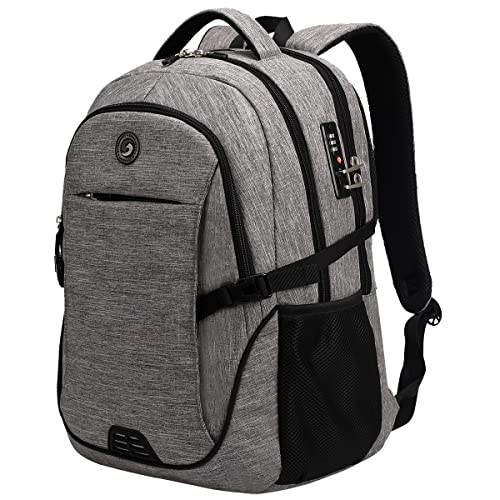
A packed school day can expose sloppy backpack design in a hurry. Loose chargers sink under books, a tablet knocks against a laptop, and thick shoulder straps still feel miserable if the load swings around with every step. The SHRRADOO Anti-Theft Laptop Backpack tackles those annoyances with divided storage, a stabilizing chest strap, padded carrying surfaces, and dedicated protection for electronics. As a candidate for the best backpack for 12 year old, it leans toward function, organization, and long-term usefulness rather than bright prints or novelty styling.
SHRRADOO Anti-Theft Laptop Backpack
The gray nylon exterior gives this backpack a low-key, grown-up appearance that won’t feel out of place at school, on a family trip, or during a weekend activity. Its shape resembles a practical computer bag more than a traditional children’s bookbag, which may suit changing tastes better than a character-based design. The neutral color also hides minor scuffs more effectively than pale fabric, though dust and dried rain spots can still become visible over time. Nothing about the styling screams for attention, and that restraint is part of its appeal.
Capacity is built around a separate compartment that fits laptops up to 17 inches, including smaller 15.6-inch, 14-inch, and 13-inch devices. That broad compatibility leaves room for a school laptop today and potentially a larger computer later, reducing the chance that the backpack becomes obsolete after one device change. A 17-inch-capable bag can feel tall on a smaller frame, however, so strap adjustment matters quite a bit. Packed lightly, the size offers flexibility; packed to the brim, it may feel bulkier than a compact middle-school backpack.
The main packing compartment is intended for daily necessities and electronics, giving notebooks, folders, headphones, and a light jacket a shared but roomy space. A separate front compartment adds smaller pockets, pen slots, and a key fob hook, which helps prevent tiny essentials from disappearing into the bottom. That layout solves a familiar morning problem: knowing the charger is somewhere in the bag but having no clue which layer swallowed it. Still, organized pockets only help when each item returns to the same place instead of being tossed into the nearest opening.
The construction uses nylon fabric with reinforced carrying points and two padded S-curve shoulder straps. Nylon keeps the shell relatively light while offering a sensible balance between flexibility and everyday resistance to rubbing. The supplied description doesn’t claim complete waterproofing, so electronics should still be protected during heavy rain. Light moisture may be less alarming than it would be with untreated cotton, but zipper tracks and seams remain possible entry points.
Storage That Keeps School Gear Under Control
The separate laptop area is more than a wide sleeve. An internal shockproof fastening belt secures a laptop or tablet so it won’t slide freely whenever the backpack is set down, turned sideways, or carried up stairs. That restraint can reduce small bumps between a device and nearby books, especially during crowded transitions between classes. It isn’t a rigid protective case, though, and a hard drop can still transfer force through the padded walls.
The spacious central compartment gives bulky school supplies somewhere to sit without pressing directly against the computer. Thick binders, notebooks, lunch items, and a sweatshirt can be arranged more sensibly when they aren’t competing with the laptop sleeve for every inch. The divided interior also makes unloading easier because electronics stay in one section while ordinary supplies remain in another. Overpacking is still the obvious trap, since available space often gets filled simply because it’s there.
Front organization is especially useful for items needed on short notice. Pens, charging cords, earbuds, a calculator, and identification cards can stay within reach rather than drifting beneath heavier books. The included key hook is a small touch, but it can save plenty of pocket-patting at the end of the day. Loose objects may rattle if the front section is sparsely packed, so soft pouches can add order for delicate accessories.
A lower-back anti-theft pocket provides concealed storage for a phone, wallet, passport, or other compact valuables. Its placement against the wearer’s back makes casual access harder for someone standing behind the bag, while keeping important items close. That feature is more useful during travel, school events, or crowded transportation than during an ordinary classroom period. The pocket isn’t a safe, naturally, and bulky objects may create an uncomfortable pressure point if they sit directly against the lower back.
Comfort, Stability, And Heat Management
Shoulder comfort depends on more than adding foam, and this model takes a layered approach. The S-curve padded straps are shaped to follow the shoulders more naturally than straight strips of webbing, while their adjustable length helps position the bag higher on the back. A low-hanging backpack tends to pull backward and sway, making a moderate load feel heavier than it is. Proper adjustment keeps the weight closer to the body and reduces that pendulum effect.
The back panel combines airflow foam padding with multi-panel breathable mesh. Air channels can reduce the flat, clammy feeling that develops when a backpack sits against the same spot for a long walk. The effect has limits, especially in hot or humid weather, because any padded bag blocks some airflow. Even so, segmented mesh generally feels less stuffy than a single slab of dense foam pressed across the entire back.
A chest strap adds useful stability when the bag contains a laptop, books, and other dense items. Tightening it helps keep the shoulder straps from spreading outward and controls side-to-side movement during brisk walking. The stabilized center of gravity can make crowded stairways, bus steps, and longer school routes feel less awkward. The strap may seem unnecessary with a light load, so it can simply remain loose when the backpack isn’t heavily packed.
The foam-padded top handle provides another carrying option for short distances. Grabbing the bag from a locker, moving it beside a desk, or lifting it into a vehicle is easier when the handle doesn’t dig sharply into the fingers. That padded grip isn’t intended to replace the shoulder straps for prolonged carrying, particularly with a laptop inside. Repeatedly swinging a loaded backpack by one handle also puts concentrated stress on the upper seam.
USB Access And Travel-Friendly Details
The external USB port connects to a built-in cable inside the backpack, creating a convenient pass-through for phone charging. A power bank sits inside, the internal cable connects to it, and a separate charging cord runs from the exterior port to the phone. The USB charging port doesn’t generate power and no power bank is included, a distinction that matters because the feature can otherwise sound more self-contained than it really is. Its main benefit is keeping the battery pack stored securely instead of carrying it in a hand or pocket.
Cable management determines whether the USB setup feels tidy or irritating. A short interior cable reduces loose tangles, but the power bank still needs a stable pocket so it doesn’t bounce against books or electronics. The exterior connection can be useful during trips or long activity days, though it adds another opening that should be treated carefully around rain. Dust around the port may also need occasional cleaning to maintain a reliable connection.
A luggage strap across the back allows the backpack to slide over the upright handle of a rolling suitcase. That feature takes shoulder weight out of the equation while moving through stations, terminals, or hotel corridors. The luggage pass-through also keeps the bag from repeatedly slipping off the top of a suitcase during quick turns. From a broader travel angle, a related reference appears in best carry-on luggage with USB charger, where integrated charging access is paired with wheeled luggage rather than a shoulder-carried design.
The backpack’s travel features are useful, but they don’t turn it into luggage for a long trip. The interior is shaped around devices, school supplies, and daily essentials instead of folded clothing, shoes, and toiletry kits. A short overnight stay may be manageable with careful packing, while a longer trip would likely require another bag. The carry-on versatility works best as a personal-item role, keeping technology and frequently used belongings close at hand.
Practical Strengths And Honest Limitations
Storage flexibility is the clearest strength. A dedicated 17-inch laptop compartment, roomy central section, organized front pocket, and hidden rear pocket give different items a logical place instead of forcing everything into one cavity. The internal restraint for a laptop or tablet adds another layer of everyday protection. For school routines involving electronics, cables, books, and personal items, that separation can reduce both clutter and accidental bumps.
Carrying comfort is another strong point on paper, thanks to the padded S-curve straps, breathable back panels, chest strap, and foam handle. Those features address pressure, heat buildup, and unwanted movement rather than relying on thick padding alone. Comfort still depends on how much weight goes inside and how the straps are adjusted. A heavily loaded 17-inch backpack can overwhelm a smaller frame regardless of how thoughtfully the padding is arranged.
Size is the main tradeoff for daily school use. The ability to fit a large laptop brings extra height and volume, which may feel unnecessary when the usual load consists of a few notebooks, a small tablet, and lunch. That larger body can also bump against chairs or feel cumbersome in tight hallways when overfilled. On the other hand, the added room reduces squeezing on days that require a binder, sweatshirt, electronics, and activity gear.
The USB setup has limits that deserve plain language. It requires a separate power bank, depends on extra cables, and offers access rather than independent charging. The hidden pocket is also better for flat valuables than thick objects that press into the back, while the breathable mesh can only reduce heat rather than eliminate it. These aren’t deal breakers, but they define the backpack more accurately as a roomy, organized computer bag with school-friendly features rather than a compact pack built solely for light classroom loads.
BLUEFAIRY Large School Backpack
A backpack can hold plenty and still make the school day harder if everything ends up piled in one deep compartment. Crushed papers, a leaking bottle, and a laptop rubbing against lunch containers are small annoyances that add up fast. The BLUEFAIRY Large School Backpack takes a more organized route with five compartments, a padded electronics sleeve, secured side pockets, and a deep 17.9-inch body. Its roomy but structured design gives it a credible place among options for the best backpack for 12 year old, especially when school supplies, lunch, clothing, and electronics all need to travel together.
BLUEFAIRY Large School Backpack
The backpack measures 12.6 inches wide, 9.1 inches deep, and 17.9 inches high, so it lands firmly in the large school-bag category. That depth is worth noticing because it creates more space for bulky items than slim laptop backpacks that look roomy from the front but barely expand. A lunch box, thick binder, or folded sweatshirt has a better chance of fitting without forcing the main zipper into a strained curve. The flip side is obvious: a nearly 18-inch bag can feel oversized when the daily load is light.
The black-and-gray solid color scheme keeps the overall look restrained. It doesn’t lean on cartoon graphics, bright logos, or a theme that may feel dated after one school year. The neutral appearance also fits naturally into school, commuting, and family travel without looking out of place. Still, solid dark panels can show lint and pale dust, so the bag won’t stay visually spotless just because the colors are practical.
Five compartments give the design more structure than a basic two-pocket bookbag. Large school loads tend to become chaotic when books, cords, snacks, papers, and personal items share the same cavity, and divided storage cuts down on that mess. The multi-compartment layout makes it easier to reserve one area for classroom materials, another for electronics, and a smaller section for quick-access supplies. Of course, five zippers also mean remembering where everything was placed, which can take a few days of habit-building.
The stated capacity includes laptops, tablets, books, folders, clothing, a lunch box, and other daily necessities. That combination makes sense for days that extend beyond regular classes into tutoring, clubs, sports, or a stop at a relative’s home. The backpack’s flexible capacity reduces the need for a second tote, but it doesn’t make heavy items any lighter. Filling every available inch can turn a well-organized bag into a dense block that’s tiring to carry.
Five Compartments For A Less Chaotic School Day
The biggest practical benefit is separation. A roomy central area can take books and folders, while smaller compartments keep pens, chargers, keys, and other loose items from sliding underneath everything else. That organized storage matters during short class changes because digging through a single oversized section wastes time and usually bends papers along the way. A dedicated spot for each category can make packing at night and unpacking after school much less frustrating.
The 9.1-inch depth offers useful room for thicker objects such as a lunch container or folded clothing. Many backpacks claim large capacity based mostly on height, leaving the front panel stretched tight once a rigid lunch box goes inside. This model’s deep profile appears better suited to carrying objects that don’t flatten easily. The tradeoff is a wider stance behind the wearer, which may feel clumsy in crowded aisles or when turning between tightly spaced desks.
Interior pockets and slots support smaller-item organization within the larger sections. Charging cables, pens, cards, and earbuds are less likely to tumble into the same corner when they have assigned spaces. The small-item storage also helps protect delicate accessories from being crushed beneath textbooks. Those slots won’t prevent clutter by themselves, though, and stuffing several loose cables into one pocket can still create the usual tangled knot.
Folders and notebooks benefit from the backpack’s taller rectangular shape. A bag that collapses inward can bend corners even when it technically has enough volume, while a more upright body gives school materials a cleaner place to sit. The school-friendly dimensions seem particularly useful for full-size folders and multi-subject notebooks. Overloaded softcover binders may still curl if heavier objects press against them, so packing order remains important.
Padded Laptop Storage And Device Separation
A padded sleeve is sized for a 15.6-inch laptop and also accommodates a tablet. Keeping electronics in a defined section prevents them from sliding freely against hard book corners, pens, or a rigid lunch container. The sleeve also makes it easier to remove a computer without unloading the main compartment first. Laptop dimensions vary by brand, so thicker models with bulky protective cases may fit more snugly than the screen-size label suggests.
Padding adds a useful buffer, but it shouldn’t be mistaken for hard-shell protection. A backpack dropped from a bench or tossed onto pavement can still transfer significant force through the fabric and foam. The electronics sleeve is best viewed as protection from routine bumps, scratches, and shifting contents rather than serious impact. A separate laptop case may still be sensible for an expensive or school-issued device.
Tablet storage adds flexibility for days when a full laptop isn’t required. The same sleeve can also hold a thin workbook, sketch pad, or important papers that need to remain flatter than the rest of the load. This kind of dual-purpose compartment keeps the feature useful even when no electronic device is carried. Placing sharp pencils or metal accessories in the sleeve would defeat that benefit, so those items belong in the organizer pockets.
The best packing arrangement keeps the laptop closest to the back and the heaviest books directly in front of it. That setup maintains a more stable center of gravity and reduces the backward pull caused by dense items sitting near the outer panel. Lighter clothing or a lunch bag can occupy the front portion. Tossing everything in without a plan is quicker, but the bag will usually feel more awkward once the weight shifts during walking.
Side Pockets That Hold More Than A Bottle
Two elastic side pockets provide space for bottles or umbrellas, and each pocket includes a securing strap. That strap is a meaningful detail because stretchy pockets alone can loosen over time or fail to hold taller bottles during quick movement. Added retention helps keep a bottle from tipping out when the backpack is placed sideways or lifted by the top handle. Exact bottle dimensions aren’t listed, so very wide insulated containers may still be a tight fit.
Using external pockets keeps condensation and minor drips away from notebooks and electronics. A sealed bottle belongs outside the main compartment whenever possible, since even water-resistant fabric can’t save papers from a leak that starts inside the bag. The external bottle storage also makes drinks easier to reach without opening a zipper. A loose cap remains the real weak point, and no pocket design can compensate for one that isn’t tightened properly.
An umbrella fits naturally in the second side pocket, leaving the other one open for a drink. The retaining strap can help control a slim folded umbrella that might otherwise slide out of an elastic sleeve. That dual-pocket setup is handy during wet commutes because damp fabric stays outside the main storage areas. A dripping umbrella should still be shaken off first, since water can run down the side panel and collect around the base.
The side pockets slightly increase the bag’s overall width once they’re filled. That’s worth remembering in crowded hallways, buses, and narrow store aisles where protruding bottles tend to bump against seats and door frames. The secured pocket design lowers the chance of losing a bottle during those bumps, but it doesn’t make the backpack narrower. Slimmer bottles will keep the profile tidier than oversized jugs.
Comfort During Long Carrying Periods
Ergonomic S-shaped shoulder straps follow the upper body more naturally than flat, straight straps. Foam padding spreads pressure across a broader area, while adjustable webbing helps position the backpack closer to the back. The S-shaped strap design can reduce concentrated pressure around the shoulders, especially once the bag contains a laptop and several books. Comfort still depends on adjustment, since loose straps allow the load to sag and pull backward.
Mesh lining adds airflow along the shoulder contact points. That won’t eliminate sweat during hot weather, but it can feel less sticky than smooth, non-breathable padding pressed against the same area for an extended period. The breathable strap surface is most noticeable during longer walks or commutes rather than a quick trip from the car to the classroom. Thick clothing may reduce the effect, while a thin shirt makes the mesh more noticeable.
The generous depth can distribute bulky gear more comfortably if the load is arranged well. Heavy books sitting close to the back feel more stable than the same books placed against the outer front panel. This balanced packing keeps the backpack from swinging as sharply during turns or stair climbs. Even so, a deep bag invites extra packing, and shoulder padding can’t erase the strain of unnecessary weight.
Adjustability also matters as clothing changes through the year. Straps that fit over a T-shirt may need extra length over a winter coat, then tightening again once warmer weather returns. The adjustable fit gives the bag room to accommodate those seasonal shifts without hanging too low. Both straps should remain roughly even, since carrying the backpack crooked can create uneven pressure no matter how soft the foam feels.
Fabric, Reinforced Seams, And Everyday Upkeep
The exterior uses water- and abrasion-resistant fabric, a practical combination for school floors, crowded lockers, and light exposure to rain. Abrasion resistance helps with routine scraping against desks and rough surfaces, while water resistance can slow moisture from reaching the contents. Neither claim means the bag is indestructible or fully waterproof. Extended rain, soaked seams, and open zipper tracks can still allow water inside.
Key seams receive reinforcement, which targets the places most likely to experience repeated stress. Shoulder-strap attachments, loaded compartment edges, and carrying points tend to fail before broad fabric panels do. The reinforced construction should help manage normal school loads more reliably than lightly stitched decorative bags. Dragging the backpack by one strap or routinely overstuffing it will still accelerate wear around those connections.
Smooth zippers matter because five compartments create frequent daily use. A zipper that catches on lining fabric becomes irritating quickly, especially during short transitions between classes. The described smooth zipper action should make access easier, provided the compartments aren’t packed so tightly that the teeth remain under constant outward tension. Pulling from the zipper tab rather than the fabric around it also reduces unnecessary strain.
Easy maintenance suits a dark school bag that may spend plenty of time on floors and outdoor benches. Water-resistant fabric usually handles spot cleaning more conveniently than absorbent materials, though the supplied information doesn’t specify machine-washing instructions. Gentle wiping and air drying are the safer approach for preserving fabric coatings, padding, and zipper performance. Harsh scrubbing can roughen the surface even when the material resists ordinary abrasion.
School, Commuting, And Travel Tradeoffs
The backpack’s capacity works beyond the classroom. A laptop, tablet, clothing layer, books, snacks, and personal items can fit into separate areas for commuting or a short family trip. The multi-use design makes the bag practical on weekends rather than leaving it unused until Monday morning. It still opens like a school backpack, so packing folded clothing won’t feel as tidy as using a wide-opening duffel.
For travel, the 17.9-inch height and deep body offer enough room for electronics and a modest change of clothes. Its shoulder-carried layout keeps essentials close, yet the weight remains entirely on the back rather than rolling behind on wheels. From a neutral travel angle, a related packing format appears in best carry-on duffel bag for women, where a wider opening changes how clothing and personal items are arranged. The BLUEFAIRY bag remains better oriented toward upright books, folders, and devices.
The black-and-gray design transitions easily from school to commuting because it doesn’t rely on a strongly juvenile theme. That visual flexibility may extend the useful life of the bag as style preferences change. The solid colorway is less distinctive than patterned options, however, and similar-looking backpacks can be easier to mix up in a crowded classroom. A small name tag inside one compartment can help without altering the exterior.
Storage depth is both the strength and weakness of this model. It creates room for a lunch box, clothing, books, and devices, but it can also produce a bulky silhouette and encourage overpacking. The five compartments, padded laptop sleeve, secured bottle pockets, breathable straps, and reinforced seams all address practical school frustrations. The final fit depends on whether that generous 17.9-inch frame matches the daily load rather than simply offering more space than necessary.
Bunie 3-Piece Large School Backpack Set
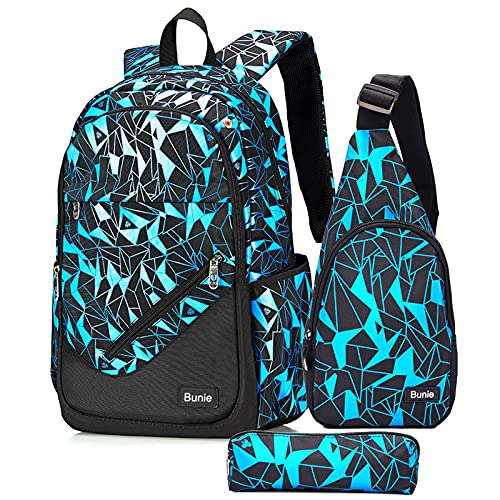
One forgotten pencil case can throw off an otherwise smooth school morning, while a phone, keys, and loose cards rattling around the main compartment create their own brand of chaos. The bunie 3-Piece School Backpack Set tackles that clutter with a full-size bookbag, a separate sling bag, and a matching pencil case. Its roomy proportions, laptop storage, and multiple organizers make it a practical contender for the best backpack for 12 year old, particularly on days that stretch from class to an outdoor activity. The design is bold and youthful, but the real story sits in how much gear the set can divide and carry.
Bunie 3-Piece School Backpack Set
The bundle includes a school backpack, sling backpack, and pencil case, which immediately separates it from single-bag options. The main pack handles books and larger gear, the sling bag suits a few quick-access belongings, and the pencil case keeps writing tools from scattering through front pockets. That division can make packing feel less like stuffing a closet and more like giving each item a proper home. Of course, three pieces also mean three things to keep track of, so the extra flexibility works best with a consistent routine.
Two backpack sizes are listed. The medium measures 12.59 by 6.29 by 18.8 inches, while the large reaches 13 by 7.48 by 19.7 inches. Both are tall compared with many compact school bags, and the large version has noticeably more depth for a lunch container, sweatshirt, or activity gear. That capacity is handy, though a nearly 20-inch frame may feel oversized on a shorter torso or during lightly packed school days.
The blue geometric pattern gives the backpack a sporty, angular look without relying on cartoon characters. That classic geometric styling may age better than a character print, especially as preferences shift from year to year. Still, it isn’t subtle, and the pattern may feel busier than a plain navy or black pack. Visual taste is the one feature no amount of storage can settle.
The set is presented for school, travel, camping, cycling, hiking, and other active uses. A broad use list sounds appealing, but each activity places different demands on a bag. The school-focused layout seems most convincing for books, electronics, stationery, and casual outings rather than technical hiking or long-distance cycling. It lacks any stated hydration system, rigid frame, or specialized trail features, so outdoor use should stay within ordinary day-trip expectations.
Capacity That Handles More Than Books
The main backpack includes several compartments for electronics, school supplies, and personal items. A separate laptop section prevents a computer from sharing one loose cavity with books, chargers, and a lunch box. That divided storage can reduce scratches and bent papers while making the morning load easier to inspect before leaving home. The compartments won’t organize themselves, though, and unused pockets can become hiding spots for old receipts and snack wrappers.
The medium version accommodates laptops up to 15 inches, while the larger size is described as fitting models up to 16 inches. An elastic binding holds the device in place, reducing the sliding and knocking that happens when a bag is placed on its side. That restraint adds useful stability during walks, bus rides, or trips up crowded stairs. It isn’t a hard protective shell, so a separate sleeve may still be sensible for an expensive or school-issued computer.
A front organizer provides places for cards, pens, a phone, and keys. Small belongings are far easier to reach when they aren’t buried under a binder or trapped beneath a sweatshirt. The front-pocket organization also keeps metal keys away from a laptop surface, which is a small but practical benefit. Overfilling that area can make the front panel bulge, so thicker objects still belong in the main compartment.
The pencil case deserves more credit than it might get at first glance. Pens and markers can leak, pencil tips can snap, and loose scissors have no business sliding beside electronics. A separate matching stationery pouch keeps those tools contained and transfers easily between classrooms or a study desk. Its usefulness depends on remembering to return it to the backpack, a small habit that saves plenty of last-minute searching.
Oxford Fabric And Everyday Durability
The backpack uses water-resistant Oxford fabric, a material commonly chosen for its woven strength and ability to handle routine rubbing. Water resistance can help during light rain or a brief spill, buying time before moisture reaches books and electronics. It doesn’t make the backpack fully waterproof, especially around zipper tracks and stitched seams. A prolonged downpour still calls for extra protection rather than blind faith in the outer fabric.
The product details describe the material as resistant to fading and free from noticeable odor. A colorfast exterior matters on a blue patterned bag because washed-out panels would be easy to spot. Odor claims are harder to judge without handling the product, so the safest reading is that the fabric is intended for ordinary daily use without a strong material smell. Airing out any new backpack before school remains a sensible habit.
Metal zippers add a sturdier feel than lightweight plastic hardware, particularly on compartments opened several times a day. Their solid zipper construction may tolerate routine pulling better, but metal parts also add a little weight and can become scratched. Zippers last longer when the bag isn’t stuffed so tightly that the teeth remain under sideways pressure. Forcing a closure over an overpacked binder is a quick way to shorten its useful life.
Oxford fabric is generally straightforward to spot clean, though no exact washing instructions are supplied. A damp cloth and mild soap are the safer route for protecting the water-resistant surface and geometric print. Machine washing can stress padding, coatings, and metal zipper components. Mud and food residue should be handled early, before they settle into the woven texture.
Shoulder Support And Back Comfort
Adjustable shoulder straps allow the backpack to sit higher or lower depending on torso length and clothing. A proper fit keeps the heaviest contents close to the body rather than letting the bag hang near the waist. The adjustable carrying position matters with a tall backpack because loose straps can exaggerate swaying and backward pull. Both sides should be set evenly, unless an uneven shoulder ache sounds like a fun afternoon.
Padded back cushions create a softer barrier between the wearer and hard-edged books. That back-panel cushioning can stop notebook corners or a laptop edge from pressing into one spot during a longer walk. Padding also helps the bag hold its shape instead of collapsing around the contents. Heat may build up in warm weather, since the description doesn’t mention mesh airflow channels or a ventilated back system.
The supplied information says the straps and cushions are intended to relieve stress on the neck and shoulders. That benefit depends heavily on load weight, fit, and packing order. Placing the laptop and heaviest books nearest the back improves the center of gravity, while light clothing can sit toward the outer panel. No padded strap can rescue a bag overloaded with items that could’ve stayed in a locker.
The large version’s added depth provides welcome room, but it also moves some of the load farther away from the spine. That physical difference can make the bag feel heavier even when the scale says otherwise. The capacity-versus-comfort tradeoff is worth taking seriously, especially for daily walking. A medium size may feel more manageable when a 15-inch laptop and standard school supplies cover the usual needs.
Hidden Earphone Port In Daily Use
A concealed earphone opening sits near the upper part of the backpack. The cable can run from a device stored inside to wired headphones outside, reducing the need to keep a phone in a hand or exposed pocket. This hidden cable pass-through is a practical throwback for anyone still using wired earbuds. Wireless headphones make the feature less essential, but they don’t make it harmful.
The port may also keep a cable from being pinched by the main zipper. That can reduce tangling and prevent the cord from dangling through a partially open compartment. The protected cable route works best when the device stays in a secure inner pocket rather than bouncing around beside heavy books. A cable pulled tightly across the shoulder can still snag, so a little slack is necessary.
Using earphones outdoors requires awareness, especially near traffic, bike paths, or crowded crossings. The backpack provides the opening, not the judgment. The music-access feature is most sensible during a bus ride, study break, or calm walk where surrounding sounds remain easy to notice. Volume and local school rules matter more than the location of the cable.
The hole is a convenience feature rather than a reason to buy the entire set. Storage layout, laptop fit, strap comfort, and bag size have a much larger effect on daily use. Still, the concealed port fits the backpack’s broader idea of keeping loose items controlled and tucked away. For wired audio, it adds function without taking up another pocket.
Sling Bag And Pencil Case Versatility
The included sling backpack can carry a phone, wallet, keys, or a few compact essentials when the full school bag would be excessive. That secondary carry option can be useful during a field trip, family outing, or short walk after the main backpack has been stored. Its exact dimensions and pocket layout aren’t provided, so expecting a small accessory bag is more realistic than treating it as a second school pack. Heavy books or a laptop clearly belong in the primary backpack.
A sling bag places weight on one shoulder, which suits light loads but becomes tiring when packed with dense objects. Rotating the strap position may help during longer use, though a balanced two-strap backpack remains better for substantial weight. The light-duty role is where this extra piece makes the most sense. A phone, transit card, and small snack fit the concept better than a hardback novel and water bottle.
The pencil case keeps the set visually coordinated, but its practical benefit goes beyond matching fabric. A contained group of writing tools is easier to move between the backpack, classroom desk, and home study space. The three-piece organization can reduce the number of loose objects spread across compartments. The downside is simple: losing one piece breaks the neat system, so labeling each item inside may be worthwhile.
Book-carrying needs sometimes lean toward open totes rather than structured backpacks. From a neutral packing angle, a related format appears in best tote bag for books, where wide access takes priority over hands-free shoulder balance. The bunie set offers better separation for electronics and smaller supplies, while a tote usually makes quick loading and unloading easier. Those formats solve different problems, so forcing them into the same role misses the point.
Practical Strengths And Clear Limitations
Capacity is the headline strength, particularly in the large size. A 16-inch laptop compartment, multiple storage areas, a front organizer, and two extra accessories provide room for a school day that includes electronics and after-class plans. The tall frame also accommodates full-size folders without folding their corners. That same capacity can become a burden if every empty pocket gets filled without much thought.
The coordinated set adds value through separation rather than sheer volume. Stationery stays in the pencil case, quick-access belongings can move to the sling, and school materials remain in the main backpack. This layout can prevent a phone or keys from scraping against a laptop. It also creates more pieces to remember, clean, and store, which won’t suit a routine built around grabbing one bag and heading out the door.
Water-resistant Oxford fabric and metal zippers support ordinary school wear, but the provided details don’t confirm waterproof seams, a reinforced bottom, or abrasion ratings. Outdoor versatility should therefore be read as casual day use rather than technical performance. The padded back cushions may soften hard contents, though no breathable mesh is specified for hot-weather comfort. Realistic expectations keep these features useful instead of turning them into promises they were never meant to make.
The biggest weakness is scale, especially with the 19.7-inch large model. That height and depth can swallow plenty of gear, but they may also look and feel oversized on a smaller frame. The medium version keeps the same general concept while limiting laptop fit to 15 inches and trimming some bulk. Choosing between them comes down to the actual daily load, because unused capacity still takes up space in a hallway, on a bus seat, and behind a classroom chair.


10 Best Laptop Backpack For College of 2026 With Padded Drop Protection

9 Best Travel Carry On Backpack For Europe of 2026 To Clear Cabin Sizers

8 Best Travel Backpack For Carry On of 2026 to Avoid Gate Checks
7 Best Travel Backpack For Camera of 2026 With Modular Gear Protection
9 Best Backpack For 9 Year Old of 2026 To Fit Narrow Shoulders

7 Best Computer Backpack For Travel of 2026 With Luggage Straps

9 Best Backpack For 8 Year Old of 2026 With the Right Fit and Support
8 Best Small Day Backpack For Travel of 2026 That Stow in Luggage