
5 Best Bed Bug Luggage Heater of 2026 To Stop Infestations

A dusty carry-on rests on the garage floor, quarantined right by the threshold while a flimsy heating tent struggles to zip over its wheels. Inside, cold spots linger deep within the zipper linings and packed clothes, leaving tiny hitchhikers untouched. It only takes a single surviving egg tucked behind an interior seam to trigger a devastating household infestation that costs thousands of dollars in exterminator bills and weeks of sleepless nights. A treatment box that cannot sustain lethal warmth from shell to core does not just fail to sanitize; it offers a false sense of security right before the nightmare spreads into the bedroom.
True peace of mind means stepping through the front door knowing every seam, wheel well, and inner pocket has reached sustained lethal heat before anything gets unpacked. That confidence comes down to a few practical safeguards: roomy chamber dimensions that enclose a fully packed bag without straining seams, heating elements that reliably push core temperatures past 120 degrees Fahrenheit, and an external temperature probe so the heat level stays verifiable without unzipping the enclosure. Safe electrical demands that run smoothly on standard household circuits keep the process hassle-free. Here is how the leading options compare for turning a stressful return trip into total relief.

- TLR Rank7.7
TLR Rank is a ranking system developed by TravelLuggageReviews.com. TLR Rank has no relationship or impact from any manufacturers or sales agent websites. Learn more
- BrandZappBug
- TLR Rank7.2
TLR Rank is a ranking system developed by TravelLuggageReviews.com. TLR Rank has no relationship or impact from any manufacturers or sales agent websites. Learn more
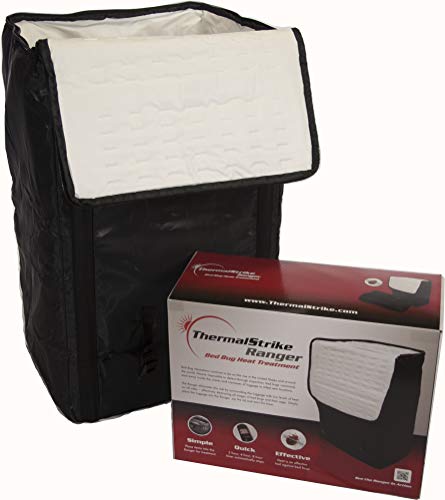
- BrandThermalStrike

- TLR Rank7.2
TLR Rank is a ranking system developed by TravelLuggageReviews.com. TLR Rank has no relationship or impact from any manufacturers or sales agent websites. Learn more
- BrandHaoguo

- TLR Rank7.2
TLR Rank is a ranking system developed by TravelLuggageReviews.com. TLR Rank has no relationship or impact from any manufacturers or sales agent websites. Learn more
- BrandMysora

- TLR Rank7.2
TLR Rank is a ranking system developed by TravelLuggageReviews.com. TLR Rank has no relationship or impact from any manufacturers or sales agent websites. Learn more
- BrandHaoguo
Last update on 2026-11-01 / Affiliate links / Images, Product Titles, and Product Highlights from Amazon Product Advertising API
Will a packed carry-on suitcase fit inside a bed bug luggage heater?
Yes, as long as your suitcase exterior measurements stay within the interior dimensions of the heating chamber. Heating units with dimensions of 18 x 15 x 29 inches readily hold standard upright carry-on bags and small duffels. If you travel with larger gear or need extra room for bulky checked luggage bags, spacious chambers measuring 29.5 x 15.7 x 29.5 inches or 39.5 x 39.5 x 28 inches provide the necessary clearance to zip the unit completely shut. Always verify your bag exterior dimensions, including wheels and grab handles, before choosing a chamber size.
Does a luggage heater reach temperatures high enough to eliminate bed bugs and eggs?
Yes, dedicated luggage heating chambers achieve sustained thermal levels that eliminate bed bugs, larvae, and eggs without chemical odors or stains. Units reach target temperatures above 120°F (50°C), up to 122°F, or up to 155°F depending on the heating setup. Systems equipped with patented six-sided heating, four built-in aluminum heat-conducting plates, or thermal pads generate 360-degree uniform heat coverage. Because pests hide deep in fabric folds and lining seams, chambers with a digital temperature display or thermometer probe let you confirm lethal heat throughout the unit.
What items must be removed from luggage before starting a heat cycle?
You should remove heat-sensitive items, toiletries, medications, and electronics before running a cycle. Battery-operated equipment, including laptops and Bluetooth luggage trackers, should never undergo sustained heating. Everyday travel goods like clothing, softside fabrics, and hard suitcase shells remain inside the chamber so heat can neutralize hitchhiking insects. Check every exterior compartment and interior pocket to ensure no meltable cosmetics or pressurized containers stay packed.
Can a luggage heater run on a standard household outlet without tripping breakers?
Most portable bed bug luggage chambers plug into standard household wall outlets without requiring specialized circuits. Units that use thermal pads operate silently while offering multiple heat settings to manage energy draw. Electrical requirements vary by model, so check the manufacturer documentation for exact wattage and voltage ratings. To prevent an overloaded circuit, plug the heater directly into an outlet rather than an extension cord, and avoid running other major appliances on the same breaker at the same time.
How long should a luggage heating cycle run?
Cycle duration depends on how densely your suitcase is packed and the timer option you select. Available units provide digital timers with 2, 4, 6, 8, 10, or 12-hour settings alongside 10 adjustable heating levels. Tightly packed clothing layers and zippered compartments insulate bugs, requiring extra time for thermal energy to soak into the suitcase center. Selecting a longer cycle ensures that the internal core stays above 120°F long enough to eliminate insects, carpet beetles, lice, and moths.
Will the heat damage zippers, wheels, or hardside luggage materials?
Standard luggage materials handle normal treatment cycles without warping or melting when set up according to the manufacturer guidelines. Heating units utilize insulated liners and hospital-grade heating pad materials that distribute warmth evenly, with some models engineered to remain safe to touch on exterior surfaces. To prevent surface damage, ensure your suitcase does not press directly against exposed heat plates, and confirm that your luggage materials are rated for temperatures above 120°F.


Best Affordable Carry On Luggage 2026 - 11 Most Loving

The 12 Best Carry On Luggage For Bad Back 2026 - Top Choices

Best Lightest carry on luggage with wheels in 2026

Top Airport Traveling Suitcases: Our 11 Best Picks

The Best Delsey Paris Luggage Set 2026

Top 10 Delsey Softside Luggage Picks for Stress-Free Travel

11 Best Guest Room Luggage Rack of 2026 To Protect Clean Bedding

11 Best Grom Luggage Rack of 2026 For Direct Bolt-On Fit










