
3 Best Camera Carryon Luggage of 2026 To Protect Fragile Gear

Airline gate agents do not care how delicate optical glass is; if a case exceeds overhead dimensions by even half an inch, it gets tagged for the cargo hold. That single moment turns travel into a panic. Baggage handlers toss luggage without remorse, and precision lenses simply cannot survive rough impacts inside an unpadded belly compartment. Even worse, protruding spinner wheels and stuffed front pockets often turn a compliant bag into an oversized target, creating forced gate-check anxiety right at the jet bridge. Losing physical custody of fragile bodies and optics puts an entire shoot at risk before the plane even leaves the tarmac.
Boarding should feel effortless, with the quiet assurance that your equipment stays right above your seat throughout the flight. Achieving that freedom requires matching the exterior build to how you fly. Crushproof hard cases deliver maximum impact armor against heavy compression, while lighter softside designs with modular dividers keep total carry weight low on regional airlines. Verifying a strict twenty-two-inch exterior profile ensures reliable overhead clearance, while rugged wheels make long terminal sprints painless. Here is how the top camera carry-on luggage options compare to keep your sensitive gear protected and right by your side.

- TLR Rank9.3
TLR Rank is a ranking system developed by TravelLuggageReviews.com. TLR Rank has no relationship or impact from any manufacturers or sales agent websites. Learn more
- BrandSLINGER

- TLR Rank8.3
TLR Rank is a ranking system developed by TravelLuggageReviews.com. TLR Rank has no relationship or impact from any manufacturers or sales agent websites. Learn more
- BrandEylar
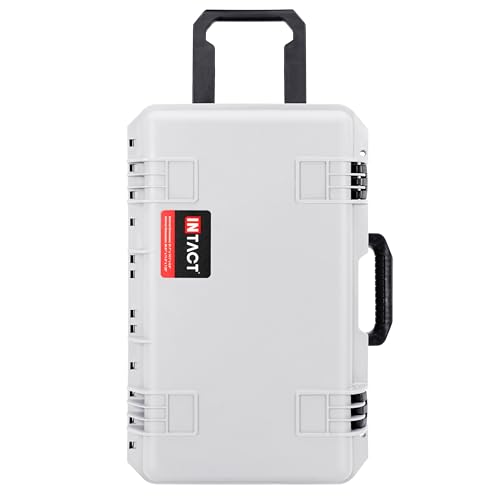
- TLR Rank9.0
TLR Rank is a ranking system developed by TravelLuggageReviews.com. TLR Rank has no relationship or impact from any manufacturers or sales agent websites. Learn more
- BrandEylar
Last update on 2026-10-27 / Affiliate links / Images, Product Titles, and Product Highlights from Amazon Product Advertising API
Will camera carry-on luggage clear standard airline overhead bin limits?
Yes, camera cases built for cabin travel are sized to fit standard overhead compartments, generally staying around 21 to 22 inches in height. For example, softside wheeled camera backpacks measure 14 x 10 x 21 inches, while rigid rolling cases feature exterior dimensions of 21.7 x 14.1 x 8.8 inches or 22.05 x 14.2 x 9.4 inches. Always check your carrier's specific carry-on requirements before boarding, because regional aircraft frequently enforce tighter depth restrictions than larger mainline planes.
Is a crushproof hard case safer than a wheeled camera backpack?
A crushproof hard case provides maximum impact defense against external pressure, whereas a wheeled backpack offers lighter weight and flexible carrying options. Hard cases built with reinforced high-pressure polypropylene shells and continuous gasket seals deliver an IP67 waterproof, dustproof, and crushproof barrier that protects gear if bags shift in the overhead bin. Wheeled backpacks feature anti-shock interior dividers that cushion against daily bumps, but their flexible fabric exteriors cannot withstand heavy crush loads. If gate-check risk or severe weather is your main worry, a rigid hard shell provides stronger defense.
How much empty weight does a camera carry-on add to airline limits?
Empty bag weight varies widely between lightweight softside packs and heavy-duty protective cases. A wheeled camera backpack can weigh as little as 4.55 pounds, leaving plenty of room for heavy glass and camera bodies under strict airline scales. In contrast, a durable rolling hard case weighs between 14 pounds and 14.550509292 pounds before packing any equipment. Photographers flying internationally with strict carry-on weight limits should calculate their gear load carefully to prevent unexpected check-in penalties.
Can interior layouts be reconfigured for changing camera gear setups?
Yes, your ability to rearrange equipment depends on whether the luggage uses customizable pluck foam or adjustable dividers. Pluck foam allows you to tear out precise shapes to cradle a specific camera and lens setup, though adapting the layout later for new gear usually requires replacing the foam layer. Modular anti-shock dividers offer ongoing flexibility, letting you reconfigure compartments to hold up to 2 professional DSLRs, 7 lenses, an attached 400mm f/5.6 lens, 2 flashes, and up to 10 accessories as your kit changes.
What features keep camera equipment secure during travel?
Integrated security points and solid closures keep valuable photo equipment safe from tampering while navigating busy airports. Selecting cases compatible with TSA approved carry-on luggage guidelines ensures security screeners can inspect internal contents without forcing open latches or cutting locks. If an airline ever forces you to gate-check your equipment due to full overhead bins, slipping Bluetooth luggage trackers into an accessory pocket helps you follow your gear across terminals in real time.
How do two-wheel rollers handle terminal concourses compared to rolling backpacks?
Solid roller wheels paired with an extendable pull handle roll reliably across flat concourses and carpeted boarding areas. However, two-wheel hard cases must be pulled behind you and cannot be worn when navigating crowded flights or narrow stairways. In contrast, 2-in-1 hybrid bags function as both rolling luggage and backpacks using hide-away shoulder harnesses, letting you switch modes instantly when wheeling over rough ground becomes impractical.


Best Affordable Carry On Luggage 2026 - 11 Most Loving

The 12 Best Carry On Luggage For Bad Back 2026 - Top Choices

Best Lightest carry on luggage with wheels in 2026

Top Airport Traveling Suitcases: Our 11 Best Picks

The Best Delsey Paris Luggage Set 2026

Top 10 Delsey Softside Luggage Picks for Stress-Free Travel

11 Best Guest Room Luggage Rack of 2026 To Protect Clean Bedding

11 Best Grom Luggage Rack of 2026 For Direct Bolt-On Fit










