Best Camping Chairs Footrest 2026: Kick Back Smarter

The appeal of best camping chairs footrest designs becomes obvious after a long afternoon outside. A standard camp chair handles sitting just fine, but dangling legs, a stiff back, and nowhere comfortable to stretch out can turn relaxing into constant shifting. A supportive footrest changes that posture by giving the legs somewhere to settle while reading, watching the fire, fishing, or simply doing absolutely nothing for a while. That little change sounds minor until several hours in a basic chair have already made your knees and lower back complain.
Comfort, though, isn't just about adding fabric beneath your feet. The better designs pair an adjustable backrest with a properly positioned leg section so reclining doesn't leave the body folded at an odd angle. Removable footrests can be especially practical because the chair can switch between upright seating around a table and laid-back lounging after dinner. Built-in versions feel simpler because there's one less piece to attach, but they may add bulk and can make the packed chair slightly more awkward to handle.
Packability deserves a close look before falling for a plush-looking seat. Extra padding, reclining hardware, head pillows, and long foot sections can turn a compact folding chair into a surprisingly chunky bundle. For drive-up campsites, RV trips, fishing spots, and backyard fires, that tradeoff often isn't a big deal. Carrying the chair any meaningful distance is another story, so packed size and carry weight matter just as much as how inviting the chair looks once opened.
Stability also separates a relaxing recliner from a chair that constantly feels a little sketchy. A wider frame and sensible leg geometry help the seat stay planted while body weight shifts backward, especially as the backrest moves into a deeper reclining position. Soft soil and sand can still cause narrow feet to sink, so large contact points are handy on loose ground. Uneven campsites add another wrinkle, and honestly, no fancy footrest makes up for a chair that rocks every time someone reaches for a drink.
Small conveniences can quietly make a big difference during real outdoor use. A cup holder keeps drinks away from dusty ground, while a side pocket gives phones, sunscreen, books, or flashlights a sensible home instead of letting them disappear under blankets. A removable headrest or pillow can soften longer lounging sessions, though heavily padded pieces may take longer to dry after damp mornings. Mesh panels breathe better in hot weather, while thicker fabric usually feels cozier once evening temperatures drop.
Fit shouldn't be ignored either. Seat height affects how easily someone can stand up, and a low sling-style chair may feel wonderfully relaxed until it's time to climb out of it. Taller backrests can support the shoulders and head more naturally, while shallow seats sometimes make the footrest feel too close. The smartest approach is to compare seat dimensions, reclining range, footrest position, and frame capacity rather than assuming every folding lounger feels the same.
Tradeoffs are part of the deal, and that's actually useful to remember. A chair built mainly for deep lounging may feel clumsy beside a camping table, while a lighter model can sacrifice padding or a fully supportive leg section. Detachable components offer flexibility but introduce pieces that need to be stored and kept together. So, the strongest pick isn't automatically the chair with the longest feature list; it's the one whose comfort features solve the annoyances that actually show up on the kind of trips being planned.
- TLR Rank8.2
TLR Rank is a ranking system developed by TravelLuggageReviews.com. TLR Rank has no relationship or impact from any manufacturers or sales agent websites. Learn more
- BrandAnmiro

- TLR Rank7.2
TLR Rank is a ranking system developed by TravelLuggageReviews.com. TLR Rank has no relationship or impact from any manufacturers or sales agent websites. Learn more
- BrandKingCamp

- TLR Rank7.8
TLR Rank is a ranking system developed by TravelLuggageReviews.com. TLR Rank has no relationship or impact from any manufacturers or sales agent websites. Learn more
- BrandFAIR WIND

- TLR Rank7.1
TLR Rank is a ranking system developed by TravelLuggageReviews.com. TLR Rank has no relationship or impact from any manufacturers or sales agent websites. Learn more
- BrandPOEPORE

- TLR Rank8.6
TLR Rank is a ranking system developed by TravelLuggageReviews.com. TLR Rank has no relationship or impact from any manufacturers or sales agent websites. Learn more
- Brand#WEJOY

- TLR Rank9.0
TLR Rank is a ranking system developed by TravelLuggageReviews.com. TLR Rank has no relationship or impact from any manufacturers or sales agent websites. Learn more
- BrandHOMECALL

- TLR Rank7.6
TLR Rank is a ranking system developed by TravelLuggageReviews.com. TLR Rank has no relationship or impact from any manufacturers or sales agent websites. Learn more
- BrandNaturehike

- TLR Rank8.6
TLR Rank is a ranking system developed by TravelLuggageReviews.com. TLR Rank has no relationship or impact from any manufacturers or sales agent websites. Learn more
- BrandAnmiro
Last update on 2026-08-19 / Affiliate links / Images, Product Titles, and Product Highlights from Amazon Product Advertising API
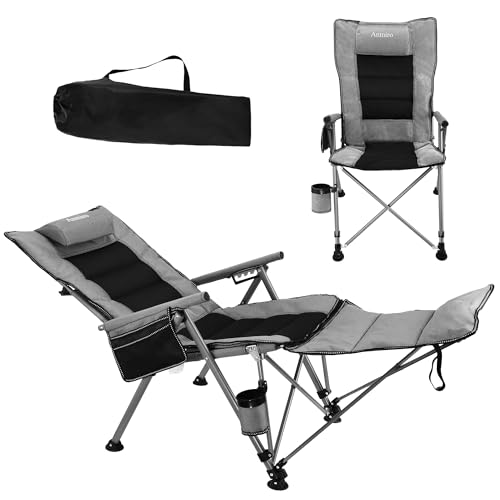
Folding Reclining Camp Chair With Footstool
Long evenings around camp have a funny way of exposing every weak point in a basic chair. Legs start feeling cramped, the back wants a different angle, and that upright sitting position that felt fine at lunch becomes less appealing after sunset. The Folding Reclining Camp Chair addresses those annoyances with a detachable footrest, five-position backrest, and padded construction that shifts the experience closer to lounging than ordinary campsite seating. Its combination of reclining flexibility and a stated 330-pound support capacity makes the design especially interesting for trips where comfort matters more than shaving every possible inch from packed gear.
Anmiro Reclining Camp Chair
The biggest difference here is posture control rather than one flashy accessory. The backrest moves through five adjustable positions, giving the chair several personalities depending on what the afternoon calls for. Sitting upright makes sense for conversation or eating, a semi-reclined angle suits reading, and the flatter setting pairs with the footrest when it's time to stretch out. That range helps solve a common camping-chair frustration: being stuck in one angle for hours whether your back likes it or not.
The detachable foot section takes that flexibility a little further. Attached, it creates a longer lounging surface that lets the legs extend instead of hanging from the edge of the seat, while removing it turns the setup back into a more conventional armchair-style camp chair. That matters around picnic tables or crowded campsites where a permanently extended leg rest could simply get in the way. The footstool also uses a triangular structure, a sensible detail because the added section needs its own stability rather than depending entirely on stretched fabric.
Comfort gets support from more than the reclining mechanism. The supplied details describe Oxford fabric paired with thick cotton padding, so the seat is designed to feel softer than the thin sling material found on many compact folding chairs. A detachable cushioned pillow adds support around the head and upper back, which becomes more useful as the chair reclines. Still, padding has a practical tradeoff: more cushioning generally means more material to pack and potentially more drying time after dew, damp grass, or an unexpected drizzle.
The fully opened chair measures about 54.57 inches long and 20.47 inches wide, which gives some context to its lounging intent. That length is useful once the footrest is doing its job, but it also means the chair occupies noticeably more ground than a simple upright camp seat. Around a roomy tent site, lawn, fishing spot, or picnic area, that's unlikely to be a problem. Packed tightly beside several coolers, tables, and tents, though, the extra footprint is worth thinking about before claiming a favorite patch beside the fire.
Steel Frame And Stability
Reclining changes the way weight moves through a chair, so frame construction matters more here than it might on a basic folding stool. This model uses a steel frame, reinforced steel pipes around the backrest, and a stated capacity of up to 330 pounds. Those specifications suggest the structure is intended to handle adult lounging rather than occasional lightweight use. The reinforced back section is particularly relevant because leaning backward places stress in a different direction than simply sitting upright.
The base adds non-slip foot caps and a triangular bracket design, both aimed at keeping the chair settled as the reclining angle changes. That's useful on patios, packed soil, and other reasonably firm surfaces where small movements can otherwise make a recliner feel twitchy. Loose sand, mud, or very soft campsite soil can still complicate stability because any narrow chair foot may sink when pressure concentrates in one spot. No folding chair can erase poor ground conditions, so placement remains part of the comfort equation.
There's also a practical distinction between feeling sturdy and being effortless to move. Steel brings reassuring structure, but it isn't the material people usually pick when every ounce matters. This chair is better understood as a comfort-oriented folding lounger than an ultralight piece of hiking equipment. For car camping, lawn events, fishing, beach outings, and similar trips where the chair travels most of the distance inside a vehicle, that tradeoff makes considerably more sense.
Reinforcement also helps the five-position mechanism feel purposeful rather than decorative. A reclining back is only enjoyable when the frame beneath it inspires confidence during position changes, and the described steel construction is a clear strength on paper. The weakness is equally straightforward: more structure means more bulk. Anyone packing a tiny trunk or hauling gear a long distance on foot may value compactness more than the ability to lie nearly flat.
Footrest Comfort And Reclining Flexibility
The 3-in-1 configuration is arguably the chair's most useful idea because it avoids forcing one seating position on every activity. With the footrest removed, the chair can function upright or semi-reclined, leaving the space in front open and making it easier to sit near a table. Attach the foot section and the setup shifts toward a lounge chair, allowing the legs to extend and the body to settle into a more restful posture. That adaptability feels more practical than a permanently attached lounger if the same chair needs to handle meals, conversation, reading, and naps.
Five backrest settings also make small comfort adjustments possible without relying on improvised pillows or awkward slouching. Someone reading may prefer a moderate recline, while lying flatter makes more sense for resting after hiking or spending hours on the water. The adjustable back doesn't magically guarantee a comfortable position for every body shape, but it gives far more room to experiment than a fixed-back folding chair. That's a meaningful advantage during long sessions where even a slight change in angle can relieve pressure.
The detachable design has one small responsibility attached to it: loose components need to stay together. A removable footrest is convenient until it gets left in the garage or buried under other gear, so packing habits matter. On the upside, removing it can reduce clutter around the chair whenever full-body lounging isn't needed. That balance between modularity and extra pieces to manage is worth recognizing rather than treating detachability as an automatic win.
The footrest's triangular assembly is another detail that fits the chair's overall logic. Extending the legs shifts pressure away from the main seat, so the added support shouldn't feel like a flimsy fabric flap hanging off the front. A triangular arrangement is designed to provide its own structural footing and resist collapsing or slipping out of position. The result, based on the supplied design information, is a more deliberate full-length resting setup rather than a token foot sling.
Storage, Carrying, And Campsite Practicality
Portability gets handled with a folding structure that requires no assembly for the main chair and includes a storage bag. Folded dimensions are listed at roughly 35.43 by 7.87 by 7.87 inches, giving it the long, narrow shape common to collapsible camping furniture. That form slides into a vehicle more easily than rigid patio seating, although its length deserves attention if cargo space is already crowded. It's portable in the car-camping sense, not the tiny-backpack sense.
The storage bag is more than a throwaway accessory on a chair with several moving and padded parts. Keeping the folded frame contained prevents straps, fabric, and hardware from snagging on tent poles or other equipment in the trunk. It also makes carrying the chair from a parking area to a nearby campsite less awkward. Still, anyone facing a long walk from the car will probably care about total carry weight just as much as folded dimensions, and no weight figure was provided in the supplied specifications.
Armrest storage is unusually generous for a chair built around reclining. The armrests include cup holders plus three-layer mesh bags intended for items such as phones, wallets, sunglasses, magazines, and mugs. Those pockets can keep small belongings off dusty ground and within reach while the chair is reclined, which is particularly handy because getting up from a laid-back position every few minutes gets old fast. Small convenience features aren't glamorous, but out at camp they're often the parts people end up using constantly.
Travel gear sometimes crosses into completely unrelated packing decisions, so it's useful not to force every storage question into the camping-chair conversation. A separate luggage reference appears in the Samsonite hard shell suitcase guide, while this chair remains firmly focused on outdoor seating and lounging. Keeping those categories separate makes the tradeoffs easier to judge on their own merits. Here, the relevant storage question is simply whether the folded chair fits comfortably alongside the rest of the camping load.
Comfort Features And Everyday Tradeoffs
The detachable pillow deserves more attention than it might get at first glance. Reclining without head support can leave the neck hovering awkwardly, especially in flatter positions, so a soft removable cushion gives the upper body somewhere to settle. Removing it is equally useful for anyone who prefers firmer support or doesn't want extra padding on hot days. That kind of optional comfort tends to age better than fixed padding because the setup can change with weather and preference.
Oxford fabric paired with cotton padding should also create a noticeably different feel from bare mesh camping seats. The padded surface is aimed at longer lounging sessions rather than maximum ventilation, which makes sense beside a fire or during cooler evenings. Under strong summer sun, though, thicker cushioning may feel warmer than an airy mesh chair. Comfort isn't one universal setting, and this model clearly leans toward softness and support rather than stripped-down breathability.
Its strongest use case is easy to picture without pretending the chair does everything. A campsite with vehicle access, a lawn concert, a fishing spot near the car, or a relaxed picnic gives the reclining back and detachable footrest room to earn their keep. A hike-in campsite where gear has to be carried for miles pushes the design in the opposite direction because bulk becomes a much bigger concern. That distinction keeps expectations realistic: this is a folding lounger first and a minimalist travel chair second.
The chair's biggest strengths are five-position reclining, the convertible footrest arrangement, reinforced steel support, padding, and useful bedside-style storage within arm's reach. Its weaknesses are the predictable costs of those comforts: a larger footprint, more material, and a folding package that isn't trying to compete with ultralight chairs. For relaxed outdoor days where sitting turns into several hours of lounging, those compromises are fairly logical. For anyone counting ounces or fighting for every inch of cargo space, the same features may feel like baggage rather than benefits.
KingCamp Hammock Chair With Footrest
A rigid camping seat can feel fine for ten minutes and strangely restrictive an hour later, especially once your legs start hunting for somewhere comfortable to land. This chair takes a different route by combining a swinging hammock-style seat with a detachable footrest, giving the body more freedom than a typical fixed folding chair. Within the broader best camping chairs footrest category, that mix of motion, leg elevation, and generous space is what gives the KingCamp design its own personality. It isn't trying to behave like a traditional lawn chair, and that's exactly where its appeal starts.
KingCamp Hammock Chair With Footrest
The detachable footrest is the feature that changes the chair most dramatically. With it attached, the legs can stay elevated while the suspended seat rocks gently front to back, creating a more relaxed posture for reading, watching a campfire, or simply stretching out after a long day. KingCamp states that raising the legs can help reduce spinal pressure by up to 30 percent, and while comfort will still vary from person to person, the underlying idea is easy to appreciate. The footrest can also roll into its storage pouch after removal, keeping the chair from feeling permanently oversized.
Removing that leg support changes the character of the seat without requiring a second chair. Upright sitting becomes easier around conversations, meals, or activities where an extended foot section would get in the way. That gives the design a useful two-mode feel: lounge deeply when there's room, then simplify the setup when space gets tighter. For crowded campsites or backyard gatherings, that flexibility can matter more than having a footrest attached every minute of the day.
The swinging mechanism brings a different kind of comfort than a standard reclining frame. Instead of locking the body into one static position, the chair uses adjustable straps so the back angle can be changed to suit a more upright or laid-back posture. Add the footrest, and the suspended construction allows a gentle front-to-back sway that feels closer to a hammock than a conventional rocker. That motion won't appeal to everyone, but people who dislike stiff seating may appreciate how naturally it lets the body shift.
There is a tradeoff worth noting. A suspended seat doesn't feel the same as a flat, firmly supported camp chair, so anyone who prefers a very rigid sitting platform may need time to adjust. The reward is freer movement and softer posture changes, while the compromise is less of that planted, bench-like sensation found in traditional folding chairs. That's not a flaw so much as a design choice, and it helps separate this model from ordinary reclining camp furniture.
Oversized Seating Without The Squeezed-In Feeling
Roominess is one of the strongest points in the supplied specifications. The seat measures 31.5 inches wide, while the distance between the armrests reaches an expansive 37.4 inches. That extra space makes it easier to shift position, sit with one leg tucked up, or stretch across the seat without feeling boxed in by narrow side rails. For a hammock-style chair, the added width also complements the natural curve of the suspended fabric instead of forcing the body into a tight pocket.
The wider layout should be especially noticeable during long lounging sessions. Small camping chairs often feel tolerable at first, then start pinching around the hips or shoulders once posture changes. Here, the oversized sitting area leaves considerably more room for casual movement, which suits activities like reading or stargazing where staying perfectly upright isn't the goal. The difference isn't simply about body size; it also affects how freely someone can rearrange blankets, jackets, or seating posture.
That width naturally asks for more campsite space, though. A 37.4-inch span between the armrests means this chair won't tuck into a tiny gap beside a crowded picnic table as neatly as a slim folding seat. The roomy proportions make much more sense where relaxation gets priority over packing several chairs shoulder to shoulder. So, the space advantage becomes a storage and layout tradeoff rather than a free benefit.
The chair also includes an ergonomic headrest, which fits the oversized design better than a short back would. Neck support becomes more useful once the body reclines and the footrest comes into play, because the head otherwise has to hold itself at an awkward angle. Combined with the suspended back, that head-and-leg support pairing helps the chair behave like a full lounging setup instead of merely a wide seat. It should feel most at home during slower activities rather than quick sit-down breaks.
Frame Strength And Six-Point Ground Support
KingCamp uses a mix of 6061 aluminum alloy and high-strength steel in the frame, balancing portability with a stated support capacity of 400 pounds. That combination makes sense for a suspended chair because the frame must handle not only downward weight but also the changing forces created by swinging. Aluminum helps keep the structure lighter than an all-steel alternative might be, while steel is used where extra reinforcement is useful. The resulting weight is listed at 11.4 pounds, which is substantial enough to feel purposeful without turning the chair into patio furniture.
The base relies on a reinforced triangular frame paired with six points of ground contact. That layout is important because hammock-style movement can put more dynamic pressure on the base than sitting motionless in a standard chair. Six support points spread that load across more contact areas, helping the frame stay balanced as the seat swings. Anti-slip foot pads add another layer of grip on firmer surfaces.
Uneven terrain still deserves some common sense. Campsites with soft sand, loose soil, or pronounced slopes can affect virtually any folding chair, especially one designed to move slightly while occupied. The six-point support system should offer broader stability than a minimal four-leg layout, but ground selection still matters. A flat patch of soil will always make better use of the frame design than a lumpy spot scattered with roots.
Weight capacity is another useful specification, but it shouldn't be confused with compactness. Supporting up to 400 pounds while offering a broad seat and swinging frame inevitably requires more structure than a tiny tripod chair. The interesting part is that the whole setup remains listed at just 11.4 pounds, which puts portability and durability in a fairly practical middle ground. Backpackers counting every ounce may still look elsewhere, while vehicle-based camping makes that weight much easier to accept.
Breathable Fabric And Long-Session Comfort
Fabric choice matters more in a hammock chair because so much of the body rests against the suspended material. KingCamp uses 600D Oxford fabric together with a breathable back area, aiming to combine structural support with airflow. That ventilation can become noticeable during hot afternoons when heavily padded recliners start trapping heat against the shoulders. The chair leans toward breathable support rather than thick, couch-like cushioning.
The suspended seat also distributes pressure differently from rigid chair panels. Instead of the body resting on a flat platform with a sharp front edge, the fabric can conform somewhat around the sitting position. Pair that shape with the adjustable back angle, and posture has more room to change as the day goes on. A reader may want a slightly firmer angle, while someone watching stars can loosen the straps and settle farther back.
Comfort still has a personal side. Some people love hammock seating because it cradles the body, while others prefer a flatter chair that makes getting in and out feel more direct. The swinging suspension introduces gentle movement that can be soothing during relaxed campsite downtime but less appealing during meals or tasks requiring a steady posture. That distinction makes this chair better suited to lounging than to serving as the only seat around a dining table.
A side cup holder keeps drinks within reach, a small detail that becomes more useful once the chair is reclined with feet elevated. Constantly leaning forward or standing up works against the whole point of a laid-back seat, so keeping a bottle or cup beside the arm helps preserve the relaxed position. The combination of headrest, cup holder, footrest, and adjustable suspension creates a setup focused on staying settled rather than repeatedly shifting around camp. None of those pieces is complicated, but together they make the chair feel intentionally designed for long sessions.
Fast Folding And Travel Practicality
Setup can sour an otherwise comfortable chair if the frame involves loose poles, confusing sleeves, or a small pile of parts. This model uses a pre-attached frame designed to fold out in roughly three seconds without tools. That matters during quick campsite stops or backyard gatherings where nobody wants furniture assembly becoming part of the evening. Open, settle in, and the chair is ready without building a suspension frame from scratch.
The included Oxford storage bag keeps the folded structure contained during transport. At 11.4 pounds, the chair is light enough for carrying from a parking area to a campsite or beach spot, though it isn't pretending to be ultralight backpacking equipment. Its more natural homes are RV storage compartments, vehicle trunks, beach trips, lawns, and campsites where the walk from transport to setup isn't extreme. That distinction keeps expectations sensible.
Mountain trips are listed among the intended uses, but distance still changes the equation. Carrying eleven-plus pounds for a short approach is one thing; carrying it alongside shelter, water, food, and cooking gear over a long trail is another. The chair earns its portability through fast folding and contained storage, not by chasing the smallest possible packed weight. Comfort takes the front seat here, with portability working in support rather than dictating the whole design.
Travel gear can involve very different storage needs once the trip moves beyond the campsite itself. For that separate packing question, a neutral luggage reference appears in the 22-inch suitcase guide, while this KingCamp chair remains focused on portable outdoor lounging. Keeping those categories apart makes sense because the chair's storage priorities revolve around folding speed, carry weight, and campsite footprint. Its bag is there to tame the frame, not replace travel luggage.
Where This Chair Makes The Most Sense
Campfire evenings show off the chair's strengths especially well. The adjustable suspension lets the body settle back, the detachable footrest supports the legs, and the headrest keeps the upper body from feeling unsupported after an hour or two. That combination makes more sense for lingering outdoors than for quick seating beside a picnic table. The chair's whole personality favors staying put and relaxing.
Beach use presents another practical fit because the breathable back helps with warmer weather and the folding frame removes the need for trees or a hanging point. Traditional hammocks can be wonderfully comfortable but useless on an open shoreline without supports, while this design carries its own structure. The self-supporting hammock format offers much of that relaxed seating feel without scouting for trunks the right distance apart. Sand stability will still depend on choosing a sensible patch and keeping the six feet planted evenly.
Backyard parties and RV trips may be even easier matches. Cargo capacity is usually less restrictive, setup happens close to the vehicle or house, and the oversized 31.5-inch seat has room to spread out without worrying about trail weight. The detachable footrest can stay stored during conversation and come back out once the crowd settles down. That sort of flexibility lets one chair handle both social sitting and slower lounging without changing the entire setup.
The biggest strengths are clear: 400-pound stated capacity, an unusually roomy seat, detachable leg support, adjustable hammock-style reclining, breathable material, and a frame that folds quickly. Its limitations come from the same design decisions, namely more bulk than minimalist camping chairs and a suspended sitting feel that won't suit people who want a rigid platform. For trips where the chair is meant to become a genuine resting spot rather than a temporary perch, those tradeoffs make considerably more sense. The KingCamp design is at its best when comfort, movement, and leg support matter more than shaving every last pound from the gear pile.
FAIR WIND Oversized Camping Chair With Footrest
Long outdoor sitting sessions can expose problems that barely register during a quick backyard break. Narrow seats pinch at the legs, hard fabric starts feeling unforgiving, and keeping both feet planted for hours can make relaxing feel like work. The FAIR WIND setup approaches best camping chairs footrest comfort from a simpler angle, pairing an oversized padded chair with a separate ottoman-style footrest instead of attaching the leg support directly to the frame. That arrangement gives the chair a relaxed lounge character while leaving room to reposition the footrest or use it independently.
FAIR WIND Oversized Camping Chair
The chair opens to 38.2 by 21.3 by 21.3 inches, and that wider layout is immediately relevant for anyone tired of camping chairs that feel pinched around the thighs. More horizontal room means the legs aren't forced into a narrow position, which can make a noticeable difference during campfire evenings, lawn events, or long fishing sessions. FAIR WIND pairs that broader seat with an attached ottoman, giving both the upper and lower body somewhere to settle. The resulting setup feels more like portable lounge furniture than a bare-bones folding seat.
The separate footrest is arguably the most practical piece of the package. Rather than locking the legs into one fixed position, the detached ottoman can be pulled closer, pushed farther away, or moved aside altogether depending on posture and available ground space. FAIR WIND also notes that the footrest can double as a side table, which gives it a second job when leg support isn't necessary. That kind of flexibility makes sense around camp because needs change constantly between eating, reading, talking, and kicking back.
A separate ottoman also avoids one annoyance found on some integrated loungers: a permanently extended front section can get in the way around picnic tables or crowded fire rings. Here, the main chair keeps a conventional footprint while the footrest only occupies space when needed. The downside is equally clear, though, because two separate pieces need to be carried, positioned, and kept together during packing. Someone who prefers a one-piece recliner may consider that extra component a nuisance rather than an advantage.
The chair's design favors stationary comfort over frequent repositioning. There isn't a supplied reclining mechanism or multi-angle backrest specification, so the footrest provides most of the posture variation by changing how the legs are supported. That makes this model different from reclining loungers that alter the back angle as well as leg position. Its strength is simple lounge flexibility, while its limitation is the lack of a stated adjustable backrest.
Steel Frame Strength And 300-Pound Support
FAIR WIND builds the chair around a high-tensile steel frame, with reinforced hubs at the cross points to help support a stated maximum load of 300 pounds. Cross-point reinforcement matters because folding chairs concentrate a lot of stress around their pivoting joints. Strengthening those intersections gives the frame a more purposeful foundation for extended sitting. That construction also suits the chair's oversized layout, where a flimsy frame would undermine the extra room.
Steel carries an obvious tradeoff: strength generally comes with more weight and bulk than minimalist aluminum designs. The supplied information doesn't list the chair's actual carry weight, so it would be misleading to pretend this setup is especially light. What is clear is that the frame has been designed around stability and support rather than ultralight travel. Car camping, RV trips, sporting events, and lawn use fit that philosophy better than long-distance hiking.
The widened structure may also help the chair feel less cramped while distributing body weight across a larger sitting area. Broad seats can be especially welcome during long sessions because they allow small posture changes instead of forcing the hips into one narrow channel. Pairing that width with the stated 300-pound capacity gives the chair a substantial, lounge-first identity. Still, capacity figures should always be treated as manufacturer specifications rather than a promise about how comfortable every body type will feel.
Ground conditions remain part of the equation, no matter how sturdy the frame appears on paper. A wide chair sitting on firm grass or packed dirt will behave differently than the same chair placed on loose sand, mud, or sloping terrain. The quad-fold frame is designed for convenient opening and closing, but sensible placement still matters for stability. A supportive chair can't fully compensate for soft or uneven ground beneath its feet.
Four-Layer Padding And Neck Support
FAIR WIND uses four-layer 600D ripstop polyester fabric with sponge cushioning rather than a thin single-layer sling. That construction aims to soften the contact points that tend to become irritating after several hours outside. Thick padding can reduce the sharp, stretched-fabric feeling common in basic folding chairs, particularly across the back and seat. For people who spend entire evenings around a fire or sideline, long-session cushioning is more useful than it sounds on a product page.
The padded back includes a soft neck rest, another detail that becomes more noticeable as sitting time stretches out. A high back without any neck support can leave the head floating forward, especially once the legs are raised on the ottoman. Giving the neck a softer contact point makes the lounge posture feel more complete. The chair still isn't described as a recliner, so the neck rest supports the existing back angle rather than creating a new one.
Thicker padding has its own practical cost. More fabric and sponge usually mean more bulk in the folded package, and wet padding can take longer to dry than a breathable mesh seat. The supplied pack size of 40.16 by 8.2 by 8.2 inches reflects a chair built around cushioning and structure rather than tiny storage dimensions. That isn't necessarily a problem, but it deserves attention when trunk space is already fighting with coolers, tents, sleeping bags, and cooking gear.
Temperature is another consideration. A fully padded seat may feel cozy during cooler evenings, while hot summer afternoons can make thick fabric feel warmer than open mesh. The 600D ripstop polyester brings durability-focused construction, but airflow isn't emphasized in the supplied specifications. Anyone prioritizing maximum ventilation may prefer a more open-backed design, while those who dislike thin fabric digging into the legs may appreciate the extra cushioning.
Storage Features That Actually Matter Outdoors
The chair has more built-in storage than many straightforward camp seats. FAIR WIND lists a large insulated drink holder, side organizer, tablet holder, side pockets, and a cooler bag, creating several spots for the little things that otherwise end up scattered around the campsite. A phone can stay off damp grass, reading material can remain within reach, and a cold drink doesn't need to sit beside someone's shoes. Those conveniences become especially handy once the legs are up and getting out of the chair feels like unnecessary effort.
The insulated drink holder and cooler bag serve slightly different purposes, which is worth noticing. One keeps a drink close at hand, while the other can hold additional chilled items nearby without requiring constant trips to a larger cooler. The side organizer then handles smaller belongings that are easy to misplace after dark. This isn't glamorous engineering, but campsite comfort often depends on exactly these small organizational details.
A tablet holder adds another practical angle for slower outdoor days. Reading, watching downloaded media, or keeping a screen nearby is easier when the device doesn't have to balance on someone's lap beside a drink and phone. The chair's multi-pocket storage helps separate those items rather than piling everything into one oversized pouch. That organization also reduces the chance of delicate electronics sharing space with bottles, keys, or other hard objects.
Travel organization sometimes extends into luggage territory, though that is a separate problem from campsite seating. For that unrelated packing category, a neutral reference appears in the 30-inch hardside luggage guide, while this FAIR WIND setup remains centered on camp chair storage and relaxation. Keeping the topics separate avoids pretending a folding chair and a suitcase solve the same problem. Here, the useful question is whether the chair's pockets and cooler space reduce the clutter around a personal seating area.
Footrest Versatility And Real Campsite Use
The ottoman changes the chair from an ordinary seat into something closer to a portable lounge station. Raising the legs can feel especially welcome after hiking, standing around a grill, or spending hours walking through an event. Because the footrest is independent, its distance can be adjusted instead of forcing every person into the same leg angle. That freedom is a quiet advantage over fixed foot supports that may feel either too close or too far away.
Using the ottoman as a side table gives the set another layer of usefulness, but expectations should stay sensible. The supplied description says it can serve that role, yet no tabletop material or dedicated hard surface is mentioned. That means it makes sense to think of it as an occasional side surface, not a replacement for a rigid camping table. Lightweight items may suit it better than anything that demands a perfectly flat platform.
The two-piece arrangement also allows the footrest to disappear from the setup when space gets tight. Around a crowded fire ring, for instance, moving it aside gives people more walking room while preserving the chair itself. Later, once the campsite settles down, the ottoman can return for a more relaxed posture. That adaptability is simple, but simple features often survive real outdoor use better than complicated mechanisms.
People who frequently switch between upright meals and laid-back lounging may appreciate that independence more than a fixed leg extension. On the flip side, anyone who dislikes managing loose gear could prefer an integrated footrest that folds with the chair. The FAIR WIND design clearly favors modularity over one-piece convenience. Neither approach wins automatically; it depends on whether movable comfort or streamlined packing matters more.
Pack Size And Carrying Tradeoffs
The chair folds into a package measuring about 40.16 inches long and 8.2 inches square, then goes into the included tote bag. A shoulder sling makes the bundled chair easier to carry from a vehicle to a nearby campsite, field, or lawn. The shape is narrow enough to slide alongside other long gear, but forty inches of packed length still deserves space planning. This isn't the kind of chair that disappears into a daypack.
The quad-fold structure is familiar territory for outdoor furniture, and that's a good thing. It avoids complicated assembly while letting the chair collapse into a long bundle for storage. The included storage tote keeps fabric, frame sections, and straps contained so they don't snag on nearby equipment. That everyday practicality matters more than shaving a few seconds from setup.
The ottoman adds another object to the packing routine, even though it contributes useful flexibility once camp is established. Anyone loading several chairs for a family trip should account for both the main seats and their accompanying footrests. The larger padded construction also means this set occupies more room than stripped-down event chairs. Comfort eats cargo space, and this model doesn't pretend otherwise.
For short carries, that compromise looks reasonable because the shoulder sling keeps transport straightforward. Long walk-in sites are less convincing without a supplied chair weight, since the real carrying burden can't be judged from dimensions alone. The most natural fit is vehicle-supported outdoor use where packed bulk matters but doesn't dominate the entire decision. Once the chair reaches camp, the extra cushioning, storage, and footrest have far more opportunity to justify the space they consumed.
Strengths, Weaknesses, And Best-Fit Situations
The clearest strength is the combination of oversized seating and separate leg support. Rather than chasing reclining mechanisms, FAIR WIND gives the lower body more room through a movable ottoman while keeping the main chair structurally familiar. Add four-layer padding and a neck rest, and the design makes sense for people who remain seated for long stretches. It feels built around campsite lingering, not quick pit stops.
Storage is another genuine advantage because it addresses the mess that tends to grow around a chair during an afternoon outdoors. Drinks, a tablet, phone, and small personal items can stay close without crowding the seat or resting directly on the ground. The cooler bag and organizer are particularly relevant during long events where repeatedly standing up defeats the purpose of bringing a comfortable chair. The setup turns a single seat into a small personal base camp.
The weaknesses aren't hidden once the design is viewed realistically. A 40.16-inch packed length, thick padding, steel framing, and a second footrest piece make this less appealing for minimalist packing. There is also no supplied adjustable-back specification, so anyone specifically seeking several reclining angles may prefer a different chair style. The FAIR WIND approach favors broad, padded, straightforward comfort rather than mechanical adjustability.
Car campsites, fishing spots near parking areas, backyard gatherings, lawn events, and RV travel line up naturally with those strengths. The 300-pound stated capacity, broad seating area, padded neck support, separate ottoman, and generous storage all earn more value once carrying distance stops being the main concern. Hike-in trips place the emphasis elsewhere, especially where every bulky item has to justify itself mile after mile. This chair makes its strongest case where people can bring a little more gear in exchange for a noticeably more settled place to sit.
POEPORE Reclining Camping Chair With Footrest
Resting outdoors gets old fast when the chair dictates one stiff posture for hours. A sore lower back, dangling legs, and nowhere sensible to put a drink can turn a quiet afternoon into constant fidgeting. The POEPORE model tackles those little annoyances with a four-position adjustable backrest, removable footrest, and modular padding, which gives it a distinct place among best camping chairs footrest options. Its layout favors adaptable comfort rather than forcing one permanent lounging position on every activity.
POEPORE Reclining Camping Chair
The standout feature is the four-position reclining backrest, because it lets the chair change with the moment instead of locking the body upright. A more vertical position suits conversation, meals, or fishing, while deeper angles make sense for reading, relaxing, or catching a quick nap. That adjustment matters after a few hours outside, when even a comfortable posture starts feeling stale. Rather than getting up just to stretch the spine, the back angle can be changed and the whole sitting position reset.
The removable footrest adds another layer of flexibility. Keeping it attached lets the legs extend forward, taking pressure off the knees and reducing that cramped feeling common with regular folding chairs. Taking it off turns the setup into a simpler reclining camp chair, which can be more practical beside a picnic table or in a crowded campsite. That modular design is useful because a footrest feels wonderful during downtime but can become dead space when people are moving around.
The comfort pieces don't stop at the leg support. POEPORE includes a sponge pillow and cotton pad, and both can be added or removed depending on weather, posture, or personal preference. Extra padding can feel much better during cooler evenings, while stripping some of it away may be more comfortable on warm afternoons. That ability to change the cushioning keeps the chair from being locked into one feel all season.
There is a small practical cost to all that flexibility. Removable pieces need to stay organized, and a footrest, pillow, or cotton pad won't help much if it gets left behind in the garage. The modular design rewards organized packing more than a one-piece chair would. Still, the upside is clear: comfort can be adjusted without replacing the entire chair or carrying separate seating for different situations.
Stainless Steel Frame And 264-Pound Capacity
The chair uses a stainless steel frame with a stated support capacity of up to 264 pounds. That construction gives the reclining mechanism a solid foundation, which matters because shifting backward changes how body weight moves through the frame. A reclining chair has to handle more than straight downward pressure, especially as the user adjusts between upright and laid-back positions. The steel framework is therefore more than a spec-sheet detail; it supports the chair's whole adjustable design.
Wear-resistant fabric adds durability to the seating area, while breathable mesh material helps reduce heat buildup against the body. That combination is sensible for outdoor seating because camping chairs deal with friction, repeated folding, sun exposure, and changing temperatures. Mesh ventilation becomes particularly welcome during summer trips when fully padded fabric can feel stuffy. The tradeoff is that mesh usually offers less insulation on colder evenings, so the removable cotton pad becomes more useful once temperatures drop.
The stated capacity should also be read realistically. A 264-pound weight rating tells us what POEPORE specifies for support, but it doesn't guarantee identical comfort for every height, shape, or sitting posture. Seat geometry and back angle can matter just as much as the number on the label. Someone who prefers a broad, oversized chair may care more about usable seat space, while another person may put reclining range ahead of width.
Steel construction isn't automatically lightweight, and this chair weighs 12.12 pounds. That isn't extreme for a reclining chair with a footrest and removable cushioning, but it clearly places the model outside ultralight backpacking territory. The strength-versus-weight tradeoff makes more sense for car camping, road trips, beach outings, gardens, and fishing spots where the chair doesn't need to ride on someone's back for miles. Comfort gets priority here, and portability plays a supporting role.
Portable Size Without Pretending To Be Ultralight
Folded dimensions are listed at 10.23 by 7.87 by 35.43 inches, giving the chair the familiar long, narrow profile of collapsible outdoor furniture. That shape can slide into a trunk beside tents, sleeping bags, or other folding gear more easily than a rigid lounge chair. A carrying bag is included, which keeps the folded frame, fabric, and loose edges contained during transport. The package is still nearly three feet long, so compact doesn't mean tiny.
Setup is described as taking only seconds, and that's a useful advantage for a chair with several comfort features. Nobody wants to spend ten minutes assembling furniture after driving into camp at dusk. The fast-fold design keeps the main chair straightforward even though the footrest and cushions offer extra configuration choices afterward. Open the frame, decide how much padding is needed, attach or remove the footrest, and the seating arrangement is essentially ready.
The 12.12-pound weight is manageable for short carries from a car to a campsite, picnic area, garden, or shoreline. Walking across a field with the carry bag is one thing; hauling it alongside a full backpack over a mountain trail is another. The chair's portable character comes from folding convenience rather than extreme weight reduction. That's an important distinction because buyers sometimes expect every product labeled portable to behave like backpacking equipment.
Road trips are a particularly sensible match. The folded dimensions allow the chair to travel as a long bundle, and the removable pieces can stay packed together in the carrying bag. For separate travel-storage needs outside the campsite, a neutral reference appears in the extra-large duffle bags for travel guide, while this POEPORE setup remains centered on portable reclining comfort. Keeping those jobs separate makes the packing decisions easier to judge.
Footrest And Backrest Work Better Together
A footrest by itself can help the legs, but the adjustable backrest is what turns the chair into a more complete lounge setup. Leaning back while keeping the legs planted low can still leave the body feeling awkward, especially during long resting sessions. Raising the feet at the same time creates a more natural full-body posture. That pairing is one of the strongest reasons this model stands apart from basic camp chairs with a simple attached leg sling.
Four back positions offer enough variation to change how the chair feels without adding a complicated mechanism. Sitting upright makes sense for eating or conversation, while the intermediate angles suit reading or watching activity around camp. A deeper recline pairs naturally with the removable footrest when rest takes priority. Small angle changes may sound trivial on paper, but they're often the difference between sitting comfortably for twenty minutes and staying put for an entire evening.
The detachable footrest also prevents the chair from becoming overly specialized. Some reclining loungers are wonderful for napping but awkward for everything else because the leg section always sticks out. POEPORE lets that part disappear when it's inconvenient. The convertible setup therefore works better for changing campsite routines, moving from lunch to fishing to late-night lounging without swapping chairs.
Still, the design isn't a substitute for a true flat cot. The supplied information describes adjustable reclining and leg support, not a fully horizontal sleeping platform. Anyone expecting overnight sleeping comfort should keep those expectations in check. The chair is better understood as a reclining rest seat that makes naps and extended lounging more comfortable than a standard folding chair.
Cooling Mesh And Removable Padding
Heat management can make or break an outdoor chair in summer, and the breathable mesh is an important part of the POEPORE design. Air can move through the seating material more easily than it can through a completely padded back. That matters at beaches, gardens, and exposed campsites where shade comes and goes. A chair can have all the padding in the world, but trapped heat will send people standing up sooner than expected.
The removable cotton pad changes that equation when conditions cool down. Instead of committing to either thick padding or bare mesh, the chair lets the user shift between the two approaches. The cotton cushioning adds softness for long sitting sessions, while removing it favors ventilation and a lighter feel. That seasonal flexibility is especially practical for camping, where morning temperatures and afternoon temperatures can feel like two completely different trips.
The sponge pillow follows the same logic. Some people want neck support while reclining, while others feel pushed forward by thick pillows. Making the head support removable avoids forcing either preference. It also lets the chair serve different activities, since reading upright may call for less pillow support than leaning back for a nap.
Removable padding does bring one maintenance advantage too. Separate pieces can be taken away from the main seat when they aren't needed, reducing the amount of material exposed to dust, food spills, or damp grass. The supplied description doesn't specify washing instructions, so there's no reason to make claims about cleaning methods. Still, detachable comfort components generally offer more flexibility than permanently sewn-in cushions because they don't have to remain on the chair during every outing.
Cup Holder And Side Pocket Keep Things Close
Small storage features sound boring until something important disappears under the chair after dark. POEPORE includes a cup holder and side pocket, giving drinks and personal belongings a predictable place to stay. A phone, wallet, keys, or small accessory can remain off the ground instead of getting buried in sand or grass. That organization is especially useful once the footrest is attached and getting out of the reclined position becomes less appealing.
The cup holder solves a similarly ordinary but persistent problem. Holding a drink for an entire conversation is annoying, and setting it directly on uneven ground invites spills. Keeping it beside the arm maintains the chair's relaxed setup without requiring another table. The built-in storage isn't elaborate, but it supports the chair's core purpose by reducing the number of times someone has to stand up.
The side pocket is also useful during fishing or road-trip stops where loose objects tend to accumulate quickly. Sunglasses, a phone, small tackle accessories, or charging cables can stay within reach instead of mixing with larger gear. That doesn't turn the chair into a full storage station, and expectations should remain reasonable. The simple organizer is best for personal essentials rather than bulky equipment.
Minimal storage has one advantage over huge multi-pocket systems: there's less fabric hanging from the sides. Large organizers can add bulk or catch on other gear while folding, whereas a smaller pocket keeps the setup relatively straightforward. The POEPORE approach favors basic convenience rather than stuffing every possible compartment onto the frame. For a reclining chair already carrying a footrest and padding, that restraint makes sense.
Where The Chair Fits Best
Beach days suit the chair because the breathable material, adjustable back, and leg support all address common lounging frustrations. The four reclining positions let posture change as the day goes on, while the footrest can come off when more open space is needed. Sand may still demand careful placement because any folding chair can shift on loose ground. The chair's strengths show up most clearly once it has a reasonably level spot to sit.
Fishing is another natural use because waiting often involves long stretches in the same general area. Sitting upright while handling gear, then reclining during slower periods, gives the chair more range than a fixed seat. The cup holder and side pocket keep a few essentials close, while the footrest can be removed if it interferes with movement. That ability to change the setup without changing chairs is practical rather than flashy.
Garden and patio use make just as much sense. The chair can stay relatively upright during conversation, recline for reading, or shift into a nap-friendly position with the footrest and pillow in place. POEPORE even describes office or garden napping among the intended uses, which fits the adjustable design. The chair's flexibility is more useful in spaces where it doesn't have to be packed away after every short sitting session.
The clearest strengths are adjustable reclining, removable leg support, configurable cushioning, breathable mesh, and straightforward storage for small personal items. The limitations are just as easy to identify: 12.12 pounds of carry weight, a long folded profile, removable parts that need to stay organized, and a 264-pound stated capacity that may not suit every situation. This isn't a stripped-down trail chair, and it doesn't try to be. Its appeal lies in giving outdoor sitting more ways to change position without turning the setup into a bulky fixed lounge chair.
WEJOY Reclining Camping Chair With Footrest
A chair that feels fine during lunch can become a wrestling match with your back by sunset. Fixed seating angles leave little room to shift posture, while dangling feet often turn a relaxing campsite into a constant search for a cooler, log, or spare bag to use as leg support. The WEJOY design takes a more adjustable approach to best camping chairs footrest comfort, combining a four-position backrest with a detachable leg rest and padded seating. That combination makes it less of a basic camp chair and more of a convertible outdoor lounger that can change roles as the day slows down.
WEJOY Reclining Camping Chair
The four-position backrest is the feature that gives this chair its range. Sitting upright makes sense during conversations or snacks, while the intermediate settings let the body lean back for reading without committing to a full lounging position. A deeper setting works with the footrest for naps or slower afternoons where getting comfortable matters more than sitting neatly. Having those distinct angles helps avoid the familiar problem of trying to create a recline by slouching in a chair that wasn't designed for it.
The detachable footrest changes the setup just as much as the reclining back. Attached, it extends support beneath the legs and lets the chair function as a full-body lounge seat; removed, the frame returns to a more traditional armchair configuration. That flexibility is useful around picnic tables, crowded fire rings, or sporting events where an extended leg section could get underfoot. Rather than dragging along separate chairs for upright sitting and lounging, the same frame handles both jobs.
WEJOY also adds a cushioned pillow and supportive armrests, which help the adjustable design feel more complete. Neck support matters more once the chair moves into its deeper reclining positions because the head naturally wants somewhere to rest. The padded head support keeps the chair from feeling like a long fabric sling with no structure at the top. Armrests add another steady contact point when sitting down, shifting position, or getting back up.
The layout does ask for a little patience the first time around. WEJOY specifically notes that initial folding and unfolding may take some time, while later setup and packing can be completed in seconds once the mechanism becomes familiar. That's a refreshingly realistic detail rather than pretending every moving part is instantly intuitive. A few practice folds at home would make more sense than figuring out the frame for the first time beside a dark campsite.
Four Backrest Positions Change The Way You Sit
A four-angle system hits a useful middle ground between fixed seating and overly complicated recliners. The chair can support a more upright posture during meals or conversation, then shift back as the activity becomes less formal. Reading usually calls for a different body angle than napping, and having several preset positions makes that change straightforward. The point isn't endless adjustment; it's having enough options to stop fighting the chair.
Backrest control also works particularly well with a removable footrest because upper- and lower-body support can change independently. Someone might prefer the footrest while keeping the back relatively upright, while another situation calls for a deeper recline with the legs stretched forward. That two-part adjustment gives the chair more usable combinations than a fixed-back model with a simple foot sling. It adapts to the activity instead of requiring the activity to adapt to the chair.
There is a practical difference between this design and hammock-style seating. WEJOY uses a more conventional framed chair with defined reclining positions, so the body isn't constantly moving with a suspended seat. That makes the stable reclining format better suited to people who want to lean back without a swinging sensation. The downside is that it won't deliver the floating movement some hammock-chair fans enjoy.
The supplied description says the chair can be positioned for lying down, but it should still be treated as a reclining chair rather than a dedicated sleeping cot. The adjustable back and footrest are intended for resting, reading, and naps, not replacing a flat sleeping platform. That's an important distinction for realistic expectations. A camping lounger can make an afternoon nap much easier without pretending to provide the support of a proper camp bed.
Detachable Footrest Keeps The Chair Flexible
Integrated leg rests can be wonderfully comfortable until there's no room for them. WEJOY avoids that trap with a removable footrest that can stay attached during lounging and disappear when space gets tight. Sitting near a camp table becomes easier without a long fabric section extending forward, while evenings around the fire can bring the footrest back into play. That flexibility is one of the chair's strongest practical qualities.
Leg support is especially noticeable after activities that involve standing or walking for hours. Instead of propping your boots on a cooler or balancing your heels on another chair, the dedicated foot section gives the legs their own place to rest. Combined with the reclining back, it creates a more complete resting posture than either feature could manage alone. Little annoyances tend to disappear once the chair stops making the body improvise its own support.
Detachable pieces aren't completely hassle-free, though. The footrest has to stay with the rest of the gear, and leaving it behind turns a convertible lounger into a regular reclining chair for that trip. The modular advantage therefore comes with a small organizational responsibility. Keeping everything together in the supplied storage bag is the sensible way to avoid playing hide-and-seek with parts before departure.
The ability to remove the leg section also changes how easily people can get in and out of the seat. A full lounger occupies more space in front, while the armchair configuration leaves the approach clear. That makes the 2-in-1 design practical during gatherings where people frequently stand up, move around, or rearrange seating. Later, once everyone settles in, adding the footrest turns the same chair back into a relaxation-focused setup.
600D Oxford Fabric And Padded Seating
The seating material uses 600D Oxford fabric with a PE coating, paired with 250G shaped chemical fiber cotton inside the seat. That combination is designed to balance outdoor durability with cushioning rather than relying on a thin fabric sling. Oxford material is commonly chosen for gear that has to endure repeated folding and abrasion, while the padding gives the body a softer surface during longer sitting sessions. For a chair built around reclining, that extra cushioning makes more sense than chasing the lowest possible packed weight.
WEJOY describes the coated fabric as abrasion resistant and water resistant, useful characteristics around grass, dirt, and the occasional splash. Water resistance should still be treated differently from waterproofing, though, especially because padding and seams can complicate moisture exposure. The PE-coated Oxford fabric is better understood as outdoor-oriented material rather than something meant to stay indefinitely in heavy rain. Packing the chair dry whenever possible remains the safer habit.
Cushioning comes with the predictable warm-weather tradeoff. Thick seating can feel far better than bare fabric during a cool morning, yet it may hold more warmth during hot afternoons. The 250G filling clearly pushes the design toward comfort rather than maximum airflow. Anyone camping mainly in hot, humid weather may value open mesh more, while cooler-weather lounging gives padding more opportunity to earn its space.
The pillow follows that same comfort-first philosophy. A supported head can make a deep recline much more natural because the neck isn't left straining against the upper edge of the chair. Paired with the padded seat, supportive arms, and footrest, the cushioned setup creates several contact points rather than asking one piece of fabric to carry the whole job. That's the kind of detail that becomes more noticeable after an hour than during a quick sit-down.
Steel Frame And Triangular Support
The structural side relies on Q195 steel tubing finished with a plastic spray coating. Steel makes sense in a chair that needs to hold different reclining angles because the frame has to manage shifting loads as the back moves. WEJOY also uses a triangular bracket design, which gives the base additional structural geometry instead of depending solely on straight folding legs. That approach favors stability over shaving every possible ounce.
Anti-slip foot covers add another practical layer beneath the frame. Smooth chair feet can creep on patios, packed surfaces, or indoor floors, particularly while someone changes position. The gripping foot covers are intended to reduce that movement and help the frame stay planted. Soft sand, loose dirt, and uneven campsites can still affect stability, so choosing level ground remains part of setting up any reclining chair safely.
The product description calls the chair lightweight, but no actual weight figure is supplied. Without that measurement, it's better to judge portability through the folding dimensions and storage method rather than guessing. Steel tubing, padding, a reclining mechanism, and a detachable footrest all add material compared with a minimalist stool. The heavy-duty construction therefore seems aimed more at comfortable vehicle-supported trips than ounce-counting backpacking.
Frame complexity can also affect how a folding chair feels during packing. More joints and reclining components mean more moving pieces than a simple X-frame seat, which helps explain the note about taking extra time during the first use. Once the folding sequence becomes familiar, WEJOY says subsequent packing can be finished within seconds. That learning-curve tradeoff feels reasonable for a chair that offers more adjustment than a basic open-and-sit model.
Cup Holder And Storage Keep Essentials Nearby
Getting comfortable only to realize your drink is sitting three feet away gets old quickly. WEJOY adds a cup holder to keep beverages beside the seat rather than on uneven ground. The benefit becomes more obvious once the back is reclined and the footrest is attached because standing up requires more effort than it does from a simple upright chair. A dedicated holder keeps one of the most frequently reached items where it belongs.
A storage bag on the chair provides space for smaller personal belongings. Phones, sunglasses, keys, or other campsite odds and ends can stay off the dirt and within reach instead of vanishing beneath blankets or neighboring gear. The side storage isn't presented as a giant organizer, and that's probably a good thing because oversized pockets can become awkward once they're overloaded. Simple storage supports the chair without turning its sides into dangling cargo bins.
Those features also suit beach and lawn use, where there may not be a nearby table. Drinks and small valuables otherwise tend to migrate onto towels, grass, or sand where they're easy to kick or misplace. The built-in convenience features reduce the need for extra furniture around a single seat. Less clutter near the chair means more room for the footrest once it's extended.
Travel organization can extend far beyond campsite pockets, but luggage serves a separate purpose and shouldn't be forced into the same conversation. For that unrelated packing topic, a neutral reference appears in the carry-on luggage with removable garment bag guide, while this WEJOY chair stays focused on outdoor seating storage. The distinction matters because the chair's pockets solve immediate access problems, not full-trip packing. Around camp, quick reach is the real benefit.
Folded Size And Transport Practicality
Once packed, the chair measures 18 by 21 by 90 centimeters, giving it a long, narrow form rather than a short compact bundle. That works reasonably well in a car because the chair can lie alongside tents, poles, or other folding equipment. The included storage bag keeps the frame contained and makes it easier to handle as one piece. The packed length is still substantial enough that small trunks deserve a little planning.
Portability makes the most sense in relation to the chair's intended destinations. Beaches, lawns, campsites, and outdoor gatherings usually involve relatively short carrying distances from a vehicle or parking area. In that setting, the fold-and-carry format is much more important than fitting inside a hiking backpack. The chair doesn't need assembly tools, so arriving and getting seated shouldn't become a project once the folding method is familiar.
The first-use warning deserves another nod because it's exactly the kind of practical detail that often gets buried in product descriptions. A new reclining frame can feel awkward until the hinges and folding sequence make sense. Practicing once before a trip takes the mystery out of it, and subsequent use is described as much quicker. The seconds-long later setup is more believable with that learning curve acknowledged upfront.
Padded material and a footrest naturally take more room than a stripped-down event chair, so storage expectations should stay realistic. The chair trades some compactness for reclining capability and leg support. That bargain makes sense if sitting comfort is a major part of the trip, but less so if every inch of cargo space is already spoken for. A crowded hatchback makes those dimensions matter more than a roomy SUV or RV.
Where The WEJOY Design Earns Its Space
Fishing trips fit this chair nicely because posture can change without abandoning the same spot. An upright setting keeps things practical while handling equipment, then a deeper recline and detachable footrest make slower stretches more comfortable. The cup holder and storage pocket keep a few essentials near the seat. That mix supports a day built around alternating activity and waiting.
Beach days present a different benefit. The chair can function as a straightforward armchair while people are eating or talking, then turn into a reclining lounger once the pace slows down. The PE-coated Oxford fabric is intended to offer some resistance to outdoor moisture, although the padded construction still deserves sensible care around water. Carrying it from the car rather than over a long trail is where its folding design feels most appropriate.
Backyards and lawns may be an even easier fit because transport becomes almost irrelevant. In those settings, the four back positions, pillow, armrests, and footrest can be appreciated without worrying about hauling the chair very far. It can serve as upright seating during a gathering and shift into nap duty afterward. That ability to change character is more useful than carrying several specialized chairs for the same afternoon.
The main strengths are four-position reclining, removable leg support, padded construction, steel framing, and convenient small-item storage. The compromises come from the same comfort-focused design: a relatively long folded package, several removable components, no supplied weight specification, and a first-use folding process that may require some figuring out. For campsite lounging where changing posture matters more than minimalist packing, those tradeoffs are easy to understand. The WEJOY chair makes the strongest case for itself by giving one folding frame several genuinely different ways to sit.


8 Best Folding Picnic Camping Table of 2026 For Stable Outdoor Dining
9 Best Travel Camping Table of 2026 For Uneven Ground
12 Best Heavy Duty Camping Table of 2026 That Will Not Wobble or Sag
8 Best Camping Table Adjustable Legs of 2026 for Uneven Ground

9 Best Adjustable Height Camping Table of 2026 For Uneven Ground

10 Best Adjustable Camping Table of 2026 For Uneven Ground
10 Best Waterproof Camping Table of 2026 For Rain-Ready Campsites

11 Best Folding Bamboo Camping Table of 2026 For Uneven Ground