Best Dog Camping Chairs 2026: Comfy Picks That Pack Well

best dog camping chairs solve a surprisingly common campsite headache: keeping a dog comfortable without handing over your own chair, sleeping bag, or clean picnic blanket. A dedicated raised seat gives muddy paws somewhere predictable to land while keeping fur away from damp soil, pine needles, gravel, and chilly ground. That sounds simple, yet seat height, fabric tension, frame stability, and usable sleeping space can make the difference between a dog settling down and repeatedly hopping off. A chair that packs neatly also keeps the car from becoming a puzzle every time camping gear gets loaded.
Raised dog camping chairs can be especially handy after sunset, when ground moisture starts creeping through blankets and campsite temperatures drop. Elevation creates a small barrier between the sleeping surface and cold or uneven terrain, while a taut fabric platform can feel more supportive than a thin mat tossed over rocks. Still, higher isn't automatically better. Short-legged dogs, older dogs, and hesitant jumpers may struggle with tall frames, so a low-profile camping chair often makes more sense than something built mainly to look like miniature human furniture.
Fabric deserves more attention than it usually gets because camping has a knack for turning clean gear filthy in a hurry. Durable polyester fabric is practical because loose dirt can be brushed away, and many surfaces can be wiped down after wet paws, drool, or a surprise roll beside the fire ring. Thick padding feels cozy, but there's a catch: bulky cushions can hold moisture and take longer to dry after rain. A simpler tensioned seat may look less plush, yet it can be easier to shake clean, air out, fold, and put back into the vehicle without carrying half the campground home.
Frame design matters just as much as the seat itself. Wide feet and a balanced stance help reduce rocking on packed dirt, while narrow contact points may sink into soft ground or shift on loose gravel. A stable folding frame should feel planted once opened, especially if a dog tends to circle several times before lying down or launches onto the seat with more enthusiasm than grace. Weight capacity also needs sensible breathing room rather than matching a dog's weight right on the nose, since jumping creates more force than quietly lying still.
Portability is where some roomy chairs become a pain in the neck. A large sleeping platform sounds appealing until the folded frame eats up valuable trunk space beside a cooler, tent, stove, and bedding. Compact folding designs strike a better balance for frequent trips because they're easier to stash, carry from the parking area, and move around camp as shade shifts through the afternoon. Carry bags are useful too, though simple fold-and-go construction can be less fiddly when packing up with dirty gear and an impatient dog underfoot.
Comfort also depends on how a dog naturally rests. Curlers often do well on smaller seats with supportive edges, while sprawlers need enough room to extend without hanging half their body over the frame. Some dog camping beds include bolsters or padded rims that create a tucked-in feeling, but those extras add bulk and can trap debris. So the practical sweet spot isn't the fanciest chair on the campsite; it's the one that matches body size, resting habits, terrain, cleaning tolerance, and the amount of cargo room available.
- TLR Rank9.5
TLR Rank is a ranking system developed by TravelLuggageReviews.com. TLR Rank has no relationship or impact from any manufacturers or sales agent websites. Learn more
- BrandKuma Outdoor Gear

- TLR Rank8.3
TLR Rank is a ranking system developed by TravelLuggageReviews.com. TLR Rank has no relationship or impact from any manufacturers or sales agent websites. Learn more
- BrandCroBlissful

- TLR Rank8.8
TLR Rank is a ranking system developed by TravelLuggageReviews.com. TLR Rank has no relationship or impact from any manufacturers or sales agent websites. Learn more
- BrandAceOrbit

- TLR Rank7.9
TLR Rank is a ranking system developed by TravelLuggageReviews.com. TLR Rank has no relationship or impact from any manufacturers or sales agent websites. Learn more
- BrandKuma Outdoor Gear

- TLR Rank8.0
TLR Rank is a ranking system developed by TravelLuggageReviews.com. TLR Rank has no relationship or impact from any manufacturers or sales agent websites. Learn more
- BrandFAIR WIND
- TLR Rank7.2
TLR Rank is a ranking system developed by TravelLuggageReviews.com. TLR Rank has no relationship or impact from any manufacturers or sales agent websites. Learn more
- BrandFUNYAKIT

- TLR Rank9.6
TLR Rank is a ranking system developed by TravelLuggageReviews.com. TLR Rank has no relationship or impact from any manufacturers or sales agent websites. Learn more
- BrandEtna Products

- TLR Rank8.6
TLR Rank is a ranking system developed by TravelLuggageReviews.com. TLR Rank has no relationship or impact from any manufacturers or sales agent websites. Learn more
- BrandUSKAU

- TLR Rank8.5
TLR Rank is a ranking system developed by TravelLuggageReviews.com. TLR Rank has no relationship or impact from any manufacturers or sales agent websites. Learn more
- BrandLeinuosen

- TLR Rank7.9
TLR Rank is a ranking system developed by TravelLuggageReviews.com. TLR Rank has no relationship or impact from any manufacturers or sales agent websites. Learn more
- BrandPcuauld

- TLR Rank7.6
TLR Rank is a ranking system developed by TravelLuggageReviews.com. TLR Rank has no relationship or impact from any manufacturers or sales agent websites. Learn more
- BrandTRIXIE
Last update on 2026-08-18 / Affiliate links / Images, Product Titles, and Product Highlights from Amazon Product Advertising API
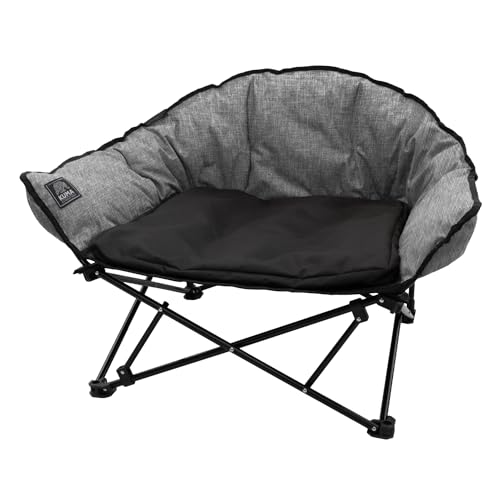
Kuma Lazy Bear Dog Bed For Camping Comfort
A long day around camp can leave a dog hunting for the softest patch of ground, and bare dirt rarely wins that contest. Pebbles press through thin mats, evening moisture creeps into blankets, and somebody's folding chair often becomes the next tempting spot. For anyone sorting through best dog camping chairs, the Kuma Lazy Bear takes a different route by giving a dog a spacious, padded place to stretch out instead of squeezing that comfort into a traditional chair shape. That distinction matters because soft cushioning and room to settle naturally can be more useful than height for dogs that simply want to curl up after a busy afternoon outdoors.
Kuma Lazy Bear Dog Bed
Kuma describes this model as an outdoor dog bed built around ultra-soft, luxurious padding, and that feature gets straight to the problem many basic camp mats miss. A thin pad may keep fur off the dirt, but it doesn't necessarily make rocky or uneven campsites much easier on elbows, hips, and paws. The Lazy Bear's emphasis on a plush sleeping surface gives it more of a cozy resting-zone feel than a stripped-down piece of camping equipment. For dogs that tend to circle, flop down, shift positions, and eventually sprawl, generous padded space makes more practical sense than a narrow perch.
The roomy format also changes how the bed fits into camp life. Rather than asking a dog to balance on a smaller elevated platform, the Lazy Bear provides enough surface area for relaxed lounging beside the tent, under an awning, or near the campsite seating area. That can reduce the familiar shuffle where a dog keeps moving between someone's blanket, a patch of grass, and the doorway of the tent. A dedicated resting place gives the camp setup a little more order without turning pet comfort into another complicated routine.
There's a tradeoff, naturally. Thick padding usually means more bulk than a bare fabric cot, so campers squeezing every inch out of a small trunk may notice the difference. The included carry bag helps manage that bulk by keeping the bed contained during transport, which matters once the vehicle is already loaded with sleeping bags, cooking gear, food bins, and folding furniture. It isn't trying to disappear into a tiny backpack pocket, and that's worth recognizing before treating portability and plush comfort as the same thing.
The styling also leans toward a modern camp setup rather than purely utilitarian gear. Heather grey is understated enough to sit beside neutral tents, rugs, and camp furniture without looking like a brightly colored pet accessory dropped into the middle of everything. That's cosmetic, sure, but glamping and organized car camping often involve equipment that stays visible for several days. Comfort-focused design paired with a subdued finish makes the Lazy Bear feel more at home in that kind of setup.
Comfort That Makes Sense After A Long Outdoor Day
A dog's definition of campsite luxury is pretty straightforward: somewhere soft, familiar, and free from sharp ground pressure. The plush padding is therefore the Lazy Bear's clearest strength because it addresses comfort directly instead of adding decorative features that don't change the resting experience. After trail walks, lake time, or hours spent following people around camp, a softer surface gives tired muscles somewhere forgiving to land. Dogs that refuse thin mats may also be more willing to stay put once the resting spot actually feels different from the ground beneath it.
That comfort can matter most during longer evenings. Campground soil cools after sunset, and even a dry-looking site can feel noticeably harder and less inviting once everybody settles in. The Lazy Bear doesn't promise insulation figures in the supplied details, so claiming a specific thermal benefit would be a stretch. Still, substantial padding physically creates more separation from hard terrain than lying directly on a blanket or bare ground, and that's a practical distinction you can understand without invented numbers.
Space is another quiet advantage. Some dogs sleep curled tightly, while others somehow double in length the moment they relax, legs heading in four directions like they own the campsite. A spacious dog bed accommodates that natural movement better than a restrictive seat that forces a particular posture. That's especially relevant under the broader best dog camping chairs search, where the most comfortable answer isn't always technically a chair at all.
The softer design may be less appealing for dogs that strongly prefer elevated cots with firmer fabric tension beneath them. A padded floor-level bed and a raised camping chair solve related problems in different ways, and pretending they're interchangeable would miss the point. The Kuma model favors cushioned lounging over elevation, so the better fit comes down to whether softness or ground clearance matters more in the camping routine. That honest distinction is one of the more useful ways to judge this bed.
Carry Bag And Camp Setup Practicality
Outdoor gear becomes annoying fast when packing it takes longer than using it. Kuma includes a carry bag with the Lazy Bear, which gives the bed a defined place to go between trips instead of leaving a loose padded piece sliding around the cargo area. That small organizational detail becomes more valuable on departure morning, when damp towels, tent stakes, bowls, leads, and half-packed food containers are already competing for attention. Keeping the dog bed contained also makes it easier to separate from cleaner equipment after a dusty weekend.
Car camping and glamping are the natural settings suggested by the product description, and the design fits that role better than minimalist hiking. The bed is described as portable, yet the focus on luxurious padding signals that comfort has priority over shaving every possible ounce or inch. That's a sensible compromise for drive-up campsites where gear only travels from the vehicle to the tent area. Carrying it deep into the backcountry, on the other hand, isn't the use case supported by the details provided.
Placement should be straightforward because a soft bed doesn't demand the same leveling attention as a folding chair with individual feet. A relatively flat patch under shelter should let the dog settle without a frame wobbling over small dips in the soil. Still, common sense matters around wet ground, mud, and campfire sparks, since the supplied information doesn't specify waterproof construction or fire-resistant materials. Protected campsite placement is the safer expectation rather than assuming capabilities that aren't stated.
Gear organization sometimes stretches beyond pet equipment into completely unrelated travel needs. As a separate reference, people carrying multiple computers may encounter a different packing problem discussed in backpacks for carrying two laptops, though that concern has no functional connection to the Kuma dog bed itself. Keeping those categories separate avoids forcing an artificial relationship where none exists. The Lazy Bear's own portability story stays centered on its included carry bag and campsite-friendly format.
Where The Lazy Bear Stands Out And Where It Doesn't
The strongest point is easy to spot: comfort comes first. Kuma isn't positioning this as a stripped-down platform with just enough fabric to keep a dog off the soil. The product description specifically emphasizes an ultra-soft, luxurious padded surface, so the design suits camping trips where a dog remains part of the lounging setup rather than merely needing a temporary place to sit. That makes the Lazy Bear especially appealing for slower weekends, campground stays, and glamping arrangements where bulky comfort gear isn't automatically a deal breaker.
The limitation sits on the opposite side of that same strength. Plush gear tends to demand more packing room than sparse gear, and nothing in the supplied description suggests an ultralight or tiny packed profile. Campers working with tight cargo space should therefore weigh padding versus packability rather than assuming both are maximized. The carry bag improves handling, but it doesn't magically erase the physical volume created by a generously padded bed.
Another distinction is the lack of an explicitly stated raised frame in the provided details. Anyone searching best dog camping chairs because they specifically want elevation above wet grass or hot ground should pay attention to that difference. The Lazy Bear is presented as an outdoor dog bed, not as a suspended cot or miniature folding chair. Its value comes from softness and spaciousness, so shoppers prioritizing ground clearance may prefer a different construction style.
Cleaning details also remain unspecified in the information provided. Outdoor dog gear eventually meets muddy paws, loose hair, grass, dust, and the occasional wet belly, so washability can matter almost as much as comfort over repeated trips. Without stated care instructions, there's no good reason to invent claims about removable covers, machine washing, waterproof liners, or stain resistance. Maintenance expectations should stay realistic until those specifications are confirmed from the manufacturer.
Best Fit For Real Campsite Routines
The Lazy Bear makes the most sense where campsite comfort outweighs ultralight efficiency. A drive-up campground, RV site, cabin porch, or glamping setup leaves enough room for a spacious padded dog bed without demanding that every item fold down to the size of a water bottle. That relaxed environment also gives the bed a stable role throughout the day, moving from tent shade to an evening lounging area as needed. Dogs get a recognizable spot, while people get a better chance of keeping their own chairs to themselves.
Longer stays highlight that benefit even more. A dog that has somewhere consistent to settle may spend less time investigating every blanket, sleeping bag, and camp seat that looks remotely soft. There's no guarantee of behavior change, of course, and training still matters, but a clearly defined comfort zone removes one common reason for wandering around in search of a better resting surface. Sometimes the practical win is simply giving the dog an option that's more appealing than the human gear nearby.
Hot-weather camping may require more thought because heavy padding can feel different from an open-mesh elevated cot. The supplied description doesn't mention breathable mesh, ventilation panels, cooling fabric, or other heat-management features, so those benefits shouldn't be assumed. In warm conditions, shade and airflow around the resting area remain important regardless of how comfortable the padding feels. Plushness can be a strength in cool or moderate conditions, yet it isn't automatically the answer for every climate.
Cooler evenings, relaxed campground mornings, and slow afternoons beside the tent play more naturally to the Lazy Bear's personality. The bed takes the basic camping problem of hard, messy ground and answers it with soft padding, generous space, and portable storage rather than an elaborate mechanical design. That approach won't satisfy every interpretation of best dog camping chairs, particularly where elevation or minimal packed size dominates the wish list. For comfort-oriented outdoor trips, though, the concept is refreshingly straightforward: give the dog a real place to lounge instead of making do with whatever patch of camp happens to be least uncomfortable.
CroBlissful Raised Dog Camping Chair
Uneven ground has a way of exposing weak pet gear fast. A thin mat can bunch up, damp soil creeps through fabric, and a sagging cot may leave a tired dog shifting around instead of settling down. The CroBlissful design takes a more structured approach within the best dog camping chairs category by combining a raised resting surface, soft cushioning, and a folding frame that doesn't need assembly. At 8.5 pounds with an included travel bag, it also tackles one of the biggest camping frustrations: bringing supportive pet furniture without turning the trunk into a storage headache.
CroBlissful Portable Dog Camping Chair
The biggest practical difference is the chair's raised construction. Rather than placing a dog directly on dirt, gravel, grass, or a hard patio, the frame holds the resting surface above the ground and gives the body a more defined place to settle. That setup can be especially handy around campsites where surfaces change from packed soil to tree roots and rough patches within a few feet. The supplied specifications describe a sturdy base designed to resist sagging, which matters because a drooping center can turn an otherwise roomy bed into an awkward hammock.
Size plays a major role here too. The chair measures about 28 inches long, 24 inches wide, and 22 inches high, giving it a fairly substantial footprint compared with smaller portable pet cots. That roomy surface can help dogs shift between curling up and stretching out without immediately running into the frame edges. The snug shape still provides a defined boundary, though, so the bed doesn't feel like a loose blanket thrown across the campsite.
Then there's the 200-pound stated support capacity, which gives the frame considerably more headroom than a lightweight pet bed designed only for smaller animals. That doesn't mean every large dog will automatically fit comfortably, because usable surface dimensions matter just as much as weight capacity. Still, the listed capacity makes the chair more flexible across different body sizes and also reduces the concern that ordinary shifting, stepping, or hopping onto the seat will push the frame close to its limit. Capacity and usable space work together here, and neither should be judged in isolation.
The cotton fabric adds another interesting layer to the design. CroBlissful describes the material as durable cotton construction intended to handle outdoor use while helping pets stay cool. Cotton tends to feel softer and less plasticky than some synthetic camp fabrics, which can make a resting surface more inviting after a long walk. The tradeoff is worth remembering, though: the supplied information doesn't claim waterproofing, rapid drying, or stain resistance, so wet-weather expectations should stay realistic.
Quick Folding Design Without Setup Fuss
Camp furniture earns its keep by being easy to live with, not by adding another mini-project at the end of a long drive. The CroBlissful chair uses a quick-fold mechanism and requires zero assembly according to the provided specifications. That means there are no loose poles to identify, no fabric sleeves to wrestle over a frame, and no tools to dig out after dark. Open it, place it where the ground is reasonably stable, and the resting area is ready without much ceremony.
That simplicity matters more than it sounds. Dogs rarely wait patiently while complicated gear gets assembled, especially after several hours in the car or an energetic arrival at camp. A chair that goes from packed to usable in seconds lets the resting routine start before water bowls, tent stakes, and cooking equipment have completely taken over the site. The fewer moving parts involved, the less chance there is of setup becoming the annoying part of bringing the bed along.
Folding also helps when the campsite layout changes during the day. Shade shifts, cooking areas get busy, and the comfortable spot beside the tent in the morning may be baking in direct sun by afternoon. The lightweight 8.5-pound frame makes relocating the chair less cumbersome than dragging a bulky piece of furniture around camp. That flexibility is useful for RV sites and patios too, where the chair may move between indoor storage, an awning, and open outdoor space.
The included travel bag gives the folded chair a cleaner storage routine. Loose folding gear can snag on other equipment or collect dirt throughout the cargo area, while a bag keeps the frame and fabric contained between uses. Portable storage also helps separate the chair from blankets, clothing, or sleeping gear after a dusty trip. It's a small detail, but anyone who has packed a campsite in a hurry knows how quickly small organizational wins start to matter.
Comfort On Rougher Campsite Surfaces
A camping bed doesn't need to feel like a living-room sofa, but it does need to stop the ground from becoming the main feature. CroBlissful pairs soft cushioning with a sturdy base designed to maintain support across uneven surfaces. That combination is useful on packed dirt, grassy sites, and patios where tiny changes in elevation can make a flat mat feel lumpy. The raised frame creates a more consistent sleeping platform instead of making the dog conform to every pebble and root underneath.
The anti-sag aspect deserves attention because support can disappear quickly on poorly tensioned cots. A deep center dip may force a dog into one position and make turning around more awkward, especially for larger bodies. CroBlissful specifically describes the base as sturdy enough to prevent sagging, so the intended benefit is a more stable resting surface rather than a loose hammock effect. That should help the chair feel predictable as a dog changes position during a nap.
Cushioning makes the design more comfort-oriented than bare mesh camping cots. After hiking, running around an RV site, or simply spending hours outdoors, a softer surface gives elbows and joints a gentler place to land. The product is described as suitable for dogs and cats of all ages, though individual mobility still matters because the raised format may be easier for some animals to access than others. Very small, stiff, or mobility-limited pets may prefer a lower entry point, even if the surface itself is comfortable.
Heat management is another area where the material choice becomes relevant. The supplied description says the cotton construction helps keep pets cool, which fits the more breathable feel associated with fabric that isn't heavily sealed. Still, there are no stated airflow measurements or cooling technology claims, so expectations should stay grounded. Shade, hydration, and airflow remain more important than relying on the chair alone during hot-weather camping.
Stability, Capacity, And Everyday Use
A portable chair can feel light without feeling flimsy, and that's the balance CroBlissful appears to be aiming for. The frame is described as lightweight yet stable, while the stated 200-pound support capacity suggests a design built with a useful safety margin for many pets. Stability matters because dogs don't always step carefully onto furniture. They may jump, turn in circles, lean against one side, or climb aboard with all the grace of a dropped backpack.
The 22-inch listed height deserves a closer look because that's a substantial overall dimension for a pet camping chair. Depending on how that measurement relates to the frame and resting surface, access could feel different from a low cot that sits just a few inches above the ground. The supplied information doesn't provide a separate seat-height figure, so it would be misleading to claim exactly how far a dog needs to step up. Overall dimensions and actual entry height aren't necessarily the same thing, and that distinction matters for short-legged or older pets.
Large support capacity doesn't automatically solve fit, either. A long-bodied dog may technically fall well under the weight limit yet still want more sleeping length than the 28-inch surface provides. By contrast, a compact dog may enjoy the enclosed feel created by the 28-by-24-inch resting area. Body proportions, preferred sleeping position, and how much a dog sprawls all influence comfort more than the weight number alone.
Outdoor surfaces create another practical test. Narrow chair feet can sink into very soft sand or muddy soil regardless of how strong the frame is, while firmer campsite pads provide a more predictable base. The product is described for all-terrain comfort, but sensible placement still matters because no folding chair can make unstable ground completely irrelevant. A quick glance at the surface before opening the frame can prevent wobbling and keep the resting area feeling secure.
Where Portability Helps And Where It Doesn't
At 8.5 pounds, the CroBlissful chair lands in a useful middle ground. It's light enough to move around a campground without feeling like permanent furniture, yet the specifications suggest enough structure to support a larger pet. Car camping, RV travel, patio use, and short carries from a parking area fit this design naturally. Long-distance backpacking is a different story because eight and a half pounds is significant once every ounce has to ride on someone's back.
The travel bag softens that limitation by making the chair easier to manage as a single packed item. A folded frame sliding loose in a trunk can catch on tent bags, folding tables, and cooler handles, while a contained package is easier to stack around. That doesn't make the chair tiny, and the supplied information doesn't list folded dimensions, so cargo-space planning still involves some uncertainty. Portable doesn't always mean compact, and those two ideas are worth separating.
Travel gear creates plenty of unrelated packing decisions too, especially on longer road trips where outdoor equipment shares trunk space with regular luggage. As a separate packing reference, rigid suitcase dimensions are discussed in 28-inch hard shell luggage, though that topic has no functional connection to the CroBlissful dog chair itself. Keeping that distinction clear prevents an unrelated internal reference from being dressed up as part of the chair's benefits. The actual portability story here rests on quick folding, an 8.5-pound listed weight, and the included carry bag.
Storage at home should be simpler than dealing with a permanently assembled pet cot. The folding mechanism allows the chair to collapse between trips, which can help in apartments, garages, RV compartments, or crowded closets where every awkward frame seems to steal twice the space it should. Still, exact folded measurements aren't included in the provided details. Foldability is confirmed, but claiming a specific storage footprint would go beyond the available information.
Material Tradeoffs Around Dirt And Weather
Cotton changes the feel of the CroBlissful chair in a way that campers may either appreciate or question. The fabric is described as durable and cooling, giving the resting surface a softer character than stiff synthetic material. That's appealing on dry trips where comfort matters and the chair spends most of its time under an awning or beside a tent. The missing piece is weather protection, because no waterproof or water-resistant rating is included in the supplied description.
Rain, muddy paws, wet grass, and damp fur are unavoidable parts of outdoor travel sooner or later. Without specific care instructions, it's safest not to assume the cotton surface can be machine washed, removed, or left exposed overnight. Cleaning requirements remain an unknown based on the information provided. That matters for frequent campers because easy maintenance can determine whether a comfortable chair stays convenient after several dirty weekends.
The brown finish may hide some everyday campsite dust better than pale fabrics, although color alone can't solve staining. A pet climbing onto the chair after running through damp soil can transfer more than a little dirt in seconds. Keeping a towel nearby or placing the chair under shelter can reduce some of that mess without requiring complicated maintenance habits. Simple campsite care often matters more than fancy materials once gear starts getting used regularly.
Durability should also be judged around the stated construction rather than imagined abuse resistance. CroBlissful says the cotton fabric is made to withstand rugged terrain, but there are no supplied abrasion scores, tear-strength measurements, or chew-resistant claims. Dogs that scratch aggressively before lying down may put different stress on fabric than a calm pet that simply steps aboard and sleeps. Rugged outdoor use and destructive behavior aren't the same test, so the product shouldn't be treated as chew-proof without evidence.
Who Gets The Most Practical Value From This Design
The CroBlissful chair makes the strongest case for trips where the dog needs a defined resting place but the gear still has to move easily. Its combination of raised support, cushioning, and quick folding fits campground routines where comfort matters but permanent furniture would be a nuisance. The chair can transition from campsite to RV area to patio without requiring reassembly each time. That versatility comes from straightforward mechanics rather than an overload of extra features.
Larger dogs benefit from the reassuring 200-pound capacity, but surface dimensions still need to match actual body length and sleeping habits. A medium dog that curls tightly may have plenty of room, while a broad or stretched-out dog could feel constrained despite sitting far below the weight limit. Fit is the real deciding factor, not the biggest number printed in the specifications. Measuring the space a dog naturally occupies while resting can tell more than weight alone.
Older pets introduce another tradeoff. The cushioning and anti-sag support sound appealing for tired joints, yet any raised chair asks the animal to step up and down rather than simply walk onto a floor-level mattress. Since the provided details don't state actual seat entry height, mobility needs deserve extra attention. A pet that hesitates around steps or elevated beds may not appreciate the same design that a younger dog hops onto without thinking twice.
For campers sorting through best dog camping chairs, the CroBlissful stands apart through a fairly specific combination: generous dimensions, cotton fabric, soft cushioning, a sturdy folding base, 200-pound stated capacity, zero-assembly setup, and an 8.5-pound listed weight. Its weaknesses are just as practical to understand, including uncertain folded dimensions, unspecified cleaning instructions, no stated waterproofing, and a raised format that may not suit every pet. Those aren't deal breakers by default. They simply frame the chair accurately as portable comfort-focused camping furniture rather than ultralight gear or an all-weather pet shelter.
AceOrbit Padded Dog Camping Chair
Cold ground, damp grass, and uneven campsite dirt can turn an otherwise relaxed evening into a constant shuffle for a dog that can't get comfortable. A folded blanket helps for a while, but it still sits directly on whatever the campsite throws underneath it. Within the best dog camping chairs category, the AceOrbit takes a more structured approach with a raised padded bed, a foldable frame, and enough room for a dog to stand, turn, and settle without feeling boxed in. Its 8.61-pound listed weight keeps the setup reasonably portable while the stated 200-pound capacity gives the frame substantial support headroom.
AceOrbit Padded Portable Dog Camping Chair
The first thing that separates this chair from a simple travel mat is the elevated resting surface. AceOrbit designed the bed to lift a pet away from direct contact with soil, grass, and other outdoor surfaces, creating a cleaner place to rest around camp or in the backyard. That elevation also means a dog isn't pressing its body directly against every pebble, twig, or chilly patch underneath. For outdoor trips where the ground changes from packed dirt to grass and gravel, consistent support can matter more than adding another layer of loose bedding.
Comfort gets more attention than it does on many bare cot-style designs. The chair combines Oxford cloth and cotton with thick padding, giving the resting area a softer character instead of relying only on stretched fabric. AceOrbit specifically describes the padded surface as warm and snug in chilly weather, which makes sense as a design goal for evenings around an RV site or campsite. The supplied information doesn't include insulation measurements, though, so the realistic benefit is added cushioning and separation from the ground rather than a guaranteed temperature rating.
The dimensions come in at about 28 by 24 by 22 inches, creating enough room for medium to large dogs according to the product description. That size gives a dog space to step onto the bed, turn around, and lie down rather than immediately meeting the edge of a narrow platform. Still, body shape matters as much as weight. A long dog that sleeps fully stretched may use space differently from a stockier dog that curls tightly, so the listed dimensions deserve as much attention as the capacity figure.
Then there's the stated 200-pound load-bearing capacity, which provides a generous limit for a portable pet chair. Capacity alone doesn't guarantee comfort, but it does speak to the type of structural duty the frame is intended to handle. Dogs rarely climb onto outdoor furniture delicately; they step, pivot, lean, and sometimes drop their full weight down at once. Having a sturdy base helps keep those ordinary movements from turning the seat into a sagging or unstable resting spot.
Padding Changes The Feel Of Outdoor Rest
Many elevated pet beds solve the ground-contact problem but stop there. AceOrbit adds thick padding, which changes the experience from simply being off the dirt to having a softer place to decompress after walking, playing, or hanging around outdoors for hours. That extra cushioning may be especially welcome on cooler evenings when a taut fabric cot can feel a little sparse. The result is more like portable pet furniture than a stripped-down camp platform.
The combination of Oxford cloth and cotton also creates an interesting balance. Oxford cloth is commonly associated with sturdy outdoor gear construction, while cotton contributes softness to the seating area described by AceOrbit. The supplied details don't provide abrasion scores, waterproof ratings, or a removable-cover claim, so those qualities shouldn't be assumed. What can be said safely is that the design aims to pair durability with a cushioned feel rather than choosing one and ignoring the other.
Padding has a downside too, and it's worth saying plainly. More cushioning usually means more material to pack than a minimal mesh cot, and soft layers can require extra care after muddy or wet outings. AceOrbit doesn't provide specific cleaning instructions in the supplied description, so claims about machine washing, waterproofing, or quick drying would be guesswork. For frequent outdoor use, maintenance remains a practical unknown that deserves consideration alongside comfort.
Warm-weather use introduces another tradeoff. The thick padded construction may feel cozy, but no cooling mesh, ventilation system, or measured airflow feature is listed in the information provided. Shade and access to water still matter on hot trips, regardless of how comfortable the bed feels under normal conditions. Cold-weather coziness and summer breathability aren't automatically the same strength, so climate should influence where this chair makes the most sense.
Foldable Design Keeps Camp Setup Simple
Complicated gear gets old fast once a campsite is already full of tent poles, cookware, chairs, leads, bowls, and sleeping bags. The AceOrbit uses a foldable design built around easy setup and transport, so the bed doesn't need to become another assembly job at the end of a drive. That simplicity fits car camping and RV travel particularly well. Open the chair, place it on reasonably stable ground, and the dog's resting area can be established without loose parts or separate tools.
The listed weight of 8.61 pounds keeps the chair portable enough to move between common outdoor settings without feeling like permanent patio furniture. It can shift from beside an RV to a shaded campsite corner, then back toward the vehicle when packing starts. That kind of mobility matters because outdoor comfort isn't static. Sun moves, wind changes, and the nicest resting spot at breakfast may be the worst one by midafternoon.
Eight and a half pounds isn't ultralight, though. A short carry from the parking area is one thing; hauling it for miles alongside a tent, food, water, and personal gear is another. The portable frame suits vehicle-supported adventures far more naturally than weight-sensitive backpacking. That's not a flaw so much as a useful boundary around what this product is built to do.
The folding format can also make storage easier between trips. A collapsible dog bed doesn't occupy the same awkward permanent footprint as rigid furniture, which helps in garages, RV compartments, closets, or crowded cargo areas. AceOrbit doesn't provide exact folded dimensions in the supplied information, so there's no basis for claiming it packs especially flat or fits a particular compartment. Foldability is confirmed, while the precise packed footprint remains unspecified.
Raised Support Helps On Messy Outdoor Ground
A clean resting area becomes surprisingly valuable after the campsite turns dusty or damp. The elevated dog chair keeps a pet's body away from direct ground contact, which can reduce exposure to dirt and some of the small nuisances found around outdoor surfaces. AceOrbit also frames elevation as protection from pests and other ground-level hazards. That benefit is sensible as a physical separation feature, though the chair shouldn't be treated as a substitute for normal outdoor pest precautions.
Uneven ground is another place where a frame can earn its keep. A soft blanket simply follows every contour underneath it, while a sturdy raised base creates a more defined resting platform. Small dips, scattered gravel, or patches of rough soil become less relevant to the dog's immediate sleeping surface. The frame still needs sensible placement, of course, because no portable chair can make unstable or sharply sloped terrain behave like a level patio.
The elevated design also helps create a recognizable place to settle. Around a busy campsite, dogs often bounce between the tent entrance, somebody's chair, the picnic blanket, and any patch of shade that looks promising. A dedicated resting zone gives the setup some consistency, especially once the chair becomes familiar over repeated outings. It won't replace training, but it can give that training a more obvious physical destination.
Access deserves a little thought too. The listed overall height is about 22 inches, but AceOrbit doesn't provide a separate seat-height measurement in the supplied information. Those numbers aren't necessarily identical, so claiming the dog must step a full 22 inches upward would be inaccurate. Still, mobility and entry height matter for senior, short-legged, injured, or hesitant pets, and a raised design may not feel as effortless for them as it does for an active adult dog.
Room For Medium To Large Dogs
The 28-by-24-inch footprint gives the AceOrbit a more substantial resting area than a tiny travel perch. According to the product details, the space is intended to let a pet stand, turn around, and lie down comfortably, which addresses a real weakness of undersized camping furniture. Dogs don't stay frozen in one sleeping position. They circle, reposition, stretch, curl up again, and somehow manage to occupy more space as soon as everyone else wants room.
Weight capacity can be reassuring, but size remains the sharper question. A 200-pound limit doesn't automatically mean a very long or broad dog will fit neatly onto a 28-inch surface. Body proportions and sleeping style can matter more than scale weight once the dog is actually stretched out. Measuring the space a dog normally uses while resting gives a more realistic picture than focusing only on the maximum load figure.
Medium and larger dogs that curl or rest compactly may get more use out of the available footprint. Smaller pets can also use the chair, though the roomy platform may feel less enclosed than a tight bolster-style bed. The product description presents the design primarily around medium to large dogs, so that's the size range that best matches the stated purpose. Cats are not highlighted in the supplied description, so extending the product's intended fit beyond the information given wouldn't add much useful certainty.
The 200-pound stated capacity still matters from a structural standpoint. It gives the bed breathing room for ordinary movement and means the frame isn't marketed right at the edge of common medium-dog body weights. Structural capacity and physical fit should simply be treated as two separate checks. A dog can be well within the weight limit and still prefer more length, just as a lighter dog can dislike a seat that's too broad or too high.
Outdoor Style Without Looking Like Utility Gear
Camping equipment often leans heavily toward function, but the AceOrbit uses a sleek gray finish that fits easily into a backyard, patio, RV setup, or campsite without screaming pet gear. Style doesn't change support or comfort, yet it can matter when the chair spends as much time around the house as it does outdoors. A neutral color also blends more easily with common folding furniture and campsite fabrics. For a product designed to cross between indoor and outdoor spaces, that restrained appearance makes practical sense.
The padding reinforces that furniture-like look. Rather than appearing like a bare utility cot, the chair has a fuller, softer profile that feels more at home beside a patio set or under an RV awning. Function and appearance meet in a way that suits slower camping trips where equipment stays set up for several days. Minimalist backpackers probably won't care, but car campers who keep a tidy site may appreciate the less industrial feel.
Gray can also be forgiving around ordinary dust compared with very light fabrics, although no color can hide every muddy paw print. The supplied description doesn't mention stain resistance, removable upholstery, or a specific cleaning method. That leaves fabric care as an area where expectations should stay conservative. Outdoor furniture earns marks for looking good on day one, but easy cleanup matters much more after repeated use.
Travel planning often mixes unrelated gear categories into the same packing problem, particularly when weather protection matters. As a separate luggage reference, water-resistant travel considerations are discussed in waterproof suitcase options, although that topic has no functional relationship to the AceOrbit dog chair. Keeping that reference separate avoids pretending one product category solves another. The AceOrbit's own outdoor practicality rests on its folding frame, padded surface, and elevated construction.
Strengths And Tradeoffs Worth Knowing
The clearest strength is the combination of comfort and elevation. A lot of pet camping gear makes you choose between a soft bed sitting directly on the ground or an elevated cot with little cushioning. AceOrbit tries to bridge that gap with thick padding on a raised frame. That makes it particularly suited to campground evenings, backyard lounging, RV trips, and other situations where both support and coziness matter.
Portability comes next, though with realistic limits. At 8.61 pounds, the chair is manageable for ordinary transport yet heavier than gear designed for long-distance hiking. The foldable design removes much of the setup hassle, but exact folded dimensions aren't supplied. So this is better viewed as convenient vehicle-friendly pet furniture than an ultracompact backpacking accessory.
The material mix offers another balance. Oxford cloth and cotton are used to create a chair that's described as sturdy and cozy, but the product information doesn't specify waterproofing, tear ratings, chew resistance, or washing instructions. Weather resistance and maintenance therefore remain less certain than the listed dimensions and capacity. Campers dealing with frequent rain or muddy conditions may care about that unknown more than someone using the chair mainly under an awning or on a dry patio.
Fit is the last major consideration. The generous 200-pound rating sounds reassuring, yet the actual 28-by-24-inch resting area determines how comfortably a particular dog can stretch or curl. The raised format may also be less convenient for pets with limited mobility. Among best dog camping chairs, the AceOrbit stands out most for buyers who value thick padding, strong listed capacity, foldable transport, and ground separation while accepting the extra bulk and unanswered care details that come with a more substantial outdoor bed.
Kuma Lazy Bear Dog Bed Red And Black
A campsite can look perfectly comfortable until a dog tries to settle on hard soil, scattered gravel, or a blanket that keeps sliding out of place. That small annoyance becomes more noticeable after sunset, when the ground cools and everyone wants a predictable spot to unwind. Among best dog camping chairs, the Kuma Lazy Bear approaches outdoor rest from the bed side rather than relying on a narrow folding seat, using durable 600D polyester as the defining material in the information provided. The result is a simple proposition: give a dog a dedicated outdoor resting surface that can travel with the rest of the camp setup.
Kuma Lazy Bear Dog Bed
The strongest fact available about this version is its 600D polyester construction, and that material choice fits the rough-and-tumble nature of camping gear. Outdoor pet furniture gets dragged across campsites, packed beside tents, brushed by paws, and exposed to the general mess that follows a dog outdoors. A tougher fabric makes more sense here than something delicate that belongs strictly in a living room. Still, durability shouldn't be stretched into claims about waterproofing, tear-proof performance, or chew resistance because none of those specifications were supplied.
The red-and-black color scheme also gives this Lazy Bear version a more outdoorsy, gear-like appearance than muted household bedding. Color won't change how a dog rests, of course, but visible campsite gear often benefits from being easy to spot around tents, coolers, and folding furniture. A bolder finish can also make it less likely that the bed visually disappears into dark ground or wooded surroundings. That's a small usability detail rather than a performance feature, yet little things have a habit of mattering once camp gets cluttered.
Kuma positions the Lazy Bear as a portable outdoor dog bed for camping, glamping, and other adventures, so its role is broader than just backyard lounging. The included carry bag supports that purpose by giving the bed a defined storage format between uses. Portable storage matters because loose pet bedding can become awkward once it shares cargo space with tent poles, chairs, cooking equipment, and sleeping bags. A carry bag doesn't make bulky gear vanish, but it does keep the package more organized.
The supplied details are intentionally limited, and that deserves a straight answer rather than guesswork. No exact dimensions, product weight, load capacity, cushion thickness, or washing instructions are provided in the information here. That means the fairest review has to stay centered on the confirmed 600D polyester fabric, the portable dog-bed format, and the carry bag. Filling in missing numbers would make the review sound more complete, but it would also make it less trustworthy.
Why 600D Polyester Matters Outdoors
Camping fabrics live a harder life than indoor upholstery. They rub against trunks, tent floors, dirt, and other gear, so material toughness has practical value even before comfort enters the conversation. The 600D polyester specification gives the Kuma Lazy Bear a clear outdoor-oriented foundation rather than making the product sound like an ordinary household cushion taken outside for the weekend. That's the kind of detail that matters when a bed is expected to travel repeatedly instead of staying in one corner of the house.
Polyester also tends to make sense for gear that needs to maintain its shape through regular handling. The supplied description doesn't say the fabric is waterproof or quick-drying, so those benefits shouldn't be assumed, but 600D construction still signals an emphasis on resistance to everyday wear. Dog claws, rough ground, and repeated packing can all put stress on a surface. A camping bed needs to tolerate that routine without feeling overly precious.
There's a tradeoff, though. A rugged fabric can feel different from the plush textiles used on indoor beds, and the exact softness or cushioning level isn't stated in the information provided for this version. Comfort therefore can't be judged purely from the 600D number. Fabric durability and sleeping comfort solve different problems, and a strong shell doesn't automatically tell us how soft the resting surface feels.
Cleaning is another area where restraint matters. Camp gear eventually meets dust, fur, wet paws, food crumbs, and whatever else a dog manages to collect during a day outside. The supplied description doesn't specify whether the cover is removable, machine washable, stain resistant, or safe for particular cleaning methods. Maintenance details remain unknown, so any owner planning frequent muddy trips would be wise to treat fabric care as a separate consideration rather than assuming easy washability.
A Dedicated Resting Spot Can Simplify Camp Life
Dogs tend to claim whatever looks softest, and that may be a sleeping bag, camp chair, picnic blanket, or somebody's jacket. Giving them a dedicated resting space can make the site feel less chaotic because there's a clear place intended for paws, fur, and post-hike lounging. That doesn't guarantee a dog will immediately ignore every human seat nearby. Still, consistency can help turn one specific spot into part of the camping routine.
The Lazy Bear format also avoids the narrow geometry of some chair-style pet seats. A bed gives a dog room to settle in whatever posture feels natural instead of forcing the body into a human-style sitting shape. That distinction can be especially relevant under the broader best dog camping chairs search because comfort doesn't always require an actual chair frame. Sometimes a portable bed is the more sensible answer to the same problem.
Ground conditions remain a factor because the supplied details don't confirm that this version is elevated. Without a stated raised frame, it shouldn't be described as lifting a dog above mud, insects, or cold soil. Surface placement therefore matters, particularly on damp grass or rough campsites. A sheltered, relatively flat spot would make more sense than assuming the bed itself solves every terrain problem.
The carry bag becomes useful again here because a dedicated bed is only convenient if it isn't a nuisance to transport. Camping mornings are messy enough without wrestling loose pet gear back into the vehicle. Keeping the bed contained helps preserve some order while packing, especially after a dusty weekend. Simple portability can matter more than fancy extras once gear is used trip after trip.
Where The Lazy Bear Fits Best
Car camping feels like a natural match for this style of pet gear. A portable dog bed can move from the trunk to a tent area without forcing every ounce to earn its place the way backpacking equipment does. The supplied information doesn't include the packed size or total weight, so calling it ultralight would be unsupported. Vehicle-supported travel is simply the safest practical fit based on what is actually known.
Glamping also suits the product's personality because the Lazy Bear is designed around bringing familiar pet comfort into an outdoor setting. A dog that spends several hours around camp may appreciate having a consistent place to nap while everything else changes around it. Routine and familiarity can matter during travel, especially in busy campgrounds where new smells and sounds keep pulling attention in different directions. The bed gives that routine a physical anchor.
Backyard use is another easy fit even though the product is framed around outdoor adventures. A durable portable bed can move between a patio, porch, garage, and lawn without being treated like delicate indoor furniture. That flexibility can help justify storage space between camping trips. Multi-setting usefulness is practical, even though no extra features should be invented beyond the confirmed construction.
Long-distance hiking is harder to judge. Without a listed weight or packed dimensions, there isn't enough information to say whether the bed belongs in a backpacking loadout. Campers who count ounces would need more specific portability data before making that call. Unknown packed size and weight are real limitations in the available description, not details that should be brushed aside.
Strengths That Stand Out Without Overselling
The biggest strength is straightforward: 600D polyester gives the Lazy Bear an outdoor-ready material specification that suits repeated packing and campsite use. That kind of fabric choice is more relevant than decorative extras because it addresses one of the basic demands placed on pet camping gear. Dogs aren't gentle with outdoor beds, and campgrounds aren't gentle either. A tougher exterior is therefore a sensible foundation.
The carry bag is another useful feature because it turns the bed into a more manageable travel item. Loose cushions and soft gear tend to spread out in cargo space, while a contained package is easier to stack or move. Transport organization may sound boring on paper, but it pays off every time the vehicle gets loaded. Simple convenience often ages better than complicated features.
The bed-style format can also be a strength for dogs that prefer stretching out rather than sitting upright. Traditional pet camping chairs can restrict posture, while a broader sleeping surface may feel more natural during long periods of rest. The exact dimensions aren't supplied, so size suitability can't be stated with confidence. Still, a true resting-bed concept clearly aims at relaxation rather than novelty.
The weaknesses mostly come from missing specifications rather than a confirmed design flaw. There is no provided information about capacity, dimensions, frame height, waterproofing, care instructions, or insulation. Those omissions make it harder to judge fit for very large dogs, wet climates, or space-sensitive packing. Specification gaps are worth acknowledging because they affect buying decisions just as much as the material that is listed.
Travel Practicality Beyond The Campsite
Outdoor trips often mix pet gear with completely unrelated personal luggage, and that can turn cargo organization into a bit of a juggling act. The Lazy Bear's carry bag at least gives the dog bed its own contained place in that pile. For travelers thinking about smaller personal bags in a separate category, a neutral reference appears in small travel backpacks for men, though that subject has no functional relationship to the dog bed itself. The Kuma product's own travel appeal stays rooted in its portable format and included carry bag.
Storage between trips deserves similar attention. A camping bed that spends most weekdays in a closet, garage, or RV compartment needs to be easy enough to put away that it doesn't become permanent clutter. The carry bag helps with containment, but the supplied description doesn't give folded measurements. Storage convenience is partly confirmed, while exact space requirements remain unknown.
Frequent travel can also expose the value of keeping pet gear separate from human bedding. A dog bed may pick up dirt, loose hair, pine needles, and campsite dust that nobody wants mixed into sleeping bags or clothing. A dedicated bag creates a simple boundary between those categories. Cleaner packing organization is a modest benefit, but it's the kind that becomes more appreciated after several outdoor weekends.
The red-and-black Kuma Lazy Bear ultimately makes its clearest case through simplicity rather than a long feature list. It offers an outdoor-focused pet bed, durable 600D polyester, and a carry bag for travel, without enough supplied detail to justify claims about weight limits, weatherproofing, or specialized support. Within best dog camping chairs, that makes it more appealing to campers who value a dedicated portable resting spot over complex chair mechanics. The realistic expectation is durable, travel-oriented pet bedding, not a product that should be credited with capabilities the available specifications never mention.
FAIR WIND Oversized Padded Camping Loveseat
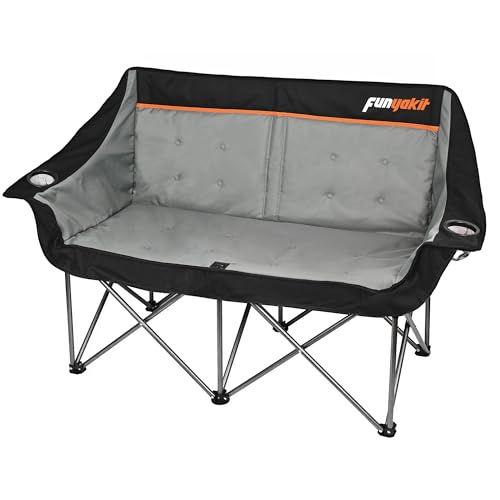
Sharing camp furniture with a large dog sounds easy until the seat starts feeling cramped, unstable, or too lightly built for two bodies shifting at once. That practical problem makes this FAIR WIND loveseat interesting within the best dog camping chairs discussion, even though it isn't a dedicated pet chair. Its 57.5-inch-wide oversized seat, reinforced steel frame, and stated 650-pound support capacity create enough structural breathing room for a person and a dog to settle side by side instead of competing for a narrow single chair. The design is unapologetically substantial, though, so its comfort comes with more packed bulk than compact campsite seating.
FAIR WIND Oversized Fully Padded Camping Chair
The basic architecture tells you what FAIR WIND prioritized: space and structural support. The open dimensions measure 57.5 inches wide, 23 inches deep, and 38 inches high, which puts this firmly in loveseat territory rather than oversized-single-chair territory. That extra width can be useful when a dog naturally wants to lean against a person, curl beside a hip, or claim half the campsite seat before anyone has even opened a drink. Instead of constantly nudging paws and elbows back into place, the widened seating area leaves more room for everybody to settle.
The frame uses 22mm high-tensile steel tubing, and FAIR WIND reinforces it with six cross-bracing hubs positioned across the front, sides, and back. Those details matter because a wide double chair faces different stresses than a narrow seat, especially when weight isn't distributed perfectly evenly. A dog hopping onto one side, turning around twice, then leaning against the edge can create shifting loads that a flimsy frame may not handle gracefully. The reinforced layout is meant to keep the structure steadier instead of relying on a few long unsupported frame sections.
Front vertical stabilizing legs add another structural layer. FAIR WIND ties those legs directly to the chair's enhanced 650-pound weight rating, which gives this loveseat considerably more listed capacity than ordinary lightweight folding chairs. That number shouldn't be confused with a recommendation to load the chair to its absolute limit every trip, but it does indicate the kind of heavy-duty role the frame is designed to fill. For mixed human-and-dog use, extra capacity headroom is more reassuring than a seat whose rating sits uncomfortably close to the combined load.
There's also a clear distinction between this product and a raised pet cot. The FAIR WIND is fundamentally a double camping chair for people, not a dog-specific bed with low entry, pet-oriented fabric geometry, or a dedicated sleeping platform. That difference can be a strength if the goal is shared seating beside the fire, but it can be a weakness for a dog that prefers sprawling flat or has trouble climbing onto standard-height camp furniture. Calling it a specialized dog chair would oversell what the provided specifications actually describe.
Four-Layer Padding Changes The Sitting Experience
A wide frame isn't much help if the fabric feels like a stretched tarp after twenty minutes. FAIR WIND addresses that with four-layer 600D ripstop polyester combined with sponge cushioning, creating a fully padded seat rather than a bare sling. That construction is particularly relevant during long campsite evenings, tailgate-style gatherings, or backyard lounging where the chair stays occupied for hours at a time. The padding gives both the seat and back a softer feel while the ripstop polyester supplies the rugged outer structure expected from outdoor furniture.
The material choice makes sense around dogs for another reason: claws and constant repositioning put more stress on a chair than quiet, motionless sitting. The specification confirms 600D ripstop polyester, which is a sturdier fabric concept than delicate household upholstery. Still, no claim about chew resistance, scratch-proof performance, waterproofing, or puncture resistance is supplied, so those abilities shouldn't be invented. A strong outdoor fabric and an indestructible pet surface are two very different things.
Sponge cushioning also introduces a realistic tradeoff. More padding means more comfort, but it generally creates more volume than a thin fabric seat and can make outdoor furniture less minimal to pack. The supplied description doesn't specify whether the cushioning can be removed or whether the fabric is machine washable. Muddy paws, wet fur, and campsite dust therefore deserve some thought because cleaning details are not provided.
The chair's padded format may be particularly appealing on cooler evenings, but there are no insulation or temperature-management specifications in the supplied information. Likewise, nothing states that the chair uses breathable mesh or dedicated ventilation panels for hot weather. That means the safe takeaway is simple: the cushioning is designed for supportive comfort, not specialized heating or cooling. Shade, airflow, and normal heat precautions still matter on warm camping days.
Why The 57.5-Inch Width Matters With A Dog
Width is probably the most relevant feature for shared seating. A 57.5-inch-wide chair gives far more lateral room than a typical single folding chair, which can make it easier for a dog to occupy part of the seat without leaving a person perched awkwardly on the edge. That extra space fits the practical appeal behind best dog camping chairs: nobody wants to pack separate furniture only to have the dog steal the human chair anyway. With a loveseat, shared lounging becomes part of the design rather than an accident.
The 23-inch depth matters too because seating depth influences how much usable room exists once a dog curls or lies sideways. FAIR WIND doesn't supply a pet-specific usable sleeping dimension, so it would be inaccurate to claim that a certain breed or body length will fit comfortably. A compact dog that curls tightly may occupy a modest section, while a long-bodied dog may spread across much more of the loveseat. Actual fit depends on posture, not merely on the overall width printed in the specifications.
Dogs that insist on leaning into people may benefit most from this format. Instead of fighting a narrow armrest or sliding off the edge of a one-person chair, they have a broader surface where body weight can be distributed more naturally. The frame's reinforcement also becomes relevant here because off-center movement is normal with animals. Camp seating doesn't stay perfectly balanced once a dog decides the left side suddenly looks better than the right.
Very large dogs still require some realism. A 650-pound support rating tells you what the chair is designed to carry structurally, but it doesn't tell you whether a particular dog's body can lie comfortably within the seat dimensions. Capacity and usable space are separate questions. A dog can weigh far less than the chair's limit and still be too long to stretch out without taking nearly the whole loveseat.
Six Cross Braces Add Welcome Reinforcement
Wide folding chairs need more than thick tubing because long spans can flex if the frame lacks reinforcement. FAIR WIND uses six cross-bracing hubs across the front, sides, and back to support the structure from multiple directions. That layout is one of the more meaningful engineering details in the supplied description because it addresses twisting and shifting forces rather than relying solely on material thickness. For a chair that may hold two people, or a person beside a restless dog, extra bracing is a sensible feature.
The front vertical stabilizing legs reinforce the same idea. A wide seat can concentrate pressure toward the front as occupants sit down, stand up, or lean forward, and those added supports are designed to strengthen that section. FAIR WIND directly associates this construction with the enhanced weight capability. The resulting frame isn't presented as delicate recreational seating; it's clearly built around a heavier-duty philosophy.
Uneven campsites can still challenge any folding chair, though. Tree roots, loose gravel, soft soil, and sloped ground affect how individual feet contact the surface, regardless of how strong the steel frame may be. The specifications don't mention adjustable feet or terrain-leveling mechanisms. Stable placement still matters, especially if a dog jumps onto the chair with considerably more enthusiasm than precision.
The steel framework also contributes to the chair's unavoidable bulk. Strength rarely comes free, and a reinforced double seat is going to occupy more room than a compact solo chair once packed. FAIR WIND provides a folded package measuring about 40 by 8.3 by 8.3 inches, which makes the storage requirement much easier to judge before a trip. That's a useful bit of honesty in the specifications because it lets campers decide whether their vehicle has room for comfort on this scale.
Portable, But Definitely Not Minimalist
The term portable can mean wildly different things in camping gear. Here it means the chair folds into a long, narrow package and comes with an easy-storage tote bag with a shoulder sling. The packed size of 40 by 8.3 by 8.3 inches is manageable for a vehicle, garage shelf, RV storage bay, or short carry from a parking area. It doesn't sound like something designed to disappear inside a hiking pack, and pretending otherwise would miss the nature of the product.
The quad-fold design is useful because a loveseat this wide would be awkward to move if it remained rigid. Folding compresses the frame into a shape that can be carried and stacked with other campsite equipment. The shoulder sling also frees a hand during short walks, which is handy when the other hand already has a leash, cooler, or bag. Still, the supplied details don't provide the chair's total weight, so there's no basis for calling it lightweight.
Vehicle space becomes the bigger consideration. A 40-inch packed length isn't trivial if the trunk is already crowded with a tent, sleeping gear, dog supplies, food bins, and a cooler. The tradeoff is straightforward: oversized comfort needs oversized storage room. Campers who prize compactness above everything else may consider that a weakness, while people driving directly to the campsite may barely care.
Travel packing can bring unrelated security concerns into the same planning process, especially when outdoor gear and regular luggage share a vehicle or hotel stop. In that separate travel category, luggage protection is discussed in suitcases designed with security in mind, though that subject has no functional relationship to this camping loveseat. The FAIR WIND chair's own portability story stays centered on its quad-fold frame, 40-inch packed length, and shoulder-sling tote.
Shared Camping Comfort Comes With Tradeoffs
The biggest strength is easy to identify: this is genuinely spacious seating. A 57.5-inch width changes the experience for anyone tired of balancing a dog on one thigh while trying to keep a drink upright with the other hand. The loveseat format also encourages relaxed side-by-side sitting rather than treating the dog as an afterthought. For campsite companionship, that layout is arguably more useful than several decorative pet-specific features.
Heavy-duty construction is the second major strength. The 22mm high-tensile steel tubing, six cross-bracing hubs, front vertical stabilizing legs, and stated 650-pound support capacity all point toward structural reinforcement as a core design priority. None of those features guarantees comfort on badly uneven ground, but together they give the chair a stronger framework than a lightly built folding seat. That matters once occupants start moving instead of sitting perfectly still.
Bulk is the obvious weakness. The 40-by-8.3-by-8.3-inch packed size requires real cargo space, and the fully padded construction isn't aimed at stripped-down minimalist travel. This is a chair you bring because you want room and cushioning, not because you're shaving ounces from a backpack. The distinction is important because portability here means foldable and transportable, not tiny.
The lack of pet-specific design is another tradeoff. There are no supplied details about a low-entry platform, leash attachment, removable pet cover, claw-resistant coating, or dedicated dog bolster. A dog also needs to get onto a standard camping loveseat rather than a low cot designed specifically around animal mobility. Shared furniture and dedicated pet furniture serve different needs, so older or mobility-limited dogs may be better served by something closer to ground level.
Where This Loveseat Makes The Most Sense
Car camping is where this chair's strengths line up most naturally. Transport distance is usually short, cargo capacity is greater than on backpacking trips, and the oversized padded seat can stay set up for hours or days without needing to justify every inch of space. A dog that likes sticking close can curl beside a person instead of occupying a separate bed several feet away. That shared arrangement feels especially appropriate around campfires, RV awnings, festivals, and relaxed campground afternoons.
Backyard use also fits the design well. The heavy-duty frame and double-seat width can function as casual outdoor furniture between camping trips instead of spending most of the year buried in a closet. Multi-person seating gives it usefulness even when the dog isn't involved. That broader purpose may make the packed bulk easier to accept because the chair isn't limited to one narrow camping scenario.
Beach use would require more caution because the supplied description doesn't mention specialized wide feet for sand or corrosion-resistant coatings. Soft surfaces can affect stability differently than firm campsite pads, and salt exposure creates its own maintenance questions. Likewise, there is no stated waterproof rating for the padded 600D polyester construction. Dry, reasonably stable ground is the safest expectation based on the information provided.
Backpacking sits at the other end of the spectrum. A 40-inch packed chair with a reinforced steel loveseat frame doesn't align naturally with gear carried for miles on foot. The specifications are built around comfort, capacity, and shared space rather than minimum packed volume. That isn't a design failure; it's simply the reason this FAIR WIND model belongs closer to car-camping furniture than trail furniture.
How It Fits Among Dog Camping Chair Options
The FAIR WIND loveseat takes an unusual route in the best dog camping chairs category because it solves the problem through shared human seating rather than dedicated pet furniture. That can be exactly right for a dog that already insists on climbing into the camp chair beside someone. Instead of buying a separate small cot and hoping it gets used, the loveseat creates one broad padded space where companionship is built into the seating arrangement. For clingy loungers, that difference could matter more than having a product labeled specifically for pets.
A dedicated raised dog bed still wins in certain situations. It can provide a separate sleeping zone, may offer easier access depending on its height, and keeps pet fur or dirt away from the human seat. The FAIR WIND takes the opposite approach by deliberately sharing the surface. That difference is fundamental, so the right design depends on whether separation or togetherness better matches the camping routine.
Durability features make the FAIR WIND particularly compelling where combined weight and repeated movement are concerns. The 650-pound stated capacity, reinforced steel construction, six bracing hubs, and stabilizing legs give the chair a specification set built around substantial loads. At the same time, no pet-specific durability claims are provided for claws, chewing, or scratching. The 600D ripstop polyester sounds suitably rugged for outdoor seating, but responsible expectations stop short of calling it animal-proof.
The final trade is comfort versus space efficiency. Fully padded four-layer fabric, sponge cushioning, an oversized 57.5-inch width, and reinforced support create a chair designed for lingering rather than merely sitting for a few minutes. That same construction leads to a 40-inch packed package and makes the FAIR WIND far less compact than leaner options. For shared dog-and-human campsite lounging, its strengths are unusually clear: generous room, serious listed capacity, reinforced framing, substantial padding, cup holders, and a foldable carry format, with bulk and the absence of specialized pet features remaining the practical compromises.


9 Best Travel Camping Table of 2026 For Uneven Ground
12 Best Heavy Duty Camping Table of 2026 That Will Not Wobble or Sag
8 Best Camping Table Adjustable Legs of 2026 for Uneven Ground

9 Best Adjustable Height Camping Table of 2026 For Uneven Ground

10 Best Adjustable Camping Table of 2026 For Uneven Ground
10 Best Waterproof Camping Table of 2026 For Rain-Ready Campsites

11 Best Folding Bamboo Camping Table of 2026 For Uneven Ground

7 Best Folding Car Camping Table of 2026 For Uneven Ground