Best Duffle Bags for Safari 2026: Tough, Smart Picks

Best duffle bags for safari need to solve a problem that ordinary vacation luggage rarely faces. The bag may move from an international airport to a small aircraft, then into the back of a dusty transfer vehicle before reaching camp. A rigid suitcase can become an awkward brick in that chain, while a soft duffle can squeeze into tight luggage compartments and settle around other bags. Safari operators commonly require soft-sided luggage because light-aircraft storage spaces are compact and oddly shaped, though the exact size and weight rules depend on the itinerary. :contentReference[oaicite:0]{index=0}
Low empty weight matters more than flashy extras. Thick frames, oversized wheels, telescoping handles, and layers of molded plastic can swallow part of a strict baggage allowance before a single shirt goes inside. A lighter duffle leaves more room for practical essentials such as layered clothing, walking shoes, camera equipment, chargers, and toiletries. Still, paper-thin fabric isn’t the answer because repeated loading, rough floors, and hurried transfers can expose weak seams quickly.
Durable fabric and reinforced stress points offer a better balance. Look closely at the zipper track, grab handles, shoulder-strap anchors, and lower corners because those areas take the hardest knocks. Water-resistant fabric helps with brief rain, wet loading areas, and accidental splashes, but it shouldn’t be confused with a fully waterproof construction. Dust protection counts too, since fine grit has a stubborn habit of working into exposed zipper teeth and loosely closed pockets.
Organization should stay simple rather than turning the bag into a maze. A wide main opening makes folded clothing easier to reach without digging to the bottom, while one or two exterior pockets can hold documents, a lightweight jacket, or items needed during transfers. Too many fixed dividers add weight and limit flexibility, so packing cubes often handle separation more efficiently. They also keep clean clothing away from dusty layers without forcing the duffle into one rigid layout.
Carrying comfort becomes noticeable during long airport walks and camp arrivals. Padded backpack straps spread the load better than a narrow shoulder strap, especially when wheels aren’t permitted or won’t roll well over gravel. Removable straps are useful because loose webbing can catch during baggage handling, but attachment hardware should feel solid rather than decorative. Side and end handles also help staff lift the bag without pulling on the main zipper.
Size deserves a reality check before checkout. A huge expedition duffle may sound convenient, yet extra capacity encourages overpacking and can create trouble on regional flights. A compact or medium bag is usually easier to manage, provided it matches the written limits supplied by the airline, tour company, or camp. IATA also advises travelers to confirm baggage requirements directly with the operating airline because acceptance rules can vary. :contentReference[oaicite:1]{index=1}
The smartest pick won’t always be the toughest-looking model on the shelf. A heavily structured adventure bag may be harder to compress, while a sleek weekender may lack the abrasion resistance needed for repeated transfers. Aim for a soft-sided safari duffle with a sensible capacity, sturdy stitching, lockable zipper pulls, several reliable grab points, and just enough organization. That combination keeps packing under control without hauling a bulky suitcase through a trip built around moving light.
- TLR Rank9.2
TLR Rank is a ranking system developed by TravelLuggageReviews.com. TLR Rank has no relationship or impact from any manufacturers or sales agent websites. Learn more
- BrandCONTAIL

- TLR Rank9.0
TLR Rank is a ranking system developed by TravelLuggageReviews.com. TLR Rank has no relationship or impact from any manufacturers or sales agent websites. Learn more
- BrandFmeida

- TLR Rank9.0
TLR Rank is a ranking system developed by TravelLuggageReviews.com. TLR Rank has no relationship or impact from any manufacturers or sales agent websites. Learn more
- BrandWEREWOLVES

- TLR Rank9.0
TLR Rank is a ranking system developed by TravelLuggageReviews.com. TLR Rank has no relationship or impact from any manufacturers or sales agent websites. Learn more
- Brandseyfocnia

- TLR Rank8.6
TLR Rank is a ranking system developed by TravelLuggageReviews.com. TLR Rank has no relationship or impact from any manufacturers or sales agent websites. Learn more
- Brandbago
- TLR Rank8.6
TLR Rank is a ranking system developed by TravelLuggageReviews.com. TLR Rank has no relationship or impact from any manufacturers or sales agent websites. Learn more
- BrandREDCAMP
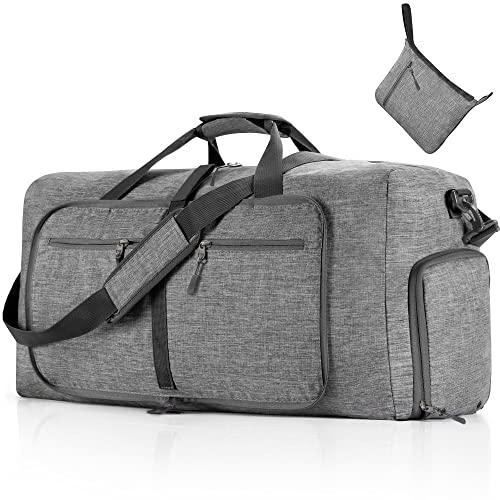
- TLR Rank8.6
TLR Rank is a ranking system developed by TravelLuggageReviews.com. TLR Rank has no relationship or impact from any manufacturers or sales agent websites. Learn more
- BrandVomgomfom

- TLR Rank7.4
TLR Rank is a ranking system developed by TravelLuggageReviews.com. TLR Rank has no relationship or impact from any manufacturers or sales agent websites. Learn more
- BrandTrail maker
Last update on 2026-08-01 / Affiliate links / Images, Product Titles, and Product Highlights from Amazon Product Advertising API
CONTAIL 32-Inch Rolling Safari Duffle Review
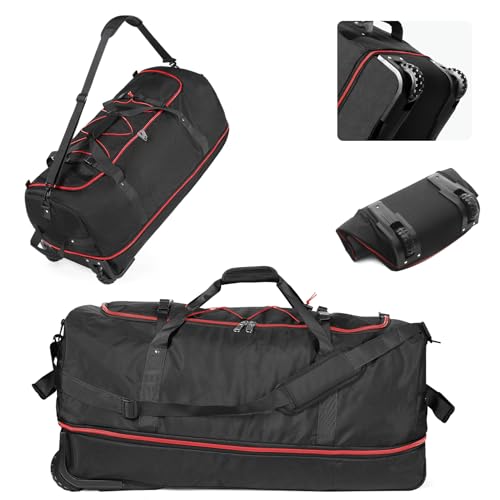
Oversized luggage can look reassuring until it has to pass through a cramped transfer point, cross a gravel path, or fit beside several other bags. The CONTAIL 32-inch rolling duffle tackles that problem with a flexible body, two wheels, and expandable storage rather than a rigid suitcase shell. Its combination of 110L to 140L capacity, reinforced carrying points, and weather-resistant fabric gives it a practical place among the best duffle bags for safari, though its large dimensions demand careful planning before regional flights.
CONTAIL 32-Inch Rolling Duffle
The first thing that stands out is the sheer amount of usable room. At its standard size, the bag measures 31.5 x 14.2 x 15 inches and provides 110 liters of capacity, which already suits bulky clothing, boots, and travel gear. Expanding the height to 19 inches raises the capacity to 140 liters, giving extra breathing room for longer trips or equipment that won’t compress neatly. That flexibility is handy, but filling every inch can create a bag that’s heavy and awkward to lift.
The soft-sided construction makes the bag easier to position than a hard suitcase of similar volume. Fabric walls can give slightly around irregular contents, and the body can fold down when it isn’t being used. That foldable design helps in a guest room, closet, vehicle, or camp where storage space is tight. Still, soft walls don’t protect fragile equipment as firmly as a molded case, so cameras and lenses need their own padded protection.
Its black-and-red finish is practical rather than flashy. Dark fabric tends to hide dust, scuffs, and handling marks better than pale luggage, while the red details make the bag easier to recognize among similar black duffles. The styling won’t appeal to someone seeking understated business luggage, but that’s not really the point here. This is a large-capacity travel bag built around utility, not boardroom polish.
Fabric Built for Messy Transfers
CONTAIL uses PVC-laminated Oxford fabric, described as waterproof, wear-resistant, and tear-resistant. That construction makes sense for airport loading areas, dusty vehicle beds, damp ground, and sudden light rain. The laminated surface should also be easier to wipe down than untreated woven fabric after a gritty road transfer. Even so, waterproof fabric doesn’t automatically mean every seam and zipper is fully submersible, so electronics still belong in sealed inner pouches.
A safari bag often gets dragged, stacked, squeezed, and lifted from whatever point happens to be reachable. The upgraded material is meant to tolerate that rougher routine without feeling as delicate as a lightweight weekender. Tear resistance matters near corners and zipper lines, where overstuffing can place steady pressure on the fabric. Sensible packing still counts because no textile benefits from sharp gear pressing directly against it for hours.
The reinforced base adds another layer of protection between packed belongings and rough surfaces. It also supports the wheel assembly, helping the bag hold its shape while being pulled. That reinforced bottom is useful on cracked pavement and compact dirt, where thin duffle bases can sag and scrape. Muddy or deeply rutted ground will still favor carrying over rolling, so the wheels shouldn’t be mistaken for an all-terrain cart.
Expandable Space Without a Packing Free-for-All
The jump from 110L to 140L is substantial, not a token zipper expansion that adds room for one sweater. It can accommodate bulky jackets, extra shoes, laundry bags, or soft gear that doesn’t fit neatly into rigid compartments. The benefit is clear during a long itinerary, but expandable capacity can tempt overpacking before a flight with strict weight rules. Checking every carrier’s baggage policy matters more than assuming a large soft bag will be accepted simply because it can compress.
Interior organization stays fairly flexible. A mesh zip pocket keeps smaller items visible, while two multifunctional pockets can work as separate compartments or button into side-pocket positions. That arrangement gives some control over toiletries, cables, socks, or smaller accessories without chopping the main compartment into fixed sections. The adjustable interior layout is especially useful when the same bag handles different packing lists from one trip to the next.
Large duffles can turn into deep fabric caves, and that’s the main organizational tradeoff here. Packing cubes or zippered pouches will make the main compartment easier to manage, particularly when clean and worn clothing share the same space. A related sizing perspective appears in 28-inch travel bag options, where slightly smaller dimensions may suit trips with tighter luggage limits. The CONTAIL’s volume pays off most when capacity matters more than compact handling.
Compression That Keeps the Load Under Control
Adjustable side compression straps help pull the fabric inward after packing. They can reduce loose shifting and make a partially filled bag feel less floppy during transport. That side compression system also takes some pressure away from the main zipper when the contents are bulky but compressible. Straps can’t correct severe overpacking, though, and forcing the bag closed is still a poor habit.
The top bungee-cord system creates a convenient spot for light, soft items. A jacket, travel blanket, or hat can sit under the cords without taking up interior space. That feature adds quick-access storage, but valuable items shouldn’t be placed there because the bungee area remains exposed. Used with restraint, the external cord system handles last-minute layers without turning the top of the bag into a cluttered pile.
Compression becomes even more helpful once the expansion panel is opened. A 140L load can shift noticeably if clothing and gear aren’t secured, particularly while the bag is rolled or lifted upright. Tightening the straps creates a firmer package and can keep softer contents from collecting at one end. The setup isn’t complicated, which is a plus after a long travel day when nobody wants to wrestle with an elaborate strap puzzle.
Two Wheels, No Telescoping Handle
The two large wheels and reinforced base give this duffle a clear advantage over carry-only expedition bags on firm surfaces. Airport corridors, hotel floors, paved walkways, and smoother camp paths should require less shoulder effort. The rolling design becomes especially valuable once the bag is packed near its upper capacity. Wheels add convenience, though they also add weight and make the base less collapsible than a completely frameless duffle.
The lack of a telescoping handle changes how the bag feels in motion. Instead of pulling from an extended suitcase grip, the bag relies on its webbing handles and overall length. That arrangement removes a bulky metal frame and preserves more flexible storage, but taller travelers may need to lean or adjust their pulling angle. The no-telescope design is a real tradeoff, not a minor detail, and it may feel less comfortable across a very large terminal.
Rough terrain deserves realistic expectations. Large wheels and a reinforced bottom can handle uneven pavement better than tiny spinner wheels, yet loose gravel, deep sand, and muddy tracks may still stop them cold. At that point, the side handles, top webbing, padded grip, and detachable shoulder strap become more important than the wheel system. The bag offers several carrying methods, but a fully loaded 140L duffle can remain cumbersome regardless of how many handles it has.
Carrying Options for Awkward Moments
Side and top webbing handles give baggage handlers and travel companions several places to grab the bag. The padded side handle should feel more comfortable during short lifts into a vehicle or onto a luggage rack. Multiple grab points also reduce the temptation to pull on the zipper or compression straps. That multi-handle layout is a small design choice that matters repeatedly during a complicated travel day.
The detachable shoulder strap provides another option when rolling isn’t practical. It can free one hand for a smaller bag, document pouch, or door handle, although the comfort level will depend heavily on packed weight. A huge duffle carried from one shoulder can become tiring fast, especially when the contents aren’t evenly distributed. The strap makes sense for short transfers, not long hikes with the bag loaded to its full capacity.
Backpack straps aren’t listed among the provided features, so this model shouldn’t be treated like a convertible backpack duffle. That limitation matters on stairs, sandy paths, and places where wheels can’t help. The available handles cover lifting and brief carrying well enough, but they don’t spread weight across both shoulders. Anyone expecting extended hands-free carrying may prefer a smaller duffle with a true backpack harness.
Practica hãy kiểm tra lại bạn đã tạo hyperlink chưa. Lưu ý yêu cầu: Create hyperlink as below rules. In addition, always add relevant CTA hyperlink or relevant hook before hyperlink to increase interaction. Structrue CTA or hooks ANCHOR_TEXT. Only 1 hyperlink in the response. I will provided you url part. "Here is list link:" Anchor text selected a 2–6 word phrase (or longer only if it reads more naturally) that still clearly represents the path topic. Rewrite full response with hyperlinkl Strengths and Honest Limitations
The strongest argument for this bag is its blend of large expandable storage and flexible construction. It can hold bulky soft goods without the fixed shell, heavy frame, and rigid corners of a large suitcase. Waterproof laminated Oxford fabric, compression straps, and a reinforced base suit rougher travel routines better than a basic cotton or thin polyester duffle. The interior pockets also add enough separation without making the packing layout overly restrictive.
Size creates the biggest concern. A 32-inch bag with up to 140 liters of room may exceed dimensional or weight allowances on certain small aircraft, even though the body is soft-sided. Regional safari flights can impose tighter restrictions than long-haul routes, and the expanded height may make acceptance more difficult. The oversized footprint therefore works better for road-heavy itineraries, checked baggage routes with confirmed allowances, or trips where several people share one large gear bag.
The missing telescoping handle is the second notable compromise. Removing that hardware keeps the design simpler and avoids a rigid internal handle frame, yet it also makes long rolling stretches less comfortable. The wheels help, but the pulling method won’t feel like a conventional suitcase. That difference could be acceptable for occasional transfers while becoming irritating during repeated walks through large airports.
CONTAIL’s 32-inch duffle makes the most sense when capacity, abrasion resistance, and flexible storage outrank compact dimensions. It’s less convincing for minimalist packing, fragile camera setups without separate cases, or strict fly-in routes where every inch and pound is scrutinized. Packed thoughtfully, the compression features and interior pockets can keep a large load under control. Stuffed to the limit, it may become more bag than one person wants to maneuver.
Fmeida 65L Foldable Safari Duffle Review
A packed suitcase can feel manageable at home, then turn into dead weight during a quick transfer or an unexpected baggage shuffle. The Fmeida 65L foldable duffle takes a more flexible route, pairing a roomy main compartment with a packable body that folds into a compact bundle between trips. That balance of 65L storage, lightweight construction, and separated organization gives it a credible place among the best duffle bags for safari, especially when spare capacity matters more than wheels or a rigid frame.
Fmeida 65L Foldable Duffle
The 65-liter capacity gives this bag enough room for clothing, lightweight shoes, toiletries, and a few soft travel extras without reaching expedition-sized proportions. Unfolded, it measures 24.5 x 11.5 x 14 inches, creating a broad packing area that should be easier to manage than an extra-deep oversized duffle. The rectangular shape also makes folded shirts and packing cubes less likely to collapse into a heap. Still, a full 65L load can get heavy, so capacity shouldn’t be mistaken for permission to pack the kitchen sink.
Foldability is the feature that changes how the bag fits into a broader travel plan. It compresses to roughly 10.24 x 9.06 inches, allowing it to ride inside another suitcase until extra carrying space is needed. That makes sense for clothing purchases, trip extensions, laundry separation, or gear that gets redistributed between travel companions. A packable design also saves closet space at home, though the softer structure won’t stand upright as neatly as framed luggage.
The black finish keeps the appearance low-key and practical. Dust, scuffs, and routine handling marks won’t stand out as sharply as they might on a pale fabric bag. The styling is plain, but that restraint suits a duffle designed to move between airports, vehicles, camps, gyms, and weekend stops. Function takes the front seat here, while decorative hardware and elaborate exterior panels are kept to a minimum.
Lightweight Fabric With Sensible Reinforcement
Fmeida uses water-resistant polyester rather than thick coated canvas or a rigid synthetic shell. That material choice helps keep the bag light and foldable while offering a basic barrier against splashes, damp floors, and brief exposure to rain. It should also dry faster than heavier natural fabric after being wiped down. Water resistance has limits, though, so a downpour or prolonged contact with wet ground could still put packed belongings at risk.
Reinforcement at major stress points is a meaningful detail on any packable duffle. Handles, shoulder-strap mounts, zipper ends, and loaded corners absorb more strain than the broad fabric panels. Strengthening those areas can reduce the chance of seams pulling apart when the bag is lifted while full. Even so, lightweight construction works best with clothing and ordinary travel supplies rather than sharp tools or dense equipment pressing against the walls.
The product description also identifies the polyester as tear-resistant. That’s useful around crowded luggage compartments and rough vehicle transfers, where bags may rub against buckles, corners, or other baggage. Tear resistance doesn’t make the fabric immune to punctures, so pointed objects still need protective sleeves or placement away from the outer panels. A little care goes a long way, especially because foldable bags trade some thickness for lower weight and easier storage.
A Separate Zone for Shoes and Worn Gear
The dedicated shoe compartment addresses one of the most annoying problems inside a single-compartment duffle. Dusty footwear no longer has to sit directly against shirts, sleepwear, or clean layers. That separation is particularly handy after outdoor walks, camp activities, or rainy transfers where soles pick up grit and moisture. The compartment can also hold worn clothing, though shoes with heavy mud should still be bagged before going inside.
An internal end pouch adds another layer of organization without dividing the entire bag into rigid sections. Smaller garments, chargers, socks, or travel accessories can stay grouped instead of disappearing under larger items. This setup offers a middle ground between an empty fabric cavity and an overbuilt organizer filled with tiny pockets. Zoned packing keeps daily essentials easier to reach while preserving most of the 65-liter main space.
The shoe area does consume some interior room once it’s filled. Bulky boots may push farther into the main compartment than slim sneakers or sandals, changing how clothing fits around them. That tradeoff is normal for end-access shoe storage, and careful packing can keep the intrusion manageable. Placing soft items beside the compartment usually uses the remaining space more efficiently than forcing in rigid packing boxes.
Pockets That Keep Small Items From Vanishing
Multiple pockets give phones, passports, cables, and other small items a defined place. That matters because loose accessories have a habit of sliding beneath clothing in large duffles, usually at the exact moment they’re needed. Quick-access organization reduces rummaging during check-in, vehicle transfers, or overnight stops. Valuable documents still belong in a secure personal bag during transit, but the pockets remain useful once the duffle reaches a room or camp.
The pocket layout appears geared toward everyday practicality rather than elaborate gear sorting. That keeps the bag from gaining unnecessary weight and avoids dozens of narrow sleeves that fit only one type of item. Packing cubes can handle larger categories, while the built-in pockets manage the small stuff. Simple organization often ages better because it doesn’t force every future trip into the same packing pattern.
Travelers balancing a duffle with a smaller cabin bag may also need to think about airline sizing across both pieces. A useful reference for that side of the packing setup appears in Spirit personal item bags, where compact dimensions matter more than the Fmeida’s generous cargo space. The two bag types solve different problems, with one handling accessible essentials and the other carrying the bulk of the load.
Handles, Shoulder Strap, and Luggage Sleeve
Comfortable handles support the bag during quick lifts from a trunk, luggage rack, or baggage belt. Their usefulness becomes obvious once the main compartment is full, since thin unpadded webbing can bite into the hands. The adjustable shoulder strap adds another carrying position and can be removed when it isn’t needed. That flexibility helps during short walks, though a heavy 65L load may still feel lopsided on one shoulder.
The rear sleeve lets the duffle slide over the handle of rolling luggage. This small feature can take much of the strain out of long airport corridors by allowing the suitcase to support the duffle’s weight. It also helps keep the bag from slipping sideways while moving through a terminal. The luggage-handle sleeve loses its advantage once pavement ends, but it’s genuinely useful during the airport portions of a mixed travel route.
No wheels are listed, which keeps the bag lighter and easier to fold but shifts all carrying effort to the handles, strap, or supporting suitcase. Gravel, stairs, and uneven ground won’t disable a wheel system because there isn’t one, yet the packed weight still has to be lifted. That tradeoff favors shorter transfers and lighter packing. Anyone planning to move the bag over long distances without rolling luggage may prefer a duffle with backpack straps.
How the Packable Design Fits Safari Travel
Soft-sided bags can fit irregular storage spaces more readily than hard-shell cases, and the Fmeida’s flexible body supports that advantage. Its moderate dimensions are less imposing than those of giant rolling duffles, while the 65L capacity still allows room for layered clothing and basic travel gear. Flexible packing can help during vehicle transfers where several bags share a narrow cargo area. Exact airline restrictions still need attention because soft construction doesn’t override size or weight rules.
The bag’s low-structure body also means fragile items require separate protection. Camera bodies, lenses, binoculars, and electronics shouldn’t rely on thin polyester walls to absorb impacts. Padded cubes or dedicated protective cases can sit inside the duffle, but they will reduce available clothing space. This is a soft-gear carrier first, not a substitute for a structured photography case.
Dust presents another practical concern. The dark exterior should hide surface grime reasonably well, and water-resistant polyester may be easier to wipe than absorbent fabric. Zippers and seams can still admit fine particles during prolonged exposure, so internal pouches help protect sensitive belongings. The bag handles ordinary travel mess better than an open tote, but it isn’t described as dustproof or fully sealed.
Useful as a Spare Bag or Primary Duffle
Used as a spare, the Fmeida can remain folded inside larger luggage until the return trip. That arrangement provides room for souvenirs, separates dirty laundry, or absorbs overflow after packing plans change. The compact folded size makes this role more convincing than it would be with a stiff duffle that occupies half a suitcase. Extra capacity can sometimes prevent a frantic repacking session, although airline baggage fees and allowances still apply.
Used as the main bag, the 65L volume feels more purposeful. It offers enough room for a multi-day clothing rotation without the handling problems of a 100L-plus hauler. The shoe section and pockets make daily access less chaotic, while the removable strap offers flexibility during transfers. A firmer base panel would likely improve shape retention, but one isn’t specified in the supplied product details.
The bag also has plausible uses beyond a safari itinerary. Its layout can accommodate gym gear, hospital essentials, dance clothing, camping supplies, or a family weekend load. That range comes from the open main compartment rather than specialized equipment features. Broad everyday utility is a strength, though the design may feel too large for a simple overnight stay unless it remains partially packed.
Strengths, Weaknesses, and Packing Tradeoffs
The clearest strengths are foldable storage, a useful 65L capacity, and separation for footwear. Reinforced stress points support repeated lifting, while water-resistant polyester offers a practical buffer against ordinary travel spills and damp surfaces. The luggage sleeve also makes the bag easier to manage beside a rolling suitcase. Together, those details solve several common packing headaches without adding a rigid frame.
Structure is the main compromise. A packable duffle may sag when partially filled, and soft sides won’t shield fragile contents from crushing or impact. The absence of listed wheels and backpack straps also limits comfortable carrying once the bag becomes heavy. These aren’t hidden flaws so much as consequences of choosing a lightweight foldable design.
The shoe compartment improves cleanliness but reduces the shape of the main packing area when loaded with bulky footwear. Water resistance helps with minor exposure, yet the bag shouldn’t be treated like a waterproof dry bag. Its 24.5-inch length may also be unsuitable for certain cabin rules, despite references to carry-on use in the supplied description. Carrier-specific limits should settle that question before departure.
Fmeida’s 65L duffle fits best into travel plans that reward low weight, packability, and straightforward organization. It’s less suitable for fragile equipment, long unsupported carries, or trips that demand a stiff protective shell. Packed with clothing, lightweight shoes, and soft accessories, it should use its design advantages well. Loaded with dense gear and pushed beyond comfortable carrying weight, its convenience could disappear in a hurry.
WEREWOLVES 65L Foldable Safari Duffle Review
Extra luggage space sounds helpful until the bag itself becomes another bulky object to store, carry, and wrestle through crowded transfers. This WEREWOLVES 65L travel duffle takes a different approach, folding into a compact pouch while still offering enough room for clothing, shoes, toiletries, and soft travel gear once opened. Its 1.3-pound construction, separate wet pocket, and packable format give it a practical connection to the best duffle bags for safari, though the lightweight structure brings a few compromises that deserve an honest look.
WEREWOLVES 65L Foldable Duffle
The bag opens to a stated 65-liter capacity, giving it enough space for a multi-day clothing rotation, sandals, toiletries, and a few travel extras. That volume sits in a useful middle ground between a compact weekender and a huge expedition hauler. It offers breathing room without automatically becoming a monster to lift, although a fully packed 65L bag can still feel heavy on one shoulder. Careful packing matters because soft bags make it easy to keep adding one more thing.
Folded down, the duffle measures about 10.2 x 9.4 inches, so it can ride inside a suitcase or stay tucked away in a closet between trips. That packable shape is handy for separating worn clothing on the return journey or carrying items that don’t fit into the original luggage setup. It also avoids the storage headache created by framed bags that keep their full size year-round. The tradeoff is predictable: a foldable body won’t stand upright or hold a crisp shape without help from the packed contents.
The green finish gives the bag a more outdoorsy appearance than standard black luggage. It may also be easier to spot in a pile of dark duffles during a group transfer. Still, appearance isn’t the main strength here, since the practical value comes from low weight, flexible storage, and multiple compartments. Anyone expecting a structured suitcase feel may find the soft silhouette too relaxed.
Pros: Lightweight Fabric and Reinforced Stress Points
At a stated weight of only 1.3 pounds, the empty bag leaves more of the baggage allowance available for actual belongings. That can make a noticeable difference on travel days filled with clothing layers, footwear, and personal gear. The lightweight build also makes the duffle easier to fold, store, and carry when partially filled. Granted, low weight usually means less protective structure, so fragile equipment needs separate padding.
The supplied details describe the fabric as waterproof and abrasion-resistant, with reinforcement at major stress points. Those qualities suit damp loading areas, dusty vehicle floors, and the occasional scrape against rough luggage racks. Reinforced handle mounts and zipper ends are especially valuable because those spots absorb much of the strain when a packed bag is lifted. Even so, sharp objects shouldn’t press directly against the outer fabric, since abrasion resistance isn’t the same as puncture-proof construction.
Metal dual-way SBS zippers add another practical touch. Two zipper pulls make the main opening easier to access from either direction and allow the bag to open wider during packing. The dual-way zipper system can also reduce awkward tugging when the compartment is full but not overstuffed. A lightweight duffle still depends on sensible loading, though, and forcing bulging contents against the zipper track can shorten its useful life.
Pros: Pockets for Shoes, Wet Gear, and Small Items
The organization layout is unusually generous for a foldable bag. It includes a main pocket, six front pockets, a back pocket, an internal hanging pouch, a side shoe compartment, and a separate waterproof side pocket. That multi-pocket design helps prevent passports, cables, toiletries, and small accessories from disappearing beneath a stack of clothing. Too many pockets can become confusing if everything is scattered randomly, so assigning each one a specific purpose keeps the setup useful.
The side shoe compartment separates dusty footwear from clean shirts and sleepwear. That matters after walking on dry trails, gravel paths, damp ground, or muddy roadside areas where soles quickly collect grit. The compartment can also hold worn socks or laundry inside an additional bag when shoes aren’t being carried. Bulky boots will occupy more of the main compartment than light sneakers, which is the unavoidable downside of an inward-facing shoe section.
A separate waterproof wet pocket solves a different problem. Damp towels, swimwear, or lightly soiled clothing can stay apart from dry belongings during a transfer. That separation is useful when there isn’t time to air-dry everything before packing up. The pocket shouldn’t be treated as a sealed container for dripping items, but it provides a more sensible barrier than tossing wet fabric directly into the main compartment.
Pros: Flexible Carrying and Suitcase Compatibility
Padded handles make short lifts less punishing on the hands, particularly while moving the bag into a vehicle or onto a luggage rack. The detachable shoulder strap provides another carrying position and can be removed to reduce loose webbing during storage. This two-way carrying setup works well for brief transfers and moderate loads. Once all 65 liters are filled with dense items, however, shoulder carrying may become uncomfortable in a hurry.
The rear luggage strap allows the duffle to sit over a suitcase handle. That detail can take much of the strain out of airport corridors by letting a rolling case support the bag’s weight. It also helps keep the duffle from sliding off the suitcase during steady movement. From a practical angle, related luggage features are discussed in luggage with USB chargers, where convenience depends more on the suitcase platform than on the duffle itself.
No wheels or backpack straps are mentioned in the provided specifications. That omission helps keep the bag light and foldable, but it limits comfortable movement when the load becomes heavy. Gravel and stairs won’t interfere with a wheel system because there isn’t one, yet every pound still has to be lifted or supported by another suitcase. The carrying limitation is manageable for shorter distances and lighter packing, but less appealing for long unsupported walks.
Cons: Soft Structure and Limited Impact Protection
The foldable body offers storage convenience at the cost of rigidity. A partly filled bag may slump, shift, or lose its shape while being carried, especially when heavy items settle at one end. Packing cubes can create a more stable internal layout, though they won’t turn the duffle into a framed suitcase. This soft-sided weakness matters most with fragile electronics, lenses, or other gear that can’t tolerate pressure.
Waterproof fabric provides useful protection, but the supplied information doesn’t establish that every seam, zipper, and opening forms a fully sealed barrier. Brief rain and damp surfaces are one thing; prolonged exposure is another kettle of fish. Electronics, documents, and medication still belong in sealed internal pouches. The weather protection is practical for routine travel mishaps, not a reason to leave the bag uncovered in heavy rain.
Multiple exterior pockets also create more places where small items can be forgotten. A front pocket may feel convenient during packing, then become overlooked during a rushed hotel checkout. Valuable belongings shouldn’t remain in exposed exterior compartments during checked transport or vehicle loading. The pocket count is a strength only when the organization system stays consistent from one stop to the next.
Cons: Capacity Can Encourage Overpacking
Sixty-five liters sounds moderate beside giant cargo duffles, but it still holds a substantial amount of clothing and gear. Filling every pocket can turn a lightweight bag into a load that’s awkward to lift and uncomfortable to carry. The capacity tradeoff becomes sharper without wheels or a backpack harness to distribute the weight. Soft construction can also hide how heavy the bag has become until it’s time to move.
Regional flights and smaller aircraft may impose baggage rules that differ from standard long-haul allowances. A flexible body can fit irregular storage areas more easily than a rigid shell, but softness doesn’t erase dimensional or weight restrictions. The bag’s final size depends on how fully it’s packed, and bulging sides can make measurements less predictable. Written carrier limits should guide the load rather than the bag’s maximum capacity.
The duffle’s broad versatility is useful, yet it doesn’t make the design equally suited to every task. Camping clothes, gym gear, and soft travel items match its strengths, while dense equipment and fragile objects expose its weaknesses. The stated after-sales support offers a route for assistance if a problem arises, but it doesn’t replace careful use or realistic expectations. Low weight, foldability, and compartment separation remain the key advantages, provided the bag isn’t asked to behave like a rigid protective case.
Seyfocnia Brown Weekender Safari Duffle Review
A polished weekender can lose its charm fast once dusty shoes, travel documents, and an overstuffed change of clothes all compete for the same space. The Seyfocnia brown weekender answers that everyday packing mess with a separate shoe pouch, accessible front storage, and a luggage sleeve that pairs with a rolling suitcase. Those details make it relevant among the best duffle bags for safari, particularly for shorter itineraries and lighter packing, though its fashion-forward shape has limits beside tougher expedition-style bags.
Seyfocnia Brown Weekender
The bag measures 21.2 x 10.8 x 11.7 inches, placing it above many compact gym bags without drifting into oversized cargo-duffle territory. That footprint can accommodate clothing and basic personal items for the stated three-to-four-day trip range, provided bulky footwear and heavy equipment stay under control. Its proportions should feel easier to lift than a giant 90L or 120L hauler. Still, the actual packed weight depends entirely on what goes inside, and soft luggage can hide an uncomfortable load surprisingly well.
The classic brown finish gives the bag a different personality from the black nylon duffles commonly used for rugged travel. It looks more like a traditional weekender, which can blend smoothly into hotel stays, business trips, or an overnight stop before a safari departure. The unisex styling also avoids overly sporty graphics or bright technical panels. Dust and rubbing may show more clearly on brown material than on plain black fabric, so appearance-conscious packing calls for a little extra care.
Its construction uses water-resistant nylon, according to the supplied product information. Nylon keeps the body flexible and generally weighs less than a rigid suitcase shell, which helps during vehicle transfers and short carries. The water-resistant finish offers a practical buffer against light rain, damp floors, or minor spills. It shouldn’t be treated as a sealed dry bag, though, especially around zippers and stitched seams.
Room for a Short Safari Packing List
A three-to-four-day capacity fits a focused travel routine better than a pack-everything mindset. Lightweight shirts, trousers, underlayers, sleepwear, toiletries, and a spare pair of shoes should make more sense here than thick jackets or piles of just-in-case clothing. The moderate interior size encourages selective packing, which can be useful on routes where carrying ease matters. Travelers bringing extensive camera equipment may need a dedicated padded case rather than expecting this soft weekender to protect sensitive gear.
The wide duffle shape should make folded clothes easier to arrange than they would be inside a narrow backpack. Packing cubes can prevent soft garments from sliding toward one end, especially when the shoe compartment is loaded. That internal balance matters because an uneven bag can pull awkwardly against the shoulder strap. A simple layout works nicely for a short trip, but frequent hotel changes may expose the inconvenience of digging beneath stacked clothing for one small item.
Capacity also needs to be judged against travel restrictions rather than the bag’s marketing categories. A product may be described as a carry-on or personal item, yet airline rules can vary by route, fare, and aircraft. The bag’s dimensions should be checked against the operating carrier before departure. Soft-sided flexibility may help it settle into a storage space, but it doesn’t override an airline’s measurement limits.
Shoe Storage Keeps Clean Layers Separate
The built-in shoe pouch is one of the bag’s most practical features. Footwear used on dusty paths, city sidewalks, or damp ground no longer needs to press directly against clean shirts and sleepwear. That separation reduces the need to wrap every shoe in a loose grocery bag. It also gives the packing routine a clearer division between clothing and items that collect dirt.
The shoe compartment uses polyester fabric with waterproof interlining, based on the supplied description. That barrier helps prevent surface moisture and grime from reaching the clean side of the bag. Muddy shoes should still be wiped down or placed inside an additional shoe bag before packing. Waterproof interlining manages ordinary mess, but it won’t make deeply soaked footwear harmless to everything nearby.
Internal shoe storage always claims part of the main compartment once filled. Slim sandals or walking shoes should intrude less than bulky boots, while high-top footwear may distort the bag’s shape more noticeably. The tradeoff is straightforward: cleaner organization in exchange for reduced clothing space. For a shorter trip, that bargain feels reasonable, provided the footwear matches the bag’s scale.
Front Storage for Travel-Day Essentials
The zippered front pocket gives phones, wallets, passports, and other small belongings a more accessible location than the bottom of the main compartment. That saves time during hotel check-ins, vehicle pickups, or airport transitions. The quick-access pocket works best for low-bulk items that won’t create a heavy bulge across the front panel. Valuable documents should remain under direct control rather than being left in checked or unattended luggage.
Exterior storage can become a catchall if every loose object gets tossed inside without a plan. Cables, receipts, keys, and travel-size bottles can quickly turn one convenient pocket into a tangled mess. A small zip pouch inside the front compartment would add another layer of order without taking much room. The feature is useful, but simple organization habits determine whether it saves time or creates another place to search.
The bag doesn’t list an elaborate network of interior dividers, so larger categories may still need packing cubes or pouches. That stripped-back arrangement keeps the interior flexible for clothing, towels, or irregular soft items. It also avoids the wasted space created by fixed compartments that don’t match a particular trip. Still, anyone who prefers a dedicated pocket for every cable and accessory may consider the layout too basic.
Luggage Sleeve and Shoulder Carrying
A rear luggage-bar sleeve lets the weekender slide over the telescoping handle of a rolling suitcase. That arrangement shifts the bag’s weight away from the shoulder during long airport walks and keeps both pieces moving as one unit. The luggage sleeve is especially helpful when the duffle contains shoes and several days of clothing. Once the journey moves onto gravel, steps, or rough paths, its usefulness naturally depends on the suitcase underneath.
The removable shoulder strap adds flexibility for terminals, hotels, and short transfers. Its adjustable length helps accommodate different heights and preferred carrying positions. More importantly, the cushioning increases the contact area across the shoulder, which can reduce the concentrated pressure caused by narrow webbing. The padded strap won’t erase the weight of a fully packed bag, but it should make moderate loads feel less punishing.
Hand carrying remains an option for quick lifts into a vehicle or onto a luggage rack. Soft-sided weekenders are often grabbed from whichever angle is easiest, so balanced loading helps prevent the bag from twisting during those moments. No wheels or backpack straps are specified, meaning every unsupported transfer relies on the handles or shoulder strap. A neutral reference for trips that place more emphasis on rolling convenience appears in rolling duffels for air travel, where wheel systems address a different carrying priority.
Safari Use Without the Expedition Bulk
The Seyfocnia’s moderate footprint can suit road-based itineraries, lodge stays, and shorter safari segments where clothing needs remain controlled. Its flexible body should be easier to position beside other soft bags than a rigid suitcase with fixed corners. The weekender format also feels less cumbersome during hotel nights before or after the wildlife portion of a trip. Longer itineraries may require laundry planning or an additional bag because the stated capacity is geared toward several days rather than extended travel.
Water-resistant nylon helps with ordinary splashes and brief weather exposure, while the shoe pouch contains some of the grime collected outdoors. Those details solve practical annoyances without turning the bag into technical expedition equipment. Dust may still enter around zipper tracks, and the outer material doesn’t provide meaningful impact protection for fragile objects. Weather resistance and protection are separate matters, and this design clearly favors the former.
The brown finish may look polished at a lodge or city hotel, but rough handling could leave visible scuffs over time. That doesn’t necessarily reduce function, yet it matters for anyone choosing the bag partly for its appearance. A protective storage cover or careful placement in a vehicle can help preserve the surface. Safari luggage rarely stays pristine forever, so realistic expectations make this style easier to appreciate.
Strengths in Daily Travel
The strongest feature set centers on accessible storage, shoe separation, and flexible carrying. The front pocket keeps small essentials from vanishing, while the shoe pouch limits direct contact between footwear and clean clothing. A luggage sleeve reduces shoulder strain when paired with a suitcase. Together, those details address common travel friction without adding a complicated internal structure.
Its three-to-four-day scale also avoids the temptation created by giant duffles that swallow far more than anyone wants to carry. A focused capacity can make packing decisions quicker and transfers less awkward. The bag still has enough room to function as a hospital bag, gym duffle, weekender, or overnight tote, based on the supplied uses. Short-trip versatility is the real appeal, rather than extreme load hauling.
The padded and adjustable shoulder strap deserves credit because carrying comfort often gets treated as an afterthought. A wider cushioned section distributes pressure better than bare webbing, especially while walking between a parking area and lodging. The strap’s removable design also lets it stay out of the way when the bag rides on a suitcase handle. That combination feels practical rather than decorative.
Limitations Worth Factoring In
The lack of wheels becomes noticeable once the bag is packed with dense clothing, toiletries, and shoes. Shoulder cushioning helps, but it can’t change the total weight or distribute the load across both shoulders like a backpack harness. The carry-only design is better suited to short distances than long walks through large transport hubs. Pairing it with rolling luggage makes the rear sleeve far more valuable.
Soft nylon also offers limited defense against crushing. Binoculars, cameras, lenses, and other delicate items require padded inserts or separate protective bags. Packing those cases inside the duffle will consume some of the clothing space and may create an uneven load. The bag’s strength lies in carrying soft belongings, not acting as a protective equipment chest.
The shoe compartment creates useful separation but can become awkward with bulky footwear. Large hiking boots may occupy a sizable portion of the main cavity and make the exterior shape less balanced. Lighter walking shoes or sandals fit the design more naturally. This space tradeoff isn’t a defect so much as a reminder that compartment features still consume physical room.
Its polished brown styling and practical pockets suit travelers who want a duffle that can move between airports, hotels, and a shorter safari without looking like a heavy expedition sack. The design makes less sense for extended bush routes, very strict luggage limits, or trips dominated by fragile equipment. Moderate capacity, water-resistant nylon, and separated footwear storage define the bag’s sweet spot. Pushed beyond that role, the missing wheels and soft structure become harder to ignore.
Bago 120L Foldable Safari Duffle Review
Big travel bags have a funny way of looking manageable until they’re filled, lifted, and squeezed into a crowded transfer vehicle. The Bago 120L foldable duffle approaches that problem with a remarkably light 1.6-pound body, a huge expandable packing area, and a compact folded form for storage between uses. Among the best duffle bags for safari, it stands out as a practical overflow carrier or road-trip hauler, though its enormous capacity can become a burden if packing discipline goes out the window.
Bago 120L Foldable Travel Duffle
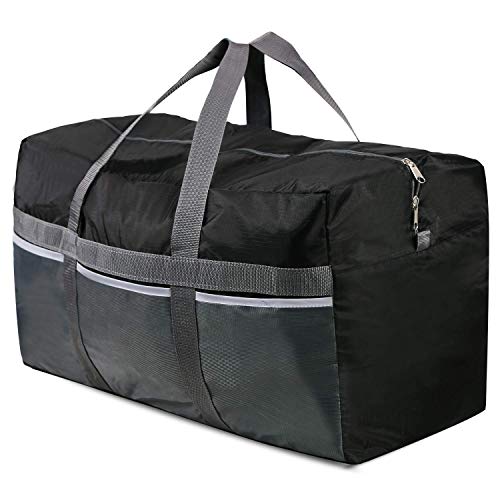
The main attraction is hard to miss: 120 liters of storage inside a bag measuring 30.7 x 12 x 20 inches when fully opened. That volume can accommodate bulky clothing, sports gear, laundry, camping supplies, or belongings transferred from a damaged suitcase. It’s considerably larger than a standard weekender, so calling it merely roomy would be underselling the point. The downside arrives once all that space is filled, because a soft bag this large can become awkward long before it looks full.
Empty weight stays at a stated 1.6 pounds, which is surprisingly low for a bag of this scale. A light shell leaves more of the baggage allowance available for clothing and gear rather than frames, wheels, or rigid panels. That benefit matters on any journey where luggage weight is watched closely. Even so, the bag’s physical dimensions may remain an issue regardless of how little the empty fabric weighs.
Collapsed, the duffle measures approximately 13 x 5 x 7 inches. That compact bundle can sit inside another suitcase, remain in a vehicle, or wait on a closet shelf without claiming much room. Used as a spare, it offers a sensible place for souvenirs, laundry, or unexpected overflow during the return trip. Used as the primary bag, however, its soft body will depend on the packed contents to maintain a stable shape.
Honeycomb Ripstop Fabric and Weather Protection
The supplied specifications describe the exterior as Honeycomb RipStop fabric with water-repellent properties. Ripstop construction is designed to limit the spread of small tears by incorporating a reinforcing pattern into the material. That structure makes sense for a duffle likely to rub against luggage racks, vehicle floors, or other bags. It still isn’t armor, so sharp corners and exposed metal objects should be wrapped before packing.
Rain flaps sit over the zipper areas to provide an added barrier against light weather. That detail can help during quick loading in drizzle or while the bag rests briefly on damp ground. The water-repellent design offers useful protection against everyday travel mishaps, but it shouldn’t be confused with a sealed dry bag. Prolonged rain, pooled water, and soaked surfaces can still challenge stitched seams and zipper openings.
The black exterior is practical for a bag expected to see rough handling. Dust, scuffs, and surface marks generally blend into dark fabric more easily than they would on pale colors. That doesn’t mean the bag will remain spotless, especially on dry roads or camping trips. A damp cloth should handle ordinary dirt, while a full cleaning would require following the manufacturer’s care guidance rather than tossing assumptions into the mix.
A Huge Main Compartment With Few Boundaries
The large central compartment gives users freedom to pack irregular objects that won’t fit neatly into a divided suitcase. Jackets, sleeping gear, sports equipment, towels, and soft travel supplies can occupy the space without fighting rigid panels. That flexibility is valuable when the packing list changes from trip to trip. On the flip side, a giant open compartment can become a black hole unless items are grouped deliberately.
Packing cubes can bring order to clothing, while separate pouches can isolate toiletries, chargers, or smaller accessories. Without that structure, contents may shift toward one end and make the duffle feel unbalanced on the shoulder. The soft-sided layout rewards thoughtful packing more than casual stuffing. Heavy items placed near the bottom and center should create a steadier load than dense objects scattered along the outer edges.
The 120L capacity may also encourage packing beyond what one person can comfortably handle. A bag filled with lightweight jackets feels very different from the same bag filled with books, dense equipment, or bottled supplies. Capacity measures space, not carrying comfort. That distinction matters because the Bago relies on handles and a shoulder strap rather than wheels or a rigid rolling frame.
Shoe Compartment for Cleaner Packing
A separate shoe compartment keeps footwear away from clean clothing and personal items. That separation is useful after dusty walks, outdoor activities, sports sessions, or rainy transfers where soles collect dirt quickly. Shoes no longer need to sit directly against folded shirts or sleepwear. For particularly muddy footwear, an additional washable shoe pouch would still prevent grime from building up inside the compartment.
The shoe section also creates a practical zone for laundry or used gear when footwear isn’t being carried. Damp or heavily soiled items should be bagged first because the supplied details don’t describe this compartment as fully sealed. The zoned storage remains helpful, though, especially on multi-stop trips where clean and worn items must share one bag. A dedicated section beats digging through the main compartment every time a pair of shoes is needed.
Bulky boots will take up more internal room than slim sneakers or sandals. Since shoe compartments often extend into the main cavity, loading them can change the shape available for clothing and packing cubes. That’s a fair trade for cleaner separation, but it’s worth planning around. A bag this large has space to spare, yet poorly positioned footwear can still create an awkward lump along one end.
Zippers, Pullers, Buckles, and Pockets
The bag uses two-way zippers, allowing the main opening to be accessed from either direction. This can make loading bulky items less fiddly and reduce the need to drag a single zipper around the entire opening. Break-resistant pullers are also listed, a useful touch for a bag that may be opened repeatedly during travel. No zipper enjoys being forced over an overstuffed load, though, so the reinforced hardware doesn’t excuse excessive pressure.
Heavy-duty buckles and clips support the shoulder-strap system and other load-bearing areas. These components matter because attachment points often absorb sudden strain when a bag is hoisted from the ground or pulled from a vehicle. The reinforced hardware gives the design more credibility than thin decorative clips would. Still, the strength of the entire carrying system depends on the surrounding stitching and fabric as well as the buckle itself.
Multiple zipped pockets create separate spots for smaller belongings that would otherwise disappear inside the 120L main compartment. Travel documents, cords, gloves, or compact accessories can remain easier to reach if each pocket has a consistent purpose. Too many loose objects spread across several pockets can produce the opposite effect, turning organization into a scavenger hunt. A simple system, used the same way at every stop, keeps the pockets genuinely helpful.
Carrying Comfort Without Wheels
Two bag handles provide the basic grip needed for lifting the duffle into a trunk, luggage area, or storage rack. The detachable padded shoulder strap offers another way to move it across short distances. That padded carrying option can spread pressure more evenly than narrow webbing, particularly when the bag holds clothing and other soft items. Once the load becomes dense and heavy, however, shoulder padding can only do so much.
No wheels are included in the supplied description. Removing a wheel frame helps explain how the bag stays lightweight and folds into such a small package. It also means every transfer requires lifting, shoulder carrying, or help from another person. Gravel and rough terrain won’t defeat tiny suitcase wheels because there are none, but that doesn’t make a full 120L load easy to carry.
The lack of backpack straps is another meaningful limitation for longer walks. A single shoulder strap places the load on one side, while backpack-style straps would distribute it across both shoulders. This bag therefore makes more sense for quick movements between vehicles, rooms, and check-in areas than for extended carrying. The large-volume design favors hauling capacity over hands-free mobility.
How It Fits Into Safari Travel
Safari luggage often benefits from flexible sides, particularly inside shared vehicles or irregular cargo spaces. The Bago can compress around softer contents rather than demanding the fixed footprint of a hard-shell case. That packable flexibility is useful during road-heavy itineraries and lodge transfers. The bag’s expanded dimensions are substantial, though, and may not suit smaller aircraft with strict baggage restrictions.
Weight limits deserve just as much attention as size rules. The empty bag is light, yet 120 liters can hold far more than many regional allowances permit. Filling it only halfway may solve the weight issue while leaving a soft, loosely shaped load that shifts during movement. Compression straps aren’t listed in the supplied details, so packing cubes and balanced placement become the main tools for controlling the shape.
Fine dust can enter through ordinary zipper and seam areas even when the exterior fabric resists water. Clothing should remain reasonably protected during routine transfers, but electronics and sensitive gear belong in sealed internal pouches. The bag offers basic environmental protection, not a dustproof or impact-resistant equipment case. That distinction is especially relevant for cameras, binoculars, and fragile accessories.
Useful as an Emergency Overflow Bag
The foldable format gives this duffle a convincing role as a just-in-case travel bag. It can stay packed inside a suitcase until souvenirs, laundry, gifts, or unexpected items require more space. That approach avoids hauling an empty full-size duffle throughout the entire trip. Airline fees and baggage rules still apply, so the extra bag solves a space problem rather than guaranteeing free transportation.
A damaged suitcase creates another situation where the Bago could earn its keep. Unfolding it at an airport or hotel provides a temporary container for clothing and soft belongings that can no longer remain in broken luggage. The broad main compartment should make transferring items relatively straightforward. Fragile possessions would still need padded protection because the duffle has no rigid shell.
The bag can also remain in a car for sports gear, camping supplies, seasonal clothing, or emergency storage. Folded dimensions make it easier to keep available without crowding the trunk. A practical reference for other emergency-oriented carrying setups appears in bug-out duffel bags, where organization and readiness often matter more than maximum travel capacity. The Bago’s strength in that setting would be sheer storage volume rather than specialized survival compartments.
Strengths That Matter in Real Use
The combination of 120L capacity and 1.6-pound empty weight is the clearest strength. Few rigid bags can offer comparable space while folding into a compact pouch after use. That balance suits bulky but relatively light belongings such as clothing, blankets, sports uniforms, or soft camping gear. It also makes the bag easier to store in small homes, apartments, or vehicles.
Ripstop fabric, rain flaps, reinforced hardware, and two-way zippers address several common weak points found on inexpensive packable duffles. The shoe compartment and zipped pockets add enough separation to prevent the bag from becoming one enormous undivided sack. These durability and organization features support repeated travel better than a bare-bones fabric carrier would. Their usefulness still depends on staying within sensible load limits.
Versatility is another genuine benefit. The same bag can hold sports equipment one week, maternity supplies the next, and travel overflow later in the year. Its shape doesn’t force a specialized packing arrangement, and the black exterior suits a broad range of uses. That flexibility makes ownership easier to justify for people who don’t need a giant duffle on every trip.
Weaknesses and Practical Tradeoffs
The bag’s biggest strength is also its biggest weakness. Enormous capacity invites heavy packing, and no wheel system is available to rescue the situation once the load becomes uncomfortable. A stuffed 120L duffle can be difficult to lift, carry, or balance, even with padded straps. The smartest use often involves packing below the maximum rather than chasing every last cubic inch.
Soft construction provides minimal impact protection. Camera equipment, laptops, glass items, and other fragile belongings require rigid or padded cases inside the main compartment. Those protective inserts take up room and may create pressure points against the exterior fabric. The Bago handles soft cargo more naturally than delicate technical gear.
Airline compatibility can’t be assumed from the bag’s foldable nature. At 30.7 x 12 x 20 inches when expanded, it may be too large for certain cabin spaces and regional aircraft holds. A flexible bag can sometimes settle into an irregular area, but carriers may still measure the outer dimensions. The size limitation makes this model better suited to confirmed checked-baggage routes, road travel, or spare-bag duty.
Shape retention is another compromise. A partly filled 120L duffle may sag, bend, or allow belongings to slide toward one end. Packing cubes and careful weight distribution can reduce that behavior, but they won’t create the stability of a framed suitcase. For travelers who value low storage bulk, flexible packing, and huge volume, the compromise may feel worthwhile; for long unsupported carries or fragile loads, it becomes much harder to overlook.

10 Best Sleeping Bags For Tall People of 2026 To Stretch Out Fully

10 Best Diaper Bag Backpacks For Dads of 2026 With Fast Gear Access

9 Best Diaper Bags For Twins of 2026 With Dual Compartments

10 Best Rebecca Minkoff Leather Crossbody Bags Over 300 of 2026 With Genuine Everyday Capacity
11 Best Marc Jacobs Bags of 2026 For Daily Essentials
10 Best Fossil Handbags of 2026 For Everyday Organization

10 Best Tory Burch Handbags of 2026 For Everyday Wear

11 Best Kate Spade Handbags of 2026 For Work and Daily Carry