Best duffle bags for weekend 2026: Smart picks

Best duffle bags for weekend travel should make a two-night escape feel easier, not turn packing into a wrestling match. A bag may look roomy in photos yet become awkward once shoes, toiletries, a jacket, and a few clothing changes are stuffed inside. The real value comes from usable space, not an inflated capacity number. A wide opening, sensible proportions, and pockets placed where they can actually be reached often matter more than decorative straps or flashy hardware.
Storage organization can save plenty of frustration during a rushed departure. One open compartment offers flexibility, but small essentials tend to vanish beneath rolled shirts and folded pants. A couple of exterior pockets keep keys, earbuds, travel documents, and charging cables close at hand without carving the interior into tiny sections. Too many dividers, though, can become a pain in the neck because fixed compartments limit how larger items fit.
Carrying comfort deserves serious attention, especially during airport walks, train transfers, or the long trek from a parking garage to a hotel room. Thin straps may look neat, but they can bite into the shoulder once the bag gains weight. Padded handles help with quick lifts, while an adjustable shoulder strap spreads pressure more evenly. Backpack-style straps offer hands-free convenience, although the extra webbing may feel unnecessary for trips where the bag spends most of its time in a car trunk.
Duffle bag capacity creates an unavoidable tradeoff. Smaller bags discourage overpacking and tuck into tight spaces with less fuss, but they leave little room for bulky shoes or cold-weather layers. Larger models handle extra gear, yet they can become heavy, saggy, and difficult to manage in crowded spaces. A medium-sized design usually hits the sweet spot for two or three days, provided the shape doesn't waste space with narrow corners or an overly curved top.
Durable materials should cope with rough floors, packed trunks, damp sidewalks, and repeated storage without feeling like stiff luggage. Nylon and polyester are usually light and easy to wipe down, while canvas offers a classic look but may absorb moisture and collect dirt. Leather can age beautifully, yet it adds weight and often requires more care. Reinforced seams around the handles and shoulder-strap anchors matter because those areas take the most strain once the bag is fully loaded.
A separate shoe compartment keeps dirty soles away from clean clothing, but it isn't always free space. Shoes pushed into a side section can reduce the main compartment and leave an awkward bulge. Flexible dividers work better because they collapse when the compartment isn't needed. Ventilation is helpful too, particularly after a wet walk or a quick gym stop, although no vent can replace unpacking the bag soon after returning home.
Water resistance provides useful protection during light rain, accidental splashes, or a damp hotel floor. Coated fabric and a reinforced base can slow moisture long enough to protect clothing, but ordinary travel duffles shouldn't be mistaken for waterproof dry bags. Covered zippers add another layer of defense, though they may feel stiffer to open. For most weekend trips, easy cleaning and practical splash resistance beat heavy waterproof construction that adds cost and bulk.
The strongest weekend travel bag matches real packing habits instead of encouraging a pile of just-in-case items. Light packers may appreciate a foldable bag that disappears into a closet between trips. Heavier packers need stronger structure, balanced handles, and enough room to prevent the zipper from straining. A thoughtful balance of capacity, comfort, organization, and manageable weight keeps a quick getaway from starting with sore shoulders and scattered belongings.
- TLR Rank9.4
TLR Rank is a ranking system developed by TravelLuggageReviews.com. TLR Rank has no relationship or impact from any manufacturers or sales agent websites. Learn more
- BrandVC VINTAGE COUTURE
- TLR Rank9.4
TLR Rank is a ranking system developed by TravelLuggageReviews.com. TLR Rank has no relationship or impact from any manufacturers or sales agent websites. Learn more
- BrandHYC00

- TLR Rank9.2
TLR Rank is a ranking system developed by TravelLuggageReviews.com. TLR Rank has no relationship or impact from any manufacturers or sales agent websites. Learn more
- BrandLUOCIP

- TLR Rank9.2
TLR Rank is a ranking system developed by TravelLuggageReviews.com. TLR Rank has no relationship or impact from any manufacturers or sales agent websites. Learn more
- BrandLucky Brand

- TLR Rank9.2
TLR Rank is a ranking system developed by TravelLuggageReviews.com. TLR Rank has no relationship or impact from any manufacturers or sales agent websites. Learn more
- BrandLitvyak

- TLR Rank9.2
TLR Rank is a ranking system developed by TravelLuggageReviews.com. TLR Rank has no relationship or impact from any manufacturers or sales agent websites. Learn more
- BrandIBFUN

- TLR Rank9.2
TLR Rank is a ranking system developed by TravelLuggageReviews.com. TLR Rank has no relationship or impact from any manufacturers or sales agent websites. Learn more
- BrandPritent
Last update on 2026-08-01 / Affiliate links / Images, Product Titles, and Product Highlights from Amazon Product Advertising API
Large 24-Inch Leather Weekend Duffle Bag Review
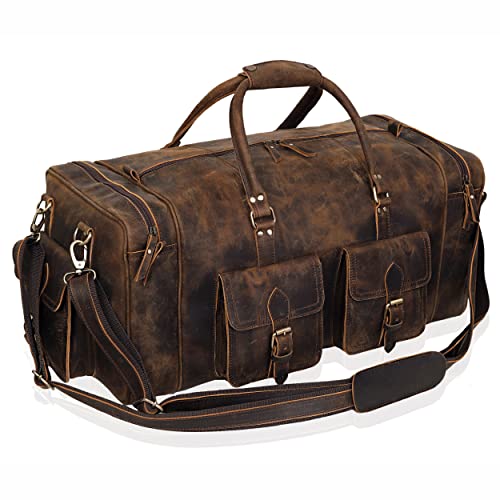
Bulky travel bags often create a strange problem: they offer plenty of room, yet somehow make every small item harder to reach. This large holdall takes a more practical route by pairing an open main compartment with separate side and front storage. Among the best duffle bags for weekend trips, its 24-inch frame stands out for travelers who pack shoes, thicker clothing, gym gear, or several outfit changes. The generous size is useful, though it also demands a little restraint because filling every inch can produce a fairly heavy load.
24-Inch Leather Canvas Duffle Bag
The first impression comes from the bag's genuine leather exterior and traditional holdall shape. It doesn't resemble a lightweight nylon gym sack, nor does it try to imitate rigid rolling luggage. The leather construction gives it a substantial, old-school character, while the canvas lining helps separate clothing and personal items from the rougher inner surface of the hide. Handmade production also gives the bag a less uniform appearance, so minor variations in grain and tone should be expected rather than treated as defects.
Its listed dimensions are 24 inches long, 12 inches high, and 11 inches wide, which places it on the larger side of weekend duffles. That footprint leaves enough space for folded jeans, shirts, toiletries, a light jacket, and other short-trip basics without forcing everything into a tight stack. Toss in gym clothing or sports accessories, and there is still workable room if packing stays reasonably organized. Still, this isn't a tiny under-seat bag, and the size may feel excessive for a single overnight stay with only a change of clothes.
The overall build favors flexible capacity instead of rigid organization. Soft-sided construction makes it easier to fit oddly shaped items, and the bag can settle into a trunk or luggage rack without fighting for every inch. On the flip side, a soft duffle won't protect delicate belongings as well as a hard-shell case. Cameras, glass containers, and easily crushed items need their own protective sleeves or padded cases inside the main compartment.
Storage Layout And Packing Experience
The large main compartment handles most of the heavy lifting. Clothing, towels, workout gear, and travel essentials can sit together without the narrow openings found on some fashion-focused leather bags. A broad central space also makes packing cubes useful because the interior isn't chopped into several restrictive sections. The tradeoff is simple: without cubes or pouches, smaller belongings can drift to the bottom and turn a quick search into a full unpacking session.
Two large side pockets provide the most practical separation in the design. Shoes can stay away from clean shirts, while cables, grooming kits, or sports accessories can be grouped without eating into the center of the bag. This setup helps after a gym visit or a rainy walk, when dirty footwear has no business rubbing against fresh clothing. The pockets still share the bag's total volume, though, so stuffing both sides with bulky shoes naturally reduces the usable room in the middle.
The front pocket suits items that need to stay close at hand, including a phone, wallet, cash, keys, or travel documents. That sounds basic, but it solves one of the most irritating problems with oversized duffles: losing a small item beneath layers of clothing. The pocket is better suited to flat essentials than bulky accessories, and valuable items shouldn't be left there unattended in crowded places. Used sensibly, it keeps routine travel stops quicker and cuts down on frantic zipper opening at check-in counters.
Packing this bag rewards a bit of planning. Heavier pieces work better along the bottom, shoes belong in the side sections, and softer clothing can fill the gaps around structured items. A couple of small organizer pouches prevent chargers, toiletries, and loose accessories from roaming through the main compartment. Packed that way, the bag feels spacious rather than chaotic, which is the difference between useful capacity and a leather-lined black hole.
Carrying Comfort And Travel Practicality
A 24-inch leather duffle can carry a serious amount of gear, but weight management matters more here than it does with a small synthetic bag. Genuine leather already has more heft than thin polyester, and a fully loaded compartment adds up quickly. Carrying it from the house to a car should be straightforward, while a long walk through a large airport may expose the limits of shoulder-based luggage. Packing only what the trip requires keeps the bag comfortable enough for its intended weekend role.
The holdall format makes this bag particularly sensible for road trips, overnight stays, and gym-to-hotel routines. It can sit across a back seat, slide into a trunk, or rest on a luggage cart without the rigid shape of a suitcase. Soft sides are forgiving in tight storage areas, although the bag may slump when only partly filled. That relaxed structure is handy for transport but less polished when the bag needs to stand upright on its own.
Cabin use depends on the carrier's rules and how heavily the bag is packed. The listed measurements may fit within some carry-on limits, but a soft bag can bulge beyond its stated dimensions once every pocket is full. Airline size policies vary, so the bag shouldn't be assumed to qualify on every flight simply because it is described as a cabin duffle. Keeping the side pockets lightly packed gives the body a better chance of fitting into an overhead compartment.
From a practical angle, a relevant reference is the best 22-inch rolling duffle bag category, which highlights a different answer to the same carrying problem. Wheels reduce shoulder strain during long terminal walks, while this leather holdall favors flexible storage and a more traditional appearance. The leather bag makes more sense for short carries and vehicle-based trips. Rolling alternatives become easier to live with once heavy loads and long distances enter the picture.
Leather Character And Maintenance Tradeoffs
Genuine leather develops character with use, including creases, color shifts, and surface marks. Some people see that aging process as part of the appeal, while others prefer a bag that looks unchanged after every trip. This material won't behave like wipe-clean nylon, and careless storage can leave it dry, misshapen, or marked. Keeping it away from prolonged moisture and intense heat helps preserve the finish.
The canvas interior lining is a sensible addition because it gives clothing a cleaner surface and makes the inside feel more finished. Canvas is durable enough for ordinary travel gear, but leaked shampoo or damp gym clothing can still leave stains and odors. Toiletries belong in sealed pouches, and wet items should be removed as soon as the trip ends. A quick airing after use prevents the closed bag from holding onto stale smells.
Leather care doesn't need to become a weekend hobby, yet occasional attention pays off. Dust can be removed with a soft cloth, and a suitable leather conditioner may help prevent excessive dryness over time. Spot treatments should be tested cautiously because leather color can change, especially on handmade pieces with natural variation. Harsh household cleaners are a poor match for natural leather surfaces and may cause more damage than the original mark.
Storage also affects how the bag ages. Leaving it crushed beneath heavier luggage can create deep folds, while sealing it in plastic may trap moisture. A breathable dust cover and light internal stuffing help the 24-inch shape hold steady between trips. That routine asks for more care than a basic sports duffle, but it supports the material's long-term appearance and keeps the holdall ready for the next outing.
Pros, Weaknesses, And Best-Fit Situations
Pros: The biggest strength is straightforward capacity backed by a useful pocket layout. The main compartment handles clothing and larger gear, the side sections separate shoes or accessories, and the front pocket keeps small essentials accessible. Genuine leather gives the bag a distinctive appearance that doesn't feel disposable or overly sporty. Its multi-use shape also works for weekend travel, gym sessions, overnight stays, and sports equipment.
More strengths: Soft construction adapts to irregular loads and fits into vehicle storage more easily than rigid luggage. The canvas lining adds a practical barrier inside, while handmade construction gives each bag slight visual variation. A 24-inch length offers room for bulkier pieces that compact duffles struggle to accept. For a two- or three-day trip involving shoes and layered clothing, that extra space can spare the zipper from constant strain.
Weaknesses: Leather weight is the clearest drawback, especially after the main compartment and both side pockets are filled. The bag lacks wheels, so every extra pair of shoes or heavy toiletry bottle eventually lands on the hand or shoulder carrying it. Soft sides also provide limited impact protection and may sag when the load is uneven. Travelers who prefer highly structured compartments may need packing cubes to keep the interior under control.
Other limitations: The generous dimensions may be more than necessary for minimalist overnight packing, and airline acceptance can't be assumed across every carrier. Natural leather requires more careful cleaning and storage than synthetic fabric. Shoe pockets improve separation but reduce central capacity whenever they hold bulky footwear. These tradeoffs don't undermine the bag's purpose, but they make it better suited to short carries, road travel, and organized weekend packing than long terminal walks with an overloaded load.
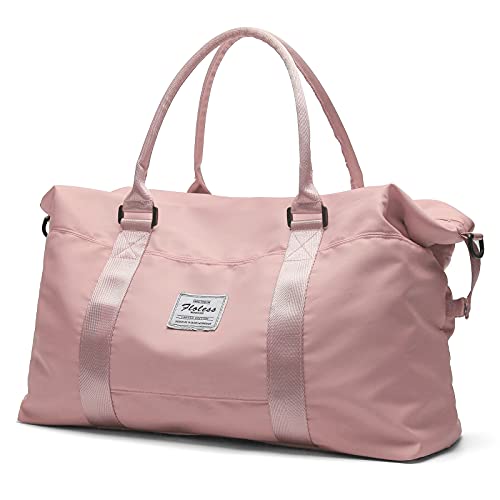
Women’s 30L Travel Duffel Bag Review
Wet towels, loose chargers, and a stuffed jacket can turn a short getaway into a surprisingly messy affair. This travel duffel bag tackles that familiar chaos with a 30-liter interior, six pockets, and a separate water-resistant section for damp gear. It fits naturally among the best duffle bags for weekend travel because its layout favors practical separation rather than one oversized compartment where everything gets jumbled together. The design is geared toward three-to-five-day packing, though the final fit still depends on clothing thickness, footwear, and how much just-in-case gear sneaks into the load.
30L Women’s Travel Duffel Bag
The bag measures 10.63 by 21.65 by 7.09 inches, giving it a long, moderately slim shape rather than the boxy build of a small suitcase. That profile leaves room for folded clothing, toiletries, workout gear, and a few travel extras without making the bag look oversized. A stated 30-liter capacity lands in a useful middle ground for weekend travel, particularly when packing lighter fabrics or using compact organizers. Heavy sweaters and bulky shoes will eat through that space faster, so the three-to-five-day claim works best with sensible packing.
Its nylon fabric is described as tear resistant and water resistant, two qualities that suit busy travel days and gym routines. Nylon usually keeps the empty weight lower than leather or heavily structured canvas, which matters once the interior is full. The water resistance can help with light splashes, damp floors, or a quick walk through drizzle, but it shouldn’t be treated as full waterproofing. Zippers, seams, and prolonged exposure can still let moisture reach the contents.
The overall shape works as a weekender, sports tote, gym bag, or overnight holdall, so it doesn’t lock itself into one narrow purpose. That flexibility is handy for trips that blend casual travel with exercise, swimming, or business errands. Still, a soft-sided design won’t shield fragile belongings from pressure or impact. Electronics and breakable toiletries need padded sleeves or protective cases rather than relying on the outer fabric alone.
Dry And Wet Separation
The standout feature is the dry-wet separated pocket made with high-density water-resistant material. Damp towels, sweaty clothing, or a swimsuit can sit apart from clean shirts and travel documents instead of spreading moisture through the main compartment. That separation solves a real nuisance after a gym session or hotel swim, especially when there isn’t time to let everything dry. The pocket also reduces the need for disposable plastic bags, though very wet items should still be wrung out before packing.
A water-resistant pocket controls moisture better than an ordinary fabric divider, but it can’t make damp clothing disappear. Sealing wet gear inside for hours may trap odor, and the pocket should be emptied soon after reaching the destination. The moisture barrier protects nearby belongings during transit, not during long-term storage. A quick wipe and a little air circulation after use will help keep the lining from developing a stale smell.
The separate section can also hold toiletries that are prone to leaking. Shampoo, lotion, and liquid makeup have a habit of escaping at the worst possible moment, so placing them inside a sealed pouch within the water-resistant compartment adds another layer of protection. That arrangement isn’t foolproof, mind you, because loose caps and crushed bottles can still create a mess. Small reusable toiletry bags remain worthwhile for containing spills and making cleanup easier.
Space is the unavoidable tradeoff. A loaded wet pocket shares the bag’s overall capacity, so a towel or pair of damp sneakers may press into the main storage area. Thin items fit with little fuss, while bulky gear can distort the bag’s shape. The feature earns its keep when used selectively rather than as a second full-size compartment.
Six-Pocket Storage Layout
Six pockets give the bag more structure than a basic single-compartment duffel. Small travel pieces such as earbuds, charging cables, keys, grooming items, and documents can stay grouped instead of sinking beneath clothing. This multiple-pocket layout cuts down on rummaging during airport lines or early hotel departures. It also helps keep frequently used items accessible without opening the entire bag in a crowded space.
Pockets only help when they match the size of the items being carried. Overfilling every section can create lumpy sides, strained zippers, and less usable room in the center. The smartest approach is to reserve pockets for genuinely small essentials while leaving clothing and larger pieces in the main compartment. That keeps the bag balanced and prevents organization from becoming clutter in disguise.
The 30-liter interior should accommodate a practical short-trip wardrobe: a few tops, lightweight pants, underwear, sleepwear, toiletries, and a compact extra layer. Packing cubes can make the rectangular space easier to manage, particularly when clean and worn clothing need to stay apart. Shoes remain the trickier item because the description doesn’t specify a dedicated shoe compartment. A separate shoe pouch can prevent dirt from reaching clothing without occupying every available pocket.
From a sizing angle, a related reference appears in the best 18-inch travel bag category, where shorter bags generally favor lighter loads and tighter storage spaces. This 21.65-inch model offers more horizontal room, which suits folded outfits and longer items but may feel less compact beside a small personal bag. The difference matters most on crowded transportation or trips where every inch of storage counts. Bigger isn’t automatically better, and the extra length earns its place only when the packing list needs it.
Airport And Luggage Handling
The integrated trolley sleeve slides over the handle of rolling luggage, reducing the need to carry the duffel on one shoulder through an airport. That feature can make a noticeable difference during long walks between check-in, security, and the gate. It also keeps the bag from slipping off the suitcase whenever the pace changes. Travelers who already use rolling luggage will get more value from the sleeve than those carrying the duffel alone.
The product is presented as an airplane-friendly carry-on bag, but airline limits aren’t universal. Its listed dimensions may suit many travel situations, yet personal-item and carry-on rules vary by carrier, ticket type, and route. A fully packed soft bag can also bulge beyond its stated measurements. Checking the applicable size allowance before departure avoids an unpleasant surprise at the gate.
The long shape should rest comfortably across the top of a rolling suitcase, provided the trolley sleeve fits the handle securely. Heavy packing may make the setup top-heavy, especially if dense items sit near one end. Placing shoes and toiletry bottles toward the center helps maintain better weight distribution. Balanced packing also reduces twisting when the bag is carried by hand or over the shoulder.
Soft nylon can squeeze into an overhead space more easily than rigid luggage, though that flexibility cuts both ways. Overstuffing may make the bag difficult to slide into a tight compartment, and delicate contents can be compressed by surrounding bags. Keeping the top layer soft gives the exterior some room to flex. Hard or fragile objects belong closer to the center, wrapped by clothing or protected in a case.
Three Carrying Styles
The removable, adjustable strap supports shoulder and crossbody carrying, while the regular handles allow the bag to function as a handbag. Switching styles helps during travel because no single carry method feels comfortable in every situation. Hand carrying works for quick transfers, shoulder carrying frees one hand, and crossbody positioning offers more stability while walking. The adjustable length also allows the bag to sit higher or lower depending on body size and load.
A 30-liter bag can become tiring once packed with shoes, toiletries, and several days of clothing. The strap’s usefulness therefore depends on padding, attachment strength, and how evenly the contents are arranged, details not fully described in the provided information. A lighter load will naturally feel easier than a bag filled to its limit. For longer airport walks, the trolley sleeve may prove more comfortable than relying on the shoulder strap.
Crossbody carry can reduce slipping, but a broad duffel may bump against the hip during fast movement. Shortening the strap keeps the bag closer to the body, while placing heavier items at the bottom limits swinging. The handles remain useful for stairs, vehicle loading, and moving the bag through narrow spaces. Each option has a practical role, which is more useful than treating one carrying style as the answer to everything.
Removable hardware adds flexibility but also creates one more component to inspect. Strap clips and attachment points carry substantial stress when the bag is full, so they shouldn’t be twisted or overloaded. Lifting by both handles may be the safer choice with a dense load. The shoulder strap is better reserved for moderate packing rather than testing the maximum capacity on every trip.
Strengths And Practical Limits
Strength: The dry-wet pocket directly addresses a common problem for gym visits, beach weekends, and hotel stays. Six pockets offer practical sorting, while the 30-liter main area leaves enough flexibility for clothing and everyday travel gear. The trolley sleeve adds real value beside rolling luggage, and the three carrying options adapt to different parts of a trip. Taken together, these features create a bag that handles mixed routines without requiring separate gym and travel bags.
Strength: Water-resistant, tear-resistant nylon keeps the construction lighter and easier to maintain than many leather holdalls. The fabric should be simpler to wipe clean after contact with gym floors, car trunks, or damp surfaces. Its soft structure also makes storage easier once the trip is over. Folded or lightly filled, it should demand less closet space than rigid luggage.
Weakness: The bag doesn’t provide the impact protection of a structured suitcase, and a crowded interior can become disorderly without packing pouches. Water resistance isn’t the same as waterproofing, so prolonged rain or a major spill can still reach the contents. The wet section may trap odor if damp items are forgotten inside. Also, filling every pocket can make the 21.65-inch body bulky and uncomfortable to carry.
Tradeoff: A 30-liter capacity suits several days of careful packing, but it may be too large for a minimal overnight outing and too small for bulky cold-weather wardrobes. Airline suitability depends on current carrier rules rather than the product label alone. The trolley sleeve shines during airport travel, yet it adds little during car-only trips. These limits are manageable, but they shape where the bag feels most natural and where another luggage style may be easier to handle.
Large Women’s 35L Weekend Travel Duffle Bag
Packing for a few days can get messy fast, especially once shoes, toiletries, a water bottle, electronics, and damp clothing all start competing for the same space. This large women’s travel duffle bag approaches that problem with 11 pockets, a 35-liter capacity, a separate shoe compartment, and a waterproof wet pocket rather than relying on one oversized cavity. That practical layout gives it a strong place among the best duffle bags for weekend trips, where easy access often matters more than squeezing in one more outfit. At 20.5 by 8.5 by 12.7 inches and 2.1 pounds, it offers substantial storage without beginning the trip as a heavy piece of luggage.
Large Women’s 35L Weekend Duffle
The bag’s 35-liter capacity is designed around three-to-five-day packing, which sounds generous but still rewards a little discipline. Lightweight tops, folded pants, sleepwear, toiletries, and a compact extra layer should fit more comfortably than thick winter clothing or several pairs of shoes. The rectangular body makes the space easier to use than a narrow barrel-shaped duffle, since folded items can sit flatter instead of bunching toward the center. Still, packing every pocket to the brim may cause the soft exterior to bulge beyond its listed dimensions.
Eleven pockets give the interior a much more deliberate layout than a basic gym sack. The main compartment handles clothing and larger belongings, while two front organized sections and two side pockets create places for an iPad, curling iron, toiletries, water bottle, or other daily essentials. That division cuts down on the usual hunt for a charger buried beneath a sweatshirt. The catch is that heavily filling smaller pockets can reduce the central space, so organization works best when each compartment has a clear job.
The black exterior keeps the bag visually simple enough for business travel, hospital packing, gym visits, or casual weekends. A neutral finish also hides minor marks better than pale fabric, though dust and lint may still show depending on the material texture. The shape leans more toward a structured travel tote than a floppy sports bag, giving it a neater appearance when partly packed. Soft-sided construction remains flexible, however, so fragile objects still need their own padded cases.
Eleven Pockets And Everyday Organization
The two front organized compartments are useful for items that need to remain within reach during transit. Travel documents, a phone charger, keys, or small personal care items can stay outside the main clothing area, which saves time at hotel desks and airport checkpoints. A front pocket also prevents frequently handled objects from being crushed beneath heavier gear. Overloading it with bulky accessories may make the front panel sag, so flatter essentials are the better fit.
Two side pockets add another layer of separation without forcing everything into internal pouches. A water bottle or compact umbrella can sit apart from electronics, while a curling iron or hair tools can remain away from folded clothing after they’ve cooled. Side storage also makes the bag easier to use during a road trip because essentials can be reached without opening the top. Large bottles may stretch the profile outward, though, which can matter in crowded overhead compartments.
The included toiletry bag gives cosmetics, medicines, hair accessories, and personal care products a dedicated place. That extra pouch helps prevent small containers from rolling around the main compartment and makes bathroom unpacking less of a production. Liquid products should still be sealed carefully because a separate pouch doesn’t guarantee leak protection. Used well, it turns a scattered collection of small items into one grab-and-go bundle.
Organization can become counterproductive if every pocket is treated like a challenge to fill. The bag works more smoothly when clothing stays in the main section, travel documents use the rear or front zip pocket, and liquids remain grouped inside the toiletry pouch. This purpose-based layout keeps weight evenly distributed and makes the interior easier to scan. Otherwise, eleven pockets can become eleven places to forget where something was stored.
Wet Pocket And Shoe Compartment
The waterproof PVC-lined wet pocket separates damp clothing, swimsuits, or towels from clean belongings. That feature solves a common problem after swimming, yoga, or a gym session, where even slightly wet fabric can spread moisture and odor through the entire bag. The wet-dry separation is especially useful when checking out of a hotel before workout clothes have dried. It isn’t meant for long-term storage, so damp items should still be removed and aired out soon after arrival.
A flat bottom compartment keeps shoes or dirty clothing away from the upper storage area. This shoe section protects clean shirts from dusty soles and gives the bag a more stable base when packed thoughtfully. It can also hold diapers, wipes, or other items that benefit from being separated from personal clothing. The downside is straightforward: filling the lower compartment with bulky footwear reduces the usable height of the main section.
The bottom layout also suits hospital or maternity packing because supplies can be grouped separately without taking over the top compartment. Diapers, wipes, slippers, or folded cloths can sit below while clothing and toiletries remain easier to reach above. That flexibility gives the bag more value than a one-purpose gym tote. Even so, medical items that require rigid protection or temperature control need dedicated containers rather than relying on a soft travel bag.
Wet pockets and shoe compartments are practical, but both alter the internal geometry. A pair of thick sneakers can push upward into folded clothing, while a packed wet pocket may make one side feel heavier. Keeping the heaviest items centered helps prevent the bag from twisting during shoulder carry. A little planning goes a long way here, because the separated design performs best when each section is used without being overstuffed.
Carry-On Features And Airport Use
The listed dimensions are intended to meet many international carry-on requirements, and the soft body may fit into an overhead compartment more easily than rigid luggage of a similar size. Airline rules still vary, though, and a fully loaded bag can expand beyond its stated measurements. The 20.5-inch length should be checked against the specific carrier’s personal-item or carry-on allowance before departure. Under-seat placement may also depend on how heavily the side and bottom compartments are packed.
A luggage strap on the back slides over a rolling suitcase handle, which can spare the shoulder during long terminal walks. This trolley sleeve also helps keep the duffle from slipping sideways whenever the suitcase turns or stops. A rear zippered pocket holds a smartphone, passport, or identification close to the body while the bag rests on the suitcase. That placement is practical, though valuables should still remain monitored in crowded areas.
The 2.1-pound empty weight is a sensible starting point for a bag with this many compartments and reinforced details. A lighter shell leaves more of the airline weight allowance available for actual belongings, but the 35-liter volume can still become heavy once shoes, liquids, and electronics are added. Shoulder comfort depends as much on packing habits as on the strap itself. Spreading dense items across the base prevents one side from dragging lower than the other.
From a broader luggage-planning angle, a neutral reference appears in best luggage sets under $100, where coordinated rolling pieces solve a different travel problem than this soft weekender. A luggage set offers structure and wheels for longer trips, while this duffle favors quick access, flexible packing, and short stays. The two formats can also work together because the rear sleeve lets the bag ride on a suitcase handle. That pairing makes more sense for airport travel than carrying a fully loaded duffle by hand from curb to gate.
Handles, Strap, And Build Details
The removable adjustable shoulder strap includes padding, giving the bag several carrying options without permanently attaching extra webbing. It can ride on one shoulder, crossbody, or by the two fixed handles depending on the load and walking distance. The rounded handles should feel more comfortable than thin flat straps during quick lifts into a trunk or overhead bin. Long carries may still become tiring because a 35-liter duffle can hold more weight than its soft shape suggests.
Thick handle material and reinforced seams address the areas that usually take the most stress. Those details matter because handle anchors bear the full load whenever the bag is lifted from the floor. The reinforced stitching supports everyday travel use, though no soft bag benefits from being dragged or yanked by one handle while fully packed. Lifting with both handles distributes strain more evenly across the construction.
Metal zippers are described as resistant to rust, which suits a bag that may encounter wet towels, humid locker rooms, or rainy travel days. Smooth zipper movement matters because overstuffed compartments place extra tension on the teeth and pulls. The metal hardware adds a more substantial feel than lightweight plastic components, but it can still wear if repeatedly forced around bulky contents. Leaving a little room near each opening reduces snagging and helps the compartments keep their shape.
Five metal feet raise the base slightly above floors, protecting the fabric from direct contact and repeated abrasion. This small bottom protection is handy in airports, gyms, hospital rooms, or hotel lobbies where surfaces may be damp or dirty. The feet won’t keep the entire base clean if the bag tips or sits in a puddle, but they reduce wear at common contact points. They also give the lower shoe compartment a touch more structure when the bag is standing upright.
Strengths, Weaknesses, And Realistic Fit
Strength: The strongest part of this design is the way it separates competing travel needs. Clean clothes, wet items, shoes, toiletries, documents, and small electronics each have a logical place instead of sharing one crowded compartment. The 35-liter capacity supports a short multi-day trip while the trolley sleeve makes airport handling less awkward. Its included toiletry pouch also adds practical value without requiring another organizer purchase.
Strength: The bag adapts to more than one routine, including weekend travel, yoga, hospital stays, gym sessions, maternity packing, and business trips. That flexibility comes from the combination of multiple pockets, a removable padded strap, a rear luggage sleeve, and a separated lower section. The black finish keeps the appearance restrained enough for different settings. At 2.1 pounds empty, it also avoids wasting too much carrying capacity on the bag itself.
Weakness: Eleven pockets can encourage overpacking, and the bag may become cumbersome once every compartment is filled. The shoe section and wet pocket share the same overall volume as the main compartment, so neither creates extra space out of thin air. Soft construction offers limited protection for fragile belongings and may lose its shape with an uneven load. Carry-on compatibility also depends on actual packed dimensions and airline rules rather than the product description alone.
Tradeoff: The 35-liter size is generous for light three-to-five-day packing, yet it may feel oversized for a bare-bones overnight stay. Thick shoes, winter layers, and full-size toiletries can reduce the practical trip length despite the roomy specifications. The trolley sleeve and rear passport pocket make the bag especially sensible beside rolling luggage, while vehicle-only trips won’t benefit as much from those details. Its best use lies in organized short travel where separation matters more than hard-shell protection.
Lucky 65L Foldable Travel Duffel Bag
A short getaway can turn into a packing headache once bulky shoes, extra layers, toiletries, and last-minute essentials start piling up. The Lucky 65L travel duffel answers that problem with an expandable main compartment, a lightweight foldable build, and two front pockets for items that shouldn't disappear beneath clothing. Its roomy design earns attention among the best duffle bags for weekend trips, especially when a compact overnight tote simply won't hold enough. The generous capacity is the main attraction, though that same size can become cumbersome when every inch is filled.
Lucky 65L Foldable Duffel
The bag measures 25 by 13 by 12 inches, placing it firmly in the extra-large duffel category. Its main compartment expands to a stated 65-liter capacity, leaving room for clothing, shoes, towels, sports equipment, or hospital essentials without forcing everything into a tight stack. That open layout makes it easy to pack irregularly shaped gear that would be awkward inside a rigid suitcase. Small belongings can wander around, however, so packing cubes or zip pouches may be needed to keep the interior from becoming a jumble.
The foldable construction gives this large bag a practical edge between trips. Once empty, it can be collapsed and stored in a closet, vehicle compartment, or larger suitcase without claiming the permanent space of structured luggage. That flexibility also makes it useful as a backup bag for purchases or extra clothing on the return journey. A foldable shell won't stand upright as reliably as a framed duffel, so the bag may slump when partly loaded.
Loden green gives the exterior a quieter, outdoorsy appearance than plain black, while the rubber Lucky clover patch adds a recognizable detail without changing how the bag functions. Other listed shades include camouflage, crimson, olive, navy, and black, which broadens the visual choices. Color variety can help the bag stand apart on a luggage rack or in a crowded gear room. Still, appearance is secondary to packing balance because a sagging, overloaded duffel won't become easier to carry just because the color looks sharp.
Large Capacity And Packing Flexibility
The 65-liter interior is best understood as flexible volume rather than a promise that every trip will feel effortless. Light clothing, soft jackets, gym gear, and towels can fill the compartment efficiently because they compress around one another. Boots, helmets, or thick winter layers consume space much faster and create uneven pressure along the sides. A broad central compartment handles those bulky pieces better than a highly divided bag, but it offers less built-in separation.
Weekend packing can quickly drift into overpacking with this much room available. The temptation to toss in another pair of shoes, a full-size toiletry kit, and several backup outfits is strong because the zipper may still close. Weight control matters more than capacity once the bag leaves the bedroom floor. A duffel that feels spacious during packing can feel like a sack of bricks during a long walk through a terminal or parking lot.
Two front zippered pockets keep smaller items outside the main cavity. A phone charger, keys, wallet, travel documents, or headphones can stay within reach instead of sinking beneath clothing. These quick-access pockets are useful during short stops and check-in routines, though they shouldn't be treated as secure storage in unattended public spaces. Flat essentials fit best because bulky items can make the front panel protrude and affect the bag's balance.
The open compartment also suits sports and camping gear that doesn't fit neatly into traditional luggage. Football pads, hockey accessories, blankets, or workout clothing benefit from the bag's forgiving shape. A related reference appears in best duffel bag for weekend travel, where capacity, carrying comfort, and storage layout often matter more than decorative details. This Lucky model leans heavily toward maximum room and flexible use rather than compact organization.
Carry Options And Handling
Handle straps support quick lifts into a car trunk, locker, or luggage rack. The adjustable shoulder strap adds another carrying option and frees one hand during shorter walks. That versatility is welcome because different loads call for different handling methods. A lightly packed bag may ride comfortably on the shoulder, while a fully loaded 65-liter compartment can become tiring regardless of strap adjustment.
Shoulder comfort depends on how the contents are arranged. Dense items placed at one end can cause the bag to tilt, swing, or pull against the neck. Keeping heavier pieces near the center creates better weight distribution and reduces the awkward pendulum effect common with long duffels. Soft clothing around hard gear also helps prevent sharp edges from pressing through the outer fabric.
The 25-inch length gives the bag a substantial footprint, so moving through narrow airplane aisles or crowded platforms may take a little care. Hand carrying keeps the bag closer to the body during tight turns, while the shoulder strap works better in open spaces. The large profile is less convenient than a compact tote when the load is minimal. Its size starts making sense once bulky clothing, sports equipment, or several days of supplies are part of the plan.
Dragging the bag across rough floors would place unnecessary stress on the fabric and seams because no wheels are listed. Lifting by both handles distributes strain more evenly than yanking one strap under a heavy load. The shoulder strap should also be checked for twisting before the bag is raised. Those small habits won't change the capacity, but they can make a large soft-sided duffel easier to manage.
Air Travel And Carry-On Limits
The product is described as suitable for airplane travel, yet carry-on acceptance always depends on the airline's current size and weight rules. At 25 inches long, the bag may exceed certain standard carry-on limits, particularly after the main compartment expands and the sides bulge. Soft construction can help it compress into an overhead bin when lightly packed. A full 65-liter load is much less forgiving and may need to be checked.
The bag makes more practical sense as an airline carry-on when it isn't filled to maximum capacity. Leaving room around the edges allows the body to flex and keeps the dimensions closer to their listed size. Moderate packing also reduces shoulder strain during security lines and gate changes. Treating the full volume as optional space rather than a target can prevent the bag from becoming unwieldy.
Essentials stored in the front pockets remain easier to reach during airport routines. Identification, a charging cable, or boarding documents can stay separate from the main clothing compartment. The quick-access layout cuts down on opening the entire bag in crowded areas. Valuable items still require attention because exterior pockets are convenient for the owner and potentially visible to others.
Rigid suitcases offer better protection for fragile belongings, while this duffel favors soft gear and adaptable storage. Electronics, glass containers, and delicate equipment need their own padded cases inside the main compartment. The soft-sided design can absorb pressure from nearby bags rather than shielding the contents from it. That tradeoff is acceptable for clothing and sports gear but less reassuring for breakable items.
Multipurpose Use Beyond Weekend Trips
The bag's broad interior suits more than travel. It can serve as a gym bag, camping holdall, football bag, hockey bag, workout carrier, overnight bag, or hospital bag according to the provided uses. That range comes from the simple open layout rather than specialized compartments. The same flexibility that welcomes bulky equipment also means loose accessories need separate organizers.
Hospital packing benefits from easy access and generous capacity, especially when clothing, slippers, blankets, and personal-care items must stay together. Camping gear can also fit well because soft items compress into the corners. A large central compartment handles changing packing lists without forcing each item into a fixed pocket. Wet or dirty gear should be isolated in separate bags, since no dedicated waterproof section is listed.
Sports use highlights both the bag's capacity and its limitations. Uniforms, pads, shoes, and towels can fit in one place, but damp equipment may spread odor through the compartment if left inside. A washable liner or sealed pouch would help separate sweaty clothing from clean items. The lack of dedicated ventilation means the bag should be emptied and aired out after workouts or games.
As a backup travel bag, the foldable body earns its keep. It can ride inside larger luggage on the outbound trip and carry extra purchases, laundry, or gear on the way home. That pack-away convenience is harder to get from rigid luggage. The tradeoff is reduced structure, so the bag may need careful packing to keep its shape when partially filled.
Pros, Cons, And Practical Tradeoffs
Pros: The standout benefit is the expandable 65-liter capacity, which gives bulky clothing and sports gear room to breathe. Two front zipper pockets improve access to small essentials, while the adjustable shoulder strap and handle straps offer flexible carrying. The foldable build also reduces storage hassle between trips. Its range of colors adds personality without interfering with the practical design.
More strengths: The bag adapts easily to vacations, gym routines, hospital stays, camping, and team sports. Soft sides accept awkwardly shaped belongings better than a rigid case, and the open compartment doesn't force a fixed packing system. The 25-inch body provides useful length for larger items that compact weekend bags struggle to hold. For vehicle-based trips or short transfers, that capacity can be more helpful than a maze of small compartments.
Cons: A full 65-liter load can become heavy and uncomfortable without wheels. The large size may not meet every airline's carry-on limits, despite being described for airplane use. Limited internal organization can also lead to clutter unless packing cubes or pouches are added. Soft construction offers less impact protection and may sag when the contents are uneven.
Practical difference: This bag favors maximum flexible storage over compact dimensions, rigid support, or specialized separation. It fits best where bulky gear and foldable storage matter more than polished suitcase handling. Light packers may consider it more bag than they need, while sports equipment and layered clothing can make the extra room worthwhile. Its strengths show most clearly on road trips, gym runs, hospital stays, and weekend travel that involves short carrying distances.
Litvyak Expandable Canvas Travel Duffle Bag
A bag that looks manageable at home can turn into a shoulder-dragging beast once shoes, electronics, clothes, and last-minute extras pile in. The Litvyak expandable duffle takes a more adaptable route, starting at 20.87 inches long and stretching to 23.62 inches when additional room is needed. That expandable shape gives it a practical place among the best duffle bags for weekend travel, particularly for trips where the return load may be larger than the outgoing one. The tradeoff is simple: extra space invites extra weight, and a fully extended canvas bag won’t feel as nimble as it did while empty.
Litvyak Expandable Canvas Duffle
The core dimensions measure 20.87 by 11.81 by 10.24 inches, creating a broad rectangular profile that suits folded clothing, shoes, toiletries, and daily electronics. Two side zippers extend the length to 23.62 inches, giving travelers a little breathing room without requiring a second bag. That change is useful after a shopping stop, a weather shift, or a weekend where dirty laundry refuses to fold as neatly as clean clothing. Still, extending the bag changes its balance, so dense items should stay near the center rather than sliding toward the new outer edges.
The expandable design is more than a novelty because it allows the same bag to handle different packing lists. Kept compact, it works better for an overnight stay or a lighter business trip. Opened fully, it can accept bulkier shoes, extra layers, or sports gear that would otherwise strain the main zipper. The bag won’t magically become easier to carry at maximum size, though, so capacity should be treated as optional room rather than a challenge to fill.
Its black finish keeps the look restrained and easy to pair with business clothing, gym wear, or casual travel gear. Five color choices are mentioned, giving the design a broader visual range without changing the internal layout. The classic canvas appearance feels less technical than a shiny nylon holdall and less formal than leather luggage. Canvas also tends to look relaxed rather than rigid, which suits weekend travel but may not appeal to someone who wants a sharply structured case.
Interior Layout And Packing Control
The interior includes one large main compartment, one zippered pocket, and three smaller pockets. That arrangement provides enough division to keep chargers, keys, grooming pieces, or travel documents from disappearing beneath clothing. A 15-inch laptop or iPad can fit according to the provided details, though neither should travel loose beside shoes or metal accessories. A padded sleeve remains the sensible way to protect electronics inside a soft canvas body.
The main compartment handles the larger pieces without forcing them through a narrow opening. Folded jeans, shirts, a light jacket, and a pair of shoes can sit together more naturally than they would inside a heavily divided tote. The open storage area also accommodates oddly shaped gear, which is handy for camping supplies or gym equipment. On the other hand, that freedom can turn into clutter unless clothing cubes or smaller pouches are used with some discipline.
Three small internal pockets are well suited to items that tend to roam. Earbuds, cables, medication, pens, and compact toiletries can stay grouped without occupying the larger zippered section. This small-item organization saves time during hotel check-in or airport security because the whole bag doesn’t need to be emptied for one charging cable. Bulky accessories should stay out of these pockets, since stretching them can reduce the usable shape of the main compartment.
The interior zippered pocket offers a better place for flatter valuables or documents that need another layer of separation. A passport, wallet, receipts, or spare cash can remain away from damp toiletries and worn clothing. That doesn’t make the pocket theft-proof, of course, but it does reduce accidental loss inside the bag. Keeping frequently used items in one consistent spot also prevents the familiar routine of checking every compartment twice.
Exterior Pockets And Quick Access
Two side zippered pockets and two front zippered pockets give the exterior a useful degree of organization. The four external compartments can hold travel documents, a phone charger, sunglasses, keys, or other items that need to stay within reach. This matters during short stops, where opening the main compartment on a sidewalk or crowded platform feels awkward. Flat items fit best because stuffing the front pockets can make the bag look lumpy and throw off its balance.
Side pockets provide a sensible home for items that shouldn’t mix with clothing. A pair of compact shoes, grooming kit, cables, or small travel accessories can stay apart from the main load. The side storage also helps preserve order when the center compartment is expanded and packed more heavily. Space remains shared, however, so filling both sides with bulky items will naturally press inward against clothing and electronics.
Exterior access is convenient, but it calls for a little common sense. A passport or phone may fit easily, yet visible pockets are still exposed in airports, train stations, and crowded streets. The front zippered sections work better for replaceable essentials than unattended valuables. Used thoughtfully, they speed up travel routines without turning the outside of the bag into an overloaded catch-all.
The pocket layout sets this model apart from bare-bones duffles that offer nothing beyond one large cavity. That difference is useful for travelers who prefer a designated place for smaller gear rather than relying on loose pouches alone. Too many pockets can create their own confusion, though, especially when similar items are scattered across all four exterior sections. Assigning each pocket a specific role keeps the design helpful instead of fussy.
Canvas Material And Hardware
The bag uses high-density cotton canvas paired with classic hardware and a soft lining. Canvas brings a sturdy, familiar feel that suits travel, gym use, camping, and everyday hauling without looking overly sporty. The material also has enough flexibility to fold or compress around soft belongings. It won’t offer the same splash resistance as coated synthetic fabric unless additional treatment is present, so damp environments call for extra care.
Cotton canvas can collect dust, surface marks, and moisture more readily than slick nylon. A soft brush or lightly damp cloth may help with routine cleaning, while soaking the bag could affect its shape or finish. The fabric tradeoff is a more natural texture in exchange for more careful maintenance. Wet towels, leaking toiletries, or muddy shoes belong inside sealed pouches rather than directly against the lining.
Classic hardware gives the exterior a more traditional look, and the large zipper is described as smooth. Zipper performance matters on an expandable bag because extra pressure builds once the compartment is packed near its limit. The main closure should move more freely when clothing is kept away from the zipper track and the corners aren’t overstuffed. Forcing a strained zipper around a packed edge is asking for trouble, no matter how substantial the hardware feels.
The soft lining protects clothing from the rougher inside surface of the canvas and gives the compartment a cleaner finish. It also makes smaller items easier to retrieve because they aren’t catching against raw seams. That said, a lining can hold odors if damp gym clothing sits inside for too long. Airing the bag after travel is a small chore that pays off, especially after sports or camping use.
Carrying Comfort And Luggage Handling
Round stitched handles support hand carrying, while the padded adjustable shoulder strap can be detached when it isn’t needed. Those options let the bag travel by hand, over the shoulder, or crossbody, which is helpful as the load changes throughout a trip. Hand carrying works well for quick lifts, while crossbody positioning keeps the bag closer during longer walks. A large extended load may still pull hard against one shoulder, even with padding.
The shoulder strap becomes more comfortable when heavier items sit low and centered. Shoes or dense toiletries placed at one end can make the bag twist and bounce against the hip. Good weight distribution reduces that awkward movement and keeps the handles from carrying uneven strain. The expandable ends are better reserved for softer pieces such as jackets, laundry, or folded shirts.
Four plastic pads protect the bottom from direct contact with floors. This wear-resistant base detail helps in hotel lobbies, gym locker rooms, airport terminals, or roadside stops where the ground may be dirty. The pads won’t keep the entire canvas bottom clean if the bag tips over or sits in a puddle. They do, however, reduce repeated rubbing at the usual contact points and give the base a little extra separation.
A rear luggage attachment lets the duffle sit over a rolling suitcase handle. That feature can take a load off during long terminal walks and prevent the bag from sliding off the suitcase every few steps. From a practical angle, a related reference appears in best tactical rolling duffel bag, where wheels and heavier structure address demanding loads differently. This canvas model stays lighter and more flexible, while a rolling format handles long-distance carrying with less shoulder strain.
Air Travel And Size Considerations
The product is described as suitable for airplane travel, but the carry-on fit depends on the airline and whether the extension zippers are open. At 20.87 inches long in its smaller form, it may fit more comfortably within common overhead limits than it does at the full 23.62-inch length. Soft sides can compress slightly when the bag isn’t packed solid. Once shoes and clothing push outward, the real exterior dimensions may exceed the listed measurements.
Keeping the bag unexpanded gives it a cleaner chance of fitting into an overhead compartment. The side extensions are better viewed as backup room for road travel, checked baggage, or the return journey rather than guaranteed cabin space. This size flexibility is useful, but it also requires travelers to think ahead instead of assuming one configuration works everywhere. Airline policies and aircraft storage vary, so labels alone don’t settle the issue.
The rear luggage sleeve makes airport movement easier when the bag is paired with a suitcase. A lightly packed duffle should ride more steadily, while an extended and heavy load may make the suitcase top-heavy. Centering the heaviest belongings near the trolley handle helps reduce tipping during turns. Exterior pockets should also remain moderately filled so the bag doesn’t lean forward or catch on nearby seats.
Soft canvas offers less impact protection than rigid carry-on luggage. Electronics, glasses, and breakable toiletries need padding because neighboring bags can press directly against the contents. The flexible shell is better suited to clothing, shoes, towels, and other items that tolerate compression. That distinction matters more on crowded flights where overhead baggage may shift or be rearranged by other passengers.
Pros, Cons, And Best Uses
Pros: The expandable length gives this bag genuine packing flexibility without committing to its largest footprint on every trip. Four exterior zippered pockets and several internal pockets keep small belongings more manageable than they would be in a single-cavity duffle. Three carry styles, a rear luggage sleeve, and bottom pads add practical handling benefits. The cotton canvas construction also gives the bag a casual, durable-looking character suited to travel, gym use, and camping.
More strengths: The interior can accommodate a 15-inch laptop, iPad, clothes, shoes, and daily necessities according to the provided specifications. Soft sides accept irregular items more easily than rigid cases, while the extension zippers provide extra room when plans change. The multi-pocket design works especially well for travelers who dislike digging through one large compartment. Five color options also allow some personal choice without changing the bag’s functional layout.
Cons: Cotton canvas may require more cleaning care than coated nylon and shouldn’t be assumed to resist heavy rain. The expandable size can encourage overpacking, which makes shoulder and crossbody carrying less comfortable. No dedicated wet pocket or ventilated shoe compartment is specified, so damp or dirty items need separate bags. Soft construction also provides limited protection for fragile electronics and may sag when partly filled.
Practical difference: This Litvyak model sits between a compact weekender and a truly oversized gear hauler. It offers more organization and size adjustment than a basic gym bag, yet it lacks the wheels, rigid frame, and weather-focused build found in heavier travel luggage. The bag fits road trips, overnight stays, business travel, camping, and gym routines where flexible packing matters. Its limitations become more noticeable with heavy loads, wet equipment, fragile belongings, or strict airline size limits.

10 Best Sleeping Bags For Tall People of 2026 To Stretch Out Fully

10 Best Diaper Bag Backpacks For Dads of 2026 With Fast Gear Access

9 Best Diaper Bags For Twins of 2026 With Dual Compartments

10 Best Rebecca Minkoff Leather Crossbody Bags Over 300 of 2026 With Genuine Everyday Capacity
11 Best Marc Jacobs Bags of 2026 For Daily Essentials
10 Best Fossil Handbags of 2026 For Everyday Organization

10 Best Tory Burch Handbags of 2026 For Everyday Wear

11 Best Kate Spade Handbags of 2026 For Work and Daily Carry