Best Folding Rocking Camping Chairs 2026 Top Picks

Best folding rocking camping chairs solve a surprisingly familiar campsite problem: sitting still isn't always that comfortable. A regular folding chair gives you somewhere to land, sure, but a gentle rocking motion can make long evenings by the fire feel far less stiff. The catch is that rocking mechanisms add hardware, weight, and moving parts, so the smartest pick isn't automatically the chair with the longest feature list. Seat comfort, packed size, stability, and rocking action matter much more once the chair leaves the patio and starts traveling.
Rocking mechanisms deserve a close look because they don't all behave the same way. Some designs use spring-loaded or piston-style systems that create movement while keeping the feet planted, which can feel reassuring on packed dirt or grass. Others depend more heavily on frame geometry, and that can make uneven campsites a little fussier. A smooth motion feels relaxing, but excessive bounce or resistance gets old fast, especially after you've been sitting through dinner, conversation, and one more log on the fire.
Comfort also comes down to details that photos don't always make obvious. A supportive backrest can reduce that slumped feeling that shows up after an hour in a shallow camp chair, while a roomy seat gives legs and hips a little breathing room. On the flip side, oversized padding and elaborate frames can turn a pleasant chair into an awkward piece of cargo. If the walk from the car to the campsite is more than a few steps, every extra pound suddenly has an opinion.
Folding convenience matters just as much as comfort because nobody wants to wrestle with a chair while everyone else is already relaxing. A frame that opens without pinched fingers, folds without a complicated sequence, and fits neatly into its carry bag makes setup noticeably less annoying. Built-in carry straps can be handy too, especially when hands are already full of coolers, blankets, or firewood. Still, compact packing usually involves a tradeoff, since wider seats and sturdier rocking hardware rarely collapse into ultralight backpacking dimensions.
Ground conditions can make or break the experience. Wide feet and a planted frame generally behave better on soft soil, while narrow contact points may sink into sand or damp ground and interrupt the rocking motion. Gravel can feel rough under certain rocker designs, and steep slopes are rarely friendly territory for any chair meant to move. So, yep, the campsite itself matters almost as much as the chair, and a model that feels buttery smooth on a lawn may act quite differently beside a rocky fire ring.
Storage features are worth having, but only if they stay out of the way. A cup holder, side pocket, or small organizer keeps a drink, phone, flashlight, or paperback close without forcing repeated trips back to the tent. Oversized accessory panels, though, can add bulk and sometimes interfere with folding. Practical beats flashy here. A simple pocket in the right spot often earns more use than three oddly shaped compartments that seemed clever on the product page.
Material choices deserve some skepticism as well. Breathable mesh can feel better during hot afternoons, while thicker fabric offers a cozier seat in cooler weather and may provide more structure. Steel frames often feel planted but tend to weigh more, while lighter frame materials can be easier to carry without always delivering the same reassuring heft. No single setup wins everywhere, so the useful question is whether the chair's compromises match the way it'll actually be hauled, stored, and used.
The strongest options balance motion with ordinary camp-chair practicality instead of treating rocking as the whole show. A chair still needs to open easily, stay steady, support the body comfortably, and survive repeated packing without becoming a nuisance. Smooth rocking, manageable weight, sensible dimensions, and dependable support are the traits that keep showing their value after the novelty wears off. Get those basics right, and settling beside the fire feels less like sitting on temporary furniture and more like claiming the spot nobody wants to give up.
- TLR Rank9.4
TLR Rank is a ranking system developed by TravelLuggageReviews.com. TLR Rank has no relationship or impact from any manufacturers or sales agent websites. Learn more
- BrandGCI Outdoor

- TLR Rank7.1
TLR Rank is a ranking system developed by TravelLuggageReviews.com. TLR Rank has no relationship or impact from any manufacturers or sales agent websites. Learn more
- BrandRomswi

- TLR Rank9.1
TLR Rank is a ranking system developed by TravelLuggageReviews.com. TLR Rank has no relationship or impact from any manufacturers or sales agent websites. Learn more
- BrandGCI Outdoor

- TLR Rank7.9
TLR Rank is a ranking system developed by TravelLuggageReviews.com. TLR Rank has no relationship or impact from any manufacturers or sales agent websites. Learn more
- BrandGCI Outdoor

- TLR Rank7.9
TLR Rank is a ranking system developed by TravelLuggageReviews.com. TLR Rank has no relationship or impact from any manufacturers or sales agent websites. Learn more
- BrandPortal
- TLR Rank9.6
TLR Rank is a ranking system developed by TravelLuggageReviews.com. TLR Rank has no relationship or impact from any manufacturers or sales agent websites. Learn more
- BrandGCI Outdoor
- TLR Rank9.0
TLR Rank is a ranking system developed by TravelLuggageReviews.com. TLR Rank has no relationship or impact from any manufacturers or sales agent websites. Learn more
- BrandRED CREAT

- TLR Rank8.6
TLR Rank is a ranking system developed by TravelLuggageReviews.com. TLR Rank has no relationship or impact from any manufacturers or sales agent websites. Learn more
- BrandGCI Outdoor
Last update on 2026-08-18 / Affiliate links / Images, Product Titles, and Product Highlights from Amazon Product Advertising API
GCI Outdoor Freestyle Rocker Camping Chair
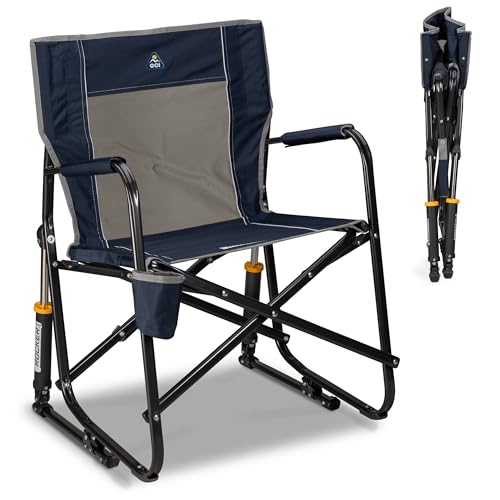
A campsite chair can feel perfectly acceptable for ten minutes, then strangely unforgiving once dinner is over and the fire settles into a long evening. The GCI Outdoor Freestyle Rocker tackles that problem with a folding steel frame and a rocking mechanism designed to keep gentle movement available without traditional curved rocker rails. Within the wider field of best folding rocking camping chairs, its appeal comes from blending familiar folding-chair practicality with a more relaxed sitting experience. At 11.8 pounds, though, this isn't the sort of chair I'd confuse with ultralight gear, and that tradeoff deserves attention from the start.
GCI Freestyle Rocker
The heart of this chair is GCI Outdoor's Spring-Action Rocking Technology, which uses shock absorbers to create the rocking motion. That setup matters because a classic rocker generally depends on curved runners and a reasonably smooth floor, while this design is intended for flat hard ground as well as softer terrain. The practical payoff is simple: rocking isn't confined to the patio, so grass beside a soccer field, packed dirt at camp, or a backyard lawn can still support the motion. It won't magically erase every bump underneath the chair, but the mechanism gives the chair more flexibility than an ordinary rocking base.
The stated 250-pound weight capacity is supported by a steel frame, and that frame contributes to the planted feel people usually want from a moving chair. Open dimensions measure 24 inches deep, 25 inches wide, and 34.8 inches high, with a 19.7-inch seat height. That relatively conventional chair height should feel more natural than the low-slung posture common to some compact camping seats, especially during longer conversations or sideline sessions. The flip side is easy to spot: 11.8 pounds of chair feels substantial if it has to travel far from the vehicle.
Solid armrests change the character of the seat more than they might seem to on paper. Instead of sinking into floppy fabric arms while getting up, the rigid arm support provides something firm to press against, which can make standing and settling back down feel less awkward. A built-in beverage holder also keeps a drink close without requiring a separate camp table. Those details don't sound flashy, but they're exactly the sort of day-to-day conveniences that matter during a two-hour game or a slow evening around the fire.
Rocking Comfort Without A Rocker Base
The strongest reason to pick this model over a basic folding chair is the controlled motion. The shock-absorber system creates a gentle rocking action rather than relying on the entire chair to roll backward on curved rails, so the footprint stays more familiar. That makes the chair easier to picture around a fire ring where space may already be shared with coolers, tables, and other seats. For someone who naturally shifts, taps a foot, or dislikes sitting completely still, the motion can make long outdoor stretches feel less rigid.
Back comfort gets help from the chair's supportive shape and its mesh backing. Mesh doesn't turn an August afternoon into air conditioning, of course, but airflow behind the torso is preferable to trapping heat against a solid panel. The benefit becomes especially noticeable at sunny sports fields or humid campgrounds where thick padded upholstery can start feeling clammy. Meanwhile, the chair still provides enough structure to avoid the hammock-like sag that makes some folding chairs troublesome after an hour.
There is a realistic terrain caveat here. The chair is designed to rock across hard and soft surfaces, but surface consistency still affects the experience; deep sand, sharply uneven stones, or a pronounced slope can make any moving camp chair less predictable. Flat lawn, packed campground soil, pavement, and similar surfaces are more natural territory for this design. That's not a flaw unique to the Freestyle Rocker, just a reminder that "any surface" shouldn't be read as permission to ignore basic footing and stability.
Its proportions also push it more toward comfort-first outdoor seating than tiny packability. A 25-inch width provides reasonable sitting room without turning the chair into an oversized loveseat-style seat. The 19.7-inch seat height keeps the body farther from the ground than many compact camp chairs, and that can make repeated sitting and standing feel less cumbersome. Still, people prioritizing a tiny trunk footprint or hiking several miles with their chair will probably view those comfort-oriented dimensions differently.
Setup Feels Refreshingly Straightforward
Folding chairs lose some of their charm the moment setup turns into a wrestling match. GCI's Eazy-Fold Technology keeps the sequence direct: grab the seat frame, push it outward, then push down to open the chair. Packing reverses the idea by using a foot on the leg base while the closure handle is pulled upward. The mechanism supports one of this chair's most useful traits, namely quick transitions between packed and ready without assembling loose components.
Folded dimensions are 25 inches deep, 4.9 inches wide, and 34.8 inches high. The narrow 4.9-inch folded width helps the chair slide beside other gear, but the nearly 35-inch height means it remains a full-length folded chair rather than shrinking into a short backpacking bundle. In a car trunk, SUV cargo area, garage wall, or equipment closet, that shape is easy enough to understand and plan around. On foot, though, the combination of length and 11.8-pound weight makes portability more about short carries than long-distance trekking.
This distinction matters because "portable" can mean very different things. For tailgates, sidelines, backyard gatherings, and drive-up campsites, car-friendly portability is often all that's needed, and the Freestyle Rocker fits that use pattern well. A chair can move from storage to vehicle to field without demanding complicated packing. Someone building an ultralight hiking kit, by contrast, is solving a completely different problem and may reasonably accept less comfort in exchange for a dramatically smaller load.
Practical Details Around Camp And Sidelines
A good rocking mechanism wouldn't mean much if the ordinary chair basics were irritating. Here, the built-in drink holder sits within easy reach beside the solid armrest, keeping a bottle, can, or cup from occupying the ground where it can be kicked over. That little convenience fits naturally around campfires and sporting events where side tables aren't guaranteed. Combined with the supportive back and rocker movement, it creates a seat designed more for lingering comfortably than merely having somewhere to sit.
The steel frame deserves both credit and scrutiny. Steel helps explain the 250-pound capacity and sturdy structure, but it also contributes to the chair's 11.8-pound mass. That's a fair exchange if stability and repeated outdoor use rank above featherweight carrying. It becomes less attractive if every outing involves a long walk from parking to a beach, festival field, or remote campsite.
Travel logistics can also matter once camping equipment starts sharing luggage space with clothing and other essentials. That topic is separate from the chair itself, but airline baggage planning can change how larger outdoor gear is packed, and a related reference appears in Allegiant checked bag costs. The Freestyle Rocker's 34.8-inch folded height reinforces why this chair makes the most intuitive sense as road-trip, campground, sideline, and backyard gear rather than something intended to disappear inside ordinary luggage.
Storage at home is similarly worth thinking about before purchase. Because the chair folds relatively flat instead of breaking into small poles and fabric panels, garage or closet storage is straightforward as long as there is enough vertical room. That simplicity has an underrated benefit: fewer separate pieces mean fewer opportunities to misplace hardware between trips. The tradeoff is obvious, though, since a long folded frame occupies more wall or trunk length than compact collapsible camping designs.
Strengths And Tradeoffs Worth Knowing
The biggest strength is the marriage of rocking motion and folding convenience. Plenty of camp chairs give you a place to sit, but this one adds a specific comfort behavior without demanding a traditional rocker footprint. Solid armrests, airflow through the mesh back, and an accessible drink holder support that same relaxed-use philosophy. For campfire evenings, kids' games, lawn gatherings, and tailgates, those features work together instead of feeling like unrelated extras.
Its main weakness is equally clear: weight and folded bulk limit how far most people will want to carry it. At 11.8 pounds, the chair isn't absurdly heavy for sturdy outdoor furniture, but it isn't subtle either. Someone crossing one parking lot may barely care; someone walking half a mile with a cooler in the other hand probably will. That distinction keeps expectations realistic and prevents the word "portable" from doing too much work.
Another tradeoff comes from the rocking mechanism itself. Moving components provide the signature comfort feature, yet they naturally make the chair more mechanically involved than a plain X-frame folding seat. Anyone who doesn't care about rocking can choose a simpler chair and potentially save weight or packed space. For people who actively enjoy rhythmic movement while talking, watching a game, or sitting near the fire, however, the extra hardware has a clear purpose rather than existing as decoration.
Where The Freestyle Rocker Makes The Most Sense
This chair makes the strongest case in situations where gear travels mostly by vehicle and then stays put for a while. A drive-up campsite is an obvious match because the 11.8-pound weight stops being a major concern once the chair only has to move from the trunk to the fire ring. Backyard barbecues and sports sidelines fit the same pattern. In those settings, the benefit of a supportive, rocking seat can outweigh the nuisance of carrying a few extra pounds.
Long sessions are where the design starts earning its keep. The 19.7-inch seat height, solid armrests, supportive back, and breathable mesh all address little discomforts that accumulate over time rather than creating a dramatic first-sit gimmick. Rocking gives restless legs somewhere to put that energy, while the drink holder reduces repeated reaching toward the ground. Those details sound ordinary on their own, but together they create a noticeably more settled outdoor seating setup.
Compact travel remains the weaker side of the equation. A folded size of 25 by 4.9 by 34.8 inches isn't difficult to store in many vehicles, but it isn't designed around minimal-volume packing. That makes the Freestyle Rocker a better fit for outings where comfort matters after arrival than trips where every inch and ounce has to justify itself during transport. Put differently, this is a chair for sitting well once you're there, not for pretending a full-featured rocker weighs nothing on the way in.
Among best folding rocking camping chairs, the GCI Outdoor Freestyle Rocker stands out by keeping its purpose focused: provide a stable folding seat, add smooth rocking through Spring-Action technology, and make setup simple enough that the mechanism doesn't become a chore. Its 250-pound capacity, steel frame, solid armrests, mesh backing, and beverage holder all support practical outdoor use without relying on invented extras or flashy claims. The compromise is carrying weight and folded length, and that's exactly where the buying decision should hinge. For vehicle-based camping, sidelines, patios, and backyard gatherings, those compromises are easier to accept because the comfort features get far more time to matter than the brief trip from storage to seat.
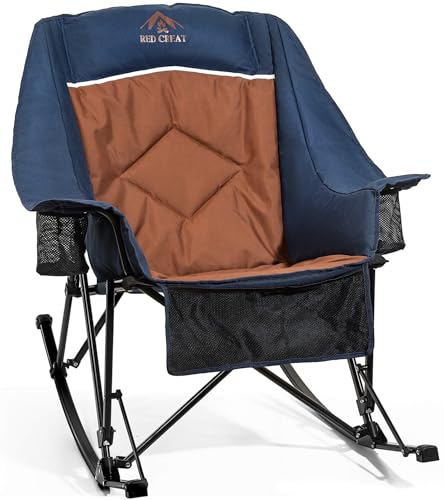
Romswi 2 Pack Folding Rocking Camping Chairs
A long afternoon outside can expose every weak spot in a basic folding chair: sweaty fabric, a low back that leaves the shoulders hanging, and flimsy arms that aren't much help when it's time to stand. The Romswi folding rocker takes a more substantial approach, pairing a tall breathable mesh back with curved rocker legs and a reinforced steel frame. Among the best folding rocking camping chairs, its most noticeable distinction is the combination of a stated 400-pound capacity and a two-chair package rather than a single lightweight seat. That sturdier approach comes with an obvious tradeoff, though, because a chair built around reinforced steel and full rocker legs isn't chasing ultralight backpacking territory.
Romswi Folding Rocking Camping Chairs
The high mesh back immediately makes sense for warm-weather sitting because it lets air move through the area that usually traps the most heat. Instead of leaning against a broad panel of solid fabric during a humid afternoon, the back and shoulders get more ventilation while still having a tall surface behind them. That matters during outdoor concerts, youth sports, backyard gatherings, or slow camp evenings where the chair may stay occupied for hours. The design isn't heavily padded, so anyone who prefers thick cushioning should recognize that airflow is prioritized over plushness.
Back height matters for another reason too. Short camping chairs often support the lower torso while leaving the upper back with nowhere useful to settle, and that posture can get old surprisingly fast. Romswi describes the mesh back as providing support for both the back and shoulders, which fits the chair's more upright, full-size approach. There's no need to oversell that feature: it simply addresses a common frustration with compact folding seats that save space by trimming away support.
The chair also uses hard armrests rather than floppy fabric straps. That changes the experience while sitting down and standing because the arms provide a firm point to brace against instead of collapsing under pressure. Around a campfire or sports field, where people may get up repeatedly for food, gear, or children, that little mechanical advantage can be more useful than another decorative pocket. Solid armrests also complement the heavy-duty frame, giving the chair a more structured feel from top to bottom.
A 400-Pound Frame Changes The Priorities
Romswi states a 400-pound weight capacity, supported by a reinforced steel frame. That figure puts load-bearing strength front and center rather than treating it as a footnote, and it separates this chair from many lighter folding rockers designed around lower capacities. The curved rocker legs spread that structural approach across the base, where smooth movement and stability have to coexist. A higher capacity doesn't automatically mean every body shape will feel equally comfortable, of course, because seat width and personal fit still matter even when the frame can handle the load.
Steel brings both reassurance and baggage. The reinforced frame is meant to create a dependable foundation for rocking, but steel generally isn't the material chosen when shaving every possible ounce from a camping kit. Romswi's supplied description doesn't specify chair weight, so it would be misleading to pretend we know exactly how heavy each chair feels in hand. Still, the construction clearly points toward strength and stability rather than minimalist trekking equipment.
The curved legs also create a different rocking character from chairs that use piston or spring-assisted mechanisms. Here, the rocker geometry itself is part of the motion, which keeps the concept straightforward but makes ground selection worth thinking about. A lawn, patio, packed campsite, or relatively smooth beach area is easier to picture than deeply rutted terrain where curved legs could encounter inconsistent resistance. That's less a knock against the design than a practical reminder that rocking furniture and rough ground don't always make easy roommates.
A 400-pound rating may also appeal to anyone who has grown tired of narrow, lightly built camp furniture that feels nervous with every shift in posture. The benefit isn't permission to abuse the chair; it's the extra structural margin suggested by a heavy-duty steel frame. Paired with sturdy armrests, the design feels aimed at people who would rather carry a little more chair than spend the evening wondering whether the frame is flexing too much. That balance is often worth more than a flashy feature list.
Rocking Comfort For Long Outdoor Sits
Rocking adds a subtle form of movement that ordinary folding chairs simply can't provide. The curved rocker legs allow the body to shift gently instead of staying locked in one position, which can make long periods of sitting feel less static. Watching a game, waiting beside a fishing spot, or talking around a fire often means occupying the same chair much longer than expected. A seat that lets the body move naturally can make those hours feel less tedious without requiring complicated adjustment levers.
The breathable back complements that motion nicely. Rocking creates continuous small changes in posture, while the mesh panel encourages airflow across the upper body instead of sealing heat against the fabric. Warm days are where this pairing should make the most sense, particularly in open fields and sunny campgrounds without much shade. Cold-weather campers may feel differently because mesh doesn't provide the wind-blocking effect of a thick upholstered back, so seasonal comfort involves a tradeoff.
The hard armrests add another layer of control while rocking. Hands can rest on a stable surface, and the arms can provide leverage while changing position or getting up. That matters more than it sounds, because some soft-sided camping chairs sag inward and make the whole seating posture feel loose. Romswi's combination of structured arms, steel framing, and a tall back is clearly built around a more conventional chair-like posture.
Folding Without Turning Setup Into A Project
Outdoor furniture earns its keep before anyone even sits down. Romswi says the chairs are ready to use in seconds with virtually no assembly required, which keeps arrival routines simple after a drive or while setting up several pieces of camp gear at once. There's no mention of loose poles, detachable rocker rails, or separate hardware that has to be matched together. The basic idea is refreshingly ordinary: unfold the chair, place it where the ground makes sense, and get on with the evening.
That folding design also matters at pack-up time. A rocker that demanded partial disassembly would become annoying fast, especially after a late game or a campsite departure where tents, coolers, sleeping gear, and cooking equipment are competing for attention. The compact folding format is intended to simplify carrying, transportation, and storage between outings. Exact folded dimensions weren't provided, so claiming that the chair fits a particular trunk, closet, or storage compartment would go beyond the supplied details.
Road trips and RV travel are probably where this format feels most natural. Space still matters, but a vehicle removes the pressure to make every item backpack-small, letting full-size seating comfort take priority over extreme weight savings. Picnics and beach trips can also suit the folding design, provided the carry from parking isn't excessively long. For remote walk-in campsites, the unanswered chair-weight question becomes more relevant, and anyone packing by the ounce would likely lean toward a very different style of seat.
Storage Features That Actually Have A Job
A drink rolling around under a rocking chair is a nuisance nobody needs. The built-in cup holder keeps a beverage near the armrest, while a side organizer provides dedicated space for smaller belongings. Phones, books, snacks, keys, and similar items can stay within reach instead of disappearing into a tent or sitting directly on dirt. These aren't glamorous additions, but they're useful because they solve little interruptions that happen repeatedly during outdoor downtime.
The side pocket is especially sensible for activities where leaving the chair means losing your place or missing something. A phone stays close during a child's game, a paperback doesn't need to sit on damp grass, and fishing accessories or snacks can remain nearby without occupying the cup holder. Storage also reduces the temptation to balance objects on the seat or armrest, which rarely ends well once the chair starts rocking. Practical details like this tend to earn more appreciation after several hours than they do in a product photo.
There is a mild tradeoff with accessory storage: the more items stuffed into a side organizer, the more uneven the chair may feel while being carried folded. Keeping the pocket reasonably light preserves the portable nature of the chair instead of turning it into another gear bag. The supplied information doesn't claim weatherproof storage, either, so electronics and books still deserve common-sense protection from rain, sand, and splashes. Simple storage is useful, but it isn't a substitute for dry bags or protected luggage.
Two Chairs Make Sense For Shared Outdoor Time
The package includes two folding rocking chairs, which changes the buying logic compared with single-chair models. A pair fits naturally around a campsite, RV awning, patio, game sideline, or backyard fire where sitting is usually a shared activity rather than a solo one. Matching chairs also remove the odd situation where one person gets the rocker and someone else ends up in a basic folding seat. For households that genuinely need two outdoor chairs, the bundle structure is more relevant than an isolated list of features.
A two-pack also means planning for twice the storage footprint. Even with a folding design, two reinforced steel rockers will naturally occupy more vehicle and garage space than one compact chair. That isn't a weakness if both seats will be used regularly, but buying a pair solely because the package exists could create unnecessary bulk. Storage space, carrying distance, and actual seating needs matter just as much as the appeal of having matching chairs.
Travel planning sometimes branches into completely different gear questions, especially when outdoor trips involve flights rather than a car or RV. That issue isn't directly tied to this rocker, but backpack organization is a separate consideration covered in best Lululemon backpack options for trips where personal carry gear matters more than campsite furniture. The distinction is useful because folding rockers and travel backpacks solve very different packing problems, and forcing one category into the logic of the other doesn't help anybody.
Where The Strengths And Weaknesses Show Up
The clearest strength is the chair's structural focus. A stated 400-pound capacity, reinforced steel frame, curved rocking legs, hard armrests, and tall mesh back all point toward a seat meant to feel substantial rather than delicate. That combination suits long campground evenings, backyard use, fishing stops, and sports sidelines where comfort and support matter more than carrying the chair for miles. The storage pocket and cup holder round things out without pretending to be the main attraction.
The most obvious weakness is that several portability details remain unspecified. Romswi describes the chair as compact and easy to carry, but no exact chair weight or folded measurements are included in the provided information. That means it's reasonable to call the design foldable and travel-oriented, but not reasonable to promise it'll feel lightweight or fit a specific cargo space. Anyone with strict storage dimensions should treat those missing measurements as information worth verifying rather than filling the gaps with assumptions.
Terrain is another practical consideration. Curved rocker legs make smooth movement possible, yet very uneven, deeply soft, or rocky ground may interrupt that motion more than a fixed four-foot chair would experience. Beach use sounds appealing, but shifting sand can behave differently depending on firmness and slope. Patios, lawns, packed campsites, and similar surfaces are easier environments for the rocker shape to do what it's supposed to do.
The breathable mesh back carries its own seasonal compromise as well. Hot weather benefits from ventilation, while cold wind can pass through mesh more readily than through thick fabric. A blanket can soften that issue around a chilly campfire, but doing so naturally reduces some of the airflow advantage that defines the chair in warmer weather. That doesn't make the material choice wrong; it simply reveals where the design's priorities sit.
How It Fits Among Folding Rocking Chairs
Within the best folding rocking camping chairs category, the Romswi set leans toward load capacity, structured support, and shared-use practicality. The 400-pound stated limit stands out, while the high mesh back and sturdy armrests address comfort without relying on thick cushioning. Add two chairs in the package and the product begins to look less like specialized solo gear and more like full-size outdoor seating that happens to fold and rock. That's a meaningful distinction for car camping, patios, RV trips, and sidelines.
Minimalists may see the same traits differently. Reinforced construction and curved rocker legs aren't the ingredients of a tiny backpacking stool, and anyone prioritizing the smallest possible packed load probably won't put heavy-duty support at the top of the list. But someone annoyed by narrow frames, low backs, and soft armrests may gladly accept more structure. Camping furniture always involves a tradeoff somewhere, and Romswi spends its design budget on support and comfort rather than extreme compactness.
The practical appeal ultimately rests on several features working together instead of one headline specification doing all the lifting. Airflow, tall back support, firm armrests, rocking movement, accessible storage, and a reinforced frame address different annoyances that crop up during extended outdoor sitting. None of those details eliminates the need for sensible ground placement or realistic packing expectations. They do, however, give the Romswi 2 Pack a clearly defined role for campers, families, anglers, spectators, and backyard loungers who want more structure than a lightweight sling chair typically provides.
GCI Outdoor Freestyle Rocker With Side Table
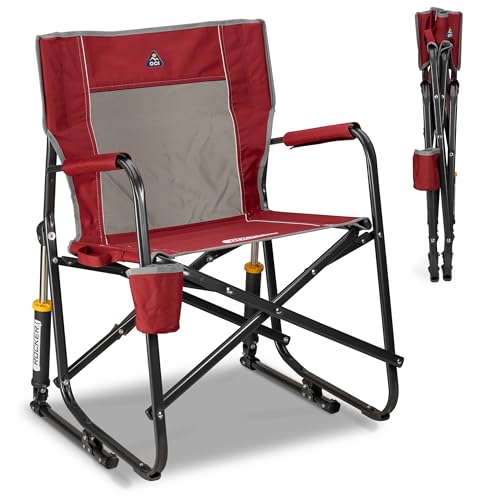
Camp chairs tend to reveal their shortcomings after the first hour, especially once a stiff backrest, awkward arm position, or nowhere to set a drink starts getting irritating. The GCI Outdoor Freestyle Rocker with Side Table takes a noticeably different route by combining a full-size folding seat with Spring-Action rocking hardware and a built-in surface beside the armrest. Within the best folding rocking camping chairs category, its strongest appeal lies in giving ordinary campsite seating a controlled rocking motion without requiring curved wooden-style rocker rails. The catch is easy to spot too: at 13.6 pounds, this chair favors comfort and convenience over featherweight carrying.
GCI Freestyle Rocker With Side Table
The chair's identity really starts with Spring-Action Rocking Technology. GCI Outdoor uses shock absorbers to create the rocking motion, allowing the seat to move while its feet remain positioned on the ground instead of rolling back and forth on traditional curved runners. According to the supplied specifications, the system is intended to operate on flat, hard, and soft terrain, which makes the design far more practical for campgrounds, lawns, sidelines, and patios than a conventional porch rocker. Uneven terrain can still influence stability, naturally, so a reasonably level spot remains the sensible place to set it down.
The motion itself addresses a simple frustration: sitting perfectly still for several hours isn't especially relaxing for everyone. A gentle rocking rhythm lets the body make small posture changes while talking around a campfire, watching a game, or sitting through a long backyard gathering. There's no manual recline mechanism or elaborate adjustment system listed here, which keeps the chair focused on natural movement rather than complicated controls. That simplicity fits outdoor use well because fewer setup steps mean less fiddling after you've already hauled everything out of the car.
Spring-assisted rocking also separates this model from folding rockers that depend entirely on long curved legs. The distinction matters because shock absorbers create the movement while preserving a footprint closer to a standard camp chair. That can be useful around crowded fire rings where people, coolers, and tables already compete for space. Still, the mechanism adds hardware, so anyone who never cares about rocking could reasonably choose a lighter conventional chair instead.
The Side Table Changes Daily Use
The built-in side table is probably the most practical difference between this version and simpler Freestyle Rocker configurations. Instead of placing a drink on dirt, balancing a phone on an armrest, or adding a separate camp table beside the chair, there's a dedicated surface already attached to the seating setup. That arrangement makes sense during games, backyard meals, or campfire evenings where drinks and small personal items keep moving in and out of your hands. Little conveniences like this don't grab headlines, but they can save a surprising amount of bending and reaching.
A side table does come with a tradeoff, though. Hardware sturdy enough to support a usable surface naturally contributes to the chair's overall 13.6-pound weight, so the added convenience isn't free from a portability standpoint. People who walk only from the vehicle to a campsite or sideline probably won't treat that as a major headache. Carrying it across a large festival field or down a long beach access path is another story, especially with a cooler or gear bag already in the other hand.
The chair also includes a drink holder, giving beverages a more dedicated location than simply setting them on the table surface. That leaves the table available for a phone, snack, book, or small plate instead of turning it into a glorified cup stand. The distinction sounds small until you're actually sitting outside for a couple of hours with nowhere clean to put anything. A separate cup space plus a table makes the chair feel more like a compact outdoor station than a bare folding seat.
Support Comes From More Than Padding
GCI Outdoor describes the chair as offering great back support, and the structure backs up that comfort-first intent with solid armrests and a 19.7-inch seat height. A relatively elevated seat can feel more natural than low camp chairs that require a deep squat every time you sit down. The solid arms matter during that motion too because they provide firm leverage instead of collapsing like fabric loops. For repeated sitting and standing during a cookout or sporting event, rigid support points can be more useful than extra cushioning.
The back incorporates durable mesh, which allows airflow to pass through rather than trapping heat behind the torso. That design makes particular sense during warm-weather camping, summer games, or backyard gatherings where thick upholstered fabric can start feeling sticky. Mesh has a seasonal compromise, of course, because wind passes through it more easily on cold evenings. A blanket can compensate around the fire, but doing so naturally reduces the ventilation benefit.
Open dimensions measure 24 inches deep by 25 inches wide by 34.8 inches high. Those proportions place the Freestyle Rocker closer to a full-size outdoor chair than the compact stools and low sling seats often sold for minimalist camping. The 19.7-inch seat height reinforces that traditional-chair posture, which should be appealing when comfort after arrival matters more than creating the smallest possible packed bundle. It isn't pretending to be backpacking furniture, and that's probably for the better.
Steel Construction Brings A Clear Tradeoff
A sturdy steel frame supports a stated maximum capacity of 250 pounds. Steel gives the rocking mechanism a solid foundation, which matters because every backward and forward movement transfers force through the frame. The practical upside is a chair designed around repeated outdoor sitting rather than delicate portability. The downside is familiar: steel adds mass, and this model weighs 13.6 pounds before anything else gets carried alongside it.
That weight puts the chair in an interesting middle ground. It's portable in the sense that it folds and can be moved from storage to a car, campsite, sports field, or backyard without dismantling components, but portable doesn't mean ultralight. Someone driving directly to a campground may barely care about a few extra pounds. Someone carrying furniture half a mile from parking will feel every one of them.
The stated 250-pound capacity also deserves to be considered separately from chair dimensions. A frame's load rating tells you how much weight it's designed to support, but it doesn't automatically indicate how roomy the seat will feel for every body type. With an overall open width of 25 inches, the chair has full-size proportions, yet personal comfort still depends on fit and seating preference. That's why capacity and comfort aren't interchangeable measurements, even though both matter.
Eazy-Fold Keeps Setup From Becoming A Chore
Setup can turn a clever chair into an annoyance if hinges, locks, and supports demand too much attention. GCI Outdoor's Eazy-Fold Technology keeps the process direct: grab the seat frame, push outward, then push downward to open the chair. No separate rocker attachment is listed, and there's no pile of loose poles to sort through. For a campsite already filled with tents, cookware, coolers, and sleeping gear, a chair that opens quickly is one less puzzle to solve.
Packing follows an equally straightforward sequence. The supplied instructions call for placing a foot on the leg base and pulling the closure handles upward, allowing the chair to fold for transport or storage. That matters after dark or at the end of a sporting event, when patience for complicated gear tends to run thin. A folding mechanism that stays attached to the chair also means there are no separate pieces waiting to disappear in the garage.
Folded dimensions measure 25 inches deep by 4.9 inches wide by 34.8 inches high. The slim 4.9-inch folded width makes it relatively flat, but the 34.8-inch length means it still occupies the space of a full-height camp chair rather than collapsing into a short bundle. Sliding it beside other chairs in an SUV, garage, RV compartment, or closet sounds straightforward if the available length is there. Small sedan trunks and tightly packed cargo areas may demand more careful planning.
Portability Depends On How Far You're Walking
The phrase portable folding chair can mean almost anything in outdoor gear, so the numbers matter more than the label. At 13.6 pounds and nearly 35 inches long when folded, this rocker makes the most sense for vehicle-supported recreation rather than long-distance carrying. Think campground loops, tailgates, backyard lawns, and sports sidelines rather than multi-mile walk-ins. That distinction isn't a criticism; it's simply where the design priorities lead.
A short carry rewards the chair's additional hardware because the side table, rigid arms, and rocking mechanism get hours of use after only a few minutes of transportation. A long carry reverses that equation because the weight becomes the dominant experience before anyone even sits down. That's the practical math behind most camp furniture choices. Comfort wins when the destination is close, while ounces become far more precious as walking distance grows.
Air travel creates yet another packing problem, especially because full-size outdoor chairs don't behave like ordinary personal items. That subject is separate from the rocker itself, but travelers dealing with limited cabin space may also encounter the practical sizing considerations discussed in best under seat backpack for travel. The Freestyle Rocker's 34.8-inch folded height reinforces how differently full-size camping furniture and compact travel bags need to be planned. For this chair, road travel and destination-based seating remain the more natural fit.
Campfires And Sports Fields Suit It Especially Well
A long campfire evening fits the chair almost perfectly because that's where rocking comfort has time to matter. Instead of sitting rigidly through dinner, conversation, and another round of firewood, small rocking movements keep the body from staying fixed in one posture. The side table gives snacks and personal items somewhere off the ground, while the beverage holder keeps a drink separated from everything else. Put those pieces together and the chair becomes less about emergency seating and more about settling in for a while.
Sports sidelines create a different but equally sensible scenario. Games often involve long stretches of sitting followed by standing, cheering, or moving around, and solid armrests provide more leverage than floppy fabric arms during those transitions. Mesh ventilation also makes sense on warm fields where shade isn't guaranteed. The chair's 13.6-pound weight may be noticeable between the parking lot and the field, but the payoff comes during the much longer period spent seated.
Backyard use could actually be where the design sees the most frequent action. A chair that folds for storage but still provides full-size support and rocking movement can move between a patio, firepit, lawn, or neighborhood gathering without becoming permanent furniture. The steel frame and side table are arguably less burdensome when transportation means crossing a driveway rather than trekking into a campsite. Sometimes the easiest gear to appreciate is the stuff that doesn't need a major trip to justify owning it.
Strengths Are Easy To Identify
The most convincing strength is how several practical features support the same purpose. Spring-Action rocking technology provides gentle movement, the mesh back addresses heat buildup, solid armrests add structure, and the side table keeps small items nearby. None of those additions feels unrelated to sitting outside for a long stretch. Even better, the chair still folds instead of turning those conveniences into permanently bulky patio furniture.
The 19.7-inch seat height is another detail worth more attention than it usually receives. Low camping seats save packing space, but they can leave knees sharply bent and require more effort every time someone gets up. A taller chair creates a posture closer to ordinary household seating, which can feel more natural during repeated use. Paired with rigid armrests, that height gives the Freestyle Rocker a distinctly structured feel.
The mechanism's adaptability is another meaningful difference. GCI Outdoor states that Spring-Action technology works on hard or soft terrain, giving the rocker broader outdoor usefulness than a traditional curved-runner chair. A concrete patio, grassy sideline, or packed campsite doesn't require a completely different seating design. Sensible placement still matters, since no chair can make a steep slope or badly uneven surface disappear.
The Weaknesses Matter Just As Much
The most obvious weakness is weight. At 13.6 pounds, this model carries more like sturdy outdoor furniture than minimalist camping equipment. That's understandable given the steel structure, rocking hardware, solid arms, and attached table, but understandable doesn't mean irrelevant. Carrying two chairs plus a cooler can turn a seemingly short walk into a workout.
Packed length is another compromise. The chair collapses to only 4.9 inches wide, which is usefully slim, yet its 34.8-inch folded height remains substantial. That shape stores nicely along a wall or beside similar folding chairs but won't tuck into every small compartment. Anyone working with limited RV storage, a crowded sedan trunk, or a packed gear closet should pay attention to the full dimensions rather than assuming "folding" means tiny.
The 250-pound capacity may also be restrictive for situations that call for higher-capacity outdoor seating. Some heavy-duty camp chairs are built around significantly greater stated limits, so this model's strengths lie elsewhere rather than in extreme load capacity. There's nothing inherently wrong with that ceiling as long as it matches the intended sitter. Product fit is always better judged from actual specifications than broad labels such as adult or heavy-duty.
What Sets This Freestyle Rocker Apart
The attached table creates the clearest difference from a stripped-down rocking camp chair. Rocking alone improves the sitting experience, but having a stable place for small belongings changes how often someone needs to bend, reach, or set things on the ground. During dinner outside, a phone and snack can stay beside the chair while the dedicated holder handles the drink. It's a simple arrangement, but it makes the seat feel more self-contained.
The chair also avoids turning rocking into a complicated feature. Shock absorbers handle the motion, while Eazy-Fold handles opening and closing, so there's no separate rocker conversion step described in the supplied information. That simplicity matters because outdoor furniture gets used more often when setup doesn't require remembering a procedure. Push it open, settle down, and the specialized mechanism largely stays out of the way.
Among the best folding rocking camping chairs, this version makes the most sense where comfort after arrival outweighs the burden of transportation. Its 13.6-pound steel-frame construction isn't aimed at hikers counting ounces, and the full-size folded dimensions won't vanish into a tiny cargo gap. But for drive-up campsites, sidelines, backyard barbecues, patios, and other destinations where sitting lasts longer than carrying, the balance becomes much easier to justify. The side table, breathable back, solid arms, 250-pound capacity, and spring-assisted rocking all point toward the same kind of use: staying put comfortably once you've reached your spot.
GCI Outdoor Comfort Pro Rocker Camping Chair
A folding chair can seem comfortable enough at first, then the little annoyances pile up: nowhere useful for a phone, a rigid sitting position, or a frame that feels clumsy to move once the event is over. The GCI Outdoor Comfort Pro Rocker tackles those problems with a portable steel-frame design, built-in storage, and a spring-assisted rocking system that keeps the chair moving on many outdoor surfaces. Among the best folding rocking camping chairs, this model takes a noticeably streamlined approach compared with bulkier rockers loaded with tables and oversized padding. At 11 pounds, it still isn't backpacking furniture, but the carry strap and folding structure make short-distance transport far more realistic.
GCI Outdoor Comfort Pro Rocker
The chair's defining feature is GCI Outdoor's Spring Action Rocking Technology, which creates a smooth rocking motion without relying on conventional curved rocker rails. That matters on lawns, campgrounds, sporting fields, and other outdoor spots where a porch-style rocker simply wouldn't make sense. The supplied description says the chair can rock on most outdoor surfaces, giving it a broader working environment than furniture that needs a flat deck or patio. Extremely rough or sloped ground can still interfere with stability, so the terrain hasn't suddenly stopped mattering.
Rocking isn't just a novelty here. Gentle movement lets the body shift position naturally instead of staying locked into one angle through an entire ball game or an evening around the fire. The chair doesn't list complicated recline controls or adjustable mechanisms, and that's actually part of its appeal. Simple rocking movement adds comfort without turning setup into another outdoor gear chore.
The mechanism also helps distinguish the Comfort Pro from folding chairs that merely add a deeper seat or thicker fabric. Its shock-assisted rocking behavior changes how the chair feels throughout a long sitting session rather than only improving first impressions. Someone who tends to move a foot, shift position, or dislike static seating may appreciate that difference more than someone who prefers a completely fixed seat. That's a useful dividing line because rocking hardware adds purpose, but only if the movement is something you'll actually use.
Steel Construction Balances Strength And Portability
A powder-coated steel frame supports up to 250 pounds according to the supplied specifications. Steel gives the rocking mechanism a sturdy platform and provides more structural confidence than an extremely minimal folding frame. The powder coating is also relevant for outdoor use because the chair is clearly intended to travel between lawns, campsites, sidelines, and storage areas. Still, no coating makes outdoor furniture maintenance-free, so keeping the chair reasonably dry during storage remains sensible.
The chair weighs 11 pounds, which puts it in an interesting middle zone. It's noticeably more substantial than ultralight stools or compact backpacking seats, yet it remains lighter than some feature-heavy rocking chairs built with attached tables and larger frame assemblies. That difference can matter during the walk from a parking lot to a soccer field or from an RV to a campsite. Short carries feel realistic; long-distance hiking with an 11-pound chair is a different proposition altogether.
Strength and weight are tied together here, and that's the tradeoff worth recognizing. A 250-pound capacity combined with a steel frame gives the chair a clear structural purpose, while the 11-pound mass is the price paid for that stability and rocking hardware. Someone prioritizing the smallest possible packed load may view the weight as a drawback. Someone tired of flimsy seats may see the exact same number as a reasonable compromise.
Soft Armrests Change The Feel
The Comfort Pro uses soft armrests rather than rigid molded arms, giving the chair a more relaxed folding-seat character. Soft arms can flex with the body and reduce the hard contact points that some people dislike during long sessions. They also help keep the structure simpler and potentially easier to fold than a chair surrounded by rigid furniture-style components. The tradeoff is that soft arms don't provide the same firm leverage for standing up that solid armrests can offer.
That difference matters during repeated sitting and standing. Someone moving in and out of the chair all afternoon may appreciate rigid support more, while someone mostly staying seated may prefer the softer feel around the elbows. Armrest style is a comfort preference, not a universally better-or-worse specification. The Comfort Pro clearly leans toward relaxed support rather than using the armrests as structural handles for the body.
The seat height measures 17.5 inches, placing it lower than some full-height camping rockers but nowhere near ground-hugging beach-chair territory. That height can create a more casual sitting posture while keeping the chair practical for ordinary outdoor events. Taller seats may be easier for some people to rise from, while a slightly lower position can feel comfortable around campfires and sidelines. Personal leg length and mobility will influence how that number feels far more than the specification alone suggests.
A Phone Pocket And Beverage Holder Earn Their Space
Small storage details can make or break a camp chair after the first hour. The Comfort Pro includes a phone pocket, keeping a device off the grass, dirt, or seat where it can easily slide away. That pocket is particularly useful during sporting events and outdoor gatherings where the phone gets used periodically but doesn't need to stay in hand. It also prevents the common routine of standing up and realizing the phone was underneath you.
A separate beverage holder handles another everyday annoyance. Drinks stay within arm's reach without requiring a side table or forcing a cup onto uneven ground. Around a campfire, that means less bending and fewer chances of accidentally kicking over a bottle or can. At a sideline, it keeps the chair setup compact while still giving the basics somewhere to go.
Neither storage feature tries to turn the chair into a mobile organizer, and that's probably a good thing. Large side panels and bulky accessory pockets can add weight, snag during folding, or tempt people to overload the chair with gear. The phone pocket and cup holder keep the setup focused on the essentials. That restrained approach fits the Comfort Pro's overall design better than a sprawling storage system would.
Setup Stays Straightforward
The chair is described as opening and closing smoothly, which supports its role as portable outdoor seating rather than furniture requiring assembly. There's no mention of detachable rocker parts, separate braces, or tools. That simplicity matters after a long drive or before a game when nobody wants to spend several minutes working out how the chair goes together. Open it, place it on reasonable ground, and the rocking mechanism is already part of the setup.
The carry strap is a particularly useful addition because folded chairs are awkward even when their weight isn't extreme. A strap frees one hand for a cooler, blanket, child, or other gear and makes that 11-pound load easier to manage over short distances. It also reduces the need for a separate carry bag, which is one less item to lose in the garage. The chair remains fairly long when folded, though, so shoulder carrying won't make it disappear.
Folded dimensions measure 6.3 by 7.3 by 44.1 inches. That narrow profile helps with stacking or sliding the chair beside other gear, but the 44.1-inch length is substantial and worth planning around. A garage corner, SUV cargo area, or RV storage space may accommodate it easily, while a tightly packed sedan trunk could require more deliberate positioning. Folding makes storage simpler, not microscopic.
The Open Dimensions Tell A Useful Story
Opened up, the chair measures 35.6 by 25.2 by 38.8 inches. Those numbers show that the Comfort Pro is still a full-size outdoor chair despite its folding design. The 25.2-inch width gives the frame a conventional adult-chair footprint without turning it into an oversized lounge seat. That balance works well for campsites and sports fields where several chairs may need to sit next to one another.
The 38.8-inch overall height also gives the chair a substantial back profile, supporting a more complete seated posture than compact stools or short folding seats. The supplied details don't specify separate lumbar padding or adjustable back support, so it would be misleading to claim features that aren't listed. What is clear is that the chair's dimensions aim for everyday seating comfort rather than minimal packed volume. That's a practical distinction for anyone who values time spent sitting more than time spent carrying.
The seat height of 17.5 inches adds another clue to how the chair will feel. It sits lower than some taller rocking camp chairs, creating a more relaxed stance while preserving usable legroom for typical outdoor sitting. Seat height and overall frame height work together here, and neither number should be judged in isolation. People with specific mobility needs may prefer a taller seat even if every other feature sounds appealing.
Where The Rocking System Makes Sense
Sports sidelines are an obvious match for the Comfort Pro because the chair combines rocking movement with easy portability. Games involve a lot of waiting, and gentle movement can make a long stretch on the sidelines feel less static. The beverage holder keeps a drink nearby, while the phone pocket handles the device everyone checks between plays. Once the game ends, the chair folds and the carry strap simplifies the walk back to the car.
Campgrounds create a slightly different use case. Around a fire ring, the Spring Action Rocking Technology can make conversation and downtime feel more relaxed without requiring a smooth patio surface. The steel frame gives the chair a sturdy foundation, and the 250-pound capacity sets a clear boundary for intended loading. A reasonably level campsite still matters because no rocking mechanism can compensate for severe slopes or unstable ground.
Lawn and backyard use may be the easiest fit of all. The chair can remain stored between gatherings, then unfold quickly for a barbecue, firepit evening, or casual get-together. Its rocking lawn-chair character makes it more comfortable for lingering than a basic folding seat while avoiding the permanent footprint of patio furniture. That's the sort of practical middle ground this design seems built around.
Portability Has A Clear Limit
The word portable deserves some perspective. An 11-pound folding chair with a shoulder strap is certainly manageable for short moves, but nobody should confuse it with a tiny hiking chair weighing a fraction of that amount. The 44.1-inch folded length reinforces the same point. This is portable furniture for vehicle-supported outings, not minimalist equipment designed to disappear inside a trekking pack.
That doesn't make the weight a weakness in every situation. A chair carried fifty yards and then occupied for three hours can justify more structure than a seat hauled over several miles. The carry strap reduces handling hassle, while the spring system, steel frame, armrests, and storage features provide the comfort benefits once you've arrived. Distance decides whether the 11-pound specification feels sensible or annoying.
Travel itself can bring completely separate carrying requirements, especially when outdoor plans overlap with work trips or air travel. That issue isn't directly connected to a rocking chair, but professional travel gear represents a different packing need referenced in best briefcase for young professional. The Comfort Pro's 44.1-inch folded length makes the contrast pretty clear because full-size outdoor seating and compact personal luggage belong to very different portability categories. For this rocker, car-based transportation remains the more natural scenario.
Strengths Come From Restraint
The biggest strength may be that the Comfort Pro doesn't try to carry every feature imaginable. The chair focuses on spring-assisted rocking, a steel frame, soft armrests, a phone pocket, a beverage holder, and straightforward folding. That keeps the design useful without adding a large attached table or sprawling storage compartments. For someone who wants movement and basic convenience without extra bulk, that restraint has real value.
The 11-pound weight also gives it a portability advantage over heavier rocking chairs, even though it's still far from ultralight. Combined with the integrated carry strap, the chair is easier to picture moving repeatedly between a car, field, campsite, and garage. A simpler accessory setup helps here because there's less rigid hardware hanging off the sides. The result feels closer to a familiar folding chair that happens to rock rather than a piece of portable patio furniture.
GCI Outdoor also lists a limited lifetime warranty, which is worth noting because it is part of the supplied product information rather than an inferred benefit. Warranty terms always depend on the manufacturer's specific conditions, so the phrase shouldn't be read as unlimited coverage for every type of damage. Still, having a stated warranty provides a defined manufacturer-backed framework that some competing products may not emphasize. It's another detail that belongs in the buying equation without needing any inflated claims.
The Weaknesses Are Mostly About Fit And Scale
The most obvious weakness is the folded length. At 44.1 inches, the chair becomes narrow but remains tall, which can complicate storage in small trunks or tightly packed gear spaces. A shorter collapsible chair will be easier to tuck into luggage-like compartments. The Comfort Pro instead preserves a full-size seating structure and accepts the longer folded shape as part of that design.
The 250-pound weight capacity is another specification that may rule the chair out for some situations. Higher-capacity rocking chairs exist, and anyone requiring additional load support should treat the stated rating as a hard practical consideration rather than a suggestion. The chair's lighter 11-pound mass compared with some heavy-duty alternatives partly reflects a different structural goal. Capacity, portability, and frame heft often pull in opposite directions.
Soft armrests create one more tradeoff. They support a relaxed posture and keep the chair structure straightforward, but they don't offer the firm push-off support of hard molded arms. Anyone who relies heavily on armrests while standing may prefer a different layout. People who dislike rigid plastic or metal under their forearms may feel exactly the opposite, which makes this less of a flaw and more of a fit issue.
Why It Stands Apart From Heavier Rockers
The main difference is balance. The Comfort Pro keeps Spring Action rocking technology and a steel frame but stops short of adding features that push weight significantly higher. Its phone pocket and beverage holder cover basic storage while preserving a relatively straightforward folding shape. That makes it attractive for situations where the chair moves frequently but doesn't need to travel far.
Among the best folding rocking camping chairs, this design makes sense for people who value smooth motion but don't necessarily want a built-in side table or an oversized heavy-duty frame. The 11-pound weight, carry strap, 17.5-inch seat height, and 250-pound capacity give it a specific identity rather than trying to cover every possible outdoor seating need. It favors manageable transport, familiar camp-chair proportions, and a softer armrest feel. Those priorities won't suit every body type or every trip, but they're internally consistent.
The Comfort Pro feels most logically placed at campgrounds, sports fields, lawns, tailgates, and backyard gatherings where the chair can be carried a modest distance and then used for a long stretch. Spring-assisted rocking, phone storage, a beverage holder, and a powder-coated steel frame address the everyday annoyances of sitting outside without turning the chair into an oversized piece of gear. Its longer folded shape and 250-pound limit remain the two specifications most likely to narrow the fit. For vehicle-supported outings, though, the design keeps a useful amount of comfort while avoiding some of the bulk associated with more elaborate rocking chairs.
Portal Oversized Folding Rocking Camping Chair
A folding rocker sounds simple until seat width, back height, carrying bulk, and getting in and out of the chair all start competing for attention. The Portal Oversized Rocking Camping Chair approaches those problems with a 22.5-inch-wide seat, a tall padded mesh back, hard armrests, and a stated 400-pound capacity. Within the best folding rocking camping chairs category, its personality is pretty clear: this is a roomier, more supportive rocker built for long outdoor sitting rather than the smallest possible packed footprint. Better yet, Portal says its folding system compresses the chair into a bundle that fits inside a carrying bag, giving the oversized design a practical travel angle.
Portal Oversized Rocking Camping Chair
The dimensions tell you more about this chair than vague comfort language ever could. Its 22.5-inch-wide seat is paired with an 18-inch seat depth and a 19.5-inch seat height, creating a noticeably full-size seating position rather than a low, narrow camping perch. Overall dimensions reach 42 inches high by 40 inches deep by 22.5 inches wide, so this rocker has some presence once opened. That scale makes sense for someone who values room and upright support more than shaving every inch from the campsite setup.
The stated 400-pound weight capacity is another major part of the design. Portal backs that rating with a thickened steel frame and high-density polyester rather than relying on a delicate ultralight structure. A heavier-duty frame can provide a more reassuring foundation during the repeated forward and backward movement of rocking, particularly for anyone who dislikes a chair that feels wispy underneath them. Capacity doesn't guarantee perfect fit for every body shape, though, so the actual seat dimensions still deserve as much attention as the headline number.
Hard armrests change the experience in a very practical way. The rigid arm support gives the hands something solid to push against while sitting down or standing up, which can feel more controlled than fabric arms that collapse under pressure. Combined with the 19.5-inch seat height, that structure should make entry and exit less awkward than deeply slung chairs positioned close to the ground. The tradeoff is a more substantial frame, but Portal clearly favors supportive structure over stripped-down minimalism.
The 29-Inch Back Is Built For More Than Shoulders
A short chair back can make a roomy seat feel oddly unfinished. Portal addresses that with a 29-inch padded backrest intended to support the shoulders and head instead of stopping halfway up the torso. That extra height becomes more relevant the longer the chair stays occupied, whether that's beside a campfire, at an outdoor concert, or through an afternoon game. Tall support also gives the rocker a more lounge-like feel without turning it into a reclining chair.
The center of that backrest uses honeycomb mesh, allowing air to pass through while the surrounding construction provides support. On warm days, that's a useful compromise because full padding can trap heat exactly where the body leans hardest against the chair. Mesh won't create a cool breeze by itself, of course, but it avoids sealing the back against a broad sheet of dense fabric. In cooler or windy conditions, that ventilation can become less welcome, so seasonal comfort cuts both ways.
Head and shoulder support also changes how the rocking motion can be enjoyed. A high back lets the upper body settle against the chair instead of requiring constant muscular effort to stay upright, and that suits a slow rocking rhythm well. Someone watching a game or talking around the fire may appreciate that full-back support more after an hour than during the first thirty seconds. The design is less appealing for anyone who prefers an open, low-back seat that encourages a more forward posture.
Rocking Comfort Comes With A Larger Footprint
The overall 40-inch depth matters because this isn't merely a folding chair with a decorative rocking label attached. A real rocking footprint needs space for the curved structure and for the body to move through its natural arc. Around a roomy campsite, backyard, or sideline, that extra depth probably won't cause much drama. In a cramped tent vestibule or tightly packed concert seating area, however, the chair deserves more room than a fixed four-leg camp seat.
Portal's rocker uses a sturdy frame and a chair shape intended for repeated movement, making it better suited to relatively predictable ground. Grass, packed campsites, patios, and similar surfaces fit the design more naturally than sharply broken rocks or steep slopes. The chair description emphasizes outdoor flexibility, but terrain still influences rocking smoothness, and no curved base can make badly uneven ground behave like a porch. A stable starting position remains part of using any outdoor rocker sensibly.
The larger size also produces a different kind of comfort than compact camping furniture. Instead of squeezing dimensions to minimize packing volume, Portal gives the sitter 22.5 inches of seat width and a 29-inch back. That can feel much more relaxed during a long evening, especially for anyone who dislikes narrow arm spacing or short backs. The compromise is obvious: more room while sitting generally means more material to transport, even with an efficient folding system.
Folding Design Keeps The Bulk Under Control
Oversized chairs can become a headache if folding them feels like wrestling patio furniture into submission. Portal says this model needs almost no assembly and can be folded or unfolded in about 10 seconds once the process is familiar. That makes the chair more practical for repeated events where setup happens next to coolers, tents, blankets, or sports gear. Quick operation matters because convenience disappears fast if every outing starts with a complicated frame puzzle.
The company also describes a bundle-style folded shape that fits into the included carrying bag. That's a meaningful distinction from folding rockers that collapse flat but remain nearly as tall and wide as the open chair. A bundled format can be easier to place alongside tents, sleeping bags, or other cylindrical gear in a vehicle. Portal doesn't provide the exact folded dimensions in the supplied details, though, so it would be a stretch to promise compatibility with a particular trunk or storage bin.
Portability here should be understood in context. The chair is built from a thickened steel frame, high-density polyester, a tall padded back, hard armrests, and rocker components, so its strengths center on support and comfort after arrival. The carrying bag helps manage transport, but this still isn't positioned as a minimalist backpacking seat. Road trips, car camping, concerts, games, and backyard use make more intuitive sense than carrying a full-size rocker deep into a hike.
Storage Features Reduce The Small Annoyances
Portal adds side pockets and a cup holder, which sounds ordinary until you've spent an evening repeatedly dropping a phone into the grass. The pockets give smaller belongings a dedicated place beside the seat, while the cup holder keeps a drink separated from books, keys, or other items. That arrangement is especially handy in situations where a side table would take up too much extra ground space. Small organizational details won't determine whether the frame is comfortable, but they can make the chair easier to live with for several hours.
The side storage also works nicely with the tall-back layout. Once settled into a full-support rocking position, there's less reason to keep leaning forward for essentials on the ground. A phone, snack, or small personal item can remain within reach while the body stays supported by the backrest. That's the sort of benefit that doesn't sound dramatic on a feature list yet becomes increasingly useful as the evening drags on.
Travel organization can involve completely different gear once outdoor trips overlap with commuting or business luggage. That separate packing need has a related reference in Tumi Alpha Bravo Andersen Slim commuter briefcase, while the Portal rocker remains focused on destination seating rather than personal carry organization. Keeping those categories separate matters because a bundled camping chair and a commuter briefcase solve very different space problems. The rocker belongs with campsite, vehicle, and event gear, not the streamlined luggage side of a trip.
Heavy-Duty Construction Is The Main Strength
The clearest strength is how consistently the design supports a bigger-chair philosophy. A 400-pound stated capacity, thickened steel frame, 22.5-inch seat width, hard armrests, and tall back all point toward substantial seating rather than an ultralight compromise. Those features work together instead of competing for attention. Someone frustrated by small camp chairs that feel cramped or flimsy will probably understand the appeal immediately.
The high-density polyester also fits the chair's structural purpose. Portal pairs that material with the steel frame to form a seat meant for repeated outdoor use, while the mesh panel prevents the entire back from becoming a heat-trapping wall. The result balances supportive fabric with ventilation rather than chasing thick cushioning everywhere. Anyone expecting plush patio-chair padding may want something softer, but heavy upholstery would also make an already substantial rocker even bulkier.
The hard armrests deserve another nod because they're more than a comfort accessory. They make sitting and standing feel more controlled, and they provide a stable place for the forearms while rocking. On a chair this tall and roomy, rigid arms reinforce the structured seating position instead of letting the sides sag inward. People who prefer soft fabric arms may view that firmness differently, so the benefit ultimately depends on how much push-off support matters.
The Weaknesses Follow From The Same Design Choices
The biggest weakness is also predictable: an oversized steel-framed rocker isn't built around extreme lightness. Portal doesn't provide a chair weight in the supplied description, so guessing at the number would be pointless. Still, a thickened steel frame, 400-pound rating, hard arms, and a 29-inch padded back make it reasonable to expect a more substantial carry than a compact aluminum camping chair. The carrying bag improves handling, but it doesn't erase the amount of structure involved.
The 40-inch overall depth is another limitation worth planning around. A larger rocking footprint gives the chair space to move comfortably, yet that same dimension can be awkward in crowded areas. Tight concert rows, narrow patios, or busy fire rings may favor a smaller fixed chair. Open campgrounds, lawns, fishing areas, and backyard spaces give this rocker more breathing room.
Mesh creates a third tradeoff. The honeycomb back improves airflow on hot days, but cold wind can pass through that same open material without much resistance. A jacket or blanket can solve the problem, though doing so reduces the very ventilation that makes the design pleasant in summer. That's not a defect; it's simply a reminder that no camp-chair material behaves perfectly in every season.
Where The Portal Rocker Makes The Most Sense
Car camping suits the chair particularly well because transport distance stays short while sitting time can stretch for hours. Once the chair is out of its carrying bag, the wide seat, tall back, and rocking design have plenty of time to justify the extra structure. The 400-pound capacity also gives the frame a distinctly heavy-duty role compared with lightweight camp seats. A drive-up campsite lets those strengths matter without turning portability into the whole experience.
Outdoor games and concerts create a similar equation. A 19.5-inch seat height keeps the chair from sitting excessively low, while the hard armrests provide leverage during repeated standing and sitting. The side pockets and cup holder help keep small belongings off grass or dusty ground. Space between neighboring chairs is the main thing to watch because the 40-inch depth gives the rocker more room to work than a fixed-seat design.
Backyard use may be even simpler. The carrying bag allows storage between gatherings, yet the chair opens into a full-size 42-inch-high rocker whenever the patio or lawn needs another comfortable seat. There's no need to dedicate permanent floor space to conventional outdoor rocking furniture. For anyone who wants a chair that can move between home and campsite duty, that combination of folding storage and substantial seating is easy to understand.
How It Fits Among Folding Rocking Camping Chairs
Among the best folding rocking camping chairs, the Portal model leans decisively toward capacity and roominess. The 22.5-inch seat, 29-inch backrest, hard armrests, and 400-pound rating create a different experience from narrow portable rockers designed mainly around low carry weight. It's less about making the chair disappear during transport and more about providing a supportive place to settle once you've arrived. That distinction matters more than any single feature because it tells you what kind of tradeoffs the chair is making.
The folding bundle design prevents the oversized construction from becoming completely unwieldy. Being able to pack the chair into a carrying bag gives it a more practical travel profile than a traditional full-size rocker, even though exact folded measurements weren't supplied. That balance between large open dimensions and compacted storage is arguably one of the more interesting parts of the design. It's a chair that wants to feel spacious in use without remaining permanently bulky between outings.
The most realistic way to judge it is to weigh those comforts against actual carrying and space needs. Strong points include the 400-pound capacity, tall ventilated back, wide seat, hard armrests, storage pockets, and cup holder, while the larger open footprint and steel-heavy construction won't suit every trip. Someone walking miles with all their gear would likely value a drastically smaller chair, while someone sitting for hours beside a fire or sports field may care far more about room and support. Portal's oversized rocker clearly spends its design budget on the latter experience.


8 Best Folding Picnic Camping Table of 2026 For Stable Outdoor Dining
9 Best Travel Camping Table of 2026 For Uneven Ground
12 Best Heavy Duty Camping Table of 2026 That Will Not Wobble or Sag
8 Best Camping Table Adjustable Legs of 2026 for Uneven Ground

9 Best Adjustable Height Camping Table of 2026 For Uneven Ground

10 Best Adjustable Camping Table of 2026 For Uneven Ground
10 Best Waterproof Camping Table of 2026 For Rain-Ready Campsites

11 Best Folding Bamboo Camping Table of 2026 For Uneven Ground