
8 Best Hard Shell Lightweight Luggage of 2026 For Easy Overhead Lifting

Grabbing a sleek hardshell without checking its empty weight is the fastest way to surrender cabin allowance before packing a single shirt. A clunky case eats up half the airline weight limit on its own, turning standard overhead lifting into an awkward, back-straining chore. Push past the limit, and an overstuffed, rigid bag risks an expensive gate-check fee right on the jet bridge. Bargain ultra-lights often swing too far the other way, using brittle plastic that cracks on the first accidental drop, paired with wobbly handles that bend under tension and wheels that drag on airport carpet.
Travel feels entirely effortless when a sturdy case glides smoothly along terminal floors and floats into the overhead bin without physical struggle. Nailing that relief requires crack-resistant flexibility and strict weight discipline. Tough polycarbonate or polypropylene shells absorb blunt impacts by flexing instead of fracturing, giving true protection without adding dead weight. Keeping the empty bag well under eight pounds protects precious packing capacity, while true exterior sizing guarantees it clears airline sizers with wheels attached. Here is how top contenders compare for smooth rolling, low weight, and reliable cabin performance in 2026.
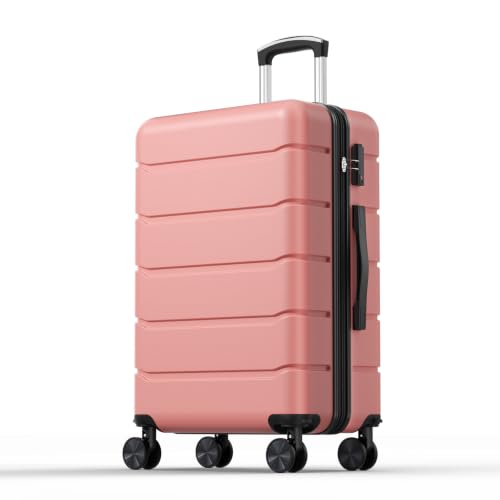
- TLR Rank9.7
TLR Rank is a ranking system developed by TravelLuggageReviews.com. TLR Rank has no relationship or impact from any manufacturers or sales agent websites. Learn more
- BrandNEWBULIG

- TLR Rank9.7
TLR Rank is a ranking system developed by TravelLuggageReviews.com. TLR Rank has no relationship or impact from any manufacturers or sales agent websites. Learn more
- BrandSweetcrispy

- TLR Rank9.0
TLR Rank is a ranking system developed by TravelLuggageReviews.com. TLR Rank has no relationship or impact from any manufacturers or sales agent websites. Learn more
- BrandLEVEL8

- TLR Rank8.9
TLR Rank is a ranking system developed by TravelLuggageReviews.com. TLR Rank has no relationship or impact from any manufacturers or sales agent websites. Learn more
- BrandEASTALOLO

- TLR Rank8.8
TLR Rank is a ranking system developed by TravelLuggageReviews.com. TLR Rank has no relationship or impact from any manufacturers or sales agent websites. Learn more
- BrandRomswi

- TLR Rank8.3
TLR Rank is a ranking system developed by TravelLuggageReviews.com. TLR Rank has no relationship or impact from any manufacturers or sales agent websites. Learn more
- BrandLUGGEX

- TLR Rank7.9
TLR Rank is a ranking system developed by TravelLuggageReviews.com. TLR Rank has no relationship or impact from any manufacturers or sales agent websites. Learn more
- BrandLONG VACATION

- TLR Rank7.8
TLR Rank is a ranking system developed by TravelLuggageReviews.com. TLR Rank has no relationship or impact from any manufacturers or sales agent websites. Learn more
- BrandSamsonite
Last update on 2026-11-01 / Affiliate links / Images, Product Titles, and Product Highlights from Amazon Product Advertising API
Which hardside luggage material balances low weight with crack resistance?
Polycarbonate and polypropylene offer the strongest flex against high impacts while keeping the overall case weight down. A three-layer polycarbonate shell provides resilience without adding bulk, while 100 percent polypropylene features a tough exterior that absorbs rough knocks and hides surface wear. Basic ABS hard shells keep weights extremely low and resist everyday scuffs, but they offer less flex under severe pressure. If you regularly travel through demanding environments, look for luggage built for rough handling that uses pure polypropylene or polycarbonate rather than rigid plastic composites.
How heavy should an empty lightweight carry-on suitcase be?
An empty hardshell carry-on should ideally weigh between 6 and 7.7 pounds to leave plenty of room for your packed items. For example, a basic 20-inch ABS carry-on can weigh as little as 6 pounds, while a feature-rich 21-inch spinner with double wheels sits around 6.5 pounds. Even a three-layer polycarbonate 20-inch model remains lightweight at 7.7 pounds. Keeping your empty case under eight pounds prevents shoulder and back strain when hoisting the luggage into cabin bins and keeps you safely below airline weight limits.
Will an expanded hard suitcase still fit inside airline overhead bins?
Expanding a hard suitcase usually pushes its exterior thickness past standard cabin bin dimensions. While an unexpanded carry-on with a 10-inch exterior depth often satisfies airline limits, using the expansion zipper to gain up to 20 percent more packing capacity adds noticeable bulk. This extra depth can prevent overhead compartment doors from latching shut, which increases the likelihood of a forced gate check. If you plan to carry your bag onboard, review hardshell luggage designed to fit overhead bins and reserve the expansion feature for ground trips or return flights where you check your bag.
What exterior dimensions should you look for to pass cabin sizer checks?
Check that the total exterior height remains at or below 22 to 23 inches, with the total width staying around 14 to 15 inches including wheels and handles. For example, a 20-inch carry-on often measures roughly 14.5 to 15 inches wide and 21.5 to 22.4 inches tall once the spinner wheels are included. A 21-inch model with wheels might measure 15 x 10 x 23 inches, which satisfies cabin restrictions on many carriers but may exceed strict 22-inch sizers. Always confirm the manufacturer's total exterior dimensions rather than relying solely on internal packing space.
Why are dual spinner wheels better than standard wheels on lightweight hard luggage?
Dual spinner wheels distribute suitcase weight across eight contact points, providing better stability and lower rolling resistance. This dual-wheel configuration glides quietly and smoothly across slick airport terminals, thick concourse carpets, and uneven exterior sidewalks without wobbling or jamming. The 360-degree rotation allows you to push the upright case along your side through cramped airplane aisles rather than straining your arm by pulling a tilted case behind you.
What is the advantage of a top-opening hard suitcase over a traditional split clamshell design?
A top-opening hard suitcase features a single deep main compartment accessible through a front lid, eliminating the need to lay the case flat to open it. Standard clamshell designs split the suitcase into two equal halves, which requires clearing substantial floor space in cramped airport waiting areas or tight hotel rooms. Opening from the top lid allows you to retrieve clothing or essentials quickly while preserving valuable floor space and maximizing usable interior depth.


Best Affordable Carry On Luggage 2026 - 11 Most Loving

The 12 Best Carry On Luggage For Bad Back 2026 - Top Choices

Best Lightest carry on luggage with wheels in 2026

Top Airport Traveling Suitcases: Our 11 Best Picks

The Best Delsey Paris Luggage Set 2026

Top 10 Delsey Softside Luggage Picks for Stress-Free Travel

11 Best Guest Room Luggage Rack of 2026 To Protect Clean Bedding

11 Best Grom Luggage Rack of 2026 For Direct Bolt-On Fit










