
5 Best Hard Shell Material For Luggage of 2026 For Crack Resistance

A packed overhead bin door slams down hard against a rigid suitcase corner, and instead of giving under pressure, the brittle plastic shell splits with a sharp pop. By the time the flight touches down, that tiny hairline fracture has spiderwebbed across the seam, leaving packed clothes exposed and triggering an urgent, expensive search for a replacement bag before the trip even starts. Rigid luggage walls that fail to absorb routine terminal knocks turn an ordinary journey into an avoidable hassle, especially when cheap composite blends shatter under standard travel shocks.
Air travel feels significantly smoother when a suitcase shrugs off rough handling, rolling effortlessly through crowded concourses while keeping fragile belongings intact without tipping airline baggage scales. The solution rests on material elasticity: pure, flexible multi-layer polycarbonate bends under severe stress and snaps back into shape rather than cracking, while specialized exterior textures shield against scuffs and scratches. Understanding how different shell compounds handle real travel impacts makes it simple to pick a durable carry-on that guards your gear across miles of transit, starting with the direct material breakdown below.

- TLR Rank9.7
TLR Rank is a ranking system developed by TravelLuggageReviews.com. TLR Rank has no relationship or impact from any manufacturers or sales agent websites. Learn more
- BrandSweetcrispy

- TLR Rank9.1
TLR Rank is a ranking system developed by TravelLuggageReviews.com. TLR Rank has no relationship or impact from any manufacturers or sales agent websites. Learn more
- BrandOLIXIS

- TLR Rank8.7
TLR Rank is a ranking system developed by TravelLuggageReviews.com. TLR Rank has no relationship or impact from any manufacturers or sales agent websites. Learn more
- Brandmixi
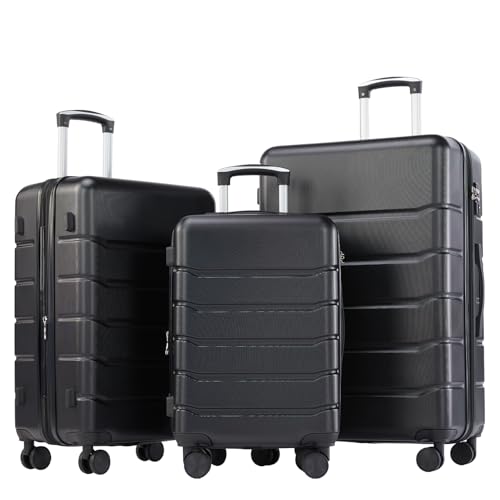
- TLR Rank8.6
TLR Rank is a ranking system developed by TravelLuggageReviews.com. TLR Rank has no relationship or impact from any manufacturers or sales agent websites. Learn more
- BrandOLIXIS

- TLR Rank7.3
TLR Rank is a ranking system developed by TravelLuggageReviews.com. TLR Rank has no relationship or impact from any manufacturers or sales agent websites. Learn more
- BrandNEWBULIG
Last update on 2026-11-02 / Affiliate links / Images, Product Titles, and Product Highlights from Amazon Product Advertising API
Is polycarbonate noticeably stronger than ABS plastic?
Yes. Polycarbonate delivers substantially higher impact resistance than standard ABS plastic under travel stress. Multi-layer designs like three-layer Covestro polycarbonate are listed as three times more pressure-resistant than ABS, absorbing severe shocks to protect fragile packed items rather than snapping. While ABS reliably deflects daily scuffs and minor bumps, polycarbonate flexes under heavy airline baggage loads and returns to its original shape without cracking.
Will an ABS hard shell crack under rough handling?
ABS shells can crack if subjected to extreme impact or heavy crushing forces because the rigid material lacks flexible give. ABS luggage effectively resists routine bumps, scuffs, and daily scrapes for standard overhead carry-on use, with compact 20-inch cases weighing 6 pounds and large 28-inch cases at 9 pounds. For severe transit environments or heavy baggage stacking, reviewing luggage built for rough handling helps ensure your luggage shell can absorb deep impacts without splitting open.
Which hard shell luggage material is the lightest for overhead travel?
ABS plastic is generally the lightest hard shell material for overhead bins. A dedicated 20-inch ABS carry-on suitcase can weigh as little as 6 pounds, preserving your critical airline carry-on allowance before you begin packing. Polycarbonate options offer higher pressure resistance, but structural additions such as integrated aluminum frames bring compact cases to around 7 pounds. Check the manufacturer weight specifications on the product page to confirm exact carry-on limits before your flight.
Is an aluminum frame worth the extra weight on a hard shell suitcase?
An aluminum frame provides rigid structural reinforcement that prevents the suitcase perimeter from collapsing under heavy pressure. Paired with shock-absorbing shells like three-layer Covestro polycarbonate, a reinforced aluminum frame protects internal gear without zippers, keeping total weight around 7 pounds on compact luggage. Zippered luggage models allow flexible fabric expansion, but solid aluminum frames offer superior crush resistance around the opening edges.
How do expandable hard shell suitcases balance capacity and durability?
Expandable hard shell suitcases use perimeter fabric gussets to instantly increase packing volume while keeping the main protective shell intact. These designs combine internal X-shaped fixing straps and zippered divider mesh pockets to keep packed items organized across dual compartments. While the zipper expansion section does not offer rigid impact protection, it provides valuable packing versatility when managing extra clothing across multi-destination trips. If you need matching sizes for various trip lengths, look into luggage sets for frequent travel with built-in expansion features.


Best Affordable Carry On Luggage 2026 - 11 Most Loving

The 12 Best Carry On Luggage For Bad Back 2026 - Top Choices

Best Lightest carry on luggage with wheels in 2026

Top Airport Traveling Suitcases: Our 11 Best Picks

The Best Delsey Paris Luggage Set 2026

Top 10 Delsey Softside Luggage Picks for Stress-Free Travel

11 Best Guest Room Luggage Rack of 2026 To Protect Clean Bedding

11 Best Grom Luggage Rack of 2026 For Direct Bolt-On Fit










