Best Light Folding Camping Chairs 2026: Smart Picks

Best light folding camping chairs solve a familiar outdoor headache: wanting a real place to sit without hauling a bulky steel-framed seat halfway across a campground, festival field, or lakeside trail. A chair can feel harmless beside the garage door, then oddly heavy once a cooler, tent, water jug, and food bag are competing for the same pair of hands. Low carry weight matters most when it comes with a sensible folded shape, since a long awkward chair can still be annoying even if the scale says it's light. Compact dimensions, balanced handles, and bags that don't fight you during packing often make the biggest difference on the walk from the vehicle.
Weight alone shouldn't run the show, though. Very light frames may trade away seat width, arm support, or the planted feel people appreciate on uneven dirt and soft grass. Stable leg geometry and broader feet can help keep a chair from digging into loose ground, while a seat with enough depth makes longer evenings around the fire less fidgety. There's a sweet spot here: light enough to carry without grumbling, sturdy enough that sitting down doesn't feel like balancing on camping gear.
Seat height deserves more attention than it usually gets. Low chairs pack nicely and work well for relaxed beach setups, but getting out of one can become a chore after a long hike or a full day outdoors. A more conventional seat height usually makes standing easier and feels familiar around a camp table, yet the frame may fold into a longer package. That tradeoff is worth thinking through before chasing the smallest packed size on the shelf.
Fabric design shapes comfort in ways that aren't obvious from a product photo. Breathable mesh panels can feel noticeably better during hot afternoons, while denser fabric may block a little more breeze during cool evenings and often gives the seat a firmer feel. Padded sections sound cozy, but they can add bulk, hold moisture longer, and become another thing to dry after damp weather. Simple fabric construction has its own appeal because dirt shakes off more easily and there's less material to trap campground dust.
Convenience details can either earn their keep or become clutter. A usable cup holder, side pocket, or small storage pouch helps keep a phone, sunscreen, or flashlight off the ground, but oversized organizers add fabric and weight that some campers never use. Fast folding matters more in daily use than a pile of accessories, especially when camp gets packed in a hurry or rain starts moving in. A chair that opens without fiddling and slides back into its carry bag without wrestling is the kind of practical design that rarely gets bragged about but quickly becomes appreciated.
Materials also affect the balance between portability and durability. Aluminum frames commonly appeal where low weight is a priority, while steel structures can provide a reassuringly solid feel at the cost of extra pounds. Neither material automatically makes a chair better, because tubing thickness, joint design, fabric attachment points, and overall construction matter just as much. Realistic expectations help here: an ultralight chair built for easy transport may not feel like a roomy backyard recliner, and a broad, heavily supported seat won't disappear into a tiny pack.
The smartest pick fits the trip rather than chasing the lowest number on a specification sheet. Short walks from the car leave more room for comfort-focused features, while festivals, sporting events, dispersed campsites, and longer carries make every awkward pound harder to ignore. Portable comfort comes from balancing weight, folded size, seat dimensions, stability, and setup speed instead of treating one measurement as the whole story. Get that balance right and the chair becomes something you'll actually bring along, not another piece of camping gear that stays home because carrying it is a pain.

- TLR Rank7.9
TLR Rank is a ranking system developed by TravelLuggageReviews.com. TLR Rank has no relationship or impact from any manufacturers or sales agent websites. Learn more
- BrandGeneric

- TLR Rank9.2
TLR Rank is a ranking system developed by TravelLuggageReviews.com. TLR Rank has no relationship or impact from any manufacturers or sales agent websites. Learn more
- BrandWEIDIORME

ONETIGRIS Tigerblade Camping Chair, Lightweight Folding Backpacking Hiking Chair, Compact
View on Amazon- TLR Rank7.9
TLR Rank is a ranking system developed by TravelLuggageReviews.com. TLR Rank has no relationship or impact from any manufacturers or sales agent websites. Learn more
- BrandONETIGRIS

- TLR Rank7.6
TLR Rank is a ranking system developed by TravelLuggageReviews.com. TLR Rank has no relationship or impact from any manufacturers or sales agent websites. Learn more
- BrandDamei century
- TLR Rank7.9
TLR Rank is a ranking system developed by TravelLuggageReviews.com. TLR Rank has no relationship or impact from any manufacturers or sales agent websites. Learn more
- BrandMOON LENCE

- TLR Rank8.7
TLR Rank is a ranking system developed by TravelLuggageReviews.com. TLR Rank has no relationship or impact from any manufacturers or sales agent websites. Learn more
- BrandCanpsky
- TLR Rank7.5
TLR Rank is a ranking system developed by TravelLuggageReviews.com. TLR Rank has no relationship or impact from any manufacturers or sales agent websites. Learn more
- BrandNaturehike
Last update on 2026-08-18 / Affiliate links / Images, Product Titles, and Product Highlights from Amazon Product Advertising API
Quad-Fold Camping Chair for Light, Simple Camp Seating
Carrying a chair shouldn't feel like hauling another piece of luggage across the campground. At 4.4 lbs, this model fits naturally into the conversation around best light folding camping chairs, especially for trips where the walk from the car, repeated setup, and limited storage space matter almost as much as sitting comfort. Its powder-coated steel frame keeps the construction straightforward, while the PE-coated polyester fabric is designed to provide tear-resistant support without turning the chair into an oversized camp fixture. The overall idea is refreshingly simple: a portable seat that opens quickly, holds everyday essentials nearby, and doesn't demand much thought once the weekend gets moving.
Quad-Fold Camping Chair With Cup Holder
The quad-fold design is the feature that shapes the day-to-day experience most clearly. Rather than dealing with separate poles, connectors, or fabric sleeves, the chair folds as one unit and can be opened or packed away in a matter of moments. That's particularly handy during tailgates, kids' sporting events, quick picnic stops, or camp mornings when nobody wants another piece of gear requiring a small assembly project. Simplicity may sound boring on paper, but around a campsite, boring gear often turns out to be the stuff people use most.
Portability gets another boost from the included carry bag. The 4.4-pound weight keeps the chair noticeably more manageable than many bulkier steel-frame camp seats, while the folded construction keeps loose fabric and legs from becoming awkward during transport. Toss it over a shoulder, carry it beside a cooler, or tuck it among other camping equipment without dedicating much attention to it. The tradeoff is worth acknowledging, though: this is still a steel-frame chair rather than an ultralight backpacking seat designed to disappear inside a hiking pack.
The frame itself uses powder-coated steel, which gives the chair a more conventional, planted construction than extremely minimal aluminum or tension-frame alternatives. That matters when sitting on uneven campground ground, where a little structural solidity can feel reassuring. The supplied specifications list a 250-pound capacity, so expectations should stay within that stated limit rather than assuming the chair is intended for heavy-duty oversized seating. Anyone prioritizing the absolute lowest possible packed weight may prefer a skeletal backpacking design, but that usually means giving up the familiar shape and straightforward feel found here.
Fabric choice is equally practical. The PE-coated polyester is described as tear resistant, a useful characteristic for a chair that's likely to rub against tent poles, campsite tables, trunks, and other outdoor equipment. It doesn't pretend to be a thick cushioned lounge seat, and that's arguably part of the point. Less padding helps keep weight and packed bulk under control, although campers who spend hours sitting around the fire may still prefer a chair with more substantial cushioning or lumbar shaping.
Light Carry Weight Without A Complicated Setup
A lightweight chair only earns its keep if it remains easy to deal with after arriving at camp. Here, quick setup and takedown pair well with the relatively low carrying weight, which removes two common sources of irritation at once. There's no elaborate mechanism to study and no pile of components waiting to get misplaced. Open it, place it on suitable ground, and the chair is essentially ready for the slower part of the day.
The published overall dimensions are 32.1 inches high, 19.1 inches wide, and 31.9 inches long. Those numbers suggest a fairly conventional adult camping-chair footprint rather than the extremely low, compact posture used by some beach or ultralight models. That familiar form can make the chair easier to live with around picnic tables, camp kitchens, and casual gatherings. Still, campers wanting an extra-wide seat or generous elbow room should pay close attention to the 19.1-inch width rather than assuming every folding chair provides the same amount of space.
The listed 32-inch seat height deserves a second look because the description presents that measurement alongside the overall dimensions. Measurements can be interpreted differently across product listings, so it's sensible to rely on the provided specification without stretching it into assumptions about exact sitting posture or ground clearance. What is clear is that the chair is intended for adult use and follows a taller conventional folding-chair form rather than a tiny ground-hugging stool. That distinction matters for anyone who dislikes dropping into a very low seat at the end of the day.
Travel gear sometimes gets evaluated only by what happens at the campsite, yet packing space matters before the trip even begins. A compact folding chair has an easier time sharing a trunk with tents, sleeping bags, food bins, and clothing, while a carry bag keeps the folded frame contained during loading. Packing questions can stretch well beyond camping furniture, and a separate sizing reference such as what size suitcase for 2 weeks illustrates the same broader problem of matching capacity to the amount of gear being carried. The subjects are different, but the practical principle is familiar: oversized equipment becomes annoying surprisingly fast.
Comfort Details And Everyday Tradeoffs
The built-in mesh cup holder sounds like a small touch until the ground is dusty, damp, uneven, or covered with pine needles. Keeping a drink beside the arm means fewer accidental kicks and less reaching toward a bottle balanced beside a chair leg. The holder can also accommodate small essentials depending on their size, though it's better viewed as simple accessible storage rather than a substitute for a proper side organizer. Campers carrying phones, keys, sunscreen, and snacks may still wish for an additional pocket.
Comfort here comes more from straightforward support than from elaborate ergonomic features. The polyester seat and steel structure create the familiar folding camping-chair experience: supportive enough for casual sitting, portable enough to move around, and uncomplicated enough for repeated outdoor use. There's no supplied mention of adjustable reclining positions, padded head support, footrests, or specialized lumbar shaping, so buyers expecting a lounge chair should keep those expectations in check. That restraint also helps explain how the chair stays down at 4.4 pounds.
The 250-pound stated capacity is another useful boundary rather than just a specification to skim past. Camp chairs get leaned into, shifted sideways, dropped onto uneven surfaces, and occasionally used more aggressively than indoor furniture, so staying within the stated capacity makes sense. People wanting substantially more load margin or an extra-wide seat would be better served by a heavier-duty model designed around those priorities. This chair takes the opposite route, favoring lighter transportation and a conventional adult footprint.
Campgrounds aren't the only setting where that balance makes sense. Picnics, outdoor concerts where personal chairs are permitted, backyard gatherings, tailgates, and casual sporting events all reward easy portability because the chair often moves several times in one day. The dark blue finish is understated, and the design doesn't rely on decorative extras that add much bulk. For someone who simply wants a place to sit without hauling a mini recliner around, that restraint has practical value.
Where This Chair Fits And Where It Does Not
This chair makes the strongest case for itself through weight, folding simplicity, and familiar construction. At 4.4 pounds, it keeps carrying demands modest while retaining a powder-coated steel frame rather than pursuing an ultra-minimal backpacking structure. That combination suits car camping particularly well, where gear still needs to be moved but shaving every last ounce isn't the sole priority. It also makes sense for situations where the chair may be opened and folded several times throughout the day.
The biggest limitation is equally clear: lightweight doesn't mean ultralight. Serious backpackers counting ounces may regard 4.4 pounds as far too heavy compared with compact trekking chairs built specifically for long-distance carrying. Likewise, someone seeking deep padding, an oversized seat, heavy-duty capacity, or an adjustable recline won't get those extras from the specifications provided here. The design stays focused, and that means accepting fewer comfort features in return for simpler transport.
Another tradeoff comes from the 19.1-inch overall width. Compact dimensions help with carrying and storage, yet broader campers may prefer more room through the seat and arm area. That isn't a flaw so much as a sizing decision, one that should be matched to personal comfort rather than judged by weight alone. A lightweight chair that feels cramped won't see much use, no matter how convenient the carry bag happens to be.
Within the category of best light folding camping chairs, the Quad-Fold Camping Chair stands out less through flashy extras and more through a sensible collection of basics. The 4.4-pound weight tackles carrying fatigue, the quad-fold frame cuts down setup fuss, the mesh cup holder handles a small but recurring campsite annoyance, and the steel-and-polyester construction keeps the format familiar. Its limitations are just as straightforward: no luxury padding, no oversized capacity, and no backpacking-level weight savings. For camping routines built around quick transport, uncomplicated setup, and a regular adult folding-chair experience, those tradeoffs form a practical rather than extravagant package.
WEIDIORME Lightweight Camping Chairs 2 Pack
Two chairs can become surprisingly annoying once the walk from the parking lot gets longer than expected and every hand is already carrying something else. Each chair in this set weighs just 3.6 lbs, putting the pair firmly in the conversation around best light folding camping chairs for outings where portability matters more than oversized padding. The individual carry bags also keep the chairs separated and contained, which is useful when two people aren't arriving or leaving at the same time. That practical split makes the set feel less like one bulky package and more like two genuinely portable seats.
WEIDIORME Lightweight Camping Chairs 2 Pack
The biggest strength here is easy to understand: two lightweight chairs are included, and each one has its own carry bag. A 3.6-pound chair is light enough to make sense for campsites, beaches, picnics, festivals, backyard gatherings, and other situations where seating needs to move rather than stay parked in one spot. Couples or friends can divide the load instead of having one person carry both chairs, and that small logistical detail can make a busy outdoor day noticeably smoother. The design isn't trying to be a plush camp recliner, and that restraint helps keep the weight down.
The frame uses high-strength steel, while the seating surface is made from 600D Oxford fabric. According to the provided specifications, the current version supports up to 250 lbs, an increase from the earlier 200-pound version. That upgraded limit gives the chair more breathing room for teens and lighter adults while still making the stated boundary very clear. Anyone close to or above 250 lbs should take that limit seriously rather than treating it as a casual suggestion.
Size deserves just as much attention as weight capacity. The product description specifically advises checking the dimensions before ordering and notes that larger, higher-capacity versions are available separately. That warning is useful because compact camping chairs can look deceptively roomy in photos, yet the real sitting experience depends heavily on seat width, back shape, and body size. A lightweight chair that pinches at the hips or feels undersized around the shoulders won't suddenly become comfortable because it's easy to carry.
The chair is described as suitable for people up to 6 feet tall, which gives another useful sizing reference. Taller bodies often notice short backrests and shallow seating angles much sooner than shorter campers do, especially after an hour around a fire or waiting through an outdoor event. The stated height guidance helps narrow expectations rather than pretending one compact chair suits every body type. That's a refreshing bit of specificity in a category where portability can sometimes overshadow fit.
Compact Carrying Makes A Real Difference
Folded down, each chair measures approximately 24 by 5 inches, so the package stays narrow enough for car trunks, gear piles, and some larger backpacks. That slim folded shape matters because a chair can be technically light while still being awkward to carry if it sticks out in every direction. Here, the long and narrow profile is more predictable, especially when the chair is slipped into its included bag. The bag's handle and drawstring closure also keep the frame from swinging loose while moving between locations.
The claimed 3-second fold-and-go design is another feature aimed at reducing friction rather than adding complexity. The important part isn't the exact number of seconds so much as the lack of a multi-piece assembly process. Folding chairs get opened, closed, repositioned, carried, and reopened constantly at festivals, fishing spots, sidelines, and campsites, so a simple mechanism earns its keep quickly. Nobody wants to solve a small engineering puzzle every time the shade moves ten feet.
A compact chair also has an advantage after the trip ends. Storage space disappears fast in apartment closets, garages, RV compartments, and crowded utility rooms, and 24-inch folded length is easier to manage than a bulky lounge chair that demands its own corner. Two chairs still take more space than one, of course, but separate bags make them easier to stack or store in different places. That's a modest convenience, yet these little details often decide which gear actually gets brought along on the next outing.
Travel gear tends to expose the same problem from different angles: bulky equipment becomes irritating long before its actual weight seems unreasonable. That same packing logic shows up in luggage maintenance, where damaged rollers can turn a manageable case into a chore, and a neutral reference on the subject appears in how to repair suitcase wheels. The connection isn't about camping chairs themselves, but about keeping portable gear genuinely portable once movement becomes part of the task. A lightweight item only feels lightweight if carrying it stays simple.
Comfort Is Practical Rather Than Plush
The contoured seat design aims to provide back support without adding thick cushioning or a complicated suspended frame. That makes sense for a chair designed around low weight and compact storage, because every extra layer of padding adds bulk and usually makes the folded package harder to manage. The breathable fabric should also be useful during warm-weather outings, where a heavily padded seat can trap heat against the back and legs. Still, anyone expecting deep lounge-chair comfort should adjust expectations before buying.
Breathability matters more at beaches, summer festivals, and sunny campgrounds than it does during a cool fall evening. The 600D Oxford fabric combines a substantial textile specification with an open-air seating format that doesn't rely on thick upholstery. That balance should make the chair easier to live with in hot conditions while still giving the seat enough structure to support the stated load. The flip side is straightforward: minimal cushioning may feel less forgiving during long stretches of sitting.
The ergonomics also need to be judged against the chair's compact purpose. A lightweight folding chair often sacrifices some seat depth, armrest bulk, or backrest height in exchange for a smaller packed profile, and this model sits firmly on the portability side of that equation. The manufacturer describes the seat as contoured for back support, but there are no supplied details about adjustable recline, lumbar pads, headrests, or padded arm supports. That keeps the design clean, though it also means comfort comes from shape and fabric tension rather than a pile of extras.
For a short beach break or an evening around a campfire, that approach may be plenty. Longer events create a tougher test because seat fit becomes more noticeable with time, and compact dimensions won't flatter every body type equally. The product's own guidance to verify dimensions before ordering is worth following closely. Portability is only a strength if the chair remains comfortable enough to stay occupied.
250-Pound Support Sets A Clear Boundary
The upgraded frame rating is one of the more meaningful changes described for this model. Earlier versions were listed for 200 lbs, while the current construction is specified for 250 lbs or 113 kg. That extra capacity gives the chair a wider practical range without turning it into a heavy-duty oversized seat. The distinction matters because shoppers sometimes assume a steel frame automatically means extremely high capacity, and that's simply not what this model claims.
The combination of reinforced steel and 600D Oxford fabric gives the chair a straightforward support system with fewer moving pieces than many ultralight trekking designs. Steel generally brings a more familiar folding-chair feel, although the real attraction here is that the finished chair still weighs only 3.6 lbs according to the supplied information. That pairing makes it interesting for people who don't want a skeletal backpacking stool but still dislike hauling a heavy camp seat. It's a middle road, and that's probably where this chair makes the most sense.
There is a clear limitation, though: people over 250 lbs are specifically not recommended for this model. That's not a minor footnote, especially for camping gear that may be used on uneven surfaces or entered with more force than indoor furniture. A larger-capacity alternative is the better direction where additional load margin or broader dimensions are necessary. Respecting the stated limit is part of matching the chair to the situation rather than trying to make one compact design cover every need.
The same logic applies to height. The supplied description indicates suitability for people up to 6 feet tall, so taller campers may want something with more generous proportions. A chair can remain structurally within its weight rating and still feel cramped through the shoulders, knees, or seat depth. Fit and capacity are separate questions, and both deserve attention before portability becomes the deciding factor.
Two-Chair Value Works Best For Shared Outings
Buying two chairs together changes the use case a little. A single ultralight seat is easy to justify for solo fishing or hiking, but a two-pack makes more sense for shared campsites, beach afternoons, concerts, patio gatherings, and weekend trips where seating for two is routinely needed. Each chair having its own bag keeps that bundle from becoming a single awkward object. One chair can stay in a vehicle while the other rides with different gear, which is more flexible than a permanently paired carry system.
The design also fits casual outdoor routines where the chairs may be moved several times. Fishing spots shift, festival crowds rearrange, shade disappears, and backyard gatherings migrate from the patio to the firepit. At 3.6 lbs per chair, relocation isn't much of a production, and the quick-fold layout avoids the usual fuss of breaking down modular camp furniture. Small changes in convenience matter more when they're repeated all day.
Hiking is listed among the suggested activities, but expectations should stay realistic. A 24-inch folded chair can fit some backpacks, yet serious backpackers may still prefer a much smaller chair that packs inside the main compartment rather than riding alongside it. The lightweight steel construction is attractive for short carries and mixed-purpose trips, but backpacking priorities can become far more demanding once every inch and ounce is counted. This isn't trying to be invisible in a pack.
That tradeoff defines its place among best light folding camping chairs. The WEIDIORME pair favors simple folding, individual carry bags, breathable seating, a 250-pound capacity, and a manageable 3.6-pound weight instead of chasing luxury padding or an extreme ultralight form. The main weaknesses are just as clear: limited capacity for larger bodies, dimensions that need checking before purchase, and a compact comfort profile that may not suit long lounge sessions. For shared outdoor plans where carrying ease and fast setup matter more than oversized seating, the specifications line up in a sensible way.
ONETIGRIS Tigerblade Lightweight Camping Chair
Backpacking gear gets irritating fast when a seemingly small comfort item eats up half the available pack space. The Tigerblade takes a different route, combining a 2.9-pound carry weight with a compact 13-inch folded length and a stated 330.6-pound capacity. Those numbers put it in an interesting spot among best light folding camping chairs, especially where walking distance matters but sitting on bare ground isn't appealing. Rather than using the familiar umbrella-style folding frame, this chair relies on detachable fabric and a collapsible aluminum structure that breaks down into a noticeably smaller bundle.
ONETIGRIS Tigerblade Camping Chair
The first thing worth examining isn't the seat fabric or even the weight capacity. It's the packed size of 5.9 by 5.1 by 13 inches, because that measurement determines whether a chair behaves like backpackable equipment or simply another object strapped awkwardly outside a bag. A 13-inch bundle is short enough to fit into many camping storage setups without dominating the available room. Paired with the 2.9-pound weight, the chair makes a stronger case for hiking, fishing, and dispersed camping than conventional full-size folding seats that remain long even after collapsing.
The tradeoff is assembly. Unlike a quad-fold chair that opens in one sweeping motion, the Tigerblade uses a foldable frame with detachable fabric, so setup involves piecing the structure together and fitting the seat. The supplied description calls the process easy to assemble and dismantle, but it's still a different routine from pulling a chair out of a sleeve and spreading four legs apart. That extra step is the price paid for getting the packed dimensions down to something much more backpack friendly.
That distinction matters during repeated stops. A fishing session or established campsite usually gives you plenty of reason to assemble the chair once and leave it standing, while a day involving constant moves may make the setup process more noticeable. Still, the chair's compact storage format becomes valuable the second everything needs to go back into a crowded vehicle or pack. Portable gear always involves a give-and-take, and here the design clearly favors smaller packed volume over instant deployment.
The supplied setup dimensions are 20 inches by 21.2 inches by 25.6 inches, so this isn't pretending to be a sprawling camp lounger. Its proportions fit the compact backpacking-chair category, where portability takes priority over huge armrests, tall backs, and thick cushioning. That can be exactly what makes sense beside a fishing spot or after a hike, but someone wanting upright dining-chair geometry or a generous headrest will need a different style. Small packed dimensions don't come free, and seat scale is part of that bargain.
7075 Aluminum Keeps Weight In Check
The frame is built from 7075 aluminum alloy, a material choice that helps explain how the chair stays at 2.9 pounds while carrying a stated load rating of 330.6 pounds. Steel can provide dependable structure, but it generally makes lightweight seating harder to achieve without trimming dimensions elsewhere. Aluminum suits this design because the chair is meant to travel rather than live permanently beside a backyard firepit. The material doesn't eliminate every durability concern, of course, since joints, connection points, and proper assembly still matter in a collapsible frame.
Structure matters just as much as the alloy itself. OneTigris describes a stable triangle structure intended to improve stability and support, which makes sense mechanically for a compact chair where the frame needs to distribute load without relying on bulky tubing. That geometry can be especially relevant on outdoor surfaces where perfect flatness is rare. Dirt, gravel, packed sand, and grass all introduce little shifts that aren't noticeable under indoor furniture but can become obvious beneath a narrow camping chair.
The stated 330.6-pound or 150-kilogram capacity stands out because the chair itself is so light. That ratio is appealing for campers who want more load margin than many minimalist chairs provide without jumping straight to a heavy-duty steel design. Still, the capacity number shouldn't be read as permission to abuse the frame, rock aggressively, or place it across unstable ground. A collapsible outdoor chair works best when its feet are properly planted and the frame is fully seated before weight goes onto it.
There's also a useful distinction between weight capacity and physical fit. A chair can technically support someone's weight while still feeling narrow, low, or short through the back, and the compact setup measurements remain relevant here. Anyone prioritizing roomy lounging should evaluate those dimensions with the same care as the load rating. The Tigerblade's strength is carrying substantial stated capacity in a small package, not turning an ultralight chair into full-size patio furniture.
600D Polyester Takes The Rougher Side Of Camp Life
The seat uses 600D polyester, described as resistant to dirt, water, and scratches. Those properties line up nicely with how this chair is likely to be treated, since detachable fabric tends to end up next to rocks, tackle boxes, cooking equipment, tent stakes, and whatever else is scattered around camp. A delicate textile wouldn't make much sense in that setting. The heavier-duty fabric also gives the lightweight aluminum skeleton a more substantial seating surface without requiring thick foam or bulky upholstery.
Water resistance deserves realistic expectations, though. Water-resistant fabric can make splashes, damp grass, or light moisture less troublesome, but it doesn't mean the entire chair becomes something you'd deliberately leave soaking in bad weather. Dirt resistance is similarly practical rather than magical. Mud, sand, and campsite dust still require cleaning, although an outdoor-oriented polyester surface is generally better suited to that mess than cushioned household-style fabric.
Scratch resistance is another useful detail for a chair that gets dismantled after use. The fabric and frame will repeatedly touch the ground, carry bag, backpacks, and other equipment, so abrasion tolerance has more day-to-day relevance than decorative styling. That's particularly true for anglers and hikers who aren't setting up on manicured lawns. Camping equipment gets knocked around. Designing for that reality makes more sense than adding padding that looks inviting in photos but increases drying time and packed bulk.
The absence of thick cushioning is still a tradeoff. A light backpacking seat generally depends on fabric tension and body position for comfort rather than plush padding, and the Tigerblade follows that pattern. That makes it easier to carry and pack, yet people planning several motionless hours beside a campfire may prefer a larger chair with broader support. Comfort here is about getting off the ground without making the chair itself a burden.
Triangle Support Changes The Sitting Feel
Compact camp chairs sometimes create an uneasy first impression because their frames look almost too small for the job. The Tigerblade's triangular support geometry is intended to counter that feeling by creating a stable structural arrangement underneath the suspended seat. Rather than spreading into the wide footprint of a traditional folding chair, it uses a tighter framework that keeps packed volume low. That distinction is especially useful on trails where a conventional chair would be difficult to justify carrying for miles.
Seat height and posture will feel different from standard campground furniture because the entire assembled chair stands only 25.6 inches high. The lower profile places the sitter closer to the ground, something many hikers don't mind after spending the day moving but which won't suit every preference. Getting out of a low chair can require more leg effort than rising from a taller seat. People who value easy entry and exit above packed size may be happier with a more traditional frame.
Low seating does have practical advantages. A smaller profile can feel natural around tents, fishing banks, low camp tables, or a fire ring where everyone is sitting closer to ground level. The 20 by 21.2-inch footprint also occupies less visual and physical space than oversized recliners with sprawling arm structures. In a tight campsite, that compactness can keep pathways clearer rather than turning the seating area into an obstacle course.
Stability still depends heavily on placement. Narrow chair feet can behave differently on mud, loose sand, or soft soil than broad-footed campground chairs, regardless of how strong the frame itself is. The triangle frame addresses structural support, but ground conditions remain part of the equation. A level, firm spot will always give compact seating a better chance to feel settled than a sloping patch full of roots and loose rocks.
Packability Makes It More Than A Car-Camping Chair
The Tigerblade separates itself from ordinary collapsible camp seating through backpack-oriented dimensions. A traditional chair might weigh only a few pounds yet still collapse into a tube two or three feet long, forcing it to ride outside luggage or stick awkwardly above a backpack. This one folds to 13 inches, which opens far more packing possibilities. That difference can matter more than a small weight saving because awkward dimensions tend to create their own carrying fatigue.
At 2.9 pounds, it's still worth putting the weight into perspective. Dedicated ultralight backpackers may consider nearly three pounds substantial for a chair, especially on long routes where every ounce gets scrutinized. Campers who aren't chasing an extreme base weight may see the equation differently, since the seat provides a legitimate place to rest without the bulk of conventional folding furniture. There's no universal answer here; mileage, pack load, and personal comfort priorities change the calculation.
Travel planning has a similar space-versus-capacity problem, particularly when bulky equipment needs to coexist with clothing and other essentials. The broader issue of fitting large amounts of gear within luggage limits is reflected in best checked luggage 62 linear inches, where exterior dimensions matter just as much as usable capacity. The subjects serve different trips, but the underlying packing frustration is familiar. Compact dimensions often create more practical freedom than shaving a few ounces from an item that still refuses to fit anywhere convenient.
That portability also helps beyond hiking. The chair can make sense for fishing, BBQ gatherings, gardening, indoor overflow seating, and outdoor events, all applications specifically included in the supplied description. Moving a 2.9-pound chair between the garage and yard is hardly demanding, and its small stored footprint means it doesn't need much permanent space afterward. The backpacking construction becomes useful even when no backpack is involved.
Where The Tigerblade Makes Sense
The most convincing use case involves someone who actually carries the chair a meaningful distance. Car campers parked ten feet from the picnic table may gain more comfort from a larger chair because weight barely matters in that situation. Hikers, anglers, and campers moving gear by hand get more value from the 2.9-pound frame and 13-inch packed length. Those specifications solve a genuine problem instead of merely looking impressive on a product page.
The detachable design may be a strength or weakness depending on routine. Packing the chair into such a small bundle requires more breakdown than an umbrella-style frame, so assembly is the portability tradeoff. People who dislike putting poles and fabric together every time they stop may prefer a conventional fold-open chair. Someone willing to spend a little more effort during setup gets the reward of a considerably smaller item once everything is packed.
Capacity gives this model another advantage inside the lightweight category. The stated 330.6-pound limit provides more margin than many compact chairs that target only lighter bodies, while the 7075 aluminum frame keeps total weight restrained. Physical dimensions still matter, however, and capacity shouldn't be mistaken for extra-wide seating. Bigger bodies may support fine by weight yet still prefer a broader seat for longer sessions.
Among best light folding camping chairs, the ONETIGRIS Tigerblade takes a notably different path from quick-opening steel camp seats. Its strengths are concentrated around low weight, a short packed size, a 7075 aluminum frame, 600D polyester fabric, and a stated 330.6-pound capacity. The compromises are equally concrete: assembly takes more involvement, the seat follows compact backpacking proportions, and the low profile won't appeal to anyone wanting effortless stand-up height. For gear lists where packed space and carry burden have to justify every item, those tradeoffs give the Tigerblade a clear reason to exist.
Damei Century Lightweight Folding Camping Chair
Four pounds doesn't sound like much until a cooler, blanket, snacks, and the rest of the day's gear are already taking up both hands. That low carry weight is exactly where the Damei century chair starts to make sense among best light folding camping chairs, especially for casual outings where a full-size seat is welcome but bulky equipment isn't. The chair combines a 16mm powder-coated steel frame with polyester fabric and a stated 300-pound capacity, giving it a more traditional folding-chair feel than tiny backpacking models. Its design leans toward straightforward comfort, quick setup, and easy transport rather than shaving every possible ounce.
Damei Century Folding Camping Chair
The 4-pound weight is the headline feature, but the chair doesn't reduce itself to a tiny stool to get there. A full-back design gives the seat a more familiar shape for campfires, sporting events, tailgates, patios, and festival grounds. That matters because ultralight seating can sometimes feel like a compromise the second you actually settle into it. Here, the balance is different: keep the structure light enough to carry easily while preserving a chair shape that feels closer to everyday outdoor seating.
The frame uses 16mm steel tubing with a powder-coated finish, which gives the structure a conventional backbone without pushing the chair into heavyweight territory. Steel isn't as light as aluminum by nature, so keeping the complete chair at four pounds suggests the frame is intentionally pared down. That makes the stated 300-pound capacity noteworthy within the supplied specifications. Still, capacity shouldn't be confused with oversized dimensions, since body fit depends just as much on the seat measurements as the number printed beside the load limit.
The seat is made from 100% polyester fabric, a practical material choice for outdoor furniture that needs to fold, flex, and travel. Polyester keeps the chair from carrying around thick upholstery that would add bulk and make storage more awkward. The supplied description also calls this a padded folding chair, so there is some emphasis on comfort even though no exact padding thickness is provided. That's worth keeping realistic, because a lightweight portable chair and a deeply cushioned lounge seat solve two very different problems.
The supplied seat dimensions are listed as 31.5 by 19.7 by 19.7 inches, which points toward a standard compact outdoor-chair footprint rather than an especially wide heavy-duty model. A 19.7-inch width should be considered carefully by anyone who prefers a lot of hip room or wide arm spacing. The 300-pound rating may sound generous, but seat fit remains a separate issue from structural capacity. That's one of those details that's easy to skim past until a chair has already been carried all the way to camp.
Four Pounds Makes Carrying Less Of A Chore
Portability becomes more useful the farther the chair travels from the vehicle. At 4 pounds per chair, this model stays manageable for walks across campgrounds, sports fields, festival lawns, and park paths without feeling like another major load. The included carry bag keeps the frame contained and gives the folded chair a cleaner shape for transport. That's simple stuff, but simple stuff tends to matter once several pieces of outdoor gear need to move at the same time.
The packed size measures 31.5 by 4 by 4 inches, so this is a long, slim package rather than a short backpacking bundle. That distinction is important. A four-pound chair can still be awkward inside a hiking backpack if the folded length extends well beyond the main compartment. For car camping, beach days, sporting events, and tailgates, the narrow shape is much easier to accommodate because it can slide beside other equipment instead of demanding a wide storage footprint.
Serious backpackers may see things differently. A 31.5-inch folded length is substantially longer than compact trekking chairs that break down into short pole sections, even if those alternatives require more assembly. Damei century avoids that assembly tradeoff by using a traditional folding structure, so setup stays quick while the packed chair remains relatively long. That's the bargain here: faster deployment and familiar seating in exchange for less backpack-friendly dimensions.
Other portable equipment runs into the same dimensional headache, where something can be light enough yet still awkward simply because of its length or shape. Large electronics bring a similar packing problem, and that broader sizing issue is reflected in best backpack for 18 inch laptop. The products serve completely different purposes, but both highlight why usable carrying dimensions matter alongside weight. A number on a scale only tells half the story once everything has to fit together.
Fast Folding Suits Busy Outdoor Days
No tools are needed for setup, and the supplied description says the chair can be opened and folded in seconds. That's a meaningful advantage at an event where seating gets moved repeatedly or at a campsite where nobody wants to build furniture after pitching a tent. The chair follows the familiar unfold-and-sit routine instead of relying on detachable poles or sleeves. Less fiddling also means fewer loose pieces to misplace in grass, sand, or the bottom of a gear bin.
Fast setup is particularly useful around youth sports and outdoor concerts. The chair can come out of its bag, unfold, and be ready without turning arrival into a small project. Once the event ends, the same simple folding mechanism makes packing up less tedious while everyone else is gathering blankets, coolers, and personal items. That sort of convenience rarely sounds dramatic, yet it's exactly what makes certain pieces of gear get used more often than others.
The design also works well for a campfire routine. Moving a chair closer to the group or shifting away from smoke doesn't require disassembling anything, and the light steel frame keeps short relocations easy. A four-pound chair can simply be lifted and repositioned without much thought. That freedom matters more than it seems during an evening when wind direction keeps changing and everyone starts shuffling seats around.
The limitation is that the quick-fold structure doesn't collapse into the tiny package associated with modular backpacking chairs. Buyers prioritizing minimal packed volume above setup speed may prefer a chair that separates into shorter components. Damei century instead favors a traditional folding format, and that makes more sense for people who want fast, familiar operation. Neither approach is universally better; the right answer depends on whether carrying compactness or setup convenience causes more frustration.
Full-Back Seating Adds Everyday Comfort
The full-back design gives this chair a more conventional sitting posture than low-slung stools and minimalist tripod seats. That can make a noticeable difference during a long baseball game, an evening beside the fire, or an afternoon spent fishing from shore. A backrest gives the upper body somewhere to settle rather than asking the legs and core to do all the work. The result should feel more natural for casual lounging, even though the supplied details don't describe lumbar shaping or an adjustable recline.
Padding is mentioned in the product description, but there are no measurements indicating how thick or extensive it is. That's where expectations need to stay grounded. Lightweight padding can soften contact points without turning the chair into a bulky recliner, while heavy cushioning would work against the four-pound design goal. Anyone seeking deep foam support for hours of stationary sitting may want a heavier chair built specifically around comfort rather than portability.
The 100% polyester seating material also keeps the chair suited to typical outdoor routines. Grass stains, dusty parking lots, picnic areas, and campsite dirt are simply part of the territory, so practical fabric makes more sense here than delicate upholstery. The information provided doesn't specify waterproofing, mesh ventilation, or removable covers, so those features shouldn't be assumed. What is clearly stated is a lightweight polyester seating surface supported by a powder-coated steel frame.
Kids and adults are both mentioned as suitable users, which fits the chair's familiar shape and simple folding mechanism. Still, the 300-pound maximum capacity should remain the hard upper limit stated for use. Younger campers may appreciate not having to climb into an unusually tall seat, while adults may value the full back more during longer sitting sessions. As always, actual comfort depends on body dimensions as much as age or weight.
300-Pound Capacity Adds Useful Headroom
A stated 300-pound support limit gives this lightweight chair more capacity than some compact seats that stop around 200 or 250 pounds. That extra margin can be useful for adults who want a lighter chair without dropping into the narrow capacity range common among minimalist models. The powder-coated steel frame is central to that balance, providing the structural basis for the published load rating. At the same time, the chair remains only four pounds, which keeps its portability argument intact.
Capacity numbers deserve practical interpretation, though. A chair can support a given static load and still feel too narrow for a particular body shape, especially with a listed width around 19.7 inches. Comfort depends on how the seat cradles the hips, how the frame sits against the legs, and whether the back provides enough room for relaxed posture. A higher weight limit is useful, but it doesn't automatically create an oversized seating experience.
Ground conditions matter too. A lightweight steel folding chair can feel secure on firm grass or packed soil but behave differently on loose sand, mud, or uneven rocky surfaces. The supplied information doesn't mention oversized feet or specialized sand plates, so it's better to treat this as a general-purpose outdoor chair rather than assume it has terrain-specific stabilization features. Beach use is listed, but soft sand can still change how any narrow-legged folding chair sits.
The powder coating adds another practical element to the steel frame because outdoor furniture inevitably gets handled with damp hands, set on grass, and carried through changing weather. The provided details describe the frame as durable, though they don't make specific corrosion-life claims. Keeping expectations tied to those facts is sensible. Basic outdoor durability is the goal here, not an indestructible chair that can be ignored outside year-round.
Useful Across Campsites, Parks, And Events
The chair's strongest use cases are easy to picture because they don't demand extreme specialization. Camping, tailgating, picnics, fishing, beach trips, sports, and festivals all benefit from seating that's light enough to carry yet large enough to feel like a regular chair. Backyard and patio use also makes sense because the frame can be brought out for extra seating and put away without occupying much storage width. One product covering several casual settings can be genuinely useful, provided those settings share the same basic seating needs.
Hiking is also included among the suggested activities, but the packed dimensions deserve another reality check there. A four-pound chair isn't outrageously heavy for a short recreational walk, yet the 31.5-inch folded length may be less attractive on technical trails or longer backpacking routes. A compact modular chair can pack shorter even if it requires extra setup. For a walk to a fishing spot or a nearby scenic overlook, though, carrying the long bag may be perfectly reasonable.
The chair also lands in an interesting middle ground between tiny trail seats and bulky padded camp loungers. It offers full-back support and a 300-pound rating without ballooning into a heavy piece of furniture, yet it doesn't shrink down as dramatically as specialized trekking chairs. That middle position is its defining difference. Some people will gladly accept the longer packed shape in exchange for quick folding and a conventional seat.
Among best light folding camping chairs, the Damei century model makes its case through a four-pound carry weight, 16mm powder-coated steel tubing, polyester seating, a 300-pound stated capacity, and tool-free folding. Its weaker points are equally visible: the 31.5-inch packed length isn't especially backpack friendly, the supplied dimensions should be checked carefully for body fit, and there are no stated premium ergonomic adjustments. For outdoor routines built around frequent carrying, quick seating, and familiar full-back comfort, the design stays focused on practical basics rather than piling on features that would make the chair heavier.
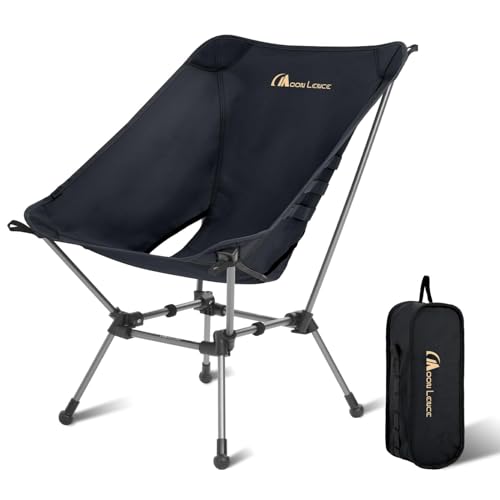
MOON LENCE Portable Camping Chair Plus
A camp chair can be light on the scale and still feel cramped once you're sitting in it for an hour. The MOON LENCE Plus attacks that problem with a 24-inch wide seat, while keeping total weight down to just 2.7 lbs. That combination gives it a distinctive place among best light folding camping chairs, especially where packability matters but narrow ultralight seats feel too restrictive. The bigger seat, reinforced aluminum frame, and compact folded size suggest a chair designed to split the difference between backpack-friendly gear and genuinely comfortable outdoor seating.
MOON LENCE Portable Camping Chair Plus
The standout change is the expanded 24-inch seat. Many compact backpacking chairs keep weight down by narrowing the sitting area, which can create pressure around the hips during longer breaks. MOON LENCE takes the opposite route here, using a widened fabric base intended to distribute body weight more evenly. That extra room matters during fishing sessions, long festival sets, or evenings around camp where a cramped seat can get old pretty quickly.
Ventilated side panels add another comfort-focused detail without relying on thick padding. The breathable construction should help air circulate around the seat during warm-weather trips, while the shaped fabric is designed to follow natural hip contours. That's a practical approach because extra foam would add bulk and slow drying after damp conditions. The result is a chair that tries to improve long-term sitting comfort through shape and airflow rather than simply piling on material.
The assembled dimensions are 22 by 18.1 by 29.9 inches, which gives the chair a more substantial presence than tiny trail stools while remaining much smaller than a full-size patio chair. That middle ground matters for people who want proper back support without carrying a long steel folding frame. The chair still sits within the compact backpacking category, though, so anyone expecting armchair-like lounging should keep expectations realistic. Roomier doesn't mean oversized.
Comfort also depends on how the chair behaves under weight, not merely how wide the fabric looks. The stated 330-pound capacity gives this model more load headroom than many lightweight alternatives, while the broader base is meant to spread pressure rather than concentrate it at a few points. That pairing makes the seat dimensions more meaningful because the chair isn't just wider for appearance. It is built around carrying a substantial stated load without turning into a bulky camp recliner.
7075 Aluminum Keeps The Frame Light
The frame uses 7075 aluminum alloy, which is a logical material for a chair chasing both strength and low weight. At 2.7 pounds, the complete chair is lighter than many conventional steel-frame models while still carrying a stated 330-pound limit. That strength-to-weight balance is one of the biggest reasons this design makes sense for backpacking, biking, hiking, and other situations where every extra pound eventually gets noticed. A strong frame doesn't help much if nobody wants to carry it.
MOON LENCE reinforces the structure with a quad-leg base and triple-lock joints. Those elements are intended to keep the chair stable through a full 360 degrees, particularly on the sort of uneven terrain common around campsites and fishing areas. The wider four-leg foundation should feel more planted than minimalist three-point designs, although surface conditions still matter. Loose sand, deep mud, and sharply sloped ground can challenge almost any compact chair.
The non-slip rubber feet address another common annoyance. Hard aluminum feet can shift unexpectedly on smooth rock, wet surfaces, or firm packed ground, so rubberized contact points provide a little extra grip where the chair meets the surface. They also give the ends of the frame some separation from abrasive ground. That doesn't turn the chair into terrain-proof furniture, but it is a sensible detail for equipment expected to move between grass, rock, dirt, and indoor floors.
The triple-lock joint design is especially relevant because collapsible chairs depend heavily on their connection points. A strong tube means little if the joints are loose or poorly supported, so reinforcing those areas directly addresses a major structural stress point. The supplied information doesn't provide fatigue-cycle data or long-term durability testing, so it's better to judge the design by the features actually stated. What is clear is that MOON LENCE has focused attention on both the frame material and the places where that frame connects.
900D Oxford Fabric Adds A Tougher Seat Surface
The seating material steps up to 900D anti-tear Oxford fabric, which is heavier-duty on paper than the 600D fabric commonly seen on portable chairs. That choice makes sense given the wider seat and 330-pound stated capacity because the fabric has to carry and distribute substantial tension between the frame points. Outdoor seating also gets scraped by buckles, fishing gear, rocks, branches, and whatever else ends up sharing space in the trunk. A tougher textile helps reduce the worry that normal camp use will quickly rough up the seat.
Durability doesn't eliminate maintenance, though. Oxford fabric can still collect dust, mud, food crumbs, and moisture after a long weekend, so keeping it clean and dry before storage remains sensible. The ventilated side sections may also trap small bits of sand or debris depending on where the chair is used. That's the unglamorous side of outdoor gear: lightweight materials make transport easier, but they still need basic care if they're expected to stay presentable.
The wider fabric base has another benefit beyond comfort. By spreading the seated area across a larger surface, the design can reduce the sharp pressure points sometimes created by narrow sling chairs. That matters during longer sessions because weight distribution can affect comfort just as much as padding thickness. A broad supportive fabric panel often feels better over time than a soft but cramped seat.
There is still no thick lounge-chair cushioning here, and that's a deliberate tradeoff. At 2.7 pounds, the chair is clearly designed around mobility rather than deep plush support. People who spend entire afternoons sitting in one place may prefer a heavier padded recliner, while hikers and campers carrying their own gear may happily give up that padding for a smaller load. The Plus model tries to soften that compromise by giving the body more room instead of adding more foam.
15-Inch Packed Length Makes Storage Easier
Folded down, the chair measures only 15 by 5.7 by 5.9 inches. That short package is a meaningful advantage over conventional folding chairs that collapse into long tubes and end up strapped awkwardly to the outside of a pack. A 15-inch bundle has a better chance of fitting inside a backpack, suitcase, gear bin, or pannier rather than dictating how everything else gets packed. Compact dimensions often matter just as much as low weight because awkward length can turn otherwise light gear into a nuisance.
The chair's 2.7-pound carry weight reinforces that portability advantage. Backpacking gear decisions usually involve tradeoffs, and a chair is technically optional, so the item has to justify its place against food, clothing, water, and shelter. At under three pounds, this one doesn't disappear from the load calculation, but it remains far easier to justify than a six- or eight-pound camp chair. For short hikes, fishing access trails, and festival walks, that difference is even easier to appreciate.
Setup requires a few simple steps rather than the single-motion opening style of a traditional quad-fold chair. That's the price of getting the frame down to a 15-inch packed bundle. The supplied details say no tools are required, which keeps the process manageable even though the frame needs to be assembled into its usable shape. Backpacking furniture almost always asks for this compromise: a little setup effort buys a much smaller package once the trip is over.
Packing strategy tends to matter with any bulky travel gear, even when the item itself isn't heavy. Color and visibility can influence how easily luggage is spotted in crowded travel settings, and that separate practical issue is discussed in what is best color for checked luggage. The subjects aren't directly connected, but both come back to making portable equipment easier to manage under real travel conditions. Compact storage and easy identification solve different headaches, yet both reduce friction once gear starts moving.
Storage Features Go Beyond A Basic Cup Pocket
Storage is more ambitious here than a simple mesh drink holder. The chair includes a durable mesh pocket intended for water bottles, phones, power banks, and other quick-access essentials. Keeping those items off wet grass or dusty ground sounds minor until something small disappears under the chair at night. A reachable pocket also reduces the constant bend-and-search routine that tends to happen around camp.
The upgraded tactical webbing is the more unusual feature. It provides attachment points for compatible tools, lights, fishing rod holders, and action cameras, giving the side of the chair more utility than a standard storage pouch. Anglers may get more value from that than casual picnickers, while photographers or campers who like hanging lights nearby may appreciate the extra organization. It's a feature that won't matter equally to everyone, which is exactly why it feels more specific than decorative.
Extra attachment options come with a small caution: adding gear changes the balance of a lightweight chair. Heavy accessories hanging from one side could potentially affect how planted the chair feels, particularly on uneven ground. The quad-leg structure should help with stability, but sensible loading still matters. A flashlight or compact tool is one thing; turning the side webbing into a hanging equipment locker is another.
The mesh pocket and webbing together make the chair particularly suited to situations where small equipment needs to stay close at hand. Fishing, hunting, photography, and extended camp setups all involve bits of gear that are easy to misplace. Integrated organization keeps more of that equipment within reach without adding a separate side table. For someone who travels light, having the chair perform double duty as a small gear station can be genuinely useful.
The Wider Seat Changes The Backpacking Tradeoff
Most ultralight seating asks the body to adapt to the chair. Narrow seats, low backs, and tight sling shapes save weight, but they can become uncomfortable if sitting continues much longer than a quick meal break. The MOON LENCE Plus pushes back against that pattern with its 24-inch wide seating area. That extra width is arguably the defining difference between this model and more skeletal backpacking chairs.
Broader dimensions don't automatically mean the chair will suit every body shape, though. The overall setup size remains 22 by 18.1 by 29.9 inches, so this is still portable furniture rather than a large outdoor recliner. Taller bodies may care about back height as much as seat width, while people who prefer upright arm support may notice that this design prioritizes a suspended compact form. The seat is more forgiving, but the underlying category hasn't changed.
The 330-pound limit also gives the wider design meaningful structural range. A broad seat paired with a low capacity wouldn't solve much for larger adults, but the 330-pound stated support provides more flexibility. Even so, weight ratings and comfort dimensions should always be evaluated separately. A chair can safely hold a person and still feel too low, too shallow, or simply different from what they prefer.
That wider fit is particularly compelling for campers who have already tried narrow trail chairs and disliked how tightly the fabric wrapped around the hips. The Plus model adds room without ballooning to traditional camp-chair weight, and that is a fairly specific problem to solve. 2.7 pounds plus a 24-inch seat is the core equation here. Everything else, from the stronger fabric to the reinforced joints, supports that central balance between carry burden and sitting space.
Where The MOON LENCE Plus Fits Best
Backpacking is an obvious use, but the chair isn't limited to trail miles. Biking, hiking, fishing, hunting, BBQs, festivals, sporting events, and family gatherings are all included in the stated use cases, and the compact folded shape makes sense across those settings. A small chair can ride in a vehicle without taking over the cargo area, then be carried to wherever seating is actually needed. That flexibility is arguably more valuable than specializing in one narrow activity.
People who rarely carry their chairs far may not need to pay extra attention to ultralight construction. A heavier steel chair can offer taller seating, broad armrests, and thicker padding with little downside if it only travels from the garage to the backyard. The MOON LENCE Plus earns its advantage through mobility, not through lounge-chair luxury. Its design makes the most sense once the chair needs to share space with other equipment or travel beyond the parking lot.
The main compromises are predictable. Assembly takes a little more involvement than opening a one-piece folding chair, the compact frame won't imitate the feel of a full-size recliner, and the lightweight build still requires sensible placement on difficult ground. In return, the chair provides a 15-inch folded length, 2.7-pound weight, wider seat, 330-pound capacity, and stronger 900D fabric. That's a pretty clear exchange rather than a vague claim that one chair can do everything.
Among best light folding camping chairs, this model stands out because it doesn't chase minimal weight by shrinking the seating area to the bare minimum. The 24-inch width, 7075 aluminum frame, quad-leg base, triple-lock joints, storage webbing, and 900D fabric give it a broader comfort-and-utility focus than many tiny trail chairs. Its limitations remain real, particularly for anyone wanting instant one-motion setup or heavily padded seating. For outdoor trips where pack space matters but sitting comfort can't be reduced to a narrow sling, the MOON LENCE Plus presents a notably balanced set of specifications.


9 Best Travel Camping Table of 2026 For Uneven Ground
12 Best Heavy Duty Camping Table of 2026 That Will Not Wobble or Sag
8 Best Camping Table Adjustable Legs of 2026 for Uneven Ground

9 Best Adjustable Height Camping Table of 2026 For Uneven Ground

10 Best Adjustable Camping Table of 2026 For Uneven Ground
10 Best Waterproof Camping Table of 2026 For Rain-Ready Campsites

11 Best Folding Bamboo Camping Table of 2026 For Uneven Ground

7 Best Folding Car Camping Table of 2026 For Uneven Ground