
10 Best Locker Lock For Luggage At The Airport of 2026 With TSA Clearance

Grabbing a standard heavy-duty gym padlock for travel is the quickest way to end up with ruined hardware and an unsecured suitcase. Most locker locks feature thick steel shackles that cannot fit through narrow zipper eyelets, and non-certified models get swiftly clipped by baggage screeners. That oversight leaves luggage completely unfastened on the carousel, exposed to theft, while stranding travelers without a way to secure gear during a long layover. Replacing a sheared lock inside an airport terminal wastes precious transit time and unnecessary cash.
Real peace of mind comes from carrying a single compact fastener that moves seamlessly from the cargo hold into a station locker. Getting the right setup requires recognized TSA clearance combined with a flexible steel cable and resettable combination dials. A narrow cable threads easily through tight luggage zipper pulls, wraps around awkward locker hasps, and eliminates the risk of dropping tiny keys in crowded boarding areas. The right dual-duty options keep your bags latched, intact, and ready for every leg of the trip.

- TLR Rank9.7
TLR Rank is a ranking system developed by TravelLuggageReviews.com. TLR Rank has no relationship or impact from any manufacturers or sales agent websites. Learn more
- BrandForge

- TLR Rank9.5
TLR Rank is a ranking system developed by TravelLuggageReviews.com. TLR Rank has no relationship or impact from any manufacturers or sales agent websites. Learn more
- BrandUP Security

- TLR Rank9.2
TLR Rank is a ranking system developed by TravelLuggageReviews.com. TLR Rank has no relationship or impact from any manufacturers or sales agent websites. Learn more
- BrandBV

- TLR Rank9.0
TLR Rank is a ranking system developed by TravelLuggageReviews.com. TLR Rank has no relationship or impact from any manufacturers or sales agent websites. Learn more
- BrandTravoce

- TLR Rank8.8
TLR Rank is a ranking system developed by TravelLuggageReviews.com. TLR Rank has no relationship or impact from any manufacturers or sales agent websites. Learn more
- BrandForge

- TLR Rank8.7
TLR Rank is a ranking system developed by TravelLuggageReviews.com. TLR Rank has no relationship or impact from any manufacturers or sales agent websites. Learn more
- BrandForge

- TLR Rank8.6
TLR Rank is a ranking system developed by TravelLuggageReviews.com. TLR Rank has no relationship or impact from any manufacturers or sales agent websites. Learn more
- BrandGIVERARE

- TLR Rank8.4
TLR Rank is a ranking system developed by TravelLuggageReviews.com. TLR Rank has no relationship or impact from any manufacturers or sales agent websites. Learn more
- BrandPuroma

- TLR Rank7.3
TLR Rank is a ranking system developed by TravelLuggageReviews.com. TLR Rank has no relationship or impact from any manufacturers or sales agent websites. Learn more
- BrandSURE LOCK
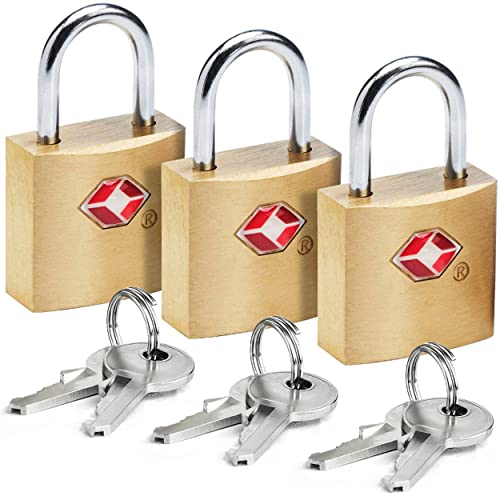
- TLR Rank7.1
TLR Rank is a ranking system developed by TravelLuggageReviews.com. TLR Rank has no relationship or impact from any manufacturers or sales agent websites. Learn more
- BrandLewis N. Clark
Last update on 2026-11-04 / Affiliate links / Images, Product Titles, and Product Highlights from Amazon Product Advertising API
FAQs
Will a TSA-approved lock fit both luggage zipper pulls and airport storage locker hasps?
It depends on the shackle style and the size of the locker hasp. Combination travel locks and flexible cable locks are built to slide through the eyelets on suitcase zippers, backpacks, and standard storage lockers. Rigid shackle models, such as compact zinc alloy or brass padlocks, require you to verify that the shackle clearance matches the fixed hole on your airport locker. If your layover plans involve using station or terminal lockers, check the shackle thickness and locker opening dimensions in the product listing before packing your carry-on hardside luggage.
Will airport TSA screeners cut my lock during security checks?
No, TSA agents will not cut a Travel Sentry Approved lock during authorized baggage inspections. Screeners use an official TSA master key, such as a TSA006 or TSA008 keyway, to open, inspect, and relock the baggage without damaging the body or shackle. Non-approved padlocks lack these specialized keyways, which forces screening personnel to cut and discard them if your bag requires physical inspection. Choosing a recognized travel lock keeps your bag secured from the check-in counter to terminal lockers without ruined hardware.
How do you know if airport security opened your lock?
Look for an open alert indicator on the lock body. Certain models feature a red indicator or red alert dot that rises after a screener unlocks the unit using a master inspection key. You can confirm whether someone accessed your suitcase zippers simply by glancing at the dial housing. Entering your personal code and reopening the lock resets the alert indicator back into its base position.
Can airport inspectors accidentally leave a lock open after checking a bag?
Certain lock designs prevent this problem entirely. Locks engineered with TSA008 mechanisms require screeners to fully secure the lock before their inspection key can be released from the cylinder. This key-retaining function ensures that baggage handlers cannot accidentally leave your suitcase unfastened on the conveyor belt. If your lock lacks a key-retaining core, check that your dials spin freely to verify the mechanism latches firmly before you stow items in an airport locker.
Is a combination lock or a keyed padlock better for airport layovers?
A resettable combination lock eliminates the hassle of tracking tiny keys across busy terminals. Three-digit dials provide 1,000 possible codes, while four-digit locks offer 10,000 unique possibilities for higher security on storage lockers. Combination dials often feature a simple lever mechanism that lets you change the factory default 0-0-0 setting in seconds. Keyed locks made of brass and steel remain an option, but losing a physical key during transit can leave your carry-on luggage with a laptop compartment stranded in an airport storage unit.
Why should you choose a flexible cable lock over a rigid shackle?
Flexible cable locks bend easily through awkwardly aligned zipper sliders and oversized locker latches. Rigid steel shackles have fixed dimensions, which can struggle to link two separate luggage pulls or clamp through thick locker rings. A braided cable gives you extra slack to thread through multiple compartments or secure bags together in transit lounges. Confirm the total lock length and cable flexibility in the specifications to ensure it matches the locker facilities at your destination airport.


Best Affordable Carry On Luggage 2026 - 11 Most Loving

The 12 Best Carry On Luggage For Bad Back 2026 - Top Choices

Best Lightest carry on luggage with wheels in 2026

Top Airport Traveling Suitcases: Our 11 Best Picks

The Best Delsey Paris Luggage Set 2026

Top 10 Delsey Softside Luggage Picks for Stress-Free Travel

11 Best Guest Room Luggage Rack of 2026 To Protect Clean Bedding

11 Best Grom Luggage Rack of 2026 For Direct Bolt-On Fit










