Best Portable Folding Tables for Camping 2026 Picks

Best portable folding tables for camping should solve a simple campsite problem without creating another one: giving you a dependable work surface while staying easy enough to pack, carry, open, and store. A table can look roomy in photos yet become a headache once it competes with coolers, chairs, tents, and cooking gear in a packed trunk. Compact folded dimensions matter almost as much as tabletop size, especially on weekend trips where every inch of cargo space gets claimed fast. Portability isn't just about low weight either; awkward shapes, loose parts, and uncomfortable carry handles can make a supposedly lightweight table feel like a chore.
A useful camping table also needs enough stability for real campsite routines, not just a coffee mug and a paperback. Uneven dirt, gravel, grass, and sloped tent pads expose shaky legs quickly, so leg design and a solid locking mechanism deserve close attention. Tables with adjustable feet or independently adjustable legs can be easier to level, though those extra moving parts may add weight and setup time. Simpler fixed-leg models often open faster, but they can rock on rough ground unless you spend a minute repositioning them.
Tabletop material changes how the table feels in daily use. Aluminum slat tops usually pack down small and shrug off damp mornings, but crumbs and spilled sauces can sneak between the slats. Molded plastic tops wipe clean quickly and create a flatter surface for plates, camp stoves, and board games, though their folded footprint can be bulkier. Fabric-topped tables save weight and storage space, yet they won't provide the firm surface needed for chopping vegetables or balancing cookware, so the lightest design isn't automatically the smartest pick.
Cooking brings another layer of practical tradeoffs. A camp kitchen table needs enough usable space to separate a stove, ingredients, utensils, and hot cookware without turning meal prep into a juggling act. Heat resistance also matters because some lightweight surfaces aren't intended for direct contact with hot pans or certain cooking appliances. Reading the manufacturer's use guidance is worth the minute, since guessing can leave a warped tabletop or damaged finish. For stove-heavy setups, a sturdy metal surface or dedicated cooking station often makes more sense than an ultralight side table.
Height deserves more attention than it usually gets. A low table pairs nicely with camp chairs and keeps snacks within reach, but bending over it for twenty minutes of food prep gets old in a hurry. Standard dining-height models feel more natural for meals and games, while taller adjustable designs can double as prep stations. Adjustable height adds flexibility, though the hardware can introduce a little wobble compared with a straightforward fixed frame.
Then there's load capacity, which sounds simple until gear starts piling up. Water jugs, cast-iron cookware, camp stoves, storage bins, and coolers add weight surprisingly fast, so a table should have enough structural headroom for the job you actually expect it to do. Still, chasing the highest load rating can lead straight to a heavier frame that's annoying to haul from the parking spot. The better balance is usable strength without unnecessary bulk, matched to meals, gear organization, or casual lounging rather than impressive numbers on paper.
Small details can make a big difference after a few nights outdoors. Rounded corners reduce bumps around a crowded campsite, mesh storage shelves keep utensils off the ground, and secure latches stop folded legs from swinging around during transport. Carry handles are handy, but their placement matters because a poorly balanced table can bang against your leg on the walk from the car. Easy cleanup matters too, especially after sticky breakfasts, dusty afternoons, and surprise rain showers.
The strongest pick isn't always the biggest, lightest, or most feature-packed table. A compact side table may be plenty for coffee and card games, while family meals need a broader surface and more stable frame. Longer stays reward comfort and workspace; quick overnighters reward speed and small packed size. Match the table to the way camp actually unfolds, and you'll avoid hauling around a bulky piece of gear that spends most of the trip folded beside the tent.

- TLR Rank9.1
TLR Rank is a ranking system developed by TravelLuggageReviews.com. TLR Rank has no relationship or impact from any manufacturers or sales agent websites. Learn more
- BrandOdoland

- TLR Rank8.4
TLR Rank is a ranking system developed by TravelLuggageReviews.com. TLR Rank has no relationship or impact from any manufacturers or sales agent websites. Learn more
- Brandhediya

- TLR Rank8.0
TLR Rank is a ranking system developed by TravelLuggageReviews.com. TLR Rank has no relationship or impact from any manufacturers or sales agent websites. Learn more
- BrandByliable

- TLR Rank7.9
TLR Rank is a ranking system developed by TravelLuggageReviews.com. TLR Rank has no relationship or impact from any manufacturers or sales agent websites. Learn more
- BrandGrope

- TLR Rank9.7
TLR Rank is a ranking system developed by TravelLuggageReviews.com. TLR Rank has no relationship or impact from any manufacturers or sales agent websites. Learn more
- BrandAnbte

- TLR Rank7.2
TLR Rank is a ranking system developed by TravelLuggageReviews.com. TLR Rank has no relationship or impact from any manufacturers or sales agent websites. Learn more
- BrandVILLEY

- TLR Rank8.2
TLR Rank is a ranking system developed by TravelLuggageReviews.com. TLR Rank has no relationship or impact from any manufacturers or sales agent websites. Learn more
- BrandMSSOHKAN
Last update on 2026-08-17 / Affiliate links / Images, Product Titles, and Product Highlights from Amazon Product Advertising API
Odoland Adjustable Portable Camping Table
A campsite can feel organized right up until plates, cookware, drinks, and small gear start competing for the same patch of ground. That little inconvenience gets old fast, especially on uneven dirt or soft grass where balancing anything becomes a juggling act. The best portable folding tables for camping need to earn their cargo space by being genuinely portable while still giving everyday camp gear a steady place to land. The Odoland design tackles that problem with continuous height adjustment, a compact aluminum tabletop, and a detachable storage bag rather than trying to turn a small camp table into an oversized piece of furniture.
Odoland Adjustable Portable Camping Table
The standout detail is the set of four individually adjustable legs, which move continuously from 16.5 inches to 23.6 inches rather than locking into only a few preset positions. That difference sounds minor on paper, but rough campsites rarely give you four perfectly even contact points. One leg can be shortened while another extends farther, helping the tabletop sit more level on dirt, gravel, grass, or a mildly sloped beach setup. For anyone tired of slipping rocks under table feet, this independent leg adjustment addresses a very familiar outdoor annoyance.
The tradeoff is that adjustable hardware changes how much weight the table is intended to support. Odoland lists a capacity of 66 pounds in adjustable mode and up to 132 pounds in locked mode, so the stronger configuration matters if heavier equipment is going on top. Those figures make the distinction pretty clear: flexibility is useful for uneven ground, while the locked configuration is better suited to heavier loads. That isn't really a flaw, but it's a practical limitation worth remembering before stacking a loaded cooler, cooking equipment, and several containers onto a compact table all at once.
Height flexibility also makes the table easier to adapt to different campsite jobs. Set lower, it can sit beside a camp chair for drinks, cards, snacks, or a lantern; raised toward the upper end, it becomes more comfortable for light meal prep or standing access. The 16.5-to-23.6-inch range doesn't turn it into a full-height kitchen counter, so expectations should stay realistic. Still, having adjustment between those points is more useful than being stuck with one fixed height that happens to feel wrong once the chairs and cooking gear are unpacked.
Compact Packing Without Giving Up Useful Space
At roughly 18.3 by 16.5 by 16.5 inches when set up, this isn't pretending to be a family dining table. Its surface is better suited to a couple of plates, drinks, fishing tackle, cooking ingredients, or smaller camp accessories that otherwise end up scattered around the site. The relatively small footprint can actually be an advantage in cramped tent areas, beside folding chairs, or around a picnic setup where a larger table would eat up walking room. For two or three people, that size makes more sense as a focused utility surface than as the centerpiece of a large meal.
Packed dimensions shrink to about 18 by 8 inches, and the listed weight is 4.9 pounds. That's the sort of size that can slide alongside chairs, bedding, or a cooler instead of demanding its own chunk of trunk space. A table may be technically portable yet still become annoying if it's bulky enough to dictate how the car gets packed, and this one avoids much of that problem. The low weight also matters on beach trips or fishing outings where the parking area isn't right beside the spot you're setting up.
There is, naturally, a compromise behind that compactness. The tabletop won't accommodate the spread you'd expect from a full-size folding camp table, so several large serving dishes or a broad cooking station could overwhelm it quickly. That limited surface area makes it better for focused tasks than sprawling setups. A small stove and a few ingredients may fit the routine nicely, while a big group meal will probably call for a second surface or a larger table altogether.
Storage That Keeps Small Camp Gear Off The Ground
The detachable Oxford cloth storage bag underneath adds usefulness without expanding the tabletop itself. Loose items such as utensils, napkins, packaged food, drink bottles, or small picnic supplies can stay close at hand instead of being piled around the legs. Anyone who's watched a plastic fork disappear into leaves or sand knows why that seemingly modest feature matters. Keeping lightweight essentials below the table also frees the aluminum surface for whatever task is happening above it.
The storage bag is detachable, which gives the setup a little more flexibility. Leaving it off keeps the table simpler when only a quick drink stand or side table is needed, while attaching it makes more sense during longer meal prep or fishing sessions where small items accumulate quickly. The removable design also means the fabric component doesn't have to remain installed during every use. That's useful because fabric storage and damp outdoor conditions aren't always the happiest pairing, particularly after rain or a wet beach morning.
Odoland positions the table around two-to-three-person camping trips, and the dimensions support that role better than a large-group scenario. Small camping parties often need organization more than acres of tabletop space, so the under-table storage can compensate for the compact top surprisingly well. Still, the bag shouldn't be treated like a structural shelf for very heavy equipment simply because the frame itself carries a sizable load rating. Lightweight essentials are the sensible match for that hanging compartment.
Aluminum Surface Fits Messy Outdoor Routines
The rectangular tabletop uses aluminum, giving the table a waterproof and rust-resistant surface according to the supplied specifications. That's a practical material choice for outdoor use because damp cups, spilled drinks, morning dew, and wet cookware are routine campsite realities rather than rare accidents. Cleanup should also be less fussy than it would be with an absorbent fabric tabletop. A quick wipe handles ordinary crumbs or moisture without requiring the sort of careful treatment some wood-based surfaces demand.
Aluminum also keeps the overall structure relatively light, though no thin portable table should be confused with a permanent workbench. Its listed load limits still govern how much weight belongs on top, and spreading weight sensibly is wiser than concentrating everything in one corner. The anti-slip legs are another thoughtful detail because smooth table feet can wander on hard surfaces or shift when someone bumps the edge. Grip helps, although very loose sand or heavily sloped terrain will still require sensible placement and leg adjustment.
Weather resistance doesn't mean the table is immune to wear, either. Sand, grit, and outdoor debris can work their way into moving joints over time, so wiping the legs before folding the table is a sensible habit after beach or dusty campground use. That small bit of care supports the adjustment mechanism without turning maintenance into a project. Basically, it's built for outdoor mess, but treating the hardware like it matters will help keep those telescoping legs moving the way they're supposed to.
Setup Is Straightforward And Tool Free
Odoland specifies tool-free assembly and includes step-by-step setup guidance, which suits a table meant to move between campsites, beaches, picnics, and fishing spots. Outdoor furniture loses much of its charm if setting it up requires a bag of loose bolts or another tool kit, so keeping assembly simple is a real benefit. The stated design is intended to go from packed form to usable table in minutes. That keeps the setup job proportionate to the size of the table instead of turning it into camp's first engineering project.
The adjustable legs will naturally require a little more attention than fixed legs because leveling is part of the process. On flat ground, matching the heights should be straightforward; on rough ground, each leg can be tuned until the surface feels stable. That extra minute buys better leveling control, which is a reasonable exchange for people who regularly camp outside developed pads. Those who camp almost exclusively on flat pavement may not get as much benefit from the adjustment system, though the compact packed size still remains useful.
Assembly instructions are worth following at least the first time because the table has both adjustable and locked operating modes with different stated capacities. Understanding how the legs secure helps avoid accidentally treating the flexible configuration like the heavier-duty one. The distinction between 132 pounds locked and 66 pounds adjustable is substantial enough that it shouldn't be glossed over. Properly setting the legs is part of using the table within the specifications rather than merely a convenience step.
Where This Table Fits Best And Where It Doesn't
This Odoland model makes the strongest case in setups where limited packing space and uneven terrain matter more than a huge eating surface. Beach outings, fishing spots, compact campsites, picnics, and two-to-three-person trips line up naturally with its dimensions and storage design. The low packed weight makes it easier to carry alongside other gear, while the adjustable legs address terrain that would leave many fixed-height tables rocking. That's a pretty practical combination for trips where every piece of gear has to justify itself.
Large family meals are where the limitations become more obvious. An 18.3-inch tabletop simply can't provide the spread of a conventional folding dining table, and trying to force too many jobs onto it would defeat the compact design. It works better as a cooking side station, snack table, gear organizer, or personal dining surface than as one table for a crowd. Campers who routinely lay out several pans, large cutting boards, and serving dishes will probably want considerably more working area.
The product details here focus on outdoor organization and portable table use rather than luggage hardware, so an unrelated informational reference should stay separate instead of being forced into the camping discussion. Travel gear occasionally brings its own little mechanical headaches, and background information about reset procedures appears at how to reset a suitcase lock. That reference has no bearing on the table's stability, weight capacity, or outdoor performance. Keeping those topics distinct makes more sense than pretending one somehow affects the other.
Practical Strengths And Tradeoffs
The clearest strength is flexibility without much packing penalty. Four independently adjustable legs, a 4.9-pound listed weight, and an 18-by-8-inch packed footprint give the table a useful balance between campsite function and transport convenience. The detachable storage bag adds organization without increasing the tabletop dimensions, while the aluminum surface suits damp and messy outdoor routines. Put together, those details address several small annoyances that tend to pile up during compact camping trips.
The main weakness is equally easy to identify: workspace is limited. That isn't surprising given the portability goal, but anyone expecting a broad family table may feel cramped almost immediately. The lower 66-pound rating in adjustable mode is another meaningful tradeoff because maximum terrain flexibility comes with reduced stated load capacity. Neither issue makes the design poor; they simply define what sort of campsite role it can handle comfortably.
The real difference lies in how Odoland treats uneven ground. Fixed-height compact tables can be lighter or simpler, yet they're at the mercy of whatever terrain sits beneath each leg. Continuous adjustment from 16.5 to 23.6 inches gives considerably more freedom to level the surface and tune the working height for the task at hand. For a compact outdoor setup where portability, organization, and uneven terrain are bigger headaches than lack of banquet-sized space, those are the features doing most of the useful work.
Hediya 2-Pack Portable Folding Camping Tables
Small camp setups get cluttered fast once drinks, snacks, phones, cookware, and loose gear start landing wherever there's an open patch of ground. Carrying a full-size table fixes the surface problem but creates another headache in the trunk, especially when chairs, coolers, and tents have already swallowed most of the space. The best portable folding tables for camping should feel useful without demanding much room or effort, and Hediya takes a different approach by pairing two compact tables instead of building one larger, heavier platform. Each table weighs just 2.46 pounds, folds for transport, and can work independently or beside its matching table whenever a little more surface area is needed.
Hediya 2-Pack Camping Table
The two-table format is the first difference worth noticing because it changes how campsite space can be arranged. Rather than forcing every drink, plate, and piece of gear onto one central tabletop, one table can sit beside a chair while the other stays near a tent, picnic blanket, or food-prep area. That flexibility makes more sense at scattered campsites where people aren't always sitting around the same spot. With a tabletop measuring 16.5 by 13.9 inches on each unit, the pair can also be positioned together whenever a wider temporary surface makes more sense.
That modular setup comes with an obvious tradeoff. Neither table offers the broad work area of a conventional folding camp table, so a large stove, oversized serving dishes, and several pieces of cookware could crowd the surface quickly. The compact tabletop is better suited to drinks, food, personal items, fishing supplies, or a modest amount of cooking gear rather than a sprawling outdoor kitchen. Still, separating two tables can be more practical than carrying one bulky model when different corners of camp need a small surface.
At only 11.5 inches tall, these tables sit firmly in side-table territory rather than dining-table territory. That height pairs naturally with low camping chairs, beach seating, and ground-level picnic setups where reaching down for a drink or snack shouldn't require getting up. It won't be comfortable as a standing food-prep station, though, and anyone expecting counter-like ergonomics will want something taller. The low profile is a strength for relaxed seating arrangements but a limitation for jobs that involve prolonged standing.
Low Weight Makes Packing Noticeably Easier
Each unit weighs only 2.46 pounds, which keeps the pair manageable even when the rest of the camping load starts getting ridiculous. That low individual weight matters because camp furniture often gets carried at the same time as chairs, blankets, food bags, or fishing equipment. A table that requires its own dedicated trip from the car can feel like overkill for a casual outing. Here, the lightweight construction keeps the tables closer to everyday accessories than heavy campsite furniture.
The folding design also addresses the usual storage headache. Hediya describes the tables as collapsing into a compact form suitable for backpacks, car trunks, and RV storage, which gives them an edge where packing space is tight. Dedicated storage bags are included as well, helping keep the folded parts together instead of letting loose pieces wander around a cargo area. For short beach stops, picnics, or campsite moves, contained packing is a small detail that saves a surprising amount of fuss.
Lightweight gear always raises a fair question: what gets sacrificed to keep the scale reading low? Hediya counters that concern with a reinforced triangular support arrangement and thicker structural tubing, including 14 mm legs and a 17 mm support frame. Those dimensions don't automatically tell the whole durability story, but they're useful specifications because they show where the design is trying to reinforce the frame. The listed capacity of 75 pounds per table also gives a clear boundary for expected loads without pretending these little tables are substitutes for heavy workbenches.
Triangular Support Adds Practical Load Capacity
The reinforced triangular frame is one of the more meaningful construction details because triangles resist deformation better than loosely braced rectangular structures. For a folding table, that geometry helps reduce the side-to-side movement that can make compact furniture feel flimsy under ordinary campsite loads. Hediya pairs that framework with the thicker support tubes mentioned in the supplied specifications. The resulting 75-pound stated capacity gives enough headroom for typical food, drink, cooking accessories, and organized camp gear as long as the load stays sensible.
A 75-pound limit sounds generous beside a 2.46-pound table, but the load rating shouldn't become an excuse to pile heavy equipment onto one small corner. Compact tabletops distribute weight over a limited area, so balanced placement still matters. A few water bottles, cookware pieces, plates, and packaged food fit the table's role far better than a concentrated heavy object perched close to an edge. That's simply good campsite practice, especially on grass, loose gravel, or sand where the surface underneath can shift.
Outdoor cooking is mentioned among the intended uses, yet the low 11.5-inch height changes how comfortable that job will feel. Seated meal preparation or keeping ingredients near a low camp chair can work nicely, while repeated bending from a standing position may get old quickly. The heat-resistant tabletop coating adds useful protection for ordinary outdoor routines, but heat resistance shouldn't be interpreted as permission to ignore the care requirements of hot cookware or cooking appliances. Following the equipment manufacturer's surface guidance remains the sensible move.
Feet And Surface Finish Handle Messy Campsites
Enlarged anti-slip feet address another issue that lightweight camp furniture can't afford to ignore. A very light table can shift easily if its feet don't get enough purchase on the ground, especially with a quick bump from a knee or chair leg. Hediya specifies these feet for use across sand, grass, gravel, and uneven terrain, giving the base more contact area than narrow tube ends alone. That's useful around beaches and rough campsites, though extremely soft sand can still require careful placement.
The tabletop coating is described as waterproof, scratch-resistant, stain-resistant, and heat-resistant, which lines up well with the kind of abuse a camping surface sees. Wet cups leave rings, snack crumbs get mashed into corners, sunscreen drips, and sandy cookware gets set down without much ceremony. A wipe-clean surface reduces the amount of maintenance needed before packing everything back into the car. Scratch resistance also helps with routine contact from utensils and small camping accessories, although no portable coated surface should be treated as indestructible.
Water resistance has another benefit after early-morning dew or a surprise drizzle. A tabletop that can be wiped instead of absorbing moisture is easier to pack without carrying dampness into a storage bag or vehicle. The stain-resistant finish also makes sense for ketchup, coffee, juice, and other campsite spills that seem to happen five minutes after the food comes out. Those practical surface traits aren't flashy, but they solve annoyances that tend to matter more after several meals outdoors.
Setup Keeps The Tables Casual And Low Fuss
No tools are required for setup, which suits a pair of tables designed around quick outings and easy transport. Hediya also includes an instruction manual for first-time assembly, so the process doesn't depend on guessing how the frame and tabletop fit together. A simple setup matters more with compact furniture than people sometimes realize because the whole appeal disappears if a tiny table takes ages to assemble. Gear this small should be something you can put into service without turning campsite setup into a project.
The dedicated carrying bags add another layer of convenience once everything needs to come back down. Folded camp equipment has an annoying habit of catching on neighboring gear, collecting dirt, or dropping loose components inside a trunk. Keeping each foldable table contained helps maintain a tidier packing routine and makes it easier to separate furniture from bedding or clothing. That organization becomes even more useful in an RV or crowded vehicle where gear gets shifted around several times during a trip.
Indoor use is possible too, according to the supplied product information, and the low height gives the tables a few sensible roles around the house. They can function as temporary floor-level side tables, small surfaces beside low seating, or extra space during casual gatherings. Still, the 11.5-inch height remains a defining characteristic wherever they're used. Anyone expecting a conventional end-table or desk height should measure first rather than assuming "portable table" means standard furniture proportions.
Two Tables Create More Flexible Camp Layouts
The pair really starts to make sense once camp activities split into different zones. One table can hold drinks between chairs while the other keeps flashlights, food containers, or small equipment off the ground near the tent. That arrangement gives the two-table design an organizational advantage that a single wider table can't always match. And if one shared surface is needed, placing both side by side roughly doubles the available tabletop area without changing how each piece packs.
There is also less commitment involved in carrying one table away from the campsite. A beach walk, fishing spot, or picnic area may only need a small surface, so taking a single 2.46-pound table leaves the second one behind for another purpose. That modularity makes the set more adaptable across a trip instead of tying both tables to one permanent arrangement. Couples or small groups who like separate chair-side surfaces may appreciate that more than campers who mainly want one central dining table.
The limitations remain straightforward rather than hidden. Low height reduces standing comfort, compact dimensions restrict large meal layouts, and lightweight construction makes sensible weight distribution especially important. Those tradeoffs are the natural price of keeping the tables small enough for backpacks, trunks, and crowded RV compartments. For sprawling family dinners or elaborate camp kitchens, a taller and broader folding table would make more sense.
Where The Hediya Pair Makes The Most Sense
Casual campsites, beach days, picnics, fishing sessions, and low-chair setups fit this design particularly well because those situations reward small packed size more than formal dining height. Drinks, phones, plates, tackle, lanterns, packaged food, and everyday camp accessories all benefit from getting off the ground without requiring a heavy furniture setup. The combination of two separate surfaces also cuts down on the constant passing of items across a campsite. That's a small comfort, sure, but small comforts have a way of mattering after several hours outdoors.
Backpack-oriented use needs a little nuance. Each table is light at 2.46 pounds, but carrying both adds up to 4.92 pounds before any other equipment enters the pack. For vehicle camping that figure is pretty modest, while weight-sensitive hikers may still consider it substantial compared with minimalist backpacking furniture. The portability advantage therefore depends on the trip rather than existing in a vacuum. Car campers and RV travelers are likely to view the weight very differently from someone counting every ounce on a long trail.
The supplied camping specifications sit apart from luggage-specific topics, so forcing the two subjects together wouldn't add anything useful to the table review. Travel packing sometimes raises a separate question around keeping formal clothing in good shape, and that subject is covered in best suitcase for carrying suits as an independent reference. It doesn't affect the Hediya table's 75-pound capacity, folding design, or campsite stability. Keeping that distinction clear avoids pretending unrelated travel gear changes how this table performs outdoors.
Strengths And Weaknesses In Everyday Use
The strongest part of the package is the balance between low weight and usable structural support. A reinforced triangular frame, 14 mm legs, 17 mm support tubing, and a 75-pound stated capacity give each table more practical purpose than its 2.46-pound weight might suggest at first glance. Add the storage bags and foldable construction, and the pair shouldn't be difficult to fit among typical camping supplies. For compact trips, that's a sensible combination rather than a spec sheet chasing size for its own sake.
The weakness sits right in the dimensions. A 16.5-by-13.9-inch top gives useful personal space, but it isn't generous once several large items arrive at the same time. The 11.5-inch height also keeps the table comfortably low beside camping chairs while making extended standing tasks less appealing. Anyone needing a full meal-prep station should treat these as supporting surfaces, not replacements for a taller camp kitchen table.
The real difference is how the set spreads functionality across two lightweight pieces. Instead of hauling one larger table everywhere, the Hediya pair lets each surface move where it's needed, then reunite when extra room becomes useful. Non-slip feet, the coated tabletop, and separate storage bags round out that flexible approach without adding complicated hardware. For campsites where chair-side convenience and easy packing matter more than one big dining surface, that layout solves the problem in a refreshingly straightforward way.
Byliable Adjustable Aluminum Camping Table
Camp furniture has a bad habit of looking manageable until it has to share trunk space with a tent, cooler, chairs, food bins, and everything else that somehow multiplies before departure. That packing pressure is exactly where the best portable folding tables for camping have to prove their worth, because a table that eats half the cargo area isn't really solving much. Byliable leans toward a larger working surface without going all the way into bulky picnic-table territory, using a roll-up aluminum top, folding frame, and adjustable legs that can handle uneven ground more gracefully. At 9 pounds, it's not the lightest table in this category, but the tradeoff is a broader 36.81-by-21.85-inch surface and a height range that can move from low seating duty toward more comfortable meal prep.
Byliable Adjustable Aluminum Table
The first thing that separates this model from smaller camp side tables is its usable surface area. Fully opened, the table measures 36.81 inches long by 21.85 inches wide, giving it enough room for several plates, food containers, cooking utensils, or a compact meal-prep arrangement without everything feeling stacked on top of itself. That extra space matters once a campsite moves beyond coffee and snacks into actual cooking. The larger tabletop makes this feel closer to a practical camp workstation than a chair-side accessory.
Height adjustment adds another layer of flexibility. The legs can be set between 21.7 and 29.5 inches, so the table can sit lower for relaxed dining or move higher for food preparation and standing tasks. That range is useful because campsite furniture rarely serves one job for the entire trip. A lower setup may work better beside folding chairs in the evening, while the upper range can reduce the constant bending that gets annoying during breakfast prep.
The key detail is that each leg adjusts independently rather than forcing all four corners to move together. Uneven dirt, sloped grass, and rough gravel can leave fixed-height tables wobbling no matter how carefully they're positioned. Byliable's individual leg adjustment lets one corner shorten while another extends, which gives much more control over leveling. The buckle-style mechanism is also designed for quick changes without tools, so correcting a tilted surface shouldn't turn into a fiddly campsite chore.
A Roll-Up Top Helps Control Packed Size
A table this wide could become awkward to transport if the top remained rigid, so the roll-up aluminum design does a lot of the portability work. Once packed, the stated dimensions shrink to 24.8 inches long by 7.9 inches wide, which is far easier to fit beside chairs, tents, or storage bins than the expanded footprint suggests. The included carry bag keeps the folded components together and makes the load easier to manage. That packed shape is a meaningful strength for vehicle camping where long, narrow gear is easier to tuck into spare space than a broad flat tabletop.
The 9-pound listed weight deserves a little perspective. Calling it ultralight makes sense relative to many full-size folding camp tables, but it's still noticeably heavier than the tiny two- or three-pound side tables often sold for backpack-style use. That extra weight buys a larger top, taller adjustment range, and a more substantial frame. For car camping, picnics, barbecues, or courtyard use, 9 pounds is fairly manageable; for ounce-conscious hiking, it may be more table than anyone wants strapped to a pack.
Portability here is really about balance rather than chasing the lowest possible number on a scale. The table gives up some featherweight appeal in exchange for more working room and a frame intended to stay useful across several activities. That makes sense for trips where cooking and dining comfort matter more than shaving every pound. Anyone who only needs a spot for one mug and a phone could easily get by with something smaller.
The Aluminum Frame Favors Outdoor Durability
Byliable uses aluminum alloy for the table, a sensible choice for outdoor furniture that needs to stay reasonably light while dealing with damp mornings, dusty campsites, and repeated packing. Aluminum avoids the rust concerns associated with untreated steel and is easier to carry than many heavier frame materials. The roll-up top also makes cleanup straightforward because hard outdoor surfaces are usually easier to wipe than fabric tabletops. Dirt, crumbs, and spilled drinks are simply part of camping, so easy maintenance matters more than fancy finishes.
The tabletop includes side chain protection on both sides according to the supplied product details. That feature helps keep the roll-up sections aligned and supports the structure of the assembled surface rather than leaving the slats to behave independently. It's a small mechanical detail, but it makes sense on a table designed to be repeatedly rolled, unrolled, assembled, and packed. Portable furniture lives or dies by its joints and connections, not just the material named in the product listing.
There is still a realistic limit to what an aluminum camp table should be asked to do. The supplied description doesn't provide a stated weight capacity, so it would be careless to invent one or assume the frame can handle extremely heavy equipment. Everyday cookware, dishes, food containers, and camp accessories fit the intended use far better than treating the table like a construction bench. That missing load figure is a weakness in the available specification because heavier-use planning requires a bit more caution.
X-Frame Support Adds Stability Without Complication
The frame uses an X-type structure, a familiar choice for folding furniture because crossed supports can resist side-to-side movement better than simple vertical legs with minimal bracing. That geometry is especially useful on a table this wide, where a small amount of frame flex becomes more noticeable across the longer tabletop. Non-slip foot covers add another layer of grip at ground level. Together, those elements aim at the problem most campers actually notice first: wobble while cutting food, pouring drinks, or leaning lightly against the edge.
Adjustable legs and stability can sometimes work against each other because more moving parts create more places for looseness to develop. The buckle design tries to keep that process simple by allowing quick locking without separate tools or loose hardware. A tool-free adjustment system makes sense for outdoor use, where tiny screws or specialty wrenches are exactly the sort of things nobody wants to hunt for after sunset. Simple mechanical locks also make it easier to re-level the table if the ground settles or one foot shifts.
Non-slip feet are useful, but they aren't magic. Loose sand, deep mud, or very soft soil can still let a table sink or tilt regardless of how good the foot covers are. The adjustable leg range helps compensate for minor changes, yet careful placement still matters on unstable surfaces. That's a fair expectation for any portable table rather than a fault unique to this one.
Setup Is Built Around Quick Changes
No-tool installation is one of the more practical aspects of this design. The frame can be opened, the tabletop attached, and the legs adjusted without needing separate equipment, which keeps setup aligned with the whole point of portable camp furniture. A quick assembly process matters because tables are often one of the last things people want to wrestle with after pitching a tent and unloading the car. Simple hardware also makes spontaneous use at picnics or barbecues more realistic.
The adjustable base gives the table a bit of adaptability after assembly rather than locking the setup into one position. If the ground changes from pavement to grass or from a flat campsite pad to an uneven picnic area, the legs can be reset without disassembling everything. That kind of on-site flexibility is easy to underestimate until a fixed table starts rocking under dinner plates. Being able to correct the problem at the legs is cleaner than stuffing cardboard, rocks, or folded cloth under one corner.
Roll-up tops do ask for a little more assembly than one-piece folding plastic tables. The payoff is the smaller packed footprint, but anyone who values absolute setup speed may prefer a rigid tabletop that simply unfolds in one motion. That's the central tradeoff here: compact storage versus the convenience of a single-piece top. For vehicle camping, the storage savings may be worth the extra assembly step.
Useful Height Range Changes How The Table Feels
The 21.7-to-29.5-inch range gives this model more ergonomic flexibility than low fixed camp tables. A height near the lower end works well around folding chairs, while the upper setting can feel closer to a conventional dining or prep surface. That adjustable working height helps reduce one of the more annoying campsite routines: hunching over a table that sits too low for slicing food or organizing cookware. Comfort isn't glamorous, but after several meals outdoors, it starts to matter quite a bit.
The higher setting also makes this table better suited to cooking support than very low beach tables. Ingredients, utensils, and lightweight cookware can stay closer to waist level rather than forcing repeated bending. Still, the exact fit depends on personal height and chair design, so the range shouldn't be treated as universally perfect. The useful point is the choice between heights, not any single number being right for everyone.
That versatility also works for non-camping scenarios. Backyard barbecues, temporary serving stations, picnics, and courtyard gatherings all benefit from a surface that can be raised or lowered to match the activity. Byliable specifically lists camping, picnics, barbecues, courtyard use, and temporary activities among the intended settings. The multi-scene design gives the table more reason to stay useful between trips instead of sitting untouched in a garage.
Where This Table Fits Better Than Smaller Models
This model makes the most sense where surface area matters almost as much as portability. Small side tables win on weight, but they can become frustrating once meal prep expands beyond a couple of cups and plates. Byliable's 36.81-inch length gives substantially more room for a compact cooking setup or shared dining arrangement. That difference is especially noticeable during car camping, where carrying nine pounds is less troublesome than trying to prepare food on a tiny tabletop.
Beach use is possible, but the table's size and weight create a mixed picture. Nine pounds is still manageable, yet carrying it across a long stretch of soft sand alongside chairs, coolers, and umbrellas may feel less casual than carrying a two-pound side table. The larger work surface pays off once it's set up, especially for food and group use. The decision really comes down to whether destination comfort or walking weight matters more.
Backpacking is where the mismatch becomes clearer. A folded size of 24.8 by 7.9 inches is compact for a full camp table, but the 9-pound weight is substantial for people carrying shelter, sleep systems, food, and water on their backs. This is better described as portable vehicle-friendly furniture than minimalist trail gear. That distinction helps set realistic expectations instead of treating every foldable table as equally suited to every kind of outdoor trip.
Practical Strengths And Limitations
The clearest strength is the blend of workspace and terrain adaptability. A 36.81-by-21.85-inch top gives noticeably more room than compact chair-side tables, while four independently adjustable legs help level that surface on uneven campsites. The roll-up aluminum construction keeps the packed dimensions down, and the included carry bag makes transport more organized. Those features work together around one practical idea: offer a useful table without making storage absurdly difficult.
The main weakness is that the table isn't truly ultralight in the backpacking sense. Nine pounds may be easy enough to move from a vehicle to a campsite, but it becomes a serious addition on long walking approaches. The supplied specifications also don't include a maximum load rating, which leaves heavier-use planning less precise than it could be. For normal dining and camp organization, that may not matter much, but people intending to place unusually heavy equipment on top should take the missing figure seriously.
The biggest difference versus smaller portable tables is the balance between adjustable height and expanded working space. Many compact models solve portability by staying short and narrow, while this one stretches up to 29.5 inches and offers a tabletop large enough for more involved camp routines. That makes it a stronger fit for cooking, shared meals, and gear organization than for minimalist travel. The product sits in the middle ground between tiny side table and bulky folding banquet table, which is a useful place to be for many campsite setups.
Travel Gear Is A Separate Packing Consideration
Outdoor furniture and luggage solve different problems, so there isn't much value in pretending they naturally belong in the same performance discussion. Packing strategy does overlap at a broader level, though, because both depend on balancing capacity against the space available in a vehicle or travel setup. A separate luggage reference appears in best 24 inch suitcase for situations centered on travel storage rather than campsite furniture. That topic doesn't change the Byliable table's adjustable height, aluminum construction, or packed dimensions, but keeping gear categories organized can make trip planning less chaotic.
The table itself remains most convincing when its size is treated as an asset rather than an inconvenience. Campers who regularly cook, share meals, or organize several pieces of gear at once are more likely to appreciate the wide tabletop than those who simply want somewhere to set a drink. Its carry bag and roll-up construction soften the storage penalty without erasing it completely. That's a fair, understandable compromise for getting more usable surface outdoors.
Anyone deciding between this and a smaller folding table should pay close attention to how camp is actually used after setup. A few snacks beside a chair don't require 36 inches of tabletop, but dinner prep, utensils, cookware, and several plates can fill a small table embarrassingly fast. The Byliable design favors workspace, adjustable height, and uneven-ground control over minimum possible weight. For vehicle-based trips where those three frustrations show up repeatedly, that priorities list makes practical sense.
Grope Portable Aluminum Camping Table
A campsite feels organized right up until drinks, cookware, phones, snacks, and small essentials start landing on the ground. That gets old fast around damp grass, loose sand, or a dusty picnic spot, where one accidental kick can turn a simple meal into a cleanup job. The best portable folding tables for camping need to give everyday gear a stable place to sit without becoming a burden to carry, and the Grope Black-S takes that compact approach seriously. Its 1.88-pound aluminum build, low profile, and folding frame make it more of a chair-side work surface than a traditional campsite dining table.
Grope Portable Aluminum Camping Table
The Small version measures 15.6 by 13.6 by 12.5 inches, so it occupies very little ground space once opened. That size works naturally beside a low camping chair, folding stool, beach mat, or tent entrance where a full-height table would feel awkward. A coffee mug, small plate, lantern, phone, or a few cooking ingredients fit the surface without much fuss. The compact footprint is the big attraction, though larger meal setups can overwhelm it quickly.
Grope also offers Medium and Large versions, measuring 22 by 16 by 16 inches and 27 by 18 by 16 inches respectively. That broader range helps because campsite needs aren't all alike; one person may only want a side table, while another may need space for plates and cookware. The Small model reviewed here sits firmly at the portability end of that spectrum. Its difference is less about maximizing surface area and more about giving a useful platform without adding much bulk.
The 12.5-inch height deserves attention before choosing this size. It feels sensible beside low camp chairs and works well from a seated position, but repeated standing meal prep would involve a lot of bending. That makes the Small version more comfortable for snacks, coffee, card games, or gear organization than for chopping and cooking through a long dinner session. The low-profile design is a strength in relaxed setups and a clear limitation for taller working positions.
Triangular Support Adds Useful Stability
Grope builds the frame from heavy-duty aluminum and uses a triangular support structure with reinforced joints. That geometry matters because compact folding tables can feel shaky if the frame twists whenever someone touches an edge. The supplied specifications state that the table can support up to 55 pounds, giving it plenty of capacity for the light-duty items that realistically fit on a surface this small. Drinks, food containers, compact cookware, and personal gear are much more sensible loads than oversized equipment.
Stable foot caps help the frame maintain its position across different outdoor surfaces. Gravel, packed dirt, grass, and campsite pads all put slightly different demands on a table, and narrow bare legs can shift more easily than capped feet. The foot design gives each contact point a firmer base without adding a complicated leveling system. Even so, very soft sand or steeply uneven ground can still create problems because these legs don't adjust independently.
That fixed-leg setup is worth calling out because it separates this table from more elaborate adjustable models. Fewer moving parts make the frame simple, quick, and lightweight, but they also remove the ability to correct a tilted tabletop by lengthening one corner. The weakness appears on rough terrain where a telescoping leg system would offer more control. On reasonably level ground, however, the simpler structure keeps setup fast and avoids extra hardware.
Setup Takes A Straightforward Three-Step Approach
The assembly process is deliberately uncomplicated. Grope describes it as unfolding the aluminum frame, pressing the two rails into their grooves, and then pressing the tabletop into place. No tools are required, which suits a portable camping table that may be opened and packed several times over a weekend. Less hardware also means fewer small pieces to lose in grass, gravel, or sand.
The hinge design is intended to let the frame open and fold within seconds. That matters during quick beach stops or short picnic breaks where spending several minutes assembling furniture would feel a little ridiculous. The quick-fold mechanism keeps the setup process in line with the table's compact size. Once the rail positions become familiar, there isn't much to overthink.
Simple assembly carries another benefit during pack-up. A table that comes apart without tools is easier to deal with when everyone is trying to load the vehicle before rain arrives or daylight disappears. The frame and tabletop can return to the accompanying storage bag instead of becoming loose pieces in the trunk. That organized packing keeps grit and outdoor residue somewhat contained while also making the table easier to grab for the next trip.
Aluminum Construction Keeps Carry Weight Down
The Small model weighs only 1.88 pounds, which is one of its strongest practical advantages. Grope lists the Medium at 2.6 pounds and the Large at 3.3 pounds, so even the bigger versions remain relatively light. Aluminum makes that possible without resorting to a fabric tabletop that would sag under cups or dishes. The Small is light enough to carry alongside a folding chair or tuck into other camping gear without feeling like a separate hauling job.
That portability becomes especially noticeable during beach trips and picnic outings. Walking from the parking lot with a cooler, blanket, chairs, and food already occupies both hands pretty quickly, so heavy furniture is rarely welcome. A 1.88-pound table adds less strain and can be packed inside the supplied bag, a backpack, or another storage area. That's where the Small model earns its place more convincingly than a bulkier table with more surface area.
Low weight does bring a practical tradeoff. A very light table can react more noticeably to bumps or strong wind than a heavier frame, particularly if very little weight is sitting on top. The triangular structure and stable feet help, but basic campsite placement still matters. The lightweight construction is best viewed as a transport advantage rather than permission to ignore wind, soft ground, or uneven footing.
The Painted Top Handles Everyday Camp Mess
Camping tables don't stay clean for long. Coffee drips, greasy utensils, wet bottles, and dusty gear all leave their mark, so the Grope tabletop uses a special painted finish described as waterproof and easy to clean. Watermarks and oil stains are not intended to absorb into the surface, allowing ordinary messes to be rinsed or wiped away. That makes more sense outdoors than a porous material that needs time to dry before packing.
The finish is also described as scratch resistant and designed to retain its color over time. Portable furniture gets rubbed against cookware, tent poles, chairs, and other gear in storage, so some protection from routine abrasion is useful. The scratch-resistant surface won't make the table immune to damage, of course. Sand and grit should still be wiped away rather than trapped between components during folding.
Water resistance helps after early-morning dew as much as it does after an accidental spill. A quick wipe can make the surface usable again instead of leaving breakfast plates on a damp tabletop. The non-absorbing finish also makes cleanup less annoying after sauces, oil, or coffee find their way onto the table. That's a modest detail, but modest details often decide whether camp furniture feels convenient after several days of use.
Chair-Side Height Fits Relaxed Outdoor Setups
The supplied description notes that the table height works with most camping chairs and stools, and the Small model's 12.5-inch profile makes that intention easy to understand. It sits low enough that a seated person can reach a drink or snack without leaning far forward. The chair-side proportions also work naturally on a beach mat or camping mat where tall furniture would look and feel out of place. Coffee, reading material, a lantern, or small personal gear all fit that routine nicely.
Cooking is possible within the table's space limits, but expectations should stay grounded. A compact burner, a small pan, or a few ingredients may fit, yet elaborate meal preparation will run into the tabletop boundaries quickly. The limited surface area makes the Small more useful as a supporting table beside a larger prep station than as the entire kitchen. Anyone planning frequent group meals would likely appreciate the Medium or Large size more.
Indoor use is also mentioned in the supplied details. The low dimensions can work as a temporary coffee table beside floor seating, a small utility surface, or an extra spot for personal items. Still, the 12.5-inch height keeps it outside the proportions of normal household end tables and desks. Measuring the intended space beforehand avoids the common mistake of assuming every folding table sits at standard furniture height.
Three Sizes Offer Different Tradeoffs
The Small model is the lightest and easiest to carry, but it also gives up the most surface area. At 15.6 by 13.6 inches, it works best with personal items, small meals, or chair-side use. The Medium stretches the tabletop to 22 by 16 inches while remaining only 2.6 pounds, which may suit shared snacks or modest food prep more comfortably. The size difference becomes more noticeable than the weight difference once several dishes arrive.
The Large reaches 27 by 18 inches while weighing 3.3 pounds. That's still relatively light, yet the broader surface naturally demands more packing space than the Small. Someone prioritizing a tiny carry package may prefer Black-S even if it means working with a narrower top. Someone who regularly cooks outdoors may decide the extra room is worth carrying another pound or so.
Grope's size lineup makes the decision less about which model is universally better and more about what problem needs solving. Small favors portability and chair-side convenience, Medium balances room and carry weight, and Large gives the most working space. The tradeoff remains refreshingly straightforward rather than hidden behind complicated feature differences. Bigger means more room; smaller means less bulk.
Camping And Beach Use Reveal Different Strengths
At a campsite, the Black-S works best as a secondary surface. A lantern, drink, phone, snacks, or utensils can stay off the ground while a larger table handles the heavy meal-prep work. The 55-pound stated capacity gives the little frame more structural headroom than the tabletop dimensions might suggest. Still, available space, not weight capacity, will usually determine how much gear ends up on it.
Beach use plays more directly to the table's portability. The 1.88-pound weight is easy to appreciate once chairs, towels, umbrellas, and food all need to cross sand from the parking area. Its low height also matches beach chairs and ground-level seating better than a tall folding table. The fixed feet mean very loose sand still requires thoughtful placement, but the lightweight package keeps transportation pleasantly simple.
Picnics fall somewhere between those two scenarios. The table can hold drinks and food beside a blanket or low chair without taking much room, and the washable aluminum surface makes sticky spills less stressful. The easy-clean top is especially practical around kids, sauces, and outdoor snacks where mess is basically part of the deal. A larger group, however, would likely need more than one small table or a bigger model altogether.
Realistic Weaknesses Matter As Much As Strengths
The biggest strength is obvious: very little weight buys a genuinely rigid tabletop. At 1.88 pounds, the Small model is far easier to carry than many traditional folding tables, and the aluminum frame avoids the sag associated with soft fabric surfaces. The triangular structure and 55-pound stated capacity give it useful support for common campsite items. Its folding design keeps the rest of the package suitably compact.
The clearest weakness is workspace. A 15.6-by-13.6-inch top fills up fast, particularly if cookware or several plates are involved. Fixed-height legs also mean the table can't level itself on badly sloped ground, and the 12.5-inch working height isn't comfortable for long standing tasks. None of those drawbacks are hidden once the dimensions are understood, but they matter a lot depending on how the table will actually be used.
The real difference is that Grope doesn't try to make the Small model do everything. It functions more like a rigid, washable platform that travels with a chair or stool rather than a miniature dining table pretending to serve a whole camp. That narrow focus can be refreshing for trips where space and carry weight matter more than meal-prep acreage. Campers wanting more room can move up to the Medium or Large version without abandoning the same basic aluminum design.
Travel Packing Is A Separate Practical Topic
Camping furniture and luggage serve different purposes, so treating one as a natural extension of the other would stretch the connection too far. Both do involve packing efficiency, though, especially on trips where a trunk, overhead bin, or storage compartment has limited room. A separate travel reference appears in best 22 inch carry on suitcase for luggage-related size considerations rather than campsite furniture. That topic has no bearing on the Grope table's 55-pound capacity, aluminum frame, or compact outdoor proportions.
The Black-S table is easier to judge once it's viewed for what it actually is: a small portable surface with unusually low carry weight. Its 1.88-pound frame, folding structure, washable finish, and chair-friendly height all support quick, casual use rather than elaborate campsite dining. It asks for very little storage room and very little setup effort. In return, it asks you to accept limited tabletop space and fixed-height legs.
Those priorities make sense for coffee beside a camp chair, snacks on a beach mat, a lantern near the tent, or personal gear that shouldn't sit directly on the ground. The compact aluminum design stays focused on portability instead of trying to imitate a full-size table. For situations built around light packing and low seating, that simplicity is the main reason the Grope Small stands out.
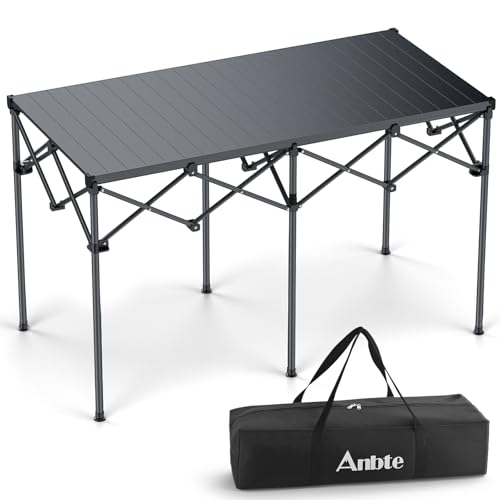
Anbte 24-Inch Adjustable Folding Camping Table
Outdoor meals get awkward fast when every plate, drink, utensil, and cooking tool has to compete for a tiny patch of clean ground. A compact table solves that mess only if it doesn't become another bulky item to wrestle into the car, and that balance is where the best portable folding tables for camping start to separate themselves. The Anbte model brings a 24-by-16-inch tabletop, three fixed working heights, an under-table storage net, and a folding briefcase-style design into a package that weighs 5.7 pounds. It isn't built around one narrowly defined campsite job, either, since the supplied specifications position it for picnics, grilling, card games, fishing, dining, work, and indoor use.
Anbte Adjustable Folding Camping Table
The three-height system gives this table a practical difference from fixed low camp tables. Its legs can be configured at approximately 10, 18.1, or 27.5 inches, so the surface can shift from ground-level picnic duty to chair-side use and then closer to a conventional working height. That range is especially useful on trips where the same table gets reused throughout the day. Breakfast on a picnic blanket, afternoon cards beside camp chairs, and evening food prep don't necessarily need the same table height.
The adjustment system uses three fixed positions rather than continuous telescoping movement. That's easier to understand and avoids the fiddly process of matching four independently adjustable legs, but it also limits fine tuning. The strength is predictable setup because each mode has a defined height. The weakness is that a surface sitting slightly too high or low can't be nudged a couple of inches between those preset positions.
At the lowest setting, the table can sit close to a blanket, tent floor, or lawn seating arrangement without looming over everything. The middle 18.1-inch setting makes more sense beside many low outdoor chairs, while the 27.5-inch position opens the door to dining, study, or light work from a standard chair. That flexibility gives one piece of furniture several identities without increasing its packed footprint. For a campsite where equipment needs to earn its keep, multipurpose height adjustment is a pretty sensible trick.
Twenty-Four Inches Gives Useful Working Room
The tabletop measures 24 by 16 inches, landing in a useful middle ground between tiny chair-side tables and wide family camping tables. There's enough space for a couple of plates, drinks, card games, fishing accessories, or a modest collection of cooking supplies without turning the setup into a balancing act. At the same time, the surface stays narrow enough for smaller campsites and crowded patios. That balance is one of the table's more practical strengths because oversized camp furniture can become a nuisance long before dinner starts.
A surface this size still has boundaries. Large grills, multiple pans, serving trays, and several people's dinnerware can fill 24 inches surprisingly fast, so it shouldn't be mistaken for a full outdoor kitchen counter. The workspace limitation becomes most noticeable during elaborate meal prep where ingredients, cookware, and hot utensils all need separation. For simple grilling support, card games, or casual dining, though, the dimensions make considerably more sense.
The rectangular proportions also give the table a different feel from very small square camp tables. Longer items can sit along the 24-inch side without consuming the whole top, while the 16-inch depth keeps things reachable from a seated position. That usable shape works well for placing food down one side and leaving the other half for plates or utensils. It's a small layout advantage, but campsite organization often comes down to exactly those little bits of breathing room.
Three Heights Change The Way The Table Gets Used
The 10-inch position is the most casual of the three. It suits picnic blankets, lawn seating, children working close to the floor, or a tent-side setup where reaching upward would feel awkward. The low-height mode can also keep snacks and drinks within easy reach during laid-back outdoor afternoons. Of course, anyone trying to chop vegetables while standing at that height will get tired of bending pretty quickly.
The middle position at 18.1 inches is arguably the most natural setting for many camp-chair arrangements. It's tall enough to keep food well off the ground yet low enough to remain comfortable beside relaxed outdoor seating. That makes it handy for coffee, cards, snacks, fishing tackle, or shared items that don't need a conventional dining surface. The middle setting fills a useful gap that fixed very-low tables sometimes miss.
The tallest configuration reaches 27.5 inches, which changes the personality of the table more dramatically. It can function more comfortably for dining, working, studying, or light meal preparation from a chair, especially indoors or at a developed campsite. This is where the adjustable design earns its keep because the same tabletop can move from blanket height toward a more familiar table position. The tradeoff is that each height still depends on a preset leg configuration rather than continuous adjustment.
The Storage Net Frees Up The Tabletop
An under-table mesh net addresses a campsite annoyance that usually doesn't show up in product photos: small stuff has nowhere to go. Napkins, packaged snacks, lightweight utensils, card decks, or other loose items can occupy valuable tabletop space even though they don't need to sit within immediate reach. The included storage mesh creates another place for those lightweight essentials without increasing the table's footprint. That keeps the top clearer for food, games, or work.
The keyword there is lightweight. The supplied description specifically positions the net for smaller items, so treating it like a heavy-duty shelf wouldn't match the intended use. Its best role is organization rather than structural storage. A few light accessories underneath can make the table feel larger simply because less clutter is fighting for the 24-by-16-inch surface.
The removable nature of under-table storage also gives the setup some flexibility. A quick picnic may not need it at all, while a longer campsite meal or card session can benefit from having small supplies tucked below. That extra storage space is especially handy where putting objects on the ground means dealing with dust, wet grass, or sand. Little conveniences like that rarely sound dramatic, but they're often the details that keep a campsite from turning into a pile of loose gear.
Five-Point-Seven Pounds Keeps Transport Reasonable
The table weighs 5.7 pounds, which keeps it far lighter than many household-style folding tables while still offering a 24-inch surface and adjustable height. That's manageable for car camping, RV trips, picnics, and short carries from a parking area. The attached handle turns the folded table into something closer to a small case instead of an awkward bundle of legs and panels. That carry-friendly format matters because portability is about shape as much as raw weight.
Anbte describes the folded package as briefcase-sized and suitable for storage in cars, RVs, river rafts, or even motorcycle rear seats. The exact folded dimensions aren't included in the supplied details, so there's no reason to invent them, but the folding format itself tells us plenty about the intended use. Gear that closes into one compact unit is easier to stack alongside chairs and coolers than furniture with loose components. The space-saving design also makes indoor storage less annoying between trips.
Calling 5.7 pounds ultralight would be stretching things compared with tiny one- or two-pound side tables. Still, the added weight buys considerably more height flexibility, storage space, and tabletop area than minimalist models typically provide. The tradeoff is easy to understand: this isn't the table for ounce-counting backpackers, but it's far more manageable than dragging a large folding dining table into camp. Vehicle-based outdoor trips are where the weight makes the most sense.
The Aluminum Frame Handles Everyday Outdoor Use
The frame uses thicker aluminum alloy, giving the table a rigid structure without pushing the overall weight too far upward. Aluminum is a sensible material for furniture that gets hauled outside, packed repeatedly, and exposed to damp conditions. It also keeps the folding legs lighter than an equally substantial steel structure would likely feel. The supplied details describe the frame as solid and durable, though no unsupported claims about long-term lifespan are needed to appreciate the material choice.
The stated maximum load is 66 pounds, which provides a useful reference for normal campsite use. Food, drinks, a portable cooking setup, card-game supplies, or work materials all fit comfortably within the intended role as long as weight is distributed sensibly. That number shouldn't be treated as an invitation to pile dense equipment on one edge of the table. A compact folding frame will always behave better with balanced loads across the tabletop.
Stability also depends on which height setting is being used and how level the ground is underneath. The supplied description doesn't mention individually leveling the legs, so rough terrain may still require repositioning the table. The fixed-height adjustment changes overall elevation, not necessarily corner-to-corner leveling. That's an important distinction for campsites where dirt, gravel, and grass rarely provide a perfectly flat foundation.
MDF Makes Cleanup Easy But Adds A Tradeoff
The tabletop uses MDF, or Medium Density Fiberboard, with a smooth surface designed for easy cleaning. Spilled drinks, crumbs, sauce, or ordinary meal mess can be wiped away instead of settling into a rough or fabric-based top. For picnics, card games, or indoor work, that smoothness makes the surface pleasant to use. It also gives cups and plates a solid landing area without the gaps found on roll-up aluminum slat tables.
MDF does come with a practical consideration: it isn't the same material as an all-aluminum tabletop. The product description calls the table waterproof and emphasizes easy spill cleanup, but care around prolonged moisture exposure is still sensible because the core material is fiberboard. The easy-clean surface is useful for normal spills and outdoor mess, yet storing the table wet for extended periods wouldn't be a smart habit. Wiping it down before packing is a simple way to treat the material sensibly.
The smoother surface can be especially pleasant for cards, notebooks, laptops, plates, and cups because everything sits on a continuous panel. That's a real difference from slatted camping tables where cards or thin objects can catch between gaps. On the other hand, solid-panel tops generally fold differently from roll-up aluminum designs and may occupy more rigid space when packed. The briefcase-style format is the compromise Anbte uses to keep that panel portable.
One-Minute Setup Suits Quick Stops
The supplied specifications say the table can be set up within about one minute, which fits the briefcase-like folding design. No complicated assembly sequence is described, so the table is intended to move from storage to usable furniture without much delay. That matters during roadside picnics, fishing stops, or BBQ preparation where furniture should support the activity rather than become an activity itself. The quick setup also makes frequent height changes more practical.
A built-in carrying handle helps both before and after use. Instead of stuffing parts into a separate sack, the folded table can be moved as one compact piece, which is handy around RV storage compartments or crowded trunks. The integrated handle is a simple feature, but simple features tend to matter most during repeated loading and unloading. Nobody wants to hug a slippery folding tabletop against their chest while carrying a cooler in the other hand.
Quick setup doesn't remove the need to make sure the leg configuration is fully secure before adding weight. With three different heights available, each setting should be properly positioned before the table is loaded. That basic setup discipline is especially relevant near the upper 27.5-inch configuration, where a stable footing matters more because the center of gravity sits higher. A few seconds of attention is a fair trade for having multiple usable heights.
It Works Beyond A Typical Campsite
The supplied use cases stretch beyond camping into BBQs, picnics, card games, dining, study, fishing, and indoor work. That list makes sense because the three-height design changes the table's role more substantially than a fixed low model can. A child can use the lower settings for activities close to the floor, while the tallest configuration suits a chair and more conventional desk-like tasks. The table isn't locked into one outdoor season or one type of trip.
Fishing is a particularly natural fit because small tackle boxes, bait accessories, drinks, and tools benefit from staying organized and off wet ground. The storage net can hold lighter items while the tabletop handles whatever needs a firmer surface. That combination of topside workspace and under-table storage reduces the temptation to scatter equipment around a chair. Still, the 24-by-16-inch top means larger tackle systems may require additional room.
BBQ use works best as a side station rather than as the entire cooking setup. Plates, seasonings, utensils, condiments, or prepared food can occupy the surface while the actual grill remains separate. The 27.5-inch height makes that supporting role more comfortable than very low camping tables. Hot cookware should still be handled according to appropriate surface-care guidance because no specific high-temperature rating is included in the provided specifications.
Where The Design Gives Something Up
The most obvious weakness is that three fixed heights aren't the same as infinitely adjustable legs. A camper dealing with a weird chair height or sloping ground can't dial the table in inch by inch. The available positions are useful, but they remain predetermined. Anyone who values exact leveling over simple configuration may prefer individually telescoping legs.
The MDF top is another compromise compared with an all-metal table. Its smoothness and easy-clean surface are pleasant for dining and card games, while an aluminum top may feel more reassuring for prolonged exposure to rough outdoor conditions. The material tradeoff favors a smooth working surface over the simplicity of an entirely metal construction. Treating the tabletop with reasonable care should remain part of ownership.
At 5.7 pounds, the table also sits between minimalist and full-size camping furniture rather than winning a pure weight contest. That's not necessarily bad because the extra mass accompanies adjustable height, a decent tabletop, and storage mesh. Still, hikers who prioritize the smallest possible pack will probably see the weight differently from RV or car campers. The table makes the most sense where convenience after setup matters more than carrying every ounce on foot.
Its Best Role Is Flexible Everyday Camp Furniture
The clearest strength is how many everyday jobs fit inside one fairly compact piece of furniture. A 24-by-16-inch top, three heights, a 66-pound stated load limit, and under-table storage let the table shift between dining, games, light work, grilling support, and low picnic duty. None of those features is especially complicated on its own. Together, though, they reduce the need to bring separate low and high tables on the same trip.
The biggest difference from tiny camping side tables is ergonomic flexibility. Those lighter designs are easy to carry but often lock the surface near knee height, which gets frustrating during long meal-prep sessions. Anbte's 27.5-inch maximum lets the same table feel substantially more conventional whenever the situation calls for it. Dropping back to 10 inches later keeps the table useful around blankets or ground seating.
Travel planning brings separate packing considerations that aren't directly related to campsite furniture, and luggage choices have their own space and organization tradeoffs. A neutral reference to best luxury duffle bags for men covers that different side of trip organization without pretending it changes how this camping table performs. The Anbte table's portable folding format, carrying handle, and three-height design stand on their own merits. Its real appeal lies in giving a modest campsite footprint more than one useful working height.

8 Best Folding Picnic Camping Table of 2026 For Stable Outdoor Dining
9 Best Travel Camping Table of 2026 For Uneven Ground
12 Best Heavy Duty Camping Table of 2026 That Will Not Wobble or Sag
8 Best Camping Table Adjustable Legs of 2026 for Uneven Ground

9 Best Adjustable Height Camping Table of 2026 For Uneven Ground
10 Best Adjustable Camping Table of 2026 For Uneven Ground
10 Best Waterproof Camping Table of 2026 For Rain-Ready Campsites

11 Best Folding Bamboo Camping Table of 2026 For Uneven Ground