
Can You Use a Duffel Bag as Checked Luggage? (Size and Fees)

At the bedroom door, a traveler looks from an open duffel to a suitcase and wonders which one can go under the plane. A duffel bag can usually be checked, but the airline’s rules decide whether it’s accepted without extra fees. A soft bag can work well, as long as it closes securely and can handle being moved with other bags.
Before leaving, check the airline’s size and weight limits, including any handles or wheels, and confirm that the ticket includes a checked bag. A bag that’s too large or heavy, or isn’t covered by the fare, may cost extra or cause trouble at check-in. What you pack matters, too: protect breakable belongings and keep restricted items out of checked luggage. A few quick checks can help you arrive at the airport ready to hand over your bag.

- TLR Rank8.3
TLR Rank is a ranking system developed by TravelLuggageReviews.com. TLR Rank has no relationship or impact from any manufacturers or sales agent websites. Learn more
- BrandWrangler
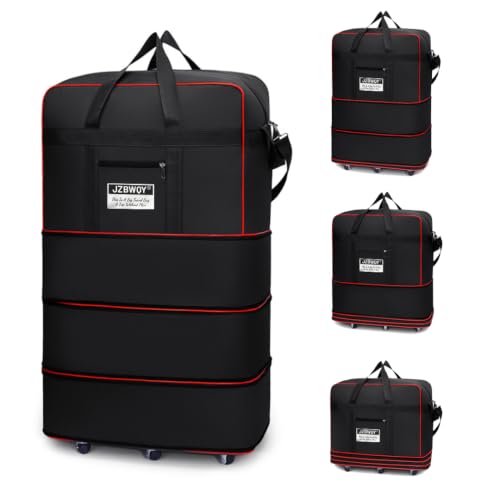
- TLR Rank8.2
TLR Rank is a ranking system developed by TravelLuggageReviews.com. TLR Rank has no relationship or impact from any manufacturers or sales agent websites. Learn more
- BrandJZBWQY
Last update on 2026-11-16 / Affiliate links / Images, Product Titles, and Product Highlights from Amazon Product Advertising API
What decides whether a duffel can go in the hold
A duffel is usually accepted as checked luggage if it meets the airline’s rules and your ticket lets you check a bag. The bag does not have to be a hard-sided suitcase. But a soft bag can bulge when packed, so its outside size may be larger than it looks when empty.
Airlines set their own limits for checked-bag size and weight. They may measure the bag with its handles, wheels, and other parts included. Your fare also matters: some tickets include a checked-bag allowance, while others charge for each bag. A bag can be accepted but still cost extra if it is over a limit or not included in your ticket.
Before you leave home, check the rules for every airline on your trip, including the airline operating a connecting flight. Do not assume that the rules for your first flight apply to the whole journey. If the airline’s page is unclear, contact the airline before you pack, and ask about your exact bag and fare.
Think about how the bag will travel, too. Airport workers move checked bags between belts, carts, and aircraft, so a loose zipper or a weak closure can let belongings spill out. A duffel with a secure closure and sound fabric is a better choice than one with a damaged zipper, torn seams, or straps that can snag.
Check size, weight, and your ticket before packing
Use these steps before you head to the airport. The airline’s current baggage page or your booking details are the best places to confirm the rules for your specific flight.
- Find the checked-bag rules. Open the airline’s baggage page and look for the section about checked bags. Check the size limit, weight limit, and whether the airline counts handles and wheels. If your trip has more than one airline, check each one.
- Measure the packed duffel. Pack the bag first, close it, and set it on the floor. Measure its longest height, width, and depth, including handles and wheels. Check the airline’s page to see how it wants those measurements added or compared. A soft duffel can stretch outward when full, so do not rely only on its listed empty size.
- Weigh the bag as you plan to travel. Put the packed duffel on a household scale if you have one. If the scale is hard to read with the bag on it, weigh yourself holding the bag, then weigh yourself without it and compare the readings. This gives you a useful estimate, but the airline’s scale at check-in determines what the airline records.
- Confirm what your fare includes. Open your booking and look for the baggage allowance, meaning the bag your ticket lets you check. Check whether you need to pay in advance or at the airport, and whether the allowance covers one bag or more. Do not treat a ticket that allows a checked bag as permission to exceed the size or weight limits.
- Check what happens if the bag is over the limit. The airline may charge a fee, require you to move items to another bag, or refuse the bag in its current form. The outcome depends on the airline and the amount over its limit. If your measurement or weight is close, remove some items or use a smaller bag rather than counting on an exception.
When comparing bag sizes, remember that a number in a bag’s name does not confirm that it meets your airline’s rules. Compare the packed outside measurements with the airline’s instructions. If you are deciding between a duffel and a suitcase, a page about how larger checked suitcases are sized can give you another point of comparison, but your airline’s limits still decide.
Secure the duffel and protect what is inside
A checked bag may be shifted or turned as it moves through the airport. Pack the duffel so it stays closed even if it lands on its side. Put heavier items low and toward the center, and fill large empty spaces with soft clothing so the contents do not slide around.
- Close every zipper fully, then pull gently on the opening to make sure it stays shut.
- Use a bag with intact seams, a working zipper, and straps that can be secured close to the body of the bag.
- Keep straps from dangling where they could catch on other bags or equipment. If the bag has detachable straps, remove them or secure them as the manufacturer advises.
- Place breakable items in the middle of the duffel and cushion them with clothing. Keep fragile items out of the bag if you cannot protect them well.
- Put a name and contact method on the bag, and keep a photo or list of what you packed for your own records.
- Do not pack the duffel so full that the zipper strains or the bag’s shape pushes past the airline’s size limit.
Do not put valuables, important documents, or items you need during the flight in a checked duffel. Keep them with you when possible. Medication that you may need during the trip should also stay in your personal item or carry-on, rather than being out of reach in the aircraft hold.
Some items are restricted or have special rules in checked luggage. Spare lithium batteries and power banks generally belong in the cabin, not in checked bags. Rules for items such as aerosols, fuel, sharp objects, and sporting equipment can depend on the item and the airline. Check the airline’s restricted-items page and the relevant government travel guidance before packing anything uncertain.
If the duffel has a tear, a zipper that will not stay closed, or a strap that cannot be secured, do not send it as it is. Move your belongings to a sound bag or repair the problem before the trip. Wrapping a weak bag with tape is not a dependable substitute for a secure closure.
Choose a soft or rolling duffel for the trip
A basic soft duffel can be easier to lift and store at home, but you have to carry it by its handles or shoulder strap. That can become tiring when the bag is heavy or when you have a long walk between the check-in desk and the curb. A rolling duffel keeps the soft-sided shape but adds wheels, which can make it easier to move through the airport.
Wheels and a pull handle add parts that need room and can affect the bag’s outside measurements. Include them when checking the airline’s size rules. A rolling duffel may also be awkward to carry on stairs or over uneven ground, so think about where you will need to lift it, not just how far you will roll it.
Before buying a duffel for checked travel, confirm its outer size and empty weight on the product page. Check whether the listed measurements include wheels and handles, and compare those measurements with the airline’s checked-bag limit. Also look closely at the zipper, seams, handles, and straps, and make sure the closure suits what you plan to pack.
For a bag you will check, prioritize a closure that stays shut and a size that leaves room for soft fabric to bulge without exceeding the airline’s limit. If you need wheels, confirm that the handle feels practical for your height and that you can still lift the bag into a car or over a step. The right choice is the one you can move comfortably and check without guessing about its size or your ticket’s allowance.
FAQs
Can a duffel be refused at check-in?
Yes. An airline can refuse a bag that breaks its size or weight rules, contains a restricted item, or cannot be closed securely. Check the airline’s rules before you leave, and do not rely on the bag being accepted just because it is made for travel.
Can I check a duffel with shoulder straps?
Usually, but loose straps can catch as airport workers move bags. Secure the straps close to the bag, or remove detachable straps if the bag’s instructions allow it. Make sure the closure and handles are also in good condition.
Do I need to pay to check a duffel?
That depends on your airline, fare, and bag size and weight. Check your booking to see whether a checked bag is included, then compare your packed duffel with the airline’s limits. If the allowance or fee is unclear, ask the airline before traveling.


Best Affordable Carry On Luggage 2026 - 11 Most Loving

The 12 Best Carry On Luggage For Bad Back 2026 - Top Choices

Best Lightest carry on luggage with wheels in 2026

Top Airport Traveling Suitcases: Our 11 Best Picks

The Best Delsey Paris Luggage Set 2026

Top 10 Delsey Softside Luggage Picks for Stress-Free Travel

11 Best Guest Room Luggage Rack of 2026 To Protect Clean Bedding

11 Best Grom Luggage Rack of 2026 For Direct Bolt-On Fit










