
How to Measure Luggage for Airline Carry-On Limits

Many travelers assume the size printed on a suitcase tells them whether it fits overhead. That can be wrong: measure the bag’s full outside, including the wheels, handles, and anything else that sticks out. Measure its height, width, and depth, then compare each number with your airline’s carry-on limit.
The right limit depends on your airline and flight, and some airlines count protruding parts differently. Measure the bag closed and packed as you plan to carry it; an expanded section or bulge can make it larger. Carry-on weight rules are separate, too, so check those before you leave. First, here’s where to place the measuring tape.

- TLR Rank9.7
TLR Rank is a ranking system developed by TravelLuggageReviews.com. TLR Rank has no relationship or impact from any manufacturers or sales agent websites. Learn more
- BrandSweetcrispy

- TLR Rank8.9
TLR Rank is a ranking system developed by TravelLuggageReviews.com. TLR Rank has no relationship or impact from any manufacturers or sales agent websites. Learn more
- BrandWrangler
- TLR Rank8.7
TLR Rank is a ranking system developed by TravelLuggageReviews.com. TLR Rank has no relationship or impact from any manufacturers or sales agent websites. Learn more
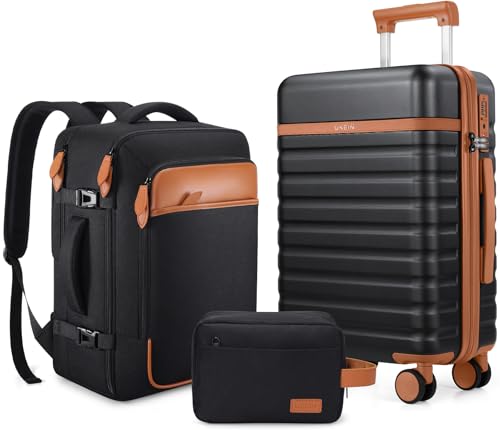
- BrandUKEIN

- TLR Rank7.8
TLR Rank is a ranking system developed by TravelLuggageReviews.com. TLR Rank has no relationship or impact from any manufacturers or sales agent websites. Learn more
- BrandSamsonite

- TLR Rank7.5
TLR Rank is a ranking system developed by TravelLuggageReviews.com. TLR Rank has no relationship or impact from any manufacturers or sales agent websites. Learn more
- BrandAmazon Essentials
Last update on 2026-11-14 / Affiliate links / Images, Product Titles, and Product Highlights from Amazon Product Advertising API
The Short Version
- Measure the suitcase from its outermost points, including wheels, handles, feet, and other parts that stick out.
- Measure height, width, and depth separately, with the bag closed and in the shape you plan to carry it.
- Compare each measurement with the carry-on size rules for your airline and flight. Do not assume every airline uses the same limit.
- Check the airline’s separate carry-on weight rule, if it has one. A bag can meet the size limit and still be too heavy.
Why the Outside Size Matters
Airlines look at the space your whole suitcase takes up, not just the hard shell or fabric body. Wheels can add height, handles can add width or depth, and a side pocket or bulge can make a bag larger than it looks when empty.
A size printed on a suitcase listing may describe the bag in a particular way. Check whether it includes wheels and handles before relying on it. If the listing does not say, measure the suitcase yourself so you know the outside size you are comparing with the airline’s rules.
This matters most when your bag is close to the limit. A suitcase that looks small enough at home may not fit an airport size checker if its wheels or packed sides extend past the allowed space. If it does not fit, airline staff may require you to check it at the gate, and a fee may apply under that airline’s rules.
Do not treat a common carry-on size as a rule for every trip. Limits can vary by airline, route, and flight. For an international trip, confirm the rules for the airline operating each flight. A partner airline on the same booking may have different limits. You can also see this international travel luggage page when thinking about airline size requirements.
How to Measure Height, Width, and Depth
Use a tape measure on a firm, level surface. Stand the suitcase upright, close it, and put away any pull handle that is meant to retract. Measure the bag as it will be carried, with its ordinary handles and other fixed parts in place.
- Measure the height. Keep the suitcase upright. Measure from the floor to its highest point, including wheels, feet, a top handle, or any other part that sticks up. Do not measure only the body from seam to seam.
- Measure the width. Look at the front of the upright suitcase. Measure across the widest point from one side to the other. Include side handles, pockets, and any other parts that extend outward.
- Measure the depth. Look at the suitcase from the side. Measure from the frontmost point to the backmost point, including wheels, handles, pockets, and anything else that sticks out.
- Write down all three results. Record them as height, width, and depth, in inches. Keep the numbers separate so you can compare each side with the matching airline limit.
If the suitcase is soft-sided, do not press it flat while measuring. Measure the outer shape without squeezing it. If it is packed, measure it packed, because clothing can push the sides outward.
Measure to the farthest point, even if that point seems minor. For example, a wheel housing may extend below the suitcase body, or a side handle may sit farther out than the shell. A small overhang still counts toward the full outside size.
Airlines may list limits in a different order or may give one combined size rule. Read the wording carefully. If the airline lists height, width, and depth separately, match your recorded measurements to those same directions. If it gives a combined total, follow its instructions for adding the dimensions.
Account for Bulges and Expansion
A suitcase can measure differently when it is full than when it is empty. Packing cubes, shoes, or a thick coat can push against the outside. An expanded section can also make the bag deeper, even if its height and width stay the same.
- Measure it closed. Zip the suitcase fully before measuring. A half-open zipper or loose flap does not show the shape you will bring to the gate.
- Measure it packed. If you have already packed, measure the bag in that condition. Check the front, back, and sides for fabric that bows outward.
- Check the expansion seam. If the suitcase has a zippered section that makes it deeper, decide whether you will use it. Measure with that section open if you plan to travel with it open.
- Look for anything attached. Include a luggage tag, a pocket filled beyond the bag’s outline, or an item strapped to the outside if it changes the space the bag takes up.
- Measure again after repacking. If you remove items or close the expansion section, recheck the depth and any side that was bulging.
Do not measure an expanded suitcase in its closed, unexpanded state and assume the same result will apply once it is packed for travel. If you are unsure how the airline treats an expandable section, check its current carry-on rules or contact the airline before leaving home.
Compare Your Measurements With the Airline’s Rules
Once you have the full outside measurements, find the carry-on rules for the airline operating your flight. Look on the airline’s official website or in your booking details. Confirm that the rules apply to your ticket and route, rather than relying on a size limit from a different airline or an old trip.
- Find the carry-on size limit. Check the airline’s current carry-on baggage page or your booking details. Make sure you are reading the rule for an overhead-bin bag, not a smaller personal item.
- Check what the airline counts. See whether the rule includes wheels, handles, and other parts that stick out. If the wording is unclear, ask the airline rather than assuming those parts do not count.
- Compare each side. Put your height beside the height limit, your width beside the width limit, and your depth beside the depth limit. If the airline gives a combined measurement, use the airline’s stated method to compare it.
- Check every flight on the booking. If your trip includes a connection or a partner airline, confirm the carry-on rules that apply to each flight. The airline operating a flight may use a different limit.
- Leave room for uncertainty. If your measurements are right at the stated limit, recheck them and verify how the airline measures. A soft bag may bulge, and a rigid suitcase cannot be pressed into a smaller shape.
Do not rely only on a phrase such as “carry-on size” on a suitcase label or listing. That description may not match the rule for your airline, and the listed measurement may not make clear which outside parts are included. Your own measurements and the airline’s current rules are the useful comparison.
If the bag exceeds even one stated side limit, it may not fit the airline’s size requirement. You can reduce the contents, close the expansion section, or choose a smaller bag. Re-measure after making a change. If it still exceeds the limit, check the airline’s options for checking the bag before you go to the airport.
Check Carry-On Weight Separately
Size and weight are separate rules. A suitcase can fit within the allowed space but still exceed an airline’s carry-on weight limit. Some airlines have a stated weight limit, while the rule and how it is applied can vary by airline and flight.
Look up the weight rule for your specific trip. If the airline sets a limit, weigh the packed bag, not the empty suitcase. A household scale can help: weigh yourself while holding the bag, then weigh yourself without it and subtract the second reading. If you do not have a reliable scale, use one at a luggage shop or another place that can weigh bags.
Check the limit again if you add items after weighing. A laptop, shoes, or a full toiletry bag can change the packed weight. If the bag is over the airline’s limit, remove items or confirm the airline’s other options before heading to the airport.
FAQs
Do I include wheels and handles when measuring luggage?
Yes, measure to the outermost points, including wheels, handles, and other parts that stick out. Check the airline’s wording too, because its rules say what it counts. Including those parts in your own measurement gives you a clear picture of the suitcase’s full outside size.
Should I measure a suitcase expanded or closed?
Measure it in the condition you plan to travel with it. If you will use the expansion section, measure with it open and the bag packed. If you will keep it closed, measure it closed, but check for bulges from the contents.
What if my suitcase is exactly at the airline’s limit?
Measure it again on a firm, level surface and check every outside part. If the airline’s wording does not explain whether a certain part counts, ask the airline. A little extra room below the stated limit can help avoid surprises from a bulging pocket or a measurement that was slightly off.
Does a carry-on have a weight limit as well as a size limit?
It depends on the airline and flight. Check the airline’s current carry-on rules for both size and weight, then weigh the bag after packing if a weight limit applies. Meeting one limit does not automatically mean the bag meets the other.


Best Affordable Carry On Luggage 2026 - 11 Most Loving

The 12 Best Carry On Luggage For Bad Back 2026 - Top Choices

Best Lightest carry on luggage with wheels in 2026

Top Airport Traveling Suitcases: Our 11 Best Picks

The Best Delsey Paris Luggage Set 2026

Top 10 Delsey Softside Luggage Picks for Stress-Free Travel

11 Best Guest Room Luggage Rack of 2026 To Protect Clean Bedding

11 Best Grom Luggage Rack of 2026 For Direct Bolt-On Fit










