
How to Travel With Cats in a Car Long Distance

The safest way to handle a long road trip with a cat is to keep them secured in an anchored carrier in the back seat for the entire drive. What changes that plan is whether you face a six-hour drive or a multi-day journey with a panicking pet. Letting a cat roam loose creates dangerous driver distractions and invites an accidental escape at a rest stop. Water breaks and litter box access should happen only while all vehicle doors remain firmly shut.
Drive length dictates whether you need pet-friendly hotel rooms, while individual temperament decides if you need sensory covers or vet-prescribed calming medicine for nausea from car movement. Traveling with two cats also means providing separate compartments so stress does not trigger fighting. Getting these travel habits right protects your pet, spares your car seats, and makes the miles far less stressful.

- TLR Rank9.8
TLR Rank is a ranking system developed by TravelLuggageReviews.com. TLR Rank has no relationship or impact from any manufacturers or sales agent websites. Learn more
- BrandUNICITII

- TLR Rank9.6
TLR Rank is a ranking system developed by TravelLuggageReviews.com. TLR Rank has no relationship or impact from any manufacturers or sales agent websites. Learn more
- BrandPetskd

- TLR Rank9.4
TLR Rank is a ranking system developed by TravelLuggageReviews.com. TLR Rank has no relationship or impact from any manufacturers or sales agent websites. Learn more
- Brandpidipiti

- TLR Rank9.2
TLR Rank is a ranking system developed by TravelLuggageReviews.com. TLR Rank has no relationship or impact from any manufacturers or sales agent websites. Learn more
- BrandPetseek

- TLR Rank9.2
TLR Rank is a ranking system developed by TravelLuggageReviews.com. TLR Rank has no relationship or impact from any manufacturers or sales agent websites. Learn more
- BrandPetskd

- TLR Rank9.0
TLR Rank is a ranking system developed by TravelLuggageReviews.com. TLR Rank has no relationship or impact from any manufacturers or sales agent websites. Learn more
- BrandPetskd

- TLR Rank9.0
TLR Rank is a ranking system developed by TravelLuggageReviews.com. TLR Rank has no relationship or impact from any manufacturers or sales agent websites. Learn more
- BrandPetskd

- TLR Rank8.8
TLR Rank is a ranking system developed by TravelLuggageReviews.com. TLR Rank has no relationship or impact from any manufacturers or sales agent websites. Learn more
- BrandLekereise
- TLR Rank8.6
TLR Rank is a ranking system developed by TravelLuggageReviews.com. TLR Rank has no relationship or impact from any manufacturers or sales agent websites. Learn more
- BrandPetskd

- TLR Rank8.6
TLR Rank is a ranking system developed by TravelLuggageReviews.com. TLR Rank has no relationship or impact from any manufacturers or sales agent websites. Learn more
- BrandICREATE.X

- TLR Rank8.2
TLR Rank is a ranking system developed by TravelLuggageReviews.com. TLR Rank has no relationship or impact from any manufacturers or sales agent websites. Learn more
- BrandLitaiL
Last update on 2026-10-22 / Affiliate links / Images, Product Titles, and Product Highlights from Amazon Product Advertising API
The Short Version
- Keep your cat contained: Secure your cat inside a sturdy, seatbelt-anchored travel carrier placed in the back seat for every second the car is moving.
- Prep in advance: Leave the carrier out in your home weeks before the trip so your cat treats it as a safe bed, and speak with your vet about anti-nausea medication or calming aids.
- Never free-roam in the cabin: Loose cats can dart under the brake pedal, distract the driver, or bolt out of the door during highway stops.
- Hold a strict door policy: Only open carrier zippers to offer water or clean a mess when every car door and window is fully closed.
Pre-Trip Setup: Carrier Familiarization and Vet Preparation
Cats rely heavily on familiar scents and established territory to feel secure. Tossing a frightened cat into a dark carrier they only see once a year for shots guarantees a loud, stressful start to your drive. Preparing your cat weeks before departure changes their emotional reaction to the carrier and protects their health along the highway.
- Turn the carrier into everyday furniture. Bring the travel crate into your living room or bedroom at least two to three weeks before your trip. Keep the door propped open, place a soft towel or a worn t-shirt carrying your scent inside, and drop high-value treats or catnip near the entrance. Your cat should view the carrier as an ordinary resting spot rather than a trap.
- Practice short engine runs and neighborhood loops. Once your cat walks into the carrier comfortably, close the door and take a five-minute drive around your neighborhood. Gradually increase this to a twenty-minute drive. These short trips help your pet adjust to the rumbling vibration, turns, and braking of the vehicle without the panic of an endless highway journey.
- Schedule a veterinary checkup. Book an appointment with your veterinarian a few weeks before leaving. Discuss whether your cat needs vet-prescribed calming medicine (mild sedatives) to ease extreme panic, or prescription medication to control nausea from car movement. If you are moving across state lines or staying at hotels that require documentation, this visit is also the best time for finding out where to get a health certificate for pet travel and making sure rabies tags and vaccines are up to date.
- Fit a secure harness and update identification. Purchase a walking strap around the chest (a harness) designed specifically for cats, which distributes pressure across the ribcage so they cannot wriggle backward out of it. Have your cat wear it around the house until they walk naturally. Confirm that their collar tag has your current cell phone number, and verify that your cat's microchip registry is updated with your new address and active phone contacts.
Car Arrangement: Securing the Crate and Managing Airflow
Where and how you position your cat in the car directly impacts both their safety and their comfort. A crate sliding across the back seat during an unexpected stop will terrify your pet and increase physical risk. Setting up the cabin properly takes only a few minutes before you load your luggage.
- Back seat placement only: Always put the carrier on the back seat floorboard or directly on the back seat. Never place a pet in the front passenger seat. Front passenger airbags deploy with explosive force during a crash, which can crush a carrier and cause severe injury.
- Fasten with seatbelts or luggage straps: Secure the carrier using the vehicle seatbelt routed through the carrier's dedicated strap loops. If your crate lacks seatbelt channels, wrap the shoulder belt snugly around the body of the crate and lock the seatbelt mechanism to prevent sliding during hard stops.
- Level the surface underneath: Most car seat cushions slant backward toward the backrest, which tilts the carrier and causes your cat to slide against the mesh wall. Fold a thick bath towel and tuck it under the low side of the crate until the floor of the carrier sits completely level.
- Direct cool air without drafty blasts: Cats overheat quickly in hot cars, but a direct blast from an air conditioning vent can cause distress. Angle the dashboard vents toward the rear ceiling or floor to circulate cool, fresh air through the cabin without blowing a direct, freezing stream onto the carrier mesh.
- Block direct sun exposure: Sunlight shining through side windows can turn a carrier into an oven, even when the car air conditioning is running. Use removable suction-cup sunshades on the side windows to keep the crate shaded throughout the day.
Bathroom and Feeding Routine: Food, Water, and Portable Litter
Managing food, hydration, and bathroom breaks requires balance on a long trip. An anxious cat with a full stomach often vomits within the first hour of driving. At the same time, withholding water for too long or ignoring litter box needs causes unnecessary physical stress.
Feed your cat a modest meal about three to four hours before you start driving, then pull up the food bowl. Giving their digestive tract time to empty prevents stomach upset and lowers the chances of a sudden bowel movement during highway traffic. For cats prone to severe motion sensitivity, your vet may recommend an even longer fasting window before departure.
Do not leave open bowls of water inside the carrier while driving. Road bumps and sudden stops will spill the water, leaving your cat sitting on cold, damp bedding for hours. Instead, offer water from a shallow dish during scheduled vehicle stops every two to three hours. If your cat refuses to drink from a dish due to nervousness, offer a lickable pureed cat treat, which provides valuable moisture and calories in a form most cats accept even when slightly stressed.
Plan your litter box strategy based on the crate size and travel schedule. If you use an extra-large travel crate that holds a small litter tray, fill it with an inch of litter and keep a scoop and sealable plastic bags handy. If your crate is standard size, set up a portable folding litter box on the car floorboard. During rest breaks, with all vehicle doors and windows sealed, let your cat step into the box. Do not worry if your cat refuses to go during daytime stops. Many cats naturally hold their bladder and bowels for eight to ten hours when traveling, choosing to wait until you arrive at your evening destination.
Accidents do happen, especially when a cat gets startled. Line the bottom of the carrier with multiple layers of disposable absorbent puppy pee pads beneath their favorite fleece blanket. If an accident occurs, pull out the soiled top pad, wipe the waterproof tray with an unscented pet-safe wipe, and toss the mess into a trash bag without having to unpack your entire trunk.
Managing Panic and Nausea: Sensory Control and Calming Care
The unfamiliar rumble of the engine, changing cabin pressure, and rapid movement of objects outside the window can trigger severe sensory overload. When a cat panics, they often meow continuously, pant with an open mouth, drool excessively, or vomit. Managing these sensory inputs helps calm their nervous system.
Limit your cat's visual field. While human passengers enjoy watching the scenery, the sight of telephone poles, trees, and passing semi-trucks flashing by at high speeds creates disorientation and visual nausea from car movement. Drape a light, breathable cotton sheet or towel over three sides of the carrier, leaving the side facing away from the window open for airflow. Blocking the outside view encourages cats to settle down and sleep.
Maintain a quiet, low-stress cabin atmosphere. Keep car audio at a low volume and choose soothing instrumental tracks or classical music rather than loud podcasts or heavy bass. Talk to your cat in a calm, steady conversational voice during the drive. Never open the carrier door while driving to comfort a crying cat. An uncontained pet that gets loose inside the cabin can wedge themselves under the foot pedals or climb onto your shoulders, creating an immediate driving emergency.
Use calming aids early. Synthetic pheromone sprays mimic the natural facial markers cats use to mark safe zones. Spray the interior of the crate and bedding fifteen minutes before putting your cat inside so the alcohol base can evaporate completely. For pets with intense car phobia, use vet-prescribed calming medicine directed by your veterinarian. Administer any medication at the exact time window recommended by your clinic, usually thirty to sixty minutes before hitting the road.
Rest Stops and Overnight Stays: Escape-Proof Rules
The greatest risk during long-distance road trips is an accidental escape. A frightened cat can squeeze through a cracked window or shoot past your legs in a fraction of a second. At a noisy highway rest area filled with moving trucks, an escaped cat is almost impossible to catch. Setting strict rules protects your pet at every stop.
- Enforce total vehicle lockdown: Never unzip the carrier door while a car door or window is open. Before you check on your cat, offer water, or scoop a travel litter tray, roll up every window, turn off the engine, close all doors, and verify that everyone inside the car knows the pet is being accessed.
- Keep harness and leash attached: Put your cat's walking strap around the chest (a harness) on before you leave your home and leave it on throughout the drive. When opening the carrier at a stop, clip a short leash to the harness ring before opening the zipper fully. If an unexpected noise causes them to bolt toward the vehicle door, you retain physical control.
- Never leave pets in a parked car alone: Even on mild days with temperatures in the low seventies, interior vehicle temperatures can climb past fatal levels within ten to fifteen minutes. If you need to use the restroom or buy food, take turns with your travel partner or use drive-through lanes so the vehicle climate control stays on.
- Secure the hotel room before release: When arriving at a pet-friendly hotel or rental, carry your cat inside the room while still locked inside the carrier. Place the carrier in the bathroom, close the bathroom door, and inspect the main bedroom for hazards. Look under beds for open box springs, check behind television stands for loose wiring, and make sure balcony doors and windows are latched tight. Only open the carrier once the space is fully contained.
What to Look for in a Long-Distance Travel Carrier
A standard vet carrier designed for a ten-minute neighborhood drive rarely provides the space, stability, and ventilation required for eight hours on the highway. Choosing a carrier built specifically for vehicle travel makes a significant difference in how relaxed your cat remains throughout the trip.
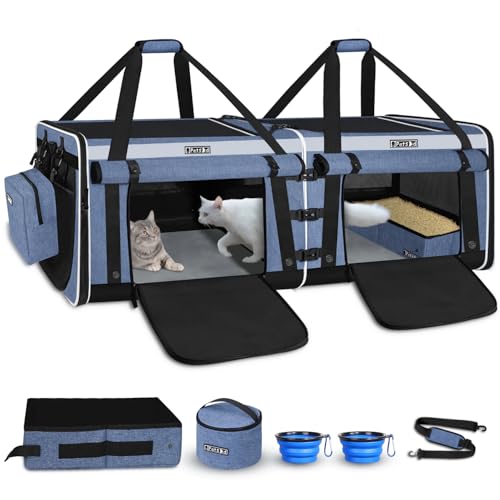
Look for expandable soft-sided crates that feature fold-out side compartments. These compartments remain zipped flat while you carry the crate, but unzip and expand across your back seat once the carrier is parked or during extended rest breaks. This gives your cat room to stretch their legs, change sleeping positions, and access a small litter area without needing to leave their enclosed space.
Check the structural security and hardware carefully. Seek out carriers equipped with built-in seatbelt straps or wide luggage loops that hold the crate firmly against the vehicle seatback. Self-locking zippers are another critical safety feature; smart or determined cats can nudge ordinary zippers open from the inside by pawing at the seams. Strong, scratch-resistant claw-proof mesh windows are essential to provide continuous ventilation without tearing under frantic scratching.
Pay attention to the base construction. The carrier must have a rigid, solid floorboard so it does not sag or buckle under your cat's weight when lifted. A removable, machine-washable fleece liner combined with an underlying waterproof, leak-resistant base pan simplifies cleanups when spills or accidents happen on the road. If you are traveling with two cats, consider a modular dual-compartment crate with a removable center divider. This setup lets bonded pets travel together while giving you the option to separate them if the stress of the road makes them irritable toward one another.
FAQs
Can I let my cat roam free in the car if someone holds them?
No, you should never allow a cat to sit loose on a passenger lap while the car is moving. Even the calmest cat can panic at a sudden horn, sudden braking, or an unfamiliar highway bump, scratching the passenger and diving into the driver footwell. Keeping your cat secured inside a seatbelt-anchored crate protects both your pet and the driver from fatal distractions.
How long can a cat hold their bladder on a road trip?
Many cats can safely hold their bladder for eight to ten hours during travel due to adrenaline and stress, which temporarily slows down digestion and waste production. While you should offer a small litter box at rest breaks every three to four hours inside a sealed car, do not panic if they refuse to use it until you reach your hotel or new home for the night.
What should I do if my cat meows nonstop for the first hour?
Continuous crying is common as cats adjust to vehicle motion and territory changes. Keep the carrier lightly covered with a breathable sheet to block outside motion, play calm music at low volume, and speak in reassuring tones without opening the carrier zipper. In most cases, cats tire themselves out and fall asleep once they realize the carrier is secure and stable.
Should I feed my cat right before we leave in the morning?
No, you should avoid feeding your cat a regular meal immediately before departure. Give them a light meal three to four hours before leaving so their stomach has time to settle, reducing the risk of vomiting caused by road vibration. Provide small sips of water or a lickable puree treat during scheduled vehicle stops instead.


Best Affordable Carry On Luggage 2026 - 11 Most Loving

The 12 Best Carry On Luggage For Bad Back 2026 - Top Choices

Best Tandem Double Buggy 2026 - 11 Best Rating

Top 12 Kids Rolling Suitcases for Fun and Easy Travel

The Ultimate Guide to Choosing the Best 8 Wheel Suitcase

Best Lightest carry on luggage with wheels in 2026

Top Airport Traveling Suitcases: Our 11 Best Picks

The Best Prams For Rough Terrain - (2026 Top Choice)










