
How to Travel With Fishing Rods Without Breaking Them

Most anglers assume that taking fishing poles on a trip is an easy way to snap a rod tip or bend a wire line ring. That fear makes sense, but gear stays completely safe when packed properly: break down multi-piece poles and pack them inside a rigid travel tube. Adding soft padding around the tips and line rings shields the most fragile parts from rough baggage handlers and shifting car trunks.
The right approach depends on your travel method and rod style. Long, one-piece poles can ride safely along the ceiling of an SUV, but flying requires either a compact breakdown rod for the overhead bin or a locked hard case checked with regular luggage. Airline baggage rules also dictate where sharp hooks, reels, and spools of line belong. Here is how to pack every piece step by step so your gear arrives intact and ready to fish.
- TLR Rank9.2
TLR Rank is a ranking system developed by TravelLuggageReviews.com. TLR Rank has no relationship or impact from any manufacturers or sales agent websites. Learn more
- BrandPlano

- TLR Rank9.2
TLR Rank is a ranking system developed by TravelLuggageReviews.com. TLR Rank has no relationship or impact from any manufacturers or sales agent websites. Learn more
- BrandWowelife

- TLR Rank9.0
TLR Rank is a ranking system developed by TravelLuggageReviews.com. TLR Rank has no relationship or impact from any manufacturers or sales agent websites. Learn more
- BrandSrempeom
- TLR Rank9.0
TLR Rank is a ranking system developed by TravelLuggageReviews.com. TLR Rank has no relationship or impact from any manufacturers or sales agent websites. Learn more
- BrandPEKREWS

- TLR Rank8.8
TLR Rank is a ranking system developed by TravelLuggageReviews.com. TLR Rank has no relationship or impact from any manufacturers or sales agent websites. Learn more
- BrandBooms Fishing

- TLR Rank8.8
TLR Rank is a ranking system developed by TravelLuggageReviews.com. TLR Rank has no relationship or impact from any manufacturers or sales agent websites. Learn more
- BrandLEOFISHING

- TLR Rank8.8
TLR Rank is a ranking system developed by TravelLuggageReviews.com. TLR Rank has no relationship or impact from any manufacturers or sales agent websites. Learn more
- BrandXTreme Rod Bags
- TLR Rank8.6
TLR Rank is a ranking system developed by TravelLuggageReviews.com. TLR Rank has no relationship or impact from any manufacturers or sales agent websites. Learn more
- BrandOKUMA

- TLR Rank8.4
TLR Rank is a ranking system developed by TravelLuggageReviews.com. TLR Rank has no relationship or impact from any manufacturers or sales agent websites. Learn more
- BrandRIGGED & READY TRAVEL FISHING

- TLR Rank7.8
TLR Rank is a ranking system developed by TravelLuggageReviews.com. TLR Rank has no relationship or impact from any manufacturers or sales agent websites. Learn more
- BrandPEKREWS

- TLR Rank-
TLR Rank is a ranking system developed by TravelLuggageReviews.com. TLR Rank has no relationship or impact from any manufacturers or sales agent websites. Learn more
- BrandGlobe Pequot Press
Last update on 2026-10-22 / Affiliate links / Images, Product Titles, and Product Highlights from Amazon Product Advertising API
Driving gives you room while flying demands strict protection
Taking a fishing trip by car offers flexibility that air travel cannot match. You can transport full-length one-piece rods, large tackle boxes, and backup gear without paying oversized luggage fees. You also control how gear is handled, so rod tips are not thrown around by airport baggage handlers. The primary danger during road trips is passenger cabin clutter, closing doors on fragile tips, or shifting luggage during sudden stops.
Flying changes the situation completely. Commercial airlines treat oversized sporting gear with the same rough handling as standard suitcases, where heavy luggage lands on top of your gear. If you fly to coastal waters or head to tropical fishing spots like Puerto Rico where you wonder where to travel without a US passport, packing requires careful planning. You must either use a breakdown travel rod that fits into standard luggage or buy a heavy-duty rigid plastic case that survives checked cargo holds. How you travel dictates whether you can bring your everyday pole or need a travel setup.
Pack multi-piece rods in reverse layers with soft padding
Rod tips are delicate, and the wire line rings (guides) lined with ceramic can crack if they clatter against each other. When packed correctly, the blank (the main pole shaft) absorbs outside pressure instead of the fragile tip. Follow these steps to prepare any multi-piece rod for safe transit.
- Separate every section at the joint. Pull the rod apart gently at the ferrule (the joint connecting rod sections). If the joint sticks, grip it with rubber pads for better traction. Never twist the rod sections by holding onto the wire line rings, as that twists the metal feet right off the main pole shaft. Clean any dirt or sand out of the joint before packing so grit does not grind into the material later.
- Stagger the pieces in opposite directions. Do not line up all fragile tips at the same height. Lay the thick butt handle section next to the thin tip section, shielding the delicate top end alongside the sturdy handle. Turn the wire line rings away from one another so the metal frames cannot scratch or bang against neighboring parts during transit.
- Band the bundle securely together. Use soft rod straps, wide rubber bands, or painter's tape to hold the sections together. Wrap them snugly at two or three points along the bundle. Avoid cheap electrical tape or duct tape because the adhesive leaves a gummy residue on the pole shaft that catches dirt.
- Wrap the bundle in a cushioned layer. Slide the bundled rod into a soft fabric sleeve, bubble wrap, or a roll of fleece cloth. You can also wrap the sections inside a soft beach towel. This cushioning keeps the ceramic inserts in the wire line rings from chipping if the case takes a drop on pavement.
- Cushion both ends of your travel case. Before sliding the wrapped rods inside your rigid plastic case, push crumpled packing paper or clean socks down to the bottom end cap. Once the rods are inside, fill the empty top space with extra cloth before closing the lid. This stops the rods from sliding back and forth inside the tube when handlers tilt the case upright.
Check long tubes as sporting gear or carry breakdown rods
The Transportation Security Administration (TSA) allows fishing rods in carry-on bags and checked luggage. However, security rules do not override individual airline baggage limits. Most airlines restrict standard carry-on bags to 22 inches in length. Unless you use a multi-piece fly rod or a compact pack rod that fits inside a carry-on bag that fits in the overhead bin, your rod case must travel in the cargo hold.
Keep these key airline policies in mind before heading to the terminal:
- Review your airline sporting equipment rules. Most major carriers treat a rigid plastic case for fishing rods as a standard checked bag, provided it stays within weight limits (usually 50 pounds). Some airlines combine a rod tube and one small tackle box as a single checked item. If stormy weather causes sudden flight changes, understanding what is a travel waiver helps you rebook without paying surprise fees on your checked sporting equipment.
- Measure total linear inches. Add the length, width, and depth of your case together. Some regional airlines restrict baggage to 62 linear inches, while others grant sporting gear allowances up to 115 linear inches. If you travel on smaller regional planes, call the airline directly to verify that their cargo door physically fits your rod tube.
- Secure the case with an approved travel lock. Airport screeners open rod cases frequently because long hollow tubes look unusual on screening monitors. Use a recognized lock that screeners can open with a master key. If you use zip ties, carry extra ties in your personal bag so you can reseal the tube for your return trip.
- Label the case inside and outside. Luggage tags get ripped off conveyor belts easily. Write your name, phone number, and destination directly on the exterior tube using a permanent marker or heavy sticker. Tape a duplicate contact sheet inside the tube cap so airport staff can identify your gear if outer tags tear away.
Keep expensive reels in carry-ons and pack sharp hooks away
Leaving reels and lures attached to rods inside a travel case is a costly mistake. Reels add bulk, crush easily against pole blanks, and invite theft if luggage goes missing. Knowing where each part of your gear belongs keeps you on the right side of airport security checkpoints.
- Pack fishing reels in your carry-on luggage. Quality reels carry sensitive internal gears and represent the most expensive part of your setup. Keep them inside your under-seat personal item or a carry-on bag that fits in the overhead bin. Remove the reel handles or fold them flat so they do not bend if another bag presses against your luggage.
- Check your spooled line rules. Standard monofilament and braided line on your reels are fine to carry onto the airplane. However, heavy wire leaders or thick saltwater line can occasionally draw extra attention from screeners. If you pack deep-sea line or sharp lead core trolling line, place those spools in your checked bag to avoid delays.
- Place all hooks, lures, and knives in checked bags. Never attempt to bring treble hooks, heavy jigs, filleting knives, or hook-removal pliers through passenger screening. Security agents classify large hooks and blades as dangerous sharp items and confiscate them at the checkpoint. Pack all tackle (hooks, lures, and gear) securely inside plastic utility boxes nested in your checked suitcase.
- Protect lure boxes from shifting gear. Wrap hard plastic tackle trays in clothes or towels within your checked suitcase. Soft plastic swimbaits and scented worms should go inside sealed freezer bags to prevent leaks if cargo hold air pressure changes during flight.
Anchor rods inside your vehicle or lock them to roof racks
Road trips sound simple, but vehicle travel causes more broken rod tips than flying. Slamming car doors, falling coolers, and restless pets can snap a graphite blank in seconds. Planning where your gear rides before loading coolers and supplies keeps your rods safe until you reach the water.
If you drive an SUV, truck, or station wagon, the safest spot for rods is suspended along the interior ceiling. Inexpensive ceiling rod nets or webbed straps stretch between the grab handles above the doors, keeping long one-piece rods flat against the headliner. This lifts delicate tips away from heavy luggage, dog crates, and passengers. If you haul camping gear or tow your setup on long trips, reviewing what is a travel trailer will give you ideas for finding long, flat floor space where rods lie completely undisturbed.
When you must place rods on the floor or across cargo, never leave them loose. Slide each pole into a padded rod sleeve and lay the handles toward the front of the vehicle. Rod handles are thick and strong, while tips are brittle. If you hit the brakes suddenly, cargo shifts forward; having sturdy rod handles face forward ensures that heavy items push against solid cork or foam rather than crushing the rod tips.
Rooftop carriers are another popular choice for road trips when traveling with passengers and full cargo space. Hard-shell rooftop rod boxes bolt directly to roof racks and lock securely. When using a roof rack, check that the reel enclosures are padded to stop road vibrations from loosening reel seats. Also check the locks and mounting brackets every time you stop for fuel to confirm road vibration has not loosened the clamps.
Choose protective travel cases or multi-piece rods for easy transit
Deciding between a rigid travel case and a dedicated travel rod comes down to how often you travel and what species you pursue. Both options solve the problem of broken gear, but each fits a different travel style.
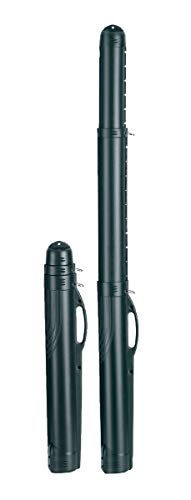
Rigid plastic travel cases are the standard choice for anglers who bring their favorite one-piece or two-piece rods on a trip. These cases feature thick molded plastic walls that withstand heavy luggage stacked on top in cargo holds. When shopping for a rigid tube, look for models with telescoping lengths so you can adjust the tube to fit the exact length of your poles without leaving extra empty space. Ensure the case features built-in padlock holes, durable latches, and internal padding on both end caps. A built-in handle or shoulder strap also makes walking through airport parking lots and terminals far more manageable.
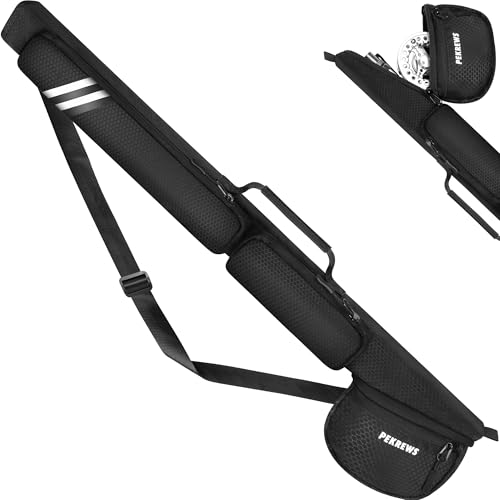
Multi-piece travel rods break down into three, four, or five short sections that slip directly into everyday carry-on luggage or duffel bags. Modern travel rods offer responsive action and sturdy backbone strength that match traditional two-piece models. When picking a multi-piece rod setup, look for options that include a fitted travel case with separate internal sleeves for each section. These dedicated sleeves stop individual rod pieces from rubbing against each other during transit. If you travel frequently by plane and want to avoid checked bag fees completely, a multi-piece breakdown rod paired with a compact reel case is the most reliable setup you can choose.


Best Affordable Carry On Luggage 2026 - 11 Most Loving

The 12 Best Carry On Luggage For Bad Back 2026 - Top Choices

Best Tandem Double Buggy 2026 - 11 Best Rating

Top 12 Kids Rolling Suitcases for Fun and Easy Travel

The Ultimate Guide to Choosing the Best 8 Wheel Suitcase

Best Lightest carry on luggage with wheels in 2026

Top Airport Traveling Suitcases: Our 11 Best Picks

The Best Prams For Rough Terrain - (2026 Top Choice)










