
How to Travel With Two Passports Without Border Delays

Use one passport per country. The rule is simple: enter and leave the same nation on the identical booklet, then show the airline the document that gives you legal entry to your destination. Sticking to this routine keeps immigration records clean and prevents border officers from thinking you overstayed your visit. Handing over the wrong document at an exit gate can cause delays, but keeping them straight makes traveling with two citizenships straightforward.
A few details shape your plan for each trip. Some countries, like the United States, legally require their citizens to enter and depart using their national passport. Your choice also depends on which document grants entry without extra paperwork at your destination, and whether your airline ticket matches the name on that specific booklet. Here is the exact order of steps to follow from departure to arrival.

- TLR Rank9.6
TLR Rank is a ranking system developed by TravelLuggageReviews.com. TLR Rank has no relationship or impact from any manufacturers or sales agent websites. Learn more
- BrandN/A

- TLR Rank9.4
TLR Rank is a ranking system developed by TravelLuggageReviews.com. TLR Rank has no relationship or impact from any manufacturers or sales agent websites. Learn more
- BrandMajosta
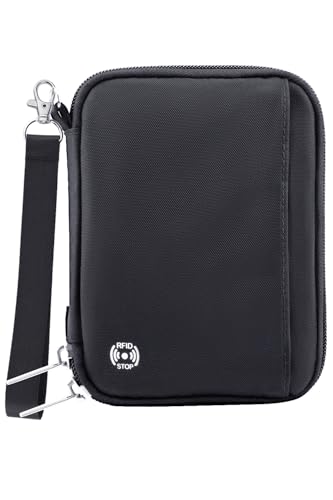
- TLR Rank9.4
TLR Rank is a ranking system developed by TravelLuggageReviews.com. TLR Rank has no relationship or impact from any manufacturers or sales agent websites. Learn more
- BrandWALNEW

- TLR Rank9.4
TLR Rank is a ranking system developed by TravelLuggageReviews.com. TLR Rank has no relationship or impact from any manufacturers or sales agent websites. Learn more
- BrandKAOBAN

- TLR Rank9.4
TLR Rank is a ranking system developed by TravelLuggageReviews.com. TLR Rank has no relationship or impact from any manufacturers or sales agent websites. Learn more
- BrandTravelon

- TLR Rank9.2
TLR Rank is a ranking system developed by TravelLuggageReviews.com. TLR Rank has no relationship or impact from any manufacturers or sales agent websites. Learn more
- BrandVULKIT

- TLR Rank9.0
TLR Rank is a ranking system developed by TravelLuggageReviews.com. TLR Rank has no relationship or impact from any manufacturers or sales agent websites. Learn more
- BrandCONTACTS

- TLR Rank8.8
TLR Rank is a ranking system developed by TravelLuggageReviews.com. TLR Rank has no relationship or impact from any manufacturers or sales agent websites. Learn more
- BrandN/A
Last update on 2026-10-22 / Affiliate links / Images, Product Titles, and Product Highlights from Amazon Product Advertising API
Always Enter and Exit One Country on the Same Passport
The single most important rule of traveling with two passports is keeping each country's entry and exit records matching. Think of every international border as an open file. When you hand your passport to a border guard upon landing, the immigration computer opens a file under that document number. When you leave, the officer scans the same booklet to close that file. If you enter on one passport and try to depart on another, the computer cannot find your arrival record. That mistake makes it look like you slipped into the country illegally or stayed past your limit, which can trigger fines, questioning in a back room, or future travel bans.
Dual nationality simply means being a citizen of two countries at the same time. While modern immigration computers process thousands of travelers an hour, they do not automatically connect your two legal identities. To the border system, your two passports represent two completely separate people. Using one document to step through immigration and another to leave breaks the digital trail. You must complete the entire visit using one identity from start to finish.
National citizenship laws also dictate which passport you must show at home. The United States requires all American citizens, including dual citizens, to enter and leave the country using a valid US passport. Other countries, including the United Kingdom, Australia, and South Africa, enforce similar rules for their own nationals. Even if your second passport offers a faster line at home, presenting a foreign document to your own government can lead to strict questioning or administrative delays. If you want a trip that avoids international border checks altogether, you can explore where to travel without a US passport for domestic territories and island getaways. But whenever you leave the country, your home passport must be the one that starts and ends your journey.
European countries inside the Schengen Area operate under a shared border system. If you enter France on an Italian passport, you have opened your stay across the entire European zone under that Italian identity. You can fly to Spain, take a train to Germany, and depart for home from Amsterdam without showing a passport at internal borders. But when you finally leave the Schengen zone from the Amsterdam airport, you must show that same Italian passport to the exit control officer so they can close your European travel record properly.
Book Flights Using the Passport for Your Final Destination
When you sit down to book your flight tickets, you only need to enter the details for one passport. Choose the booklet that gives you the easiest legal entry into your destination country. Airlines use your passport details to confirm that you have permission to land before they let you on the plane. If you use a passport that grants visa-free entry, which means visiting without prior written permission, the airline system approves your ticket without demanding extra paperwork.
Airlines face heavy government fines if they fly a passenger to a foreign airport without valid entry clearance. That is why check-in agents examine your documents so carefully. If your destination country requires an electronic authorization or a formal visa for one of your citizenships, use your other passport that lets you enter freely. For example, if you hold both American and French passports and you fly from New York to Paris, register your French passport with the airline so the system sees you as an arriving citizen rather than a tourist.
Before you confirm your booking, check these vital details:
- Match your legal name: Ensure the name on your flight reservation matches the exact spelling in the passport you show the airline check-in agent.
- Confirm document validity: Verify that both booklets remain valid for at least six months past your return date, because many airlines refuse boarding if a passport expires sooner.
- Check entry permissions: Pick the passport that avoids costly tourist visas, visitor fees, or electronic travel authorizations at your destination.
- Update frequent flyer accounts: Clear out old, expired passport numbers stored in your airline profile so the system does not pull conflicting information during online check-in.
If flight schedules change suddenly or a carrier cancels a route while you are organizing your travel documents, understanding what is a travel waiver can help you rebook your flights without paying high cancellation fees. Once your tickets are set, keep your passenger details steady and avoid swapping passport numbers back and forth inside the airline application.
Follow This Step-by-Step Sequence at Every Airport Desk
Traveling between two countries where you hold citizenship follows a simple, repeating sequence. The easiest way to remember what to do is to separate the airline from the government border guards. The airline only cares if you are legally allowed to land at the other end. Border control, which is the passport check at the airport run by government officers, only cares about your legal right to leave or enter their specific country. Here is how to handle every desk from start to finish on a round-trip journey.
- Departure check-in desk: Hand the airline counter agent the passport that grants you legal entry to your destination. If you fly from the US to Europe, show your European passport to prove you do not need a tourist visa. If the agent asks how you entered the US or why you have no US visa, show your US passport to prove you live there legally. The agent can record both numbers in their computer system.
- Airport security check: Present your boarding pass along with the passport that matches the name printed on that ticket. In the United States, transportation security officers only check that your government ID matches your boarding pass, so either passport works as long as the names match. Using your home passport here is usually the smoothest choice.
- Departure exit control: If you depart from a country that runs formal border exit checks, hand the border officer the passport of the country you are currently leaving. This step ensures the officer stamps you out or scans your biometric chip to close your local stay record. The United States does not have physical exit immigration desks, but most European, Asian, and Latin American airports do.
- Layover in a transit country: A transit country is the stopover airport along the way where you change planes. If you stay inside the international transfer area, you rarely clear local immigration and usually only show your boarding pass and destination passport at security gates. If you must exit the airport during a long layover to sleep at a hotel, show border control the passport that offers visa-free entry to that transit nation.
- Arrival immigration desk: Hand border control the passport belonging to that destination country, or the passport that gives you visa-free visitor status. If you are landing in a country where you hold citizenship, use that national passport to enter through the citizen lanes, which saves time and avoids questions about return tickets or travel funds.
- The return flight home: Repeat the entire process in reverse. Show your home country passport to the airline agent at check-in so they know you can land back home. At the foreign departure exit desk, show the foreign passport you used when you arrived so they can close your stay record. When you finally land back in your home country, walk up to immigration and present your home passport.
Border Officers Allow Dual Passports With Matching Names
Many travelers worry that carrying two national booklets will make border guards suspicious or lead to an interrogation. In reality, border control officers at major international airports process dual nationals every day. Dual citizenship is entirely legal in dozens of countries, including the United States, Canada, the United Kingdom, and most of the European Union. Carrying two legitimate booklets in your pocket is not a crime, and you do not need to hide one document when presenting the other.
If an immigration officer notices that your passport lacks an arrival stamp from your departure city, they might ask a direct question. For example, a European border officer might ask how you flew out of Chicago without a US visa in your Italian passport. Simply answer in a calm, polite voice: "I am a dual citizen, and I hold an American passport as well." If the officer asks to see the second document, hand it over openly. Border guards appreciate clear, honest answers, and explaining that you hold dual nationality resolves their question immediately.
The main headache for dual citizens comes from mismatched names. It is common for travelers to have slightly different names across two passports. A dual citizen might have a maiden name on one booklet and a married name on another, or have a middle name listed on their American passport that does not exist on their foreign document. Some countries also change the spelling of names to match local alphabets or naming conventions.
To avoid delays with mismatched names, follow these practical habits:
- Book tickets under one name: Always reserve your airline seat using the exact first, middle, and last name printed on the passport you will show to the airline desk.
- Carry legal name records: If your surnames differ between booklets due to marriage or legal name changes, keep an official, certified marriage certificate or court order in your personal carry-on bag.
- Check spelling before leaving home: Verify that character accents, hyphens, and initials match your flight paperwork so computer scanners do not reject your mobile boarding pass.
- Never present both passports unprompted: Hand border control only the single passport relevant to that country, unless the officer explicitly asks to see proof of your other citizenship.
Giving an immigration officer two passports at the same time creates immediate confusion. The officer has to figure out which person you are claiming to be and which file to scan into the national database. Keep the second passport tucked securely away until someone in authority asks to see it.
Choose a Dual Passport Wallet to Prevent Airport Mix-Ups
Juggling two small booklets, several boarding passes, and foreign customs slips while walking through crowded terminals can quickly become overwhelming. Reaching into a deep backpack pocket and pulling out the wrong passport at a busy border line creates instant stress and slows down your progress. Using dedicated travel gear designed specifically to hold two passports keeps your documents separated, protected, and ready to show at a moment's notice.
A good dual passport organizer provides separate, dedicated sleeves for both booklets so you can spot each cover instantly without pulling them out completely. This layout lets you keep your home passport on one side and your foreign passport on the other. You always know exactly which booklet your hand is touching before you step up to an airline desk or an immigration booth. It also keeps your boarding cards, paper transit receipts, and extra currency flat and easy to reach.
Physical protection is just as important as organization. Modern passports contain delicate electronic microchips and antennae embedded inside the back cover. If those chips bend, crack, or get wet, electronic airport gates cannot read your information, forcing you into manual inspection lines. Look for a wallet built with sturdy, water-resistant outer covers that keep the spine of each booklet from flexing under pressure.
You should also verify that any travel wallet you buy includes built-in radio frequency shielding layers. Modern biometric passports broadcast digital signals that can be picked up by wireless scanners. Having protective shielding built into the wallet walls keeps both documents secure while you navigate packed train stations, busy departure lounges, and security lines.
Finally, consider how the organizer fits into your overall travel routine. A slim, lightweight profile slides easily into an under-seat personal item, a zippered travel tote, or an inner coat pocket. Keeping your passports inside a secure, close-fitting pocket keeps your hands free while walking through busy transit hubs, and it keeps your valuable identification safe from pickpocketing or bag snatching in crowded tourist terminals.


Best Affordable Carry On Luggage 2026 - 11 Most Loving

The 12 Best Carry On Luggage For Bad Back 2026 - Top Choices

Best Tandem Double Buggy 2026 - 11 Best Rating

Top 12 Kids Rolling Suitcases for Fun and Easy Travel

The Ultimate Guide to Choosing the Best 8 Wheel Suitcase

Best Lightest carry on luggage with wheels in 2026

Top Airport Traveling Suitcases: Our 11 Best Picks

The Best Prams For Rough Terrain - (2026 Top Choice)










