
Is It Safe to Travel to Bulgaria in 2026?

Bulgaria is broadly safe for visitors, and violent crime against tourists is extremely rare. What usually causes trouble is not physical danger, but sneaky pickpockets, taxi scams, and rough roads. Most vacations here are smooth, relaxed, and completely trouble-free.
Your day-to-day safety mostly comes down to where you are and how you get around. Crowded train stations in Sofia and packed Black Sea resorts demand a close eye on your bags, while quiet mountain villages feel completely calm. Hailing a random cab off the street can lead to an inflated fare, making phone apps and official metered taxis much safer bets. After dark, poor streetlights and rough pavement turn highway driving into a real hazard. The guide below walks through the real risks to watch for, so you can enjoy your trip without constant worry.

- TLR Rank10.0
TLR Rank is a ranking system developed by TravelLuggageReviews.com. TLR Rank has no relationship or impact from any manufacturers or sales agent websites. Learn more
- BrandLonely Planet

- TLR Rank10.0
TLR Rank is a ranking system developed by TravelLuggageReviews.com. TLR Rank has no relationship or impact from any manufacturers or sales agent websites. Learn more
- BrandN/A

- TLR Rank9.6
TLR Rank is a ranking system developed by TravelLuggageReviews.com. TLR Rank has no relationship or impact from any manufacturers or sales agent websites. Learn more
- BrandN/A

- TLR Rank8.8
TLR Rank is a ranking system developed by TravelLuggageReviews.com. TLR Rank has no relationship or impact from any manufacturers or sales agent websites. Learn more
- BrandLonely Planet

- TLR Rank8.0
TLR Rank is a ranking system developed by TravelLuggageReviews.com. TLR Rank has no relationship or impact from any manufacturers or sales agent websites. Learn more
- BrandLonely Planet

- TLR Rank-
TLR Rank is a ranking system developed by TravelLuggageReviews.com. TLR Rank has no relationship or impact from any manufacturers or sales agent websites. Learn more
- BrandN/A

- TLR Rank-
TLR Rank is a ranking system developed by TravelLuggageReviews.com. TLR Rank has no relationship or impact from any manufacturers or sales agent websites. Learn more
- BrandN/A

- TLR Rank-
TLR Rank is a ranking system developed by TravelLuggageReviews.com. TLR Rank has no relationship or impact from any manufacturers or sales agent websites. Learn more
- BrandMajosta
- TLR Rank-
TLR Rank is a ranking system developed by TravelLuggageReviews.com. TLR Rank has no relationship or impact from any manufacturers or sales agent websites. Learn more
- BrandN/A

- TLR Rank-
TLR Rank is a ranking system developed by TravelLuggageReviews.com. TLR Rank has no relationship or impact from any manufacturers or sales agent websites. Learn more
- BrandMajosta

- TLR Rank-
TLR Rank is a ranking system developed by TravelLuggageReviews.com. TLR Rank has no relationship or impact from any manufacturers or sales agent websites. Learn more
- BrandN/A
Last update on 2026-11-02 / Affiliate links / Images, Product Titles, and Product Highlights from Amazon Product Advertising API
Violent Crime Concerns and the Real Safety Picture
Violent crime against foreign visitors in Bulgaria is rare. If you follow standard common-sense rules, your chances of running into physical danger are very low. The country belongs to both the European Union and NATO, and the U.S. Department of State consistently places Bulgaria under its standard Level 1 travel advisory or safety warning, which simply asks travelers to exercise normal precautions. Sensational headlines about Eastern Europe or regional unrest across the Black Sea often paint an alarming picture, but daily life in Bulgarian towns and cities remains calm, orderly, and peaceful.
Most crimes targeting tourists are crimes of opportunity. Muggings and violent assaults happen far less often in Sofia or Plovdiv than in many major American cities. You will see families, young students, and seniors walking through central parks, outdoor pedestrian malls, and tourist neighborhoods or main hotel strips well after sunset. The local culture is reserved, and violent confrontations in public areas are unusual.
The conflict in Ukraine is a common worry for travelers looking at a map, since Bulgaria shares the Black Sea with Ukraine and Russia. Bulgaria does not share a land border with Ukraine, and daily life hundreds of miles away from the conflict zone continues without disruption. Civilian air travel, intercity rail, and daily business operate normally throughout the country. Border crossings with Romania, Greece, North Macedonia, Serbia, and Turkey run on standard international schedules.
Entering the country is straightforward for American citizens, but your documentation matters. You must arrive with a passport valid for six months beyond your planned departure date. While tropical getaways let you look into where to travel without a US passport, a trip to the Balkans requires your standard blue passport book in good condition with empty stamp pages. Once you clear passport control, your primary safety focus shifts from international politics to local habits and avoiding petty theft.
Six Steps to Protect Your Wallet from Pickpockets and Scams
-
Book your airport rides at official kiosks or via mobile ride apps.
Never accept a ride from drivers who approach you inside the terminal arrivals hall shouting taxi offers. Rogue drivers at Sofia Airport often mimic the logos of reputable cab companies while charging ten times the legal rate. Instead, walk directly to the designated transportation desk inside the terminal lobby to request a car, or use a licensed airport taxi or rideshare app directly on your phone. Reason: Official dispatchers log the car number and set fair, regulated pricing before you ever step inside.
-
Check the window sticker rates on any street cab before opening the door.
Legitimate cabs must display a clear rate sheet on the passenger-side window showing daytime and nighttime fees per kilometer. Look closely at the company name and numbers on the glass before you get in. A metered taxi (a cab with an official fare counter) should have an operating dash unit that the driver starts immediately when you pull away. Reason: Fraudulent drivers place fake company stickers with inflated rates, like charging 20 Lev instead of 2 Lev per kilometer, which leaves you with an outrageous bill you cannot easily dispute.
-
Keep bags zipped across your front in transit hubs and busy shopping streets.
Pickpocketing or bag snatching occurs in high-traffic pedestrian areas, particularly along Vitosha Boulevard in Sofia, crowded metro stations, and central bus terminals. Carry your backpack or purse on your front in crowded train cars, or use a cross-body bag tucked securely under your arm. Reason: Crowded metro doors and tram platforms allow thieves to bump against you, open an exterior pocket, and jump off the vehicle just as the doors slide shut.
-
Exchange your dollars only inside commercial bank branches.
Avoid standalone currency exchange booths on street corners or along boardwalks in coastal resort towns. Some small street booths display great rates on large outdoor signs, but those rates often apply only to massive transactions or hide fine-print service fees of 15 to 20 percent. Walk into an established bank branch like UniCredit, DSK, or Postbank, or withdraw cash directly from an ATM mounted directly to a bank building. Reason: Bank tellers provide receipt-verified transactions and clean notes, keeping you safe from hidden fees and obsolete bank notes.
-
Review restaurant bills and handle cash payments carefully.
Always inspect the itemized bill before handing over cash in tourist hotspots or seaside cafes. Bulgaria uses the Lev (the Bulgarian unit of money), and mixed currencies are not accepted for everyday purchases. Pay with cash in the local currency or pay by card, and count your change at the table before getting up. Reason: Unscrupulous servers in busy beach resort spots sometimes add unrequested bread baskets or calculate change incorrectly when they know a foreign customer is unfamiliar with local bank notes.
-
Ignore aggressive flower sellers and clipboard petition requests.
If someone thrusts a flower into your hands or asks you to sign a charity petition near an ancient church or town square, keep walking with a polite but firm decline. This is an old distraction scheme where one person keeps you talking while an accomplice quietly works behind you. Reason: Engaging with the distraction keeps your hands occupied and lowers your spatial awareness, giving thieves an open window to slip phones out of shallow coat pockets.
Walking Alone, Night Safety, and Solo Travel Realities
Solo travelers generally find Bulgaria easy and comfortable to navigate. Solo female travelers report low levels of street harassment compared to many other popular European destinations. Catcalling is culturally uncommon, and men rarely bother solo travelers on the street or in restaurants. Bulgarians can appear quiet or stoic at first glance, but most will happily offer directions or help you decipher a train schedule if you ask politely.
Walking alone at night is safe in central city districts, university zones, and tourist neighborhoods or main hotel strips. Sofia, Plovdiv, and Varna have vibrant outdoor cafe cultures where public spaces stay well-populated past midnight during the warmer months. As with any city, you should stay on wide, well-lit main boulevards and avoid poorly illuminated side streets. Large municipal parks, such as Borisova Gradina in Sofia, are lovely during the day but can become pitch-black and empty late at night, making it wiser to walk along illuminated city streets instead.
Coastal beach resorts carry a distinctly different atmosphere after dark. Spots like Sunny Beach cater to high-energy party tourism, featuring cheap alcohol, loud open-air clubs, and rowdy international crowds. In these resort strips, the main hazards are bar fights, stolen phones left unattended on beach loungers, and pickpockets working nightclub entrances. Keep your drinks in sight, set a firm limit on your alcohol intake, and stick to trusted company if you plan to enjoy the late-night seaside club scene.
One unique cultural quirk worth remembering involves basic body language. In Bulgaria, a quick nod of the head can mean "no," while a gentle side-to-side shake of the head can mean "yes." Younger locals and hospitality staff in big hotels often adopt the Western standard when speaking English, but older shopkeepers and taxi drivers still use the traditional gestures. If someone shakes their head while agreeing to your request, do not assume they are being rude or rejecting your question.
Navigating Roads, Driving Hazards, and Transit Options
Getting around Bulgaria gives you a choice between public transit and driving yourself, and each option comes with distinct safety factors. Trains and intercity buses connect every major city, while a rental car lets you explore remote mountain monasteries, glacial lakes, and hidden historic villages.
Public transportation is affordable, reliable, and generally safe. Sofia has a modern, clean metro system with security cameras on trains and platforms, making it one of the easiest ways to move across the capital. Intercity coach buses run on predictable schedules between major hubs, offering comfortable seats and luggage compartments. Bulgarian state trains are budget-friendly, though older regional lines can be slow and basic. Pickpocketing can occur in crowded central train stations, so keep your bags close while waiting on boarding platforms.
Driving on your own presents the biggest daily safety challenge in Bulgaria. Road quality varies wildly once you leave modern multilane highways. Rural roads often have deep potholes, missing lane markings, and narrow shoulders. Aggressive driving habits are common among local motorists, including high-speed tailgating and risky passing on blind mountain curves. Stray dogs, horses, and unlit farm equipment can appear suddenly on dark country roads, making night driving outside major cities a genuine hazard you should avoid whenever possible.
If you choose to rent a vehicle, you must purchase a vignette (a digital road tax pass required on highways) before driving on national roads. Rental companies usually include this electronic pass in the contract, but you must confirm that the digital registration is active before leaving the rental lot. Police cars equipped with license plate scanners monitor highway traffic, and driving without a valid pass triggers automatic, heavy fines. Because unexpected vehicle breakdowns or itinerary changes can happen on mountainous routes, learning what is a travel waiver can help you decide how much cancellation protection and trip coverage you want for your bookings.
Daily Health, Tap Water Safety, and Emergency Contacts
Maintaining your health while traveling in Bulgaria requires only basic awareness. Tap water safety is standard across Sofia, Plovdiv, and most major mountain communities, where public supplies pipe clean water directly from mountain runoff and protected reservoirs. You can safely drink tap water and brush your teeth from hotel sinks in these inland cities. If you stay in an older apartment building with aging plumbing, the water might taste metallic, so a reusable filter bottle or bottled spring water is a practical backup. Along parts of the Black Sea coast and in small rural villages, municipal tap water can carry high mineral counts that upset sensitive stomachs, so sticking to sealed bottled water is the simplest choice there.
Pharmacies, marked clearly by green illuminated crosses and the sign "Apteka," are plentiful in towns and cities. Pharmacists in Bulgaria are well-trained and can provide basic medications for minor illnesses, stomach bugs, or headaches over the counter without a prescription. English is widely spoken in downtown pharmacies. If you take specialized daily prescription medication, bring enough in its original labeled pharmacy bottles to last your entire stay, plus a few extra days in case your return flight gets delayed.
For urgent medical assistance, fire, or police help, dial 112 from any mobile phone or landline. This is the universal European emergency number, and operators can connect you with English-speaking dispatchers. In major cities, modern private clinics offer fast, high-quality care for tourist injuries or sudden illnesses, though you must pay upfront with a credit card or cash before filing a claim with your travel insurance. Emergency services in rural areas take longer to arrive, so keep local hospital contacts written down if you head out on multi-day mountain hikes.
Choosing Navigation Tools and Field Guides for Remote Travel
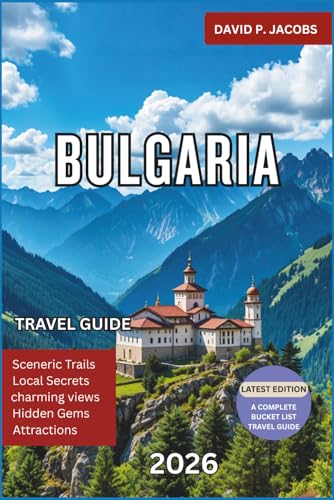
Bulgaria features dense mountain ranges, remote monasteries, and rural villages where cellular coverage can drop without warning. Once you travel outside the main highway corridors, road signs frequently switch entirely from Latin lettering to the Cyrillic alphabet. Having dedicated travel resources that do not rely on a steady cellular connection makes navigating these remote areas far less stressful.
When selecting a physical guidebook or travel reference map, prioritize publications updated for 2026 that include dual-language maps showing place names in both English and Cyrillic script. A good field reference should provide practical transit routing, regional hospital locations, and reliable neighborhood maps that fit easily inside a small daypack. Physical road maps with detailed topography and highway classifications prevent navigation mistakes if your phone battery dies or your GPS app loses satellite reception in deep river gorges.
FAQs
Do people in Bulgaria speak English?
English is widely spoken among younger locals, hotel employees, restaurant staff, and shop workers in major cities like Sofia and Plovdiv. In rural villages, older bus depots, and smaller grocery markets, older Bulgarians rarely speak English. Learning a few polite Bulgarian phrases, such as "Dobar den" for good day and "Blagodarya" for thank you, goes a long way with locals.
Can I use credit cards everywhere in Bulgaria?
Credit and debit cards are standard at hotels, supermarkets, gas stations, and seated restaurants in cities. You will still need the Lev (the Bulgarian unit of money) in physical cash for taxi rides, local bakeries, open-air vegetable markets, and public restrooms. Always carry small cash bills with you when traveling into smaller mountain towns or countryside attractions.
Are stray dogs dangerous in Bulgarian towns?
Bulgarian cities have significantly reduced stray dog populations through municipal rescue and neutering programs over the past decade. Most stray dogs roaming town centers are tagged, calm, and accustomed to pedestrians. Avoid approaching, feeding, or petting unfamiliar dogs, and take a wide path around packs resting near dumpsters or construction sites.
Is it safe to go hiking in the Bulgarian mountains?
Bulgaria offers magnificent, safe hiking trails across the Rila, Pirin, and Balkan mountain ranges. Marked trails connect extensive networks of mountain huts, but weather changes rapidly at high elevations even during midsummer. Always stay on marked paths, pack warm waterproof layers, carry a physical trail map, and download offline GPS tracks before leaving your base town.

Best Affordable Carry On Luggage 2026 - 11 Most Loving

The 12 Best Carry On Luggage For Bad Back 2026 - Top Choices

Best Tandem Double Buggy 2026 - 11 Best Rating

Top 12 Kids Rolling Suitcases for Fun and Easy Travel

The Ultimate Guide to Choosing the Best 8 Wheel Suitcase

Best Lightest carry on luggage with wheels in 2026

Top Airport Traveling Suitcases: Our 11 Best Picks

The Best Prams For Rough Terrain - (2026 Top Choice)










