What Are the Benefits of Polarized Sunglasses?

Check the reflective surfaces along daily driving routes or lake trips before choosing a new pair of shades. These lenses carry a microscopic filter that blocks blinding glare bouncing off flat surfaces like wet pavement, vehicle hoods, and open water. While standard dark tint simply dims overall light, polarization sharpens visual contrast and eases eye fatigue so seeing clearly in harsh sun feels effortless.
The everyday benefit depends on what needs viewing and how the lenses are made. Open roads become remarkably clearer, but the filter can make digital dashboards and phone displays appear distorted. Blocking harsh reflections also does not automatically stop harmful radiation, which makes certified UV400 sun safety essential. Optical build quality matters too, ensuring clear sight without lens peeling. Here is what this filtering does, when to wear it, and how to verify it works.

- TLR Rank9.2
TLR Rank is a ranking system developed by TravelLuggageReviews.com. TLR Rank has no relationship or impact from any manufacturers or sales agent websites. Learn more
- BrandKALIYADI
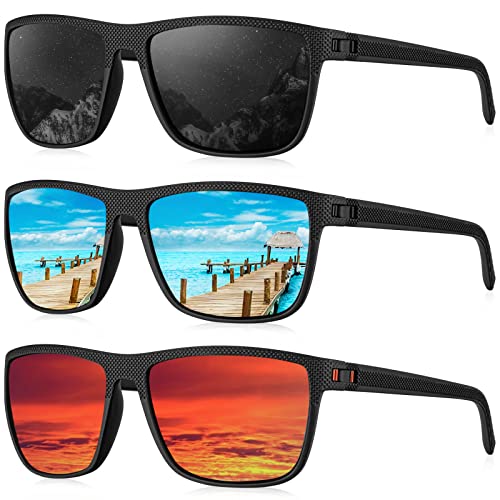
KALIYADI Polarized Sunglasses Men, Lightweight Mens Sunglasses Polarized UV Protection
View on Amazon- TLR Rank9.0
TLR Rank is a ranking system developed by TravelLuggageReviews.com. TLR Rank has no relationship or impact from any manufacturers or sales agent websites. Learn more
- BrandKALIYADI

- TLR Rank9.0
TLR Rank is a ranking system developed by TravelLuggageReviews.com. TLR Rank has no relationship or impact from any manufacturers or sales agent websites. Learn more
- BrandFoliful

- TLR Rank9.0
TLR Rank is a ranking system developed by TravelLuggageReviews.com. TLR Rank has no relationship or impact from any manufacturers or sales agent websites. Learn more
- Brandsuoso
- TLR Rank9.0
TLR Rank is a ranking system developed by TravelLuggageReviews.com. TLR Rank has no relationship or impact from any manufacturers or sales agent websites. Learn more
- BrandKALIYADI

- TLR Rank9.0
TLR Rank is a ranking system developed by TravelLuggageReviews.com. TLR Rank has no relationship or impact from any manufacturers or sales agent websites. Learn more
- BrandFanshen

- TLR Rank8.8
TLR Rank is a ranking system developed by TravelLuggageReviews.com. TLR Rank has no relationship or impact from any manufacturers or sales agent websites. Learn more
- BrandFAGUMA

- TLR Rank8.8
TLR Rank is a ranking system developed by TravelLuggageReviews.com. TLR Rank has no relationship or impact from any manufacturers or sales agent websites. Learn more
- BrandFAGUMA

- TLR Rank8.8
TLR Rank is a ranking system developed by TravelLuggageReviews.com. TLR Rank has no relationship or impact from any manufacturers or sales agent websites. Learn more
- Brandsuoso
- TLR Rank8.0
TLR Rank is a ranking system developed by TravelLuggageReviews.com. TLR Rank has no relationship or impact from any manufacturers or sales agent websites. Learn more
- BrandYIMI

- TLR Rank7.6
TLR Rank is a ranking system developed by TravelLuggageReviews.com. TLR Rank has no relationship or impact from any manufacturers or sales agent websites. Learn more
- BrandYIMI
Last update on 2026-10-15 / Affiliate links / Images, Product Titles, and Product Highlights from Amazon Product Advertising API
Block blinding road reflections with a vertical filter
To understand why polarized lenses feel so different from regular shades, look at how sunlight travels. Natural sunlight scatters in every direction. It travels in waves that move up, down, and sideways through the air. When light hits rough surfaces like grass or dirt, it bounces off at random angles. Your eyes process this scattered bounce as normal daylight.
The trouble starts when sunlight hits a smooth, flat surface. Think of wet highway asphalt after a rainstorm, a car hood, a calm lake, or hard-packed snow. Instead of scattering in all directions, the light waves bounce off that flat plane horizontally. They gather into a concentrated beam of harsh brightness. In everyday terms, this reflection is horizontal glare: blinding light bouncing off flat surfaces straight into your eyes.
Standard sunglasses treat all light the same way. They place a dark tinted layer over your eyes to dim the entire view. While this makes bright daylight somewhat softer, it does not stop that concentrated sideways beam. The reflection remains a harsh white glare, washing out colors and forcing you to squint.
A polarized lens solves this with a polarizing filter: a microscopic barrier blocking sideways bouncing light. This filter works like tiny vertical window blinds. Because the filter runs vertically, it lets upright light pass through while blocking horizontal waves bouncing off pavement or water. The blinding flash disappears, leaving your view clear and comfortable.
Cut squinting and eye fatigue on long highway trips
The main everyday benefit of a vertical filter is physical comfort. Driving on a bright highway without polarized lenses forces your eyes to work overtime. Even behind regular tinted sunglasses, your facial muscles tighten as you squint against road reflections. After a few hours behind the wheel, that constant squinting causes eye fatigue, dry eyes, and a dull forehead ache.
Polarized lenses remove that strain immediately. The moment you put them on, your face relaxes because the harsh surface reflection disappears. You can spot painted lane lines, brake lights, and road hazards through wet pavement without fighting bright reflections. Contrast sharpens instantly. Instead of a hazy road, you see crisp edges, road textures, and true colors.
This contrast boost also improves driving safety. A low morning or afternoon sun often reflects your dashboard onto the inside of your windshield, creating a blinding haze. Polarized lenses cut that reflection completely, giving you a clear view ahead. You can also see through the rear window of the vehicle ahead, letting you react to braking traffic sooner.
Outdoor water sports show the same dramatic difference. Regular sunglasses reveal only the shiny, mirror-like surface of a lake or ocean. Polarized lenses cut through that surface reflection so you can see straight into the water. Boaters and fishermen can easily spot submerged rocks, logs, and fish that would otherwise stay hidden beneath the glare.
Separate surface glare control from certified UV400 defense
Many people assume that polarization protects their eyes from sun damage. It does not. Polarization is an optical filter designed for visual comfort and contrast. It cuts surface glare, but it does not block invisible ultraviolet radiation on its own. True eye safety requires both glare reduction and ultraviolet defense.
When you wear dark sunglasses, your eyes sit in artificial shade. Your pupils naturally open wider, or dilate, to let in more light. If those lenses lack certified ultraviolet protection, your dilated pupils remain wide open while invisible radiation floods inside. Over time, that exposure damages your corneas, natural lenses, and retinas.
To protect your eyes, always verify that your sunglasses offer certified UV400 protection. UV400 means the lens blocks virtually all harmful invisible UVA and UVB rays up to 400 nanometers. This provides complete protection against harmful sun rays, regardless of how dark the tint looks.
Use this quick checklist when evaluating any pair:
- Look for the UV400 label: Confirm the frame or packaging clearly states UV400 or 100 percent UV protection. Never assume polarization includes UV defense unless clearly labeled.
- Remember darkness is not UV defense: Dark lenses without UV protection cause your pupils to dilate, letting more radiation reach inner eye tissues than wearing no shades at all.
- Check for layered builds: Look for a TAC lens (a layered plastic lens resisting surface scratches) or durable polycarbonate that seals the polarizing core between tough outer layers.
- Select the right tint: Grey lenses preserve natural colors, amber or brown lenses enhance contrast for driving and fishing, and yellow tints brighten flat light at dawn or dusk.
Watch out for blacked out screens and hidden ice patches
Polarized lenses offer huge advantages on the road and on the water, but they are not the right choice for every situation. Because these lenses block light at specific angles, they can interfere with digital screens and make certain outdoor hazards harder to see.
The most common issue involves digital screens. Many phone screens, GPS units, car dashboards, and gas pump displays have built-in polarizing filters. When the filter in your sunglasses crosses the screen filter at a right angle, the two filters cancel each other out. Your phone screen or map can turn completely black, dim drastically, or show rainbow swirls. If your car projects a heads-up display onto the windshield, polarized glasses often make that display disappear completely.
Winter roads present another serious concern. Ice reflects sunlight like a mirror. When driving in freezing weather with standard shades, you spot black ice by the bright sheen reflecting off the pavement. Polarized lenses eliminate that horizontal reflection, making slick ice look like dry or damp road. For this reason, many winter drivers and downhill skiers choose non-polarized sunglasses with high UV protection to spot slick patches early.
Pilots avoid polarized sunglasses for similar reasons. Cockpit instruments rely on digital displays that can black out at certain viewing angles. In addition, aircraft windshields often show distracting rainbow blotches under polarized light, and pilots must be able to spot the sudden glint of sunlight reflecting off distant aircraft.
Check your lenses at home using your smartphone screen
Some cheap sunglasses carry polarization stickers even though they only have standard dark tints. You do not need optical tools to verify your lenses. You can perform a quick check at home in thirty seconds using your smartphone or computer screen.
Follow these steps to confirm your lenses are polarized:
- Turn on your screen: Open a blank white screen or document on your phone or computer monitor, and set the screen brightness to its highest level.
- Hold the glasses level: Hold your sunglasses a few inches in front of the screen. Keep the frames horizontal, just as they sit across your face, and look through one lens at the bright display.
- Rotate the frames: Keep looking through the lens and slowly turn the sunglasses ninety degrees, so the frame points straight up and down.
- Check for the blackout: If the lens is polarized, the screen will turn noticeably dark, deep purple, or completely black as you reach the ninety-degree turn. This happens because the filter in your lens crosses the filter in the electronic screen. If the brightness does not change at all during the turn, the glasses are standard tinted lenses without a polarizing filter.
You can also check two pairs together. Hold both pairs lens-to-lens, look through them at a lamp, and turn one pair ninety degrees. If both are polarized, the overlapping lenses will turn pitch black.
Choose lightweight wrap frames with certified UV coatings
Getting the full benefit of polarized lenses requires a proper fit. If a frame sits too far from your face, sunlight leaks around the edges. That stray light bounces off the inside of the lens directly into your eyes, causing side glare that ruins your clear view.
For driving and outdoor sports, look for frames with a gentle wrap-around curve that hugs your face contours. Pay close attention to how the frame rests on your nose and temples. If you have a narrower facial structure, searching for styles that actually stay put on small faces prevents your glasses from sliding down when you check your mirrors. If you have broader cheekbones, picking designs that do not sit on your cheeks stops the lower rims from lifting and fogging when you smile.
Look for flexible materials like TR90 nylon or polycarbonate, with rubber nose pads that hold the frame steady during activity. Choose scratch-resistant TAC lenses to keep the polarizing core from peeling or separating over time. Most importantly, confirm certified UV400 protection on the label before buying.
FAQs
Can polarized sunglasses damage your eyes?
No, the polarizing filter itself cannot harm your eyes or weaken your vision. It simply blocks sideways light reflections. The real danger comes from wearing dark lenses that lack UV400 protection. Dark tints cause pupils to dilate, allowing harmful ultraviolet rays to flood into inner eye tissues if certified UV protection is missing.
Are polarized lenses safe for driving in the rain?
Polarized lenses work well for daytime driving in rainy conditions because they cut the harsh glare bouncing off wet roads and puddles. This allows you to spot lane markings and road hazards much faster. But you should never wear polarized sunglasses at night or during severe, dark downpours, because tinted lenses reduce ambient light and make low-light driving dangerous.
Do polarized lenses lose their effectiveness over time?
A polarizing filter does not expire or lose its ability to block glare over time. The chemical filter inside the lens stays effective for the life of the glasses. However, cheap lenses can delaminate, meaning the bonded layers peel apart along the edges, or suffer scratches that blur your view. Keeping your sunglasses in a hard case and cleaning them with a microfiber cloth keeps the lenses clear.
What is the difference between polarized and mirrored lenses?
Polarized lenses feature an internal filter that blocks horizontal light bouncing off flat surfaces like roads and water. Mirrored lenses have an outer reflective coating that bounces direct sunlight away from your eyes. A pair of sunglasses can have both features, but a mirrored lens on its own will not cut horizontal road glare unless it also includes a polarizing filter.


11 Best Black Friday Sunglasses Deals of 2026 Built to Last

10 Best Cycling Sunglasses of 2026 For Wind Defense and Zero Slip

11 Best Mens Polarized Sunglasses of 2026 For Glare-Free Driving
10 Best Polarized Fishing Sunglasses of 2026 To Cut Water Glare

11 Best Smith Sunglasses of 2026 For Water and Trail

10 Best Carrera Sunglasses of 2026 for the Right Fit

11 Best Versace Sunglasses of 2026 For a Flattering Fit

11 Best Gucci Sunglasses of 2026 For Flattering Fit and Comfort