
What Is a Travel Social Worker and How Do Contracts Work?

Reviewing current state credentials is the first practical step to take. A travel social worker is a licensed professional who takes short-term job contracts to fill urgent staffing gaps at hospitals, schools, and community clinics. These assignments usually last around thirteen weeks and run through placement agencies that coordinate employment, hourly wages, and living allowances for housing and meals.
The exact options available depend on a few key factors. Holding an independent clinical license allows for specialized roles in therapy and psychiatric units, whereas a general master's degree often leads to inpatient hospital discharge planning. State licensing boards also dictate where professionals can practice, since transfer rules vary across state lines. Here is a clear look at how contracts work, how the pay breaks down, and what the lifestyle demands day to day.

- TLR Rank10.0
TLR Rank is a ranking system developed by TravelLuggageReviews.com. TLR Rank has no relationship or impact from any manufacturers or sales agent websites. Learn more
- BrandN/A

- TLR Rank10.0
TLR Rank is a ranking system developed by TravelLuggageReviews.com. TLR Rank has no relationship or impact from any manufacturers or sales agent websites. Learn more
- BrandN/A

- TLR Rank9.6
TLR Rank is a ranking system developed by TravelLuggageReviews.com. TLR Rank has no relationship or impact from any manufacturers or sales agent websites. Learn more
- BrandMajosta

- TLR Rank9.4
TLR Rank is a ranking system developed by TravelLuggageReviews.com. TLR Rank has no relationship or impact from any manufacturers or sales agent websites. Learn more
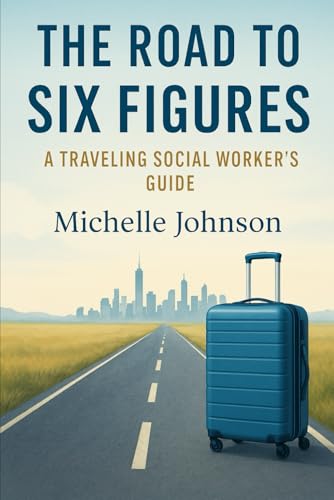
- BrandNew Social Worker Press

- TLR Rank9.4
TLR Rank is a ranking system developed by TravelLuggageReviews.com. TLR Rank has no relationship or impact from any manufacturers or sales agent websites. Learn more
- BrandBlue Leaves

- TLR Rank9.4
TLR Rank is a ranking system developed by TravelLuggageReviews.com. TLR Rank has no relationship or impact from any manufacturers or sales agent websites. Learn more
- BrandZXAZXA

- TLR Rank9.2
TLR Rank is a ranking system developed by TravelLuggageReviews.com. TLR Rank has no relationship or impact from any manufacturers or sales agent websites. Learn more
- BrandNew Social Worker Press

- TLR Rank9.2
TLR Rank is a ranking system developed by TravelLuggageReviews.com. TLR Rank has no relationship or impact from any manufacturers or sales agent websites. Learn more
- BrandVeloKomo

- TLR Rank-
TLR Rank is a ranking system developed by TravelLuggageReviews.com. TLR Rank has no relationship or impact from any manufacturers or sales agent websites. Learn more
- BrandN/A
- TLR Rank-
TLR Rank is a ranking system developed by TravelLuggageReviews.com. TLR Rank has no relationship or impact from any manufacturers or sales agent websites. Learn more
- BrandMajosta
Last update on 2026-10-23 / Affiliate links / Images, Product Titles, and Product Highlights from Amazon Product Advertising API
How the Staffing Agency Model Works Day to Day
A travel social worker fills temporary staffing vacancies at healthcare facilities and community organizations across the country. Instead of being hired directly as a permanent hospital employee, you work for a staffing agency (a placement company that hires you for assignments). The facility contacts the staffing agency when an employee takes family leave, quits unexpectedly, or when patient admissions surge. The placement company matches your clinical background with the open position and manages your administrative onboarding.
Your day-to-day work looks very similar to the work of a permanent staff member. You report to the assigned unit, attend team meetings, and complete clinical assessments or discharge plans. The difference lies in your employment status and length of stay. Because you are brought in to solve an immediate labor shortage, the facility expects you to step into patient care quickly with very little initial orientation.
Your assignment is governed by a contract (a temporary job agreement for a set number of weeks). This contract defines your hourly wage, your weekly scheduled hours, the facility location, your shift times, and any weekend rotations. The staffing agency acts as your legal employer. The agency issues your weekly paycheck, withholds payroll taxes, and provides health insurance options while you work on assignment.
Your agency recruiter serves as your main point of contact throughout your travel career. Recruiters search job listings matching your preferred clinical setting, submit your resume to hospital hiring managers, and advocate for your schedule requests. When an assignment nears its end date, your recruiter works to find your next contract or helps negotiate an extension with your current facility.
Where Travel Social Workers Work and Typical Contract Lengths
Temporary assignments exist across nearly every branch of social work, but healthcare organizations create the vast majority of openings. Hospitals rely on travelers to maintain safe patient-to-worker ratios. An emergency department or inpatient medical floor cannot pause discharges when a staff member leaves. Because social workers coordinate home healthcare, medical equipment, and post-hospital facility transfers, hospitals pay agencies to bring in skilled help right away.
Inpatient acute care hospitals represent the most common work environment for travelers. In these facilities, you manage discharge planning, coordinate complex transfers to skilled nursing centers, and assist families through sudden medical crises. Outpatient medical clinics, inpatient behavioral health units, dialysis centers, and hospice agencies also hire travelers. Some public school systems even use placement agencies to cover specialized counseling needs during the school year.
Most travel social work assignments last 13 weeks, which equals about three months. A 13-week window aligns with standard healthcare planning cycles and gives facilities enough time to recruit permanent staff. Some contracts run shorter, such as 8 weeks to cover medical leave, while others last 26 weeks. If you enjoy the facility and they still need help, the manager can offer a contract extension for another several weeks.
Before signing an agreement, verify the operational conditions of the facility so you know what to expect on your first day.
- Work setting and unit type: Confirm whether you are assigned to an emergency department, a general medical floor, a pediatric unit, or an adult psychiatric ward.
- Schedule and shift requirements: Verify whether you work four 10-hour days or five 8-hour days, along with any weekend or on-call duties.
- Orientation length: Check how many days of computer system training and unit shadowing you receive before carrying a full caseload.
- Caseload volume: Ask about the typical daily patient count per worker so you can compare the workload against your experience level.
- Documentation software: Note the electronic health record system used for patient notes so you can gauge your initial learning curve.
Evaluating these details before signing protects you from difficult surprises. A clear understanding of unit expectations allows you to focus on client care rather than struggling with administrative friction.
Understanding Travel Pay: Hourly Rates, Stipends, and Taxes
Travel pay structures differ significantly from standard permanent staff salaries. Permanent employees usually receive a straightforward hourly rate or an annual salary with standard taxes withheld from the entire sum. Travel social workers receive a blended pay package that divides weekly earnings into two parts: a taxable base hourly wage and non-taxable stipends.
A stipend is a living allowance for housing and food intended to offset the cost of working away from your permanent residence. The federal government allows travel healthcare professionals to receive these living allowances without paying income taxes on them, provided they follow strict rules. The placement agency calculates these allowances based on federal per diem rates for the specific city or county where the contract takes place. Because living allowances are not taxed, your weekly take-home pay is often noticeably higher than permanent staff earnings.
You must maintain a legitimate tax home to qualify for tax-free living allowances. In plain language, a tax home is the geographic area where you incur ongoing living expenses and maintain regular community ties, such as paying rent or a mortgage on a primary residence. If you give up your apartment and move entirely from assignment to assignment without maintaining permanent housing costs back home, tax authorities view you as an itinerant worker. In that situation, all of your earnings, including your living allowance, become taxable income.
Beyond base pay and allowances, consider how benefits and time off work. Placement agencies often provide medical, dental, and vision insurance starting on your first day or the first of the month. However, travel contracts rarely include paid time off. If you call in sick or take two weeks off between assignments to visit family, you do not collect an hourly wage or a living allowance for those days. Budgeting for unpaid breaks between contracts is essential for steady finances.
Housing arrangements also require direct planning. Most travelers take their living allowance as cash and secure short-term furnished rentals on their own. Some social workers even travel with an RV or camper to save on lodging costs, making it helpful to learn about what is a travel trailer before choosing that setup. Finding your own lodging gives you the freedom to choose your neighborhood and keep any money left over if your housing costs less than your living allowance.
Steps to Get Started and What to Expect from the Lifestyle
Transitioning into travel social work requires organizing your professional credentials well before submitting your first job application. Because professional regulation happens at the state level, your ability to work depends on the rules of the state board where the facility operates.
Following a clear sequence of steps keeps your credentialing process smooth and protects your license.
- Build solid clinical experience: Work at least one to two years as a permanent staff member in a hospital, medical setting, or clinical agency. Facilities hire travelers to handle immediate caseloads, so you need enough practical experience to manage complex cases with minimal supervision.
- Research state licensing rules: Check state licensing boards to verify whether your credentials transfer through reciprocity (an agreement allowing a license to work in another state). Some states grant temporary licenses quickly, while others require months of paperwork, background checks, and official score transfers from the licensing board.
- Select reputable staffing agencies: Connect with two or three healthcare placement companies that handle allied health and social work placements. Ask each recruiter about their hospital client systems, health insurance options, and payroll reliability.
- Organize your credential records: Gather your degree transcripts, clinical supervision forms, immunization records, tuberculosis screenings, state licenses, and professional references into a single digital folder. Having these ready allows your recruiter to submit your profile the moment a desirable assignment opens.
- Arrange lodging and personal travel logistics: Once you sign your temporary agreement, secure furnished housing close to the facility. If you plan to bring family companions on the road, check where to get a health certificate for pet travel to satisfy state transport regulations and rental housing policies.
Deciding whether travel social work fits your life requires an honest comparison of the benefits and daily realities. The financial advantages can be substantial. Travelers often earn higher weekly take-home pay than permanent staff and gain rapid clinical experience across different hospital systems. You also gain control over your yearly schedule. If you want to work for nine months and take three months off to rest, you can simply decline assignments until you feel ready to return.
The travel lifestyle also brings genuine personal challenges. Starting a new assignment every few months means adapting to unfamiliar building layouts, new charting software, and different coworker dynamics. You leave behind your local circle of friends and familiar routines. Permanent staff under heavy workloads can occasionally feel distant toward temporary workers who leave after twelve weeks. Thriving as a traveler requires emotional resilience, clear boundaries, and comfort with frequent change.
FAQs
Can new social work graduates work as travel social workers?
Staffing agencies and healthcare facilities almost always require at least one to two years of post-degree experience before placing you on contract. Travelers receive minimal workplace training, often just one or two days of system orientation, before taking on a full caseload. Building strong clinical skills as a permanent employee ensures you can practice safely and independently in busy facilities.
What happens if a facility cancels a travel contract early?
Most travel contracts include cancellation clauses that allow a facility or agency to end an assignment with two weeks of notice if patient census drops. If an assignment ends early, your recruiter will immediately look for another open contract in the local area or in another state where you hold a license. Travelers protect themselves by maintaining an emergency savings fund that covers living costs between unexpected contract gaps.
Do travel social workers receive paid sick leave or vacation time?
Travel contracts do not provide traditional paid vacation or paid personal time off. You only earn hourly wages and living allowances for the specific shifts and hours you work at the facility. If you need time off during an assignment, you must request and negotiate those specific dates into your contract before signing it.


Best Affordable Carry On Luggage 2026 - 11 Most Loving

The 12 Best Carry On Luggage For Bad Back 2026 - Top Choices

Best Tandem Double Buggy 2026 - 11 Best Rating

Top 12 Kids Rolling Suitcases for Fun and Easy Travel

The Ultimate Guide to Choosing the Best 8 Wheel Suitcase

Best Lightest carry on luggage with wheels in 2026

Top Airport Traveling Suitcases: Our 11 Best Picks

The Best Prams For Rough Terrain - (2026 Top Choice)










