
When Is It Safe to Travel with a Newborn by Car?

Short drives can start right away. Healthy full-term babies can take brief trips home from the hospital or to the clinic from day one. Longer highway travel is different. For multi-hour road trips, waiting until your baby is at least four to six weeks old is much safer. Very young babies have weak neck muscles. Sitting propped up in an infant seat for long stretches can cause their head to tilt forward, which pinches their narrow airway and makes breathing harder.
A few key factors will change your schedule. Premature babies or infants with health concerns need a green light from their pediatrician before traveling long distances. Trip length matters just as much. Any highway drive requires you to stop every two hours to lift baby out so they can stretch flat, feed, and breathe easily. Here is how to plan your travel day safely and protect your newborn on the road.
- TLR Rank9.4
TLR Rank is a ranking system developed by TravelLuggageReviews.com. TLR Rank has no relationship or impact from any manufacturers or sales agent websites. Learn more
- BrandShynerk

- TLR Rank9.4
TLR Rank is a ranking system developed by TravelLuggageReviews.com. TLR Rank has no relationship or impact from any manufacturers or sales agent websites. Learn more
- BrandBaby Trend

- TLR Rank9.4
TLR Rank is a ranking system developed by TravelLuggageReviews.com. TLR Rank has no relationship or impact from any manufacturers or sales agent websites. Learn more
- BrandFPVERA

- TLR Rank9.2
TLR Rank is a ranking system developed by TravelLuggageReviews.com. TLR Rank has no relationship or impact from any manufacturers or sales agent websites. Learn more
- BrandTOTES BABIES

- TLR Rank9.2
TLR Rank is a ranking system developed by TravelLuggageReviews.com. TLR Rank has no relationship or impact from any manufacturers or sales agent websites. Learn more
- Brandfunbliss

- TLR Rank9.0
TLR Rank is a ranking system developed by TravelLuggageReviews.com. TLR Rank has no relationship or impact from any manufacturers or sales agent websites. Learn more
- BrandMunchkin

- TLR Rank9.0
TLR Rank is a ranking system developed by TravelLuggageReviews.com. TLR Rank has no relationship or impact from any manufacturers or sales agent websites. Learn more
- BrandBOEYOS

- TLR Rank8.8
TLR Rank is a ranking system developed by TravelLuggageReviews.com. TLR Rank has no relationship or impact from any manufacturers or sales agent websites. Learn more
- BrandJ.L. Childress
- TLR Rank8.6
TLR Rank is a ranking system developed by TravelLuggageReviews.com. TLR Rank has no relationship or impact from any manufacturers or sales agent websites. Learn more
- BrandLuckyiren

- TLR Rank8.6
TLR Rank is a ranking system developed by TravelLuggageReviews.com. TLR Rank has no relationship or impact from any manufacturers or sales agent websites. Learn more
- BrandZHOMA
Last update on 2026-10-25 / Affiliate links / Images, Product Titles, and Product Highlights from Amazon Product Advertising API
Safe Age Thresholds: Day Trips Versus Long Highway Drives
Healthy, full-term newborns can ride in a car starting on the day they leave the hospital. That first ride home, as well as routine drives to the pediatrician during the first couple of weeks, are safe because they are brief. For short local trips lasting fifteen to thirty minutes, your baby spends very little time sitting in a semi-upright angle, which keeps their breathing safe and reduces strain on their body.
Long highway drives require a different approach. Most pediatricians recommend waiting until a baby is at least four to six weeks old before setting out on a road trip that lasts several hours. During the first month of life, an infant undergoes rapid physical development. Waiting four to six weeks allows their neck muscles to gain basic tone, stabilizes their resting breathing patterns, and gives parents time to establish feeding routines. It also gives the infant's developing immune system time to mature before spending time in busy rest stops or public areas along highway corridors.
Babies born early or with a low birth weight require personal clearance from their pediatrician before taking any extended car trip. Premature infants often have smaller, softer airways and weaker muscle tone than full-term babies. Many hospitals perform a car seat tolerance screening before discharge to observe whether a premature baby can sit safely without a drop in heart rate or oxygen. If your child had any breathing assistance in the hospital, consult your pediatrician before planning a long drive, regardless of their age in weeks.
Trip distance directly influences safety. A two-hour trip to visit grandparents requires one planned stop and careful monitoring. An eight-hour cross-state journey places far more physical stress on a newborn and demands multiple prolonged pauses. When you must travel long distances during those early weeks, break the drive into manageable segments across two days rather than trying to power through in one continuous push.
The Two-Hour Rule and How Newborns Breathe in a Car Seat
The two-hour rule is a standard medical guideline for infant car safety: never leave a newborn in a car seat for more than two hours within a twenty-four-hour period without taking them out. During a road trip, this means pulling over at least every two hours to remove your baby from the seat entirely. This guideline exists because infant car seats are built to protect against crash impact, not to act as a bed for long stretches of sleep.
A newborn's physical build makes upright sitting hazardous over extended periods. An infant's head makes up roughly twenty-five percent of their total body weight, yet their neck muscles are too weak to support that weight independently. When an infant sits in a semi-inclined position for too long, muscle fatigue causes their heavy head to tilt forward. This posture leads to positional asphyxiation, which is an airway blockage from the chin falling onto the chest. Because newborns have soft, flexible windpipes, this forward slump can pinch the airway shut like a bent drinking straw.
Airway narrowing causes desaturation, which refers to safe oxygen levels dropping in the blood. A newborn experiencing desaturation will rarely cough, gasp, or cry out. Instead, they often remain completely silent, looking as though they are sleeping deeply while their oxygen levels fall. Regular stops interrupt this slumping posture and allow your baby's lungs to expand fully.
Taking your baby out of the car seat relieves pressure on their spine and chest. Laying them flat on a firm, level surface restores their natural posture, allows them to stretch their limbs, and normalizes their breathing rhythm. The two-hour rule applies even if your baby is sound asleep when the clock runs out. Breathing safety always takes priority over protecting a nap.
Step-by-Step Travel Day Routine for Road Trips
Managing a long drive with an infant requires structuring your entire travel day around regular rest breaks. Following a predictable routine prevents physical fatigue for both the baby and the driver.
- Feed and burp your baby thirty minutes before departure. Giving your infant a half hour to digest reduces the likelihood of spit-up and reflux while the car is moving, which helps keep their airway clear once they are buckled into their seat.
- Dress your baby in thin, close-fitting cotton layers. Bulky coats, snowsuits, or thick bunting bags compress under safety harnesses during a sudden stop, leaving the straps dangerously loose while also raising the risk of rapid overheating.
- Buckle your baby and perform the harness pinch check. Slide the chest clip, which is the buckle that snaps flat across armpit level, into the correct position. If you can pinch any slack in the harness webbing at your baby's shoulder, tighten the strap until your fingers slip off smoothly.
- Pull over every two hours at a safe, designated rest area. Stopping at scheduled two-hour intervals breaks up the time your child spends in a flexed posture, preventing neck fatigue before their head can slump forward.
- Remove your baby from the seat and lay them flat for thirty minutes. Placing your child on a firm, flat blanket in the backseat or a travel bassinet opens up their chest cavity, lets their neck muscles rest, and restores normal oxygenation.
- Feed, burp, and change your baby while stopped. Never unbuckle your baby to feed them while the vehicle is in motion. Handling all care tasks while parked ensures your baby returns to the road clean, fed, and properly secured.
- Double your estimated total driving time on your navigation app. Factoring in thirty- to forty-minute breaks for every two hours of driving eliminates the urge to rush or skip safety stops when delays occur.
Backseat Safety Setup for Proper Positioning
Before you turn the key, inspect the physical setup of your vehicle's rear seat. Proper equipment adjustment prevents postural collapse and allows you to keep an eye on your baby without taking your attention from the highway.
- Keep the seat rear-facing: The infant car seat must be rear-facing, which means the seat is installed facing the back window of the vehicle. This position cradles the infant's neck, head, and spine during sudden deceleration, spreading crash forces evenly across the shell of the seat.
- Verify the recline angle indicator: Every infant seat includes an angle gauge, such as a bubble level or colored line, on the base. Adjust the base so the indicator shows the maximum allowable recline for a newborn. An angle that is too upright forces the infant's head forward, while an angle that is too flat reduces crash protection.
- Position the chest clip correctly: Fasten the chest clip flat across the center of your baby's chest, directly level with their armpits. Placing this clip too low on the belly allows the shoulder straps to slip off the shoulders, while placing it too high near the neck can irritate the throat.
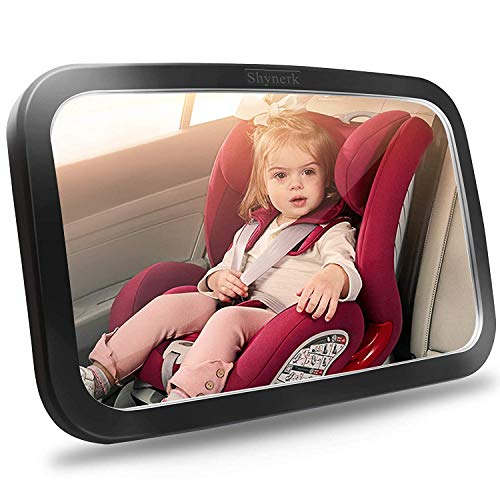
- Secure a wide-angle backseat mirror: Mount an adjustable, shatterproof baby mirror to the rear headrest directly facing your infant. Position it so you can see your baby's mouth, nose, and chest clearly in your rearview mirror with a quick glance.
- Clear the surrounding seat of loose cargo: Heavy diaper bags, metal water bottles, and hard plastic toys can become dangerous projectiles during hard braking. Pack all heavy gear in the trunk or secure it on the floorboard beneath the front seats.
Warning Signs That Mean You Must Pull Over Right Away
While driving, use your rearview mirror to monitor your baby's physical posture and breathing habits. If you notice any of the warning signs listed below, signal safely, exit the road, and address the issue immediately.
- Chin resting flat against the chest: If your baby's head has dropped forward so their chin touches their sternum, their airway is restricted. Pull over, unbuckle the harness, reposition their torso, and adjust the seat recline before continuing.
- Noisy, labored, or irregular breathing: Newborns breathe rapidly, but persistent grunting, whistling sounds, or nostril flaring on each breath indicate respiratory distress. Stop the car and lift your baby upright into your arms to check their airflow.
- Discoloration around the lips or fingers: A blue, pale, or grayish tint around the mouth, gums, or nail beds signals low blood oxygen levels. Remove the infant from the car seat immediately to allow their lungs to take in full breaths.
- Signs of overheating: Damp hair, flushed cheeks, rapid breathing, or a sweaty back of the neck mean the baby is too warm. Car seats trap body heat quickly; remove heavy blankets and adjust your vehicle's air conditioning.
- Slumping sideways against the straps: If your baby tilts sideways so their neck bends sharply against the shoulder strap, their body has lost core stability. Pull over to center their hips and spine in the seat base.
When you pull over for any breathing concern, take your baby completely out of the car seat and hold them upright against your chest. If their skin color does not return to a healthy tone or if their breathing remains labored and irregular after repositioning, call local emergency medical services immediately.
Travel Gear That Helps Keep Road Trips Safe
Preparing for long highway drives with an infant is much easier when you use gear designed to maintain safe posture and support rest stops. The most critical piece of equipment is a dedicated infant car seat that features built-in angle adjusters and clear level indicators. These visual guides take the guesswork out of installation, ensuring the seat sits at the precise angle required to keep a newborn's airway open.
A reliable backseat mirror is another valuable tool for parents traveling alone. Look for a mirror with an adjustable swivel base and heavy-duty straps that attach firmly around the rear seat headrest. It should feature a broad, shatterproof viewing surface that gives you a clear sightline to your baby's face, chest, and shoulder straps without vibrating out of alignment on rough highways.
A portable, firm travel bassinet or folding rest mat makes roadside stops significantly safer. Rather than holding your sleeping baby in your arms or leaving them in their bucket seat during restaurant stops, a flat travel pad provides a safe, level area where they can rest flat during their thirty-minute breaks. If your family prefers traveling with a camper so you have a private, climate-controlled space for these breaks, learning what is a travel trailer setup can help you plan level parking at highway rest plazas.
Keep your travel plans flexible during your baby's first two months. Delays are inevitable when you must stop every two hours for feeding and diaper changes. If you have prepaid reservations along your route, checking what is a travel waiver offers can protect your budget if an unexpected pediatrician visit forces you to delay your trip by a few days.
FAQs
Can a newborn sleep in their car seat once we arrive at our destination?
No, you should always move your baby to a flat, firm sleep surface like a crib or bassinet as soon as you arrive. Car seats maintain an upright angle that is safe during vehicle motion only when properly installed in an approved base. Leaving an infant to sleep in a car seat on the floor allows their head to tilt forward, which increases the danger of airway blockage.
Should an adult ride in the backseat next to the newborn?
Having an adult sit in the back next to the baby is highly recommended on highway road trips. An adult passenger can monitor breathing rhythms, spot chin-to-chest slumping immediately, and replace dropped pacifiers without distracting the driver. If you must travel alone, rely on a properly angled backseat mirror and pull over frequently to inspect your baby.
What should I do if my baby falls asleep right before our two-hour stop?
You must still pull over and take your baby out of the car seat when the two-hour mark arrives. While it is tempting to keep driving while a fussy infant is finally resting, the two-hour limit is based on physical airway safety and muscle fatigue, not sleep status. Gently unbuckle your baby and place them flat on a firm blanket to let their lungs expand.
Can premature babies follow the same road trip rules as full-term infants?
Premature infants require specific medical clearance from their pediatrician before undertaking multi-hour car journeys. Preterm babies have softer airway cartilage and weaker muscle tone, putting them at an increased risk of oxygen drops when seated semi-upright. Your pediatrician may recommend shorter travel intervals, specialized seat inserts, or delaying long-distance travel until your child reaches an older adjusted age.


Best Affordable Carry On Luggage 2026 - 11 Most Loving

The 12 Best Carry On Luggage For Bad Back 2026 - Top Choices

Best Tandem Double Buggy 2026 - 11 Best Rating

Top 12 Kids Rolling Suitcases for Fun and Easy Travel

The Ultimate Guide to Choosing the Best 8 Wheel Suitcase

Best Lightest carry on luggage with wheels in 2026

Top Airport Traveling Suitcases: Our 11 Best Picks

The Best Prams For Rough Terrain - (2026 Top Choice)










