
How to Fold a T-Shirt for Travel to Save Space

A half-packed carry-on sits open on the bed, its zipper already groaning under a bulky pile of cotton. The quickest fix is to roll stretchy shirts into tight cylinders and fold stiffer cotton tees into flat rectangles. Proper folding cuts your luggage bulk in half while stopping the sharp creases that ruin freshly washed clothes on the road.
The right choice comes down to your luggage and fabric. Soft knits and synthetic shirts roll up smoothly without wrinkling, which makes them ideal for squeezing into duffel bags and backpacks. Thicker cotton shirts behave better with wide, flat folds, particularly when you stack them neatly into zippered travel cubes. Getting the fold right takes seconds once you know the basic steps.
- TLR Rank9.2
TLR Rank is a ranking system developed by TravelLuggageReviews.com. TLR Rank has no relationship or impact from any manufacturers or sales agent websites. Learn more
- BrandBoxLegend

- TLR Rank9.2
TLR Rank is a ranking system developed by TravelLuggageReviews.com. TLR Rank has no relationship or impact from any manufacturers or sales agent websites. Learn more
- BrandBoxLegend

- TLR Rank9.2
TLR Rank is a ranking system developed by TravelLuggageReviews.com. TLR Rank has no relationship or impact from any manufacturers or sales agent websites. Learn more
- BrandBoxLegend
- TLR Rank9.2
TLR Rank is a ranking system developed by TravelLuggageReviews.com. TLR Rank has no relationship or impact from any manufacturers or sales agent websites. Learn more
- BrandLifewit
- TLR Rank8.8
TLR Rank is a ranking system developed by TravelLuggageReviews.com. TLR Rank has no relationship or impact from any manufacturers or sales agent websites. Learn more
- BrandGeniusidea

- TLR Rank8.2
TLR Rank is a ranking system developed by TravelLuggageReviews.com. TLR Rank has no relationship or impact from any manufacturers or sales agent websites. Learn more
- BrandHousehold Essentials
- TLR Rank7.2
TLR Rank is a ranking system developed by TravelLuggageReviews.com. TLR Rank has no relationship or impact from any manufacturers or sales agent websites. Learn more
- BrandEsmtoy-my
Last update on 2026-10-24 / Affiliate links / Images, Product Titles, and Product Highlights from Amazon Product Advertising API
Match Your Folding Style to Your Luggage and Bag Shape
The best way to pack a shirt depends on the kind of bag you carry. Suitcases and backpacks hold gear in completely different ways, so using the same fold for every trip leads to wasted space and crumpled clothing. When you understand how your luggage holds weight, choosing between rolling and folding becomes simple.
Rigid, rectangular suitcases and carry-on bags favor flat folding. These bags have flat bottoms, square corners, and sturdy walls. Flat-folded shirts lay flat like building blocks, creating stable layers that do not shift when your bag rolls over curbs or thumps into an overhead bin. If you pack a standard carry-on bag that fits in the overhead bin, flat folds allow you to stack shirts squarely against the interior frame without leaving dead corners.
Backpacks, duffel bags, and weekend holdalls favor tight rolling. These soft-sided bags have curved edges, deep cavities, and flexible fabric that stretches when packed. Rolled shirts act like small logs that you can wedge vertically or horizontally into irregular gaps. Rolling also works well for an under-seat personal item, where you must slide clothes around chargers, headphones, and bulky jackets.
Space limitations also dictate your packing method. If you fly on standby using non-rev travel, you rarely want to check bags, meaning every square inch of carry-on space counts. The same rule applies when taking a quick island weekend trip to destinations where to travel without a US passport is common. In both cases, packing light avoids gate checks and checked baggage fees.
Wrinkle prevention works differently across the two methods. Rolling bends fabric along a gentle, continuous curve instead of pressing it along a sharp crease, which stops horizontal fold lines from setting into lightweight fabrics. Flat folding spreads fabric over a broad surface, which prevents deep pressure marks on thicker cottons. Match the technique to the bag shape first, and you will save space right away.
Master the Ranger Roll to Lock Shirts into Tight Bundles
The ranger roll (rolling a shirt tightly inside its own flipped hem) is the most secure way to pack clothing for active trips. Unlike basic rolls that unravel the moment you pull another item from your bag, a ranger roll creates a neat cylinder that stays locked tight until you unwrap it. This method is ideal for duffels, gym bags, and hiking packs.
- Smooth the shirt flat: Place the shirt facedown on a clean bed or table. Smooth out every fold and crease across the chest, shoulders, and lower back using the palms of your hands. Any wrinkle left unflattened now will turn into a sharp crease once rolled tightly.
- Create the bottom pocket: Reach to the bottom hem of the shirt. Fold the hem inside out, turning up a cuff of about three to four inches around the entire circumference of the shirt. Make sure this cuff is even on both the front and back panels.
- Fold the first side: Take the left side of the shirt and fold it inward toward the center, covering about one-third of the shirt width. Fold the short sleeve back toward the outer edge so it lies completely flat along the new fold.
- Fold the second side: Take the right side and fold it across the center so it overlaps the left fold. Fold the right sleeve flat. The shirt should now look like a long, narrow rectangle running straight from the collar down to the flipped hem.
- Roll from the collar: Stand at the collar end and begin rolling the fabric downward toward the bottom hem. Roll as tightly as possible without stretching or pulling the cloth out of shape. Keep the edges aligned and press down firmly to squeeze out trapped air as you work your way down.
- Lock the roll inside the hem: Once you reach the bottom, hold the rolled cylinder firmly in one hand. Use your other hand to grab the inside-out cuff you created in step two. Pull this pocket up and over the ends of the cylinder, wrapping the roll securely inside the hem.
When finished correctly, your shirt looks like a firm, compact cylinder with no loose flaps or loose fabric edges. You can toss it into a backpack pocket, drop it on the floor, or pack it sideways among heavy gear without it loosening. To unpack, simply peel the hem back and let the shirt unroll naturally.
Use the Flat Travel Fold for Suitcases and Zippered Packing Cubes
The flat travel fold produces neat, uniform rectangles that slide smoothly into hard suitcases and a packing cube (a zippered fabric travel pouch). While retail stores fold shirts with long, wide backs, travel folding requires a more compact square that matches the depth and width of travel organizers.
- Lay the shirt facedown: Spread the shirt on a flat, firm surface with the back facing up and the collar pointing away from you. Run your hands over the fabric from the center outward to push away all surface bunches.
- Fold the left side inward: Grasp the left shoulder seam and the bottom hem. Fold about one-third of the shirt width inward toward the middle spine. Smooth the sleeve down along the folded edge so it rests flat without bunching at the armpit.
- Fold the right side inward: Grasp the right shoulder and hem, then fold the right third across the center. Align the edge so the shirt forms a straight, clean column. Smooth the second sleeve flat over the first.
- Fold the bottom hem up: Take the bottom hem and bring it upward by about one-third of the shirt length, smoothing the fabric with flat palms.
- Make the final fold: Fold the folded bottom section up once more, bringing it directly over the collar. You are left with a compact, sturdy square with clean borders on all four sides.
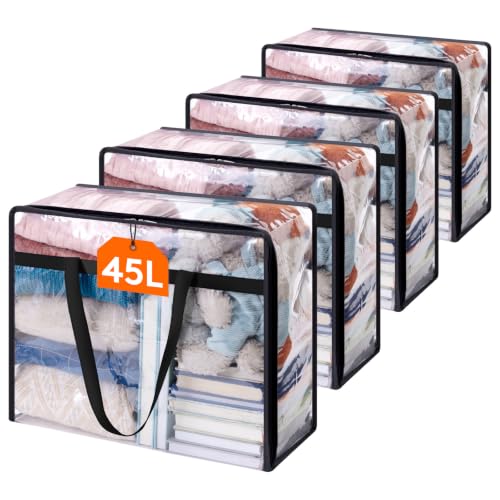
Instead of stacking these squares on top of each other like pancakes, try file-folding them. Turn each folded shirt upright so it stands on its folded spine inside your zippered fabric travel pouch. Line the shirts up front to back, just like file folders in an office cabinet.
File-folding changes how you use your luggage. When you open your bag, you see every shirt at a single glance without digging through layers. You can pull one shirt straight out without dragging or rumpling the clothes underneath. The pressure from the sides of the travel pouch keeps the shirts upright and stops them from sliding around during travel.
Check Your Fabric Type Before You Decide to Roll or Fold
Different fabrics respond differently to pressure, friction, and bending. A technique that leaves one shirt silky smooth can leave another covered in stubborn crinkles. Check the material tag inside your shirt before packing to make the right choice.
- Synthetic athletic blends (polyester, nylon, elastane): Roll tightly. These man-made fibers resist creasing and naturally spring back into shape. Ranger rolling works best here and takes up the least amount of space in gym bags and carry-on luggage.
- Lightweight natural blends (merino wool, modal, rayon): Roll loosely. Merino wool and modal fibers are soft and flexible. They handle gentle rolling well, but rolling them too tightly under heavy tension can stretch the neckband or side seams.
- Standard medium-weight cotton: Fold flat. Pure cotton fibers absorb moisture from the air and set deep creases when compressed under tight tension. A neat, flat fold placed inside a travel pouch keeps cotton shirts crisp and wearable upon arrival.
- Heavyweight cotton and oversized shirts: Fold flat. Thick streetwear tees and heavyweight cotton jerseys create massive, bulky cylinders when rolled, which actually wastes luggage volume. Folding them into thin, wide squares allows them to sit flat along the bottom of your suitcase.
- Shirts with large screen-printed graphics: Fold flat with the graphic outward. Rolling a shirt with a thick, rubberized chest print can crack the ink or leave permanent horizontal ridges across the artwork. Keep the printed area as flat as possible.
Avoid the Packing Traps That Cause Heavy Wrinkles and Stolen Space
Most packing problems come from rushing or packing without considering fabric movement. Even the cleanest ranger roll or square fold will fail if you make these common travel packing mistakes.
Never pack damp shirts. Moisture trapped inside rolled or folded clothing sets deep creases that will not release without a hot iron or a washing machine. Humidity inside a sealed suitcase also creates stale odors that transfer to your clean gear. Make sure every garment is bone dry before you begin rolling or folding.
Do not smooth shirts on soft, squishy surfaces. Folding a t-shirt on top of a soft duvet or a messy pile of laundry makes it impossible to get crisp edges. Soft surfaces cause hidden bunches on the bottom layer while you focus on the top layer. Always use a clear desk, a kitchen table, or a firm mattress.
Avoid overstuffing your packing pouches and suitcase compartments. Squeezing ten shirts into a pouch meant for six crushes the fibers together under intense pressure, locking in creases along every fold line. If you have to sit on your suitcase or strain the zipper to close it, your clothes will come out wrinkled regardless of your folding skill.
Do not leave open, empty gaps in your luggage. When a suitcase is only half full, shirts slide around every time the bag is tilted or lifted. That constant motion causes rolled shirts to unspool and flat-folded shirts to accordion into crumpled heaps. Use rolled socks, underwear, or extra pouches to fill empty voids and keep your clothing securely in place.
Look for Sturdy Folding Boards If You Prefer Uniform Flat Stacks
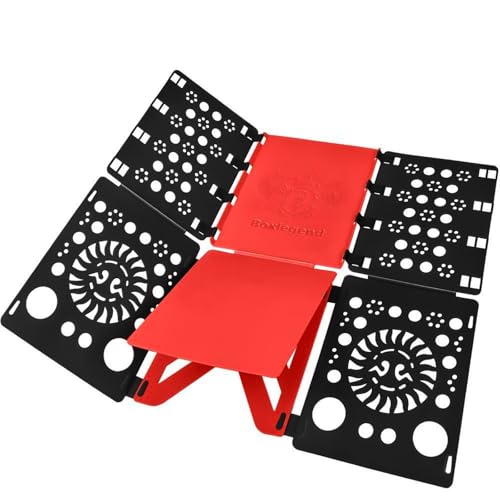
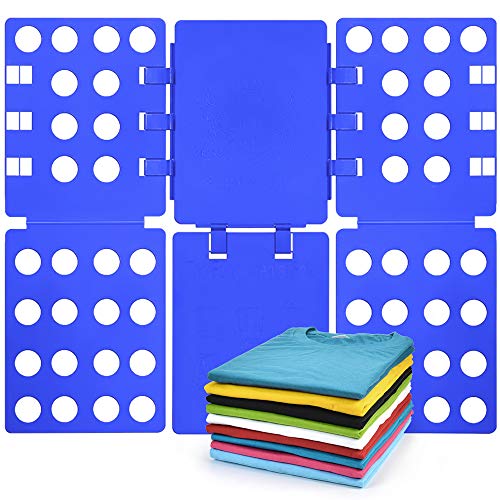
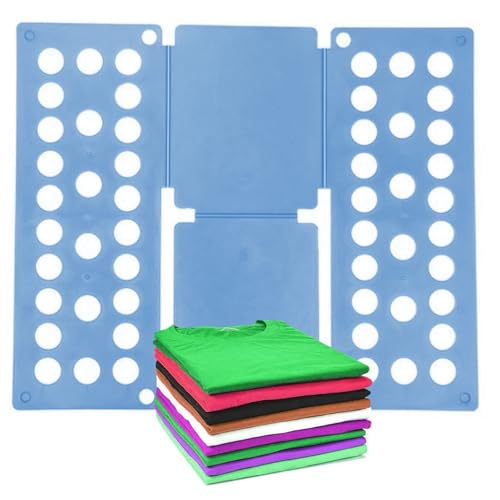
If you prefer flat folding but struggle to make shirts the exact same size by hand, a plastic shirt folding board can help. These tools use hinged panels that fold the sides and bottom of a shirt inward in three quick motions, producing identical rectangular shapes every single time.
When looking at folding helpers for travel prep, look for boards made of durable plastics like polypropylene that can withstand thousands of folds without snapping at the joints. Check the folded dimensions listed on the product specifications. You want a tool that folds garments down to a width and height that matches the inside dimensions of your suitcase or zippered packing pouches.
Look for models that include cutout ventilation holes or smooth handles. These openings reduce static cling between the plastic and the fabric, allowing you to slide the board out cleanly without snagging the freshly folded shirt. While a folding board is an optional tool for home laundry rooms, it speeds up packing significantly when preparing clothes for family trips or extended vacations.
FAQs
Is it better to roll or fold shirts to prevent wrinkles?
Rolling works best for synthetic, stretchy, and athletic fabrics because the continuous curve stops hard creases from forming. Flat folding works better for pure cotton, linen, and heavy fabrics because tight rolling forces stiff natural fibers to hold deep pressure lines. Match the method to the shirt fabric to get the fewest wrinkles.
How do I pack heavy cotton t-shirts without making bulky stacks?
Fold heavy cotton shirts flat instead of rolling them. Lay the shirt flat, fold the sleeves and sides inward to make a wide rectangle, and fold the bottom up in half just once. This distributes the thick fabric over a wider surface area so the shirt lays flat along the base of your bag instead of forming a fat, round log.
Will rolling ruin shirts with large screen-printed graphics?
Rolling can damage thick rubberized ink or large vinyl graphics across the chest. Bending stiff screen prints into tight rolls can cause the ink to crack or peel, especially in cold airplane cargo holds. Fold shirts with large graphics flat so the printed surface stays completely smooth.
What is the easiest way to remove travel wrinkles without an iron?
Hang your wrinkled shirt on a sturdy hanger inside the bathroom while you take a hot shower, keeping it away from direct water spray. The steam relaxes the cotton and synthetic fibers, allowing light travel creases to fall out naturally within ten to fifteen minutes. Smooth the fabric gently with your hands once the steam settles.


Best Affordable Carry On Luggage 2026 - 11 Most Loving

The 12 Best Carry On Luggage For Bad Back 2026 - Top Choices

Best Tandem Double Buggy 2026 - 11 Best Rating

Top 12 Kids Rolling Suitcases for Fun and Easy Travel

The Ultimate Guide to Choosing the Best 8 Wheel Suitcase

Best Lightest carry on luggage with wheels in 2026

Top Airport Traveling Suitcases: Our 11 Best Picks

The Best Prams For Rough Terrain - (2026 Top Choice)










