
How to Fold a Travel Blanket Back Into Its Pouch

The fastest way to pack a travel blanket is to fold it lengthwise into thirds to match the width of the storage pocket, then roll it firmly toward the opening to squeeze out trapped air. The exact folding direction changes depending on whether the pouch is stitched directly onto the blanket or packed as a loose sack. Squeezing that cushion of air out as you roll keeps the fabric flat so the zipper glides shut without catching.
Fabric thickness also plays a role, since thick plush fleece needs steady pressure while slippery pocket nylon needs to follow its original creases. Working space changes your technique too, because rolling across a flat hotel bed is easy, but folding on your lap in a crowded airplane seat requires careful tucks so the edges never touch the dirty floor. Here is how to fold each blanket style neatly so you can pack up in seconds.

- TLR Rank9.4
TLR Rank is a ranking system developed by TravelLuggageReviews.com. TLR Rank has no relationship or impact from any manufacturers or sales agent websites. Learn more
- BrandBEDELITE

- TLR Rank9.2
TLR Rank is a ranking system developed by TravelLuggageReviews.com. TLR Rank has no relationship or impact from any manufacturers or sales agent websites. Learn more
- BrandPAVILIA

- TLR Rank9.2
TLR Rank is a ranking system developed by TravelLuggageReviews.com. TLR Rank has no relationship or impact from any manufacturers or sales agent websites. Learn more
- BrandBOACAY

- TLR Rank9.0
TLR Rank is a ranking system developed by TravelLuggageReviews.com. TLR Rank has no relationship or impact from any manufacturers or sales agent websites. Learn more
- BrandFrelaxy
- TLR Rank9.0
TLR Rank is a ranking system developed by TravelLuggageReviews.com. TLR Rank has no relationship or impact from any manufacturers or sales agent websites. Learn more
- BrandOrga'Neat
- TLR Rank8.8
TLR Rank is a ranking system developed by TravelLuggageReviews.com. TLR Rank has no relationship or impact from any manufacturers or sales agent websites. Learn more
- BrandGIVERARE

- TLR Rank8.8
TLR Rank is a ranking system developed by TravelLuggageReviews.com. TLR Rank has no relationship or impact from any manufacturers or sales agent websites. Learn more
- BrandTirrinia
- TLR Rank8.8
TLR Rank is a ranking system developed by TravelLuggageReviews.com. TLR Rank has no relationship or impact from any manufacturers or sales agent websites. Learn more
- BrandFendox Travel
Last update on 2026-10-24 / Affiliate links / Images, Product Titles, and Product Highlights from Amazon Product Advertising API
The Short Version
- Match the pouch width: Fold blanket sides inward until your strip matches the pocket opening.
- Squeeze out trapped air: Press down firmly with your forearms as you fold or roll to flatten plush fibers.
- Lap-fold in tight spaces: Anchor the bottom hem between your knees to keep fabric off dirty airplane floors.
- Guard the zipper track: Place a finger between the fabric and zipper teeth as you pull the slider shut.
The Fold-and-Tuck Method for Built-In Pillow Pouches
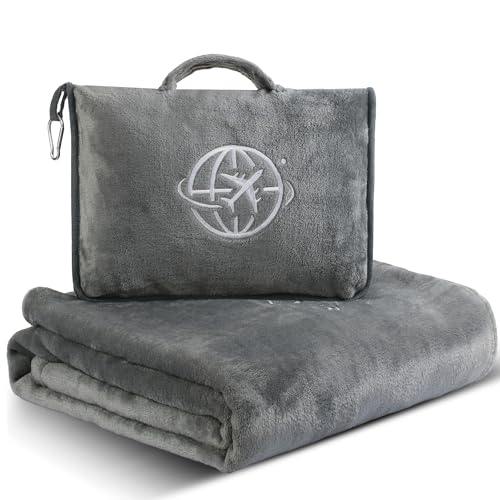
Many plush travel blankets come with a built-in pouch (an attached zipper pocket that lets the blanket double as a soft travel pillow). Stuffing thick fleece back inside often feels frustrating because fabric bunches up at the opening. The key to easy packing is matching the width of the folded blanket directly to the pouch before you roll or fold.
Follow these numbered steps to pack a blanket into its attached pocket:
- Expose the pocket: Lay the blanket flat on a bed or across your lap. Turn the attached zipper pocket inside out so the opening faces outward and lies flat against the blanket edge.
- Measure the target width: Look at the width of the pocket opening. Your folded strip needs to be slightly narrower than this opening, or the zipper will pull against bulky edges.
- Fold lengthwise into thirds: Bring the left side of the blanket toward the middle. Fold the right side over the first fold. Check the width of this long strip against the pocket opening. Adjust the folds until the strip is roughly half an inch narrower than the zipper.
- Fold from the far end: Start at the edge opposite the pocket. Fold the fabric upward toward the pocket in ten-inch sections, like folding a map. Press down with your hands on each fold to squeeze out air trapped in the fleece.
- Flip the pocket over the stack: Hold the folded pile firmly with one hand. Use your other hand to pull the pocket edges up and around the folded bundle, turning the pocket right-side out over the blanket.
- Clear the zipper line: Push the corners of the blanket deep into the bottom of the pouch. Run your index finger along the zipper track to hold fleece away from the teeth, then pull the slider closed smoothly.
The Tight Roll Method for Backpacks and Totes
When your blanket does not have an attached pocket or comes with a loose stuff sack, rolling is much better than folding. Folded blankets leave stiff corners that waste room inside bags. A rolled blanket forms a compact cylinder that tucks easily into an under-seat personal item or slides into the water bottle sleeve of a backpack.
The best way to pack a loose blanket is a ranger roll (a tight roll tucked into its own cuff). This technique locks the bundle together so it never unravels in transit.
- Create the cuff: Lay the blanket out flat. Flip the bottom hem backward under the blanket to create a cuff about four inches deep along the entire bottom edge.
- Fold into a narrow strip: Fold the left third of the blanket inward to the center, then fold the right third over it. Smooth out any large wrinkles.
- Roll tightly from the top: Start at the top edge opposite your cuff. Roll the blanket downward as tightly as possible, using your palms to press out air as you roll.
- Invert the cuff: Once you reach the bottom, reach into the cuff you made in step one. Pull the cuff around the outside of the rolled cylinder. The folded cuff holds the entire roll tight without needing straps or rubber bands.
Lap Folding in a Tight Airplane Seat
Packing up before landing in a crowded airplane cabin is tricky. Space is tight, and letting a clean fleece blanket slide onto a dirty airplane floor is something every traveler wants to avoid. You can easily fold your blanket without letting it touch the carpet.
Use this simple checklist to pack your blanket entirely on your lap:
- Clear your lap space: Close your tray table and fasten your seatbelt so your lap is open and both hands are free.
- Pin the bottom hem: Pinch the bottom edge of the blanket firmly between your knees. This keeps the lower half off the cabin floor while you handle the top.
- Fold widthwise against your chest: Hold the two top corners and bring them together in front of your chest to fold the blanket in half lengthwise. Bring the edges together once more so the blanket is folded into quarters.
- Fold upward onto your thighs: Release your knees and pull the bottom hem up onto your lap. Fold the blanket upward in short, flat folds toward your stomach, pressing down against your thighs to push out trapped air.
- Slide into your bag: Slide the flattened bundle straight into its pouch or into a carry-on bag that fits in the overhead bin. If you fly standby and understand what is non rev travel, you know that keeping personal items small and off the floor makes quick seat changes much easier.
Handling Pocket-Size Nylon Blankets
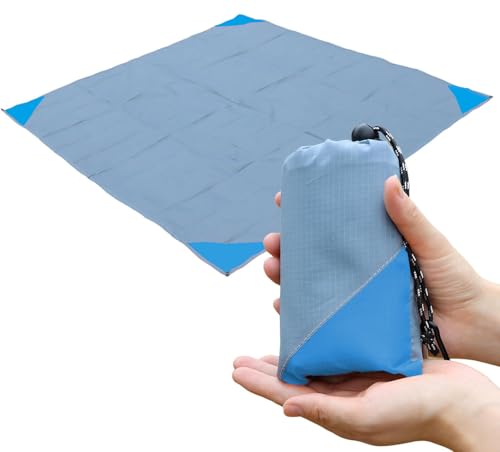
Pocket-size outdoor blankets made from thin nylon or polyester behave differently than fleece. They do not hold thick pockets of air, but their slippery fabric makes them tricky to fit back into tiny storage pouches. Trying to stuff a nylon sheet randomly into its bag usually causes the material to bunch at the opening.
The easiest way to repack these thin sheets is to follow their original factory crease lines. Manufacturing machines press crisp lines into nylon mats, and folding along those existing creases prevents air bubbles.
Shake the blanket to remove loose dirt or sand. Pick up two corners and fold the blanket in half along the center crease line. Fold it in half again in the same direction until the strip matches the width of the small storage pouch. Once you have a narrow strip, fold it end-over-end into small squares that match the length of the pouch. Press each fold flat with your palm to push out air between the slippery layers, then slide the neat packet into the bag.
Keeping a pocket blanket folded small in your jacket pocket gives you a clean place to sit if delays force you to wait in an airport terminal. When unexpected travel disruptions happen and you check what is a travel waiver to change your flights, having compact gear makes waiting out delays far more comfortable.
Packing Mistakes That Jam Zippers and Tear Seams
When a travel blanket case will not close, forcing the zipper can break the pull tab or tear the seams. Most packing troubles come from a few simple mistakes:
- Trapping air inside plush fleece: Microfiber fabric holds a surprising amount of air. If you fold loosely, you end up fighting air volume instead of fabric thickness. Always press the bundle flat with your hands before closing the pouch.
- Folding wider than the pouch: If your folded bundle is wider than the zipper opening, the edges will bunch against the seams. Always check the width of your fold against the pouch before you begin rolling.
- Catching loose fibers in zipper teeth: Soft fleece threads easily catch in zipper sliders. Slide your index finger along the inside of the track right ahead of the zipper to guide fabric out of the way.
- Forcing a stuck zipper: If the zipper snags, pulling harder will only wedge fabric deeper into the teeth. Pull the zipper slider backward slightly, tease out the caught fibers with your fingers, smooth the edge flat, and pull forward again.
What to Look for in a Packable Travel Blanket
If you travel often, choosing a blanket designed for quick packing saves time and effort at the gate. Look for a blanket that features an attached built-in pouch (an attached zipper pocket) rather than a separate storage bag. Separate pouches are easily dropped or forgotten in seat pockets, leaving you with an unwieldy blanket to carry by hand.
A built-in luggage sleeve (a strap that slides over a suitcase handle) is another helpful feature. It lets you slip the packed pouch over your rolling luggage handle, keeping your hands completely free while walking through airport terminals. Metal clips or carabiner loops also allow you to clip the pouch to the outside of your personal item if the bag interior is full.
Fabric weight also matters. Heavy fleece provides wonderful warmth, but it takes up significant room in your bag and requires extra effort to compress. A lightweight micro plush or jacquard weave provides plenty of comfort while folding down flat enough to fit into an under-seat personal item without taking up all your storage space.
FAQs
Is it better to roll or fold a travel blanket?
Rolling works best when you want to pack a loose blanket into a backpack or tote bag, because a firm roll slides easily into narrow spaces. Folding works better for blankets with flat, rectangular zipper pouches because flat folds distribute fabric evenly toward the outer seams.
Why will my travel blanket not fit back into its case?
The blanket usually fails to fit because air is trapped between the plush fibers, making the bundle too bulky. Another frequent reason is that the folded width is wider than the pouch opening. Fold the strip slightly narrower than the pouch and press out the air with your hands before zipping.
How do you wash a travel blanket with an attached pouch?
Unzip the pouch completely and shake out the blanket so all fabric is fully extended. Machine wash on a gentle cycle with cold water and mild detergent, avoiding fabric softeners that can coat plush fibers. Tumble dry on low heat or line dry, and ensure the pocket interior is completely dry before folding it away.
What should I do if the pouch zipper gets stuck on the blanket fabric?
Stop pulling forward immediately to prevent tearing the fabric. Gently pull the slider backward while using your fingers to wiggle the trapped fibers free from the teeth. Once clear, flatten the fabric downward and place a finger under the track to guide the slider forward.


Best Affordable Carry On Luggage 2026 - 11 Most Loving

The 12 Best Carry On Luggage For Bad Back 2026 - Top Choices

Best Tandem Double Buggy 2026 - 11 Best Rating

Top 12 Kids Rolling Suitcases for Fun and Easy Travel

The Ultimate Guide to Choosing the Best 8 Wheel Suitcase

Best Lightest carry on luggage with wheels in 2026

Top Airport Traveling Suitcases: Our 11 Best Picks

The Best Prams For Rough Terrain - (2026 Top Choice)










