
How to Fold Socks for Travel to Save Luggage Space

Running out of suitcase space is nothing to worry about, even when a trip calls for bulky footwear and extra layers. The best fix is to roll socks into tight cylinders instead of twisting them into round balls, creating firm bundles that easily slip into shoes or empty corners. This simple habit keeps pairs together without overstretching the stretchy top band or cluttering the main packing area.
The right technique varies depending on sock thickness, bag style, and personal packing setup. Thin dress socks and low-cut liners often pack best with a quick flat fold, while heavy wool hiking socks require a snug roll to tame their bulk. Travelers using a soft duffel or backpack can slide these rolls into empty shoe openings, while carry-on rollers work well with small zippered pouches. Here are the simple steps to fold every pair quickly and pack your bag without wasted room.

- TLR Rank9.6
TLR Rank is a ranking system developed by TravelLuggageReviews.com. TLR Rank has no relationship or impact from any manufacturers or sales agent websites. Learn more
- BrandZmart

- TLR Rank9.4
TLR Rank is a ranking system developed by TravelLuggageReviews.com. TLR Rank has no relationship or impact from any manufacturers or sales agent websites. Learn more
- BrandSOCKJAR
- TLR Rank9.4
TLR Rank is a ranking system developed by TravelLuggageReviews.com. TLR Rank has no relationship or impact from any manufacturers or sales agent websites. Learn more
- BrandAmazon Essentials

- TLR Rank9.0
TLR Rank is a ranking system developed by TravelLuggageReviews.com. TLR Rank has no relationship or impact from any manufacturers or sales agent websites. Learn more
- BrandBYESOX

- TLR Rank8.6
TLR Rank is a ranking system developed by TravelLuggageReviews.com. TLR Rank has no relationship or impact from any manufacturers or sales agent websites. Learn more
- BrandGeneric

- TLR Rank8.4
TLR Rank is a ranking system developed by TravelLuggageReviews.com. TLR Rank has no relationship or impact from any manufacturers or sales agent websites. Learn more
- BrandJxiwfvl

- TLR Rank7.8
TLR Rank is a ranking system developed by TravelLuggageReviews.com. TLR Rank has no relationship or impact from any manufacturers or sales agent websites. Learn more
- BrandNEVLOSO

- TLR Rank7.2
TLR Rank is a ranking system developed by TravelLuggageReviews.com. TLR Rank has no relationship or impact from any manufacturers or sales agent websites. Learn more
- BrandGeneric

- TLR Rank-
TLR Rank is a ranking system developed by TravelLuggageReviews.com. TLR Rank has no relationship or impact from any manufacturers or sales agent websites. Learn more
- BrandGeneric

- TLR Rank-
TLR Rank is a ranking system developed by TravelLuggageReviews.com. TLR Rank has no relationship or impact from any manufacturers or sales agent websites. Learn more
- BrandGeneric
Last update on 2026-10-24 / Affiliate links / Images, Product Titles, and Product Highlights from Amazon Product Advertising API
How to Do the Tight Cylinder Roll for Maximum Space
The tight cylinder roll, often called the military roll, is the most dependable way to pack everyday socks. It turns each pair into a firm, self-contained cylinder that will not unravel, even if you toss it into a backpack or dig through your bag in a hurry. When you roll socks this way, the fabric locks itself in place without requiring rubber bands or clips. It works exceptionally well for crew socks, athletic socks, and mid-calf everyday pairs.
To get a tight, stable roll that stays neat throughout your journey, follow these four simple steps:
- Lay the socks completely flat. Place one sock directly on top of the other on a flat surface, such as a bed or a table. Smooth out any wrinkles with your hands and make sure the heels align flat against each other rather than sticking out to the side.
- Create the outer pocket cuff. Take the stretchy top band of the outer sock and fold it backward down over itself by about two inches. This fold turns the top of that single sock inside out, creating a small collar or cuff that will later secure your finished roll.
- Roll firmly from toe to cuff. Start at the toe end with both hands and roll the socks together toward the top opening. Keep the roll as tight and even as possible, pressing out trapped air as you move upward. You want a firm, solid little cylinder by the time you reach the top collar.
- Flip the collar over the roll. Once you reach the folded band, take the turned-out lip of the cuff you created in step two and stretch it over the entire roll. Pull it smoothly across the roll until it encases the rolled fabric completely.
When you finish step four, you have a tidy, locked cylinder. If your socks are made of thin athletic synthetic fabric, the finished roll will be about the size of an energy bar. For thicker cotton crew socks, it will look more like a small soda can. If you travel frequently on standby or through non-rev travel, you know that overhead bin space is never guaranteed, so having firm cylinders that you can squeeze into tight cracks makes a noticeable difference.
If you find that the roll pops open during step four, the roll was likely too loose or the initial fold was too shallow. Make sure that first cuff fold is at least two inches deep so it has enough fabric to grip the rolled bundle without slipping off.
The Flat Fold Method for Thin Dress Socks and No-Show Liners
While the tight cylinder roll works wonders for crew and tennis socks, it is not ideal for every style. Thin dress socks, trouser socks, and low-cut no-show liners can become awkward when rolled tightly. Because these materials are so lightweight, rolling them can create tiny, slippery balls that slide around loose in your luggage. Rolling can also cause fine dress materials to wrinkle along the shins.
For thin fabrics, the flat fold is the cleanest solution. It keeps your dress socks smooth, prevents odd creases, and lets you slide multiple pairs into slim pockets or between flat garments.
- Align the pair smoothly. Lay one dress sock flat on your folding surface with the heel centered and flattened. Place the matching sock directly on top, smoothing out the fabric from the toe all the way up to the stretchy top band.
- Fold the toes upward. Take the toe end of both socks together and fold it upward toward the center, covering about one-third of the total length of the sock.
- Fold the top cuff down. Take the top opening of both socks and fold it downward over the toe fold, creating a neat three-layer square or flat rectangle.
- Tuck the cuff to secure it. Gently tuck the bottom folded edge inside the opening of the top stretchy band. Do not yank or force it; just slide it in enough so the rectangle holds its flat shape.
Once folded flat, you can stack your dress socks vertically in a small packing pouch like file folders in a drawer. This makes it easy to see colors and patterns at a glance without disrupting the whole pile. Whether you are packing for a short business meeting or heading on a vacation when looking into where to travel without a US passport, flat-folding your thin socks keeps them crisp and ready to wear straight out of your suitcase.
You can also slide these flat pairs between layers of dress shirts or slacks. They act as soft buffers that help reduce harsh folding creases in your formal clothes, letting you use dead space while protecting your wardrobe.
Why Balling Socks Ruins Fabric and Steals Suitcase Space
Almost everyone learned to pack socks by rolling them into a loose lump and turning one cuff over the whole bundle to make a round ball. It is fast, familiar, and easy to do while watching television on laundry day. But when you are trying to pack a suitcase efficiently, balling your socks is one of the worst habits you can keep.
The primary problem with the sock ball is basic geometry. When you wrap socks into round spheres, you create awkward shapes that do not pack flush against anything else. If you place four or five sock balls together in a suitcase corner, the rounded edges leave large empty luggage gaps between them. Those gaps cannot hold anything useful, which means you are essentially packing pockets of trapped air inside your luggage. Cylinders and flat rectangles, on the other hand, sit flush against one another and against the flat walls of your bag.
The second problem is long-term fabric damage. The stretchy top band of every sock contains fine strands of elastic rubber or spandex woven into the yarn. When you stretch that cuff around a bulky ball of fabric, those elastic strands are pulled to their absolute limit. Leaving socks in that stretched state for several days or weeks inside a compressed suitcase breaks down the elasticity permanently.
Over time, the stretchy top band loses its memory and goes limp. That is why older socks start to sag, bunch around your ankles, and slide down into your shoes while you walk. By switching to the tight cylinder roll or the flat fold, you place almost zero tension on the elastic threads, preserving the fit and life of your socks for many more trips.
Using Shoes and Luggage Gaps to Pack Socks for Free
Socks are uniquely flexible, which means they rarely need to take up prime real estate in the center of your suitcase. You can often pack an entire week of socks without losing any main storage room simply by filling the hollow pockets and odd angles already present in your bag.
Your packed shoes are the most obvious opportunity. A pair of running sneakers, hiking boots, or leather dress shoes contains a surprising amount of hollow volume. If you pack shoes empty, your other luggage can press down on them, crushing the toe box and creating permanent creases in leather footwear. Stuffing two or three rolled sock pairs into each shoe preserves the shoe shape during transit while using space that would otherwise be completely wasted.
Beyond footwear, every suitcase has hidden pockets of space created by its frame and hardware. Here is a quick checklist of the best places to tuck your rolled socks:
- Inside shoes and boots: Fill the toes first with flat-folded socks, then slide tight rolls into the ankle opening.
- Between luggage handle rails: The aluminum handle rods running down the floor of wheeled suitcases create deep grooves that fit rolled sock cylinders perfectly.
- In suitcase corners: The rounded corners of hard-shell bags are too tight for folded shirts or jeans, but they hold two or three sock rolls easily.
- Along the perimeter zipper track: When you finish packing packing cubes, slide a perimeter border of sock rolls around the outer edges before zipping the bag shut.
- In exterior stash pockets: Use thin outer pockets of your carry-on bag that fits in the overhead bin for flat-folded pairs.
If you are worried about cleanliness when packing socks inside your footwear, use a simple barrier. You can place the rolled socks inside a clean plastic sandwich bag before sliding them into the shoe, or wrap the socks in a fresh tissue. This keeps your clean socks protected from any road dust or odors inside your walking shoes.
Choosing Zippered Pouches to Keep Clean and Dirty Pairs Separate
Even when your socks are folded neatly, letting them float loose in a large suitcase compartment can quickly lead to clutter. A few days into a trip, loose socks tend to migrate toward the bottom of the bag, making it frustrating to find matching pairs each morning. Using a dedicated zippered organizer pouch keeps everything corralled in one visible, easily accessible spot.
A good sock pouch also solves the problem of laundry management on the road. Nothing ruins the freshness of a clean suitcase faster than throwing damp, worn athletic socks back into the main compartment with your clean shirts. By using a two-sided travel organizer or carrying a second slim zippered pouch exclusively for laundry, you seal worn pairs away from your fresh clothing until you reach a washing machine.
When shopping for travel pouches to organize your socks, keep these practical details in mind:
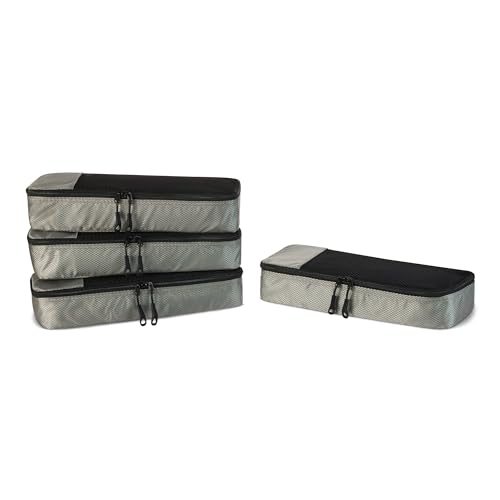
Look for slim rectangular organizers rather than bulky square cubes. Slim dimensions allow you to slip the pouch vertically into luggage gaps, between the bottom handle rails, or along the side wall of a duffel bag. A breathable mesh top panel is also helpful because it allows you to see whether you are reaching for casual ankle socks or dress socks without having to unzip every compartment.
Finally, check the zipper quality and the interior seams. Knitted socks can easily snag on rough metal teeth or unfinished interior piping. Choose pouches with smooth, coil-style nylon zippers and clean, bound seams that will not catch on loose threads when you pull socks out in a hurry.
FAQs
Does folding or rolling socks stretch out the stretchy top band?
The tight cylinder roll and flat fold methods do not damage the elastic. Unlike traditional balling, which pulls the cuff tight around a large bundle of fabric, these methods only fold the band over once or tuck it flat. This keeps minimal tension on the internal rubber threads so your socks maintain their snug fit over time.
How should you pack thick wool or hiking socks for cold trips?
Thick wool socks are too bulky for tight cylinder rolling because they create rolls as large as water bottles. For heavy winter socks, lay them flat on top of each other, fold them in half once from toe to cuff, and slide them directly into the bottom of your boots or lay them completely flat across the base of your suitcase.
How many pairs of socks should you pack for a week-long vacation?
For a standard seven-day trip, packing eight pairs of socks is the ideal balance. This gives you one clean pair for each day, plus one extra backup pair in case your feet get wet from unexpected rain or you take an extra workout walk. Because rolled socks pack so small, an eighth pair takes up almost no extra room.


Best Affordable Carry On Luggage 2026 - 11 Most Loving

The 12 Best Carry On Luggage For Bad Back 2026 - Top Choices

Best Tandem Double Buggy 2026 - 11 Best Rating

Top 12 Kids Rolling Suitcases for Fun and Easy Travel

The Ultimate Guide to Choosing the Best 8 Wheel Suitcase

Best Lightest carry on luggage with wheels in 2026

Top Airport Traveling Suitcases: Our 11 Best Picks

The Best Prams For Rough Terrain - (2026 Top Choice)










