
What Is a Travel Adapter and Do You Need One?

Packing for an international trip brings plenty of questions, but getting power for your devices is nothing to stress over. A travel adapter is simply a small plug connector that reshapes your pins so they slide into a foreign wall outlet. It only changes the physical fit of your plug prongs, which means it does not alter the electrical power coming through the socket.
What you need in your suitcase depends on the destination you visit and the power ratings on your electronics. Different countries use completely different outlet holes, and items with heating elements often cannot handle foreign electricity without a separate converter. Most modern phones, tablets, and laptops handle overseas currents automatically without extra help. Here is how to tell the difference and choose the right piece for your upcoming journey.

- TLR Rank9.6
TLR Rank is a ranking system developed by TravelLuggageReviews.com. TLR Rank has no relationship or impact from any manufacturers or sales agent websites. Learn more
- BrandTESSAN

- TLR Rank9.4
TLR Rank is a ranking system developed by TravelLuggageReviews.com. TLR Rank has no relationship or impact from any manufacturers or sales agent websites. Learn more
- BrandTESSAN
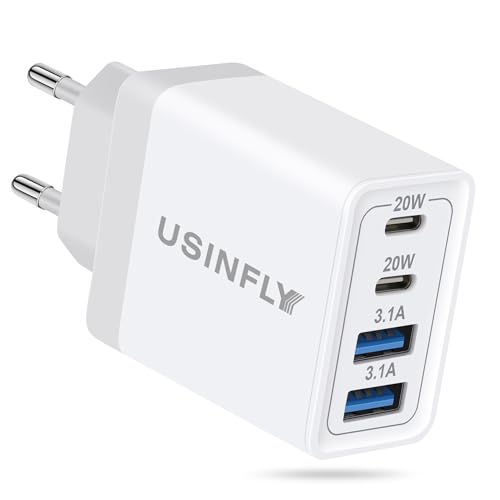
- TLR Rank9.4
TLR Rank is a ranking system developed by TravelLuggageReviews.com. TLR Rank has no relationship or impact from any manufacturers or sales agent websites. Learn more
- BrandUSINFLY

- TLR Rank9.4
TLR Rank is a ranking system developed by TravelLuggageReviews.com. TLR Rank has no relationship or impact from any manufacturers or sales agent websites. Learn more
- BrandOne Beat

- TLR Rank9.4
TLR Rank is a ranking system developed by TravelLuggageReviews.com. TLR Rank has no relationship or impact from any manufacturers or sales agent websites. Learn more
- BrandCeptics

- TLR Rank9.4
TLR Rank is a ranking system developed by TravelLuggageReviews.com. TLR Rank has no relationship or impact from any manufacturers or sales agent websites. Learn more
- BrandTESSAN

- TLR Rank9.4
TLR Rank is a ranking system developed by TravelLuggageReviews.com. TLR Rank has no relationship or impact from any manufacturers or sales agent websites. Learn more
- BrandHANYCONY

- TLR Rank9.2
TLR Rank is a ranking system developed by TravelLuggageReviews.com. TLR Rank has no relationship or impact from any manufacturers or sales agent websites. Learn more
- BrandAnker

- TLR Rank9.2
TLR Rank is a ranking system developed by TravelLuggageReviews.com. TLR Rank has no relationship or impact from any manufacturers or sales agent websites. Learn more
- BrandTESSAN
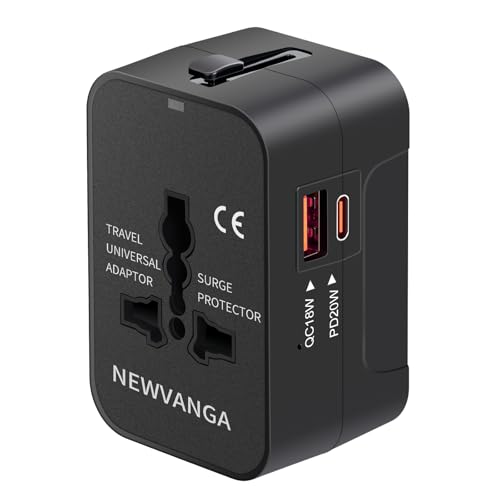
- TLR Rank9.0
TLR Rank is a ranking system developed by TravelLuggageReviews.com. TLR Rank has no relationship or impact from any manufacturers or sales agent websites. Learn more
- BrandNEWVANGA
Last update on 2026-10-23 / Affiliate links / Images, Product Titles, and Product Highlights from Amazon Product Advertising API
Understand that a travel adapter only changes the plug shape
Wall outlets around the world do not share a single standard. When you plug a phone charger into an outlet in the United States, you use two flat parallel metal pins. In France, Germany, or Italy, wall plates feature two round holes. In the United Kingdom, sockets use three large rectangular openings arranged in a triangle.
A travel adapter bridges this physical gap. It has slots on the front that accept your domestic power cord and metal pins (prongs) on the back that match the foreign wall outlet. When you plug your device into the adapter and slide it into the wall, metal contacts inside simply touch each other.
This connection is purely mechanical. The adapter does not alter, filter, or transform the electricity flowing from the building. It simply gives your plug the correct physical shape to touch the live contacts inside the wall. If an American plug is a flat key and a European socket is a round keyhole, an adapter is the blank key that lets them meet.
Because an adapter only alters the shape of the metal pins, it offers zero electrical defense. Whatever voltage flows behind that foreign wall plate travels straight into your device. Understanding this physical role keeps your electronics safe abroad.
Never confuse a plug adapter with an electrical power converter
The most frequent mistake travelers make is assuming that any plug that physically fits into a wall is safe to use. That assumption ruins expensive electronics. The difference between an adapter and a converter comes down to plug shape versus electrical strength.
Voltage is the electrical power level from the wall. In North America, standard wall outlets deliver electricity at roughly 110 to 120 volts. Across the United Kingdom, continental Europe, Australia, and most of Asia and Africa, wall outlets operate at 220 to 240 volts. Foreign outlets push electricity with twice the pressure of an American socket.
A travel adapter changes the plug shape so your cord fits. A converter is a device that changes electrical power levels by stepping that higher 220-volt current down to 110 volts before it reaches your equipment. If you use a simple adapter on a device built solely for American 110-volt power, you feed twice the intended electrical force into delicate internal circuits.
When you send 240 volts into a 110-volt device, damage happens in seconds. The unit will hum, smell like burning plastic, pop loudly, and blow its internal fuse. In the worst cases, the appliance catches fire, throws sparks, and cuts power to the room. If you smell smoke or hear crackling, pull the plug immediately, stay clear of the outlet, and alert hotel staff.
Read the fine print on your device label before you pack
You do not need to guess whether your gadgets will survive foreign power. Every electronic device sold in North America carries an electrical specification label. This label is printed on the charging brick, stamped into the plastic housing, or etched into the metal frame.
To verify if your gear is safe with a simple adapter, check the label using this short process:
- Find the input line: Look for the word "INPUT" near the regulatory symbols on your charger. Turn the power brick under a bright lamp or use your phone camera to zoom in on the tiny text.
- Check the voltage numbers: Read the numbers beside the word input. If the label reads "100-240V", your device is dual voltage. Dual voltage means the equipment automatically handles both American and overseas electrical power levels.
- Confirm the frequency: Next to the voltage, you will usually see "50/60Hz". American grids run at 60 hertz, while European and Asian grids run at 50 hertz. A dual-voltage label listing 50/60Hz handles both frequencies without trouble.
- Identify single-voltage items: If the label states only "120V" or "110-120V", the device is strictly single voltage. Connecting this item directly to a 220-volt outlet with a simple travel adapter will destroy it.
Modern consumer electronics are almost always dual voltage. Mobile phones, tablets, laptops, wireless earbuds, smartwatches, and digital cameras handle a wide voltage range. Their power supplies automatically step down incoming voltage, meaning they only require a basic travel adapter to charge safely anywhere in the world.
Match the right adapter style to your specific travel route
Once you confirm your electronics are dual voltage, you need an adapter that matches the wall outlets at your destination. Different parts of the world rely on specific plug letter categories, and your route determines what style of adapter belongs in your bag.
If you are planning an international vacation or deciding where to travel without a US passport, your outlet requirements depend on local infrastructure. American territories like Puerto Rico and the US Virgin Islands use standard American outlets. Once you head abroad to the United Kingdom, continental Europe, or South America, you encounter completely different wall plates.
Single-country adapters are small, molded plastic pieces built for one specific region. A Type C adapter features two round prongs used across most of continental Europe. A Type G adapter has three rectangular blades used in the UK, Ireland, and Singapore. Single-country adapters are inexpensive, light, and durable. Because they fit flush against the wall, they rarely sag out of old hotel sockets.
Universal travel adapters combine multiple plug types into a single square block. These units feature sliding levers that push out prongs for Europe, the UK, Australia, and North America. A universal block is ideal if you visit multiple countries on one journey. They are slightly larger and heavier than single-region plugs, so they require a snug outlet to stay seated.
Many modern adapters also incorporate built-in USB ports. These ports allow you to plug your phone and smartwatch cables straight into the adapter block. This frees up the main three-prong outlet on the front for your laptop charger, reducing the wall plugs you need to pack in your carry-on bag.
Leave single-voltage heating appliances and surge protectors off your packing list
The items that cause the most trouble during international travel are high-heat styling tools and motor-driven appliances. Hair dryers, curling irons, flat irons, clothes steamers, and electric kettles pull immense amounts of electrical power, often between 1,200 and 2,000 watts.
Most domestic hair styling tools sold in the US are single voltage (120V only). If you plug a 120-volt hair dryer into a European 230-volt wall outlet using an adapter, the heating coil receives double the designed voltage. The element glows bright orange, melts the plastic barrel within seconds, trips the circuit breaker, and creates a severe fire hazard.
Do not rely on small travel converters for high-heat styling tools. Basic converters struggle to regulate the high wattage these heating elements demand, causing converters to overheat and fail mid-use. Instead, use the hair dryer supplied in your hotel room, or purchase a dedicated dual-voltage travel straightener that features a manual switch to toggle between 120V and 240V.
Surge protectors are another hazard on specific routes. A surge protector is an internal safety shutoff designed to guard electronics against power spikes. While helpful in home offices, surge protectors are strictly banned on cruise ships. Marine electrical grids handle grounding differently than municipal land grids, making surge protectors a fire risk on board.
Much like reviewing airline policies or checking what a travel waiver covers before departure, reading cruise line and hotel restrictions saves you headaches. If your travel adapter includes built-in surge suppression, ship security will confiscate it at the terminal checkpoint. When boarding a ship, stick to simple, non-surge-protected adapters approved for maritime use.
Select a versatile travel adapter that fits your travel style
Choosing the right travel gear comes down to your personal gadgets, your packing habits, and your flight itinerary. You do not need an oversized electrical kit to keep your essentials running smoothly across foreign borders. Focusing on a few core design elements helps you pick an adapter that serves you across multiple vacations.
First, check the destination coverage of the plug design. If you regularly travel to one specific country to visit family, a dedicated adapter molded for that exact country is reliable, rigid, and sits tight against the wall. If you take varied international trips or have layovers on different continents, an all-in-one universal unit with sliding prongs covers over a hundred destinations in a single package.
Second, look at the port layout on the adapter face. An adapter that pairs a standard AC wall socket with multiple built-in USB ports lets you charge several items at the same time. This turns a single foreign wall outlet into a complete charging station for your phone, camera, and tablet without needing separate wall bricks for each cord.
Third, check the physical dimensions and weight of the unit. Oversized or front-heavy charging cubes tend to pry themselves loose from worn hotel outlets, particularly in older European buildings where sockets sit recessed inside circular cups. A slim, well-balanced block stays firmly plugged in overnight so you never wake up to a dead phone battery.
Finally, confirm whether you need grounded or ungrounded pin compatibility. Most consumer phones and tablets use two-prong plugs, but bulkier items like certain laptop power bricks use a three-prong grounded plug. Make sure the face of your chosen adapter accepts three-prong American plugs if any of your electronics require that third round grounding pin.
FAQs
Does a travel adapter change the electricity coming from the wall?
No, a travel adapter does not change the electricity or voltage levels. It only alters the physical layout and shape of the metal prongs so an American plug fits into a foreign wall socket. If the wall outlet supplies 230 volts, your device receives 230 volts through the adapter.
Can I charge my phone and laptop safely with just an adapter?
Yes, nearly all modern smartphones and laptops charge safely with just a travel adapter. Their charging bricks are dual voltage, meaning they automatically adapt to any electrical input between 100 and 240 volts. Always verify the tiny text on the charger brick to confirm it lists 100-240V before plugging in.
What happens if I plug a 110V hair dryer into an overseas socket using an adapter?
Plugging a single-voltage 110V hair dryer into an overseas 230V socket instantly overloads the motor and heating coil. The tool will overheat, emit smoke, likely blow the room fuse, and can easily catch fire. Never connect single-voltage heating appliances abroad without a heavy-duty voltage converter.
Can I use an American power strip overseas if I plug it into an adapter?
Avoid plugging a standard American power strip into an overseas adapter. Most domestic power strips contain built-in surge protectors rated solely for 120 volts. Connecting them to a 230-volt European or Asian socket can cause the internal surge components to overheat, melt, or short out.
More guides: what is a travel advisor and what is a travel router.


Best Affordable Carry On Luggage 2026 - 11 Most Loving

The 12 Best Carry On Luggage For Bad Back 2026 - Top Choices

Best Tandem Double Buggy 2026 - 11 Best Rating

Top 12 Kids Rolling Suitcases for Fun and Easy Travel

The Ultimate Guide to Choosing the Best 8 Wheel Suitcase

Best Lightest carry on luggage with wheels in 2026

Top Airport Traveling Suitcases: Our 11 Best Picks

The Best Prams For Rough Terrain - (2026 Top Choice)










