
What Is the Travel Size for Carry-On Toiletries?

Airport security defines travel size toiletries as liquids, gels, creams, pastes, and aerosols in containers that hold 3.4 ounces (100 milliliters) or less. That strict volume cap changes completely if a bag gets checked under the plane, where regular bottles are welcome. For carry-on luggage, every small bottle must fit comfortably inside a single, clear quart-sized bag before reaching the scanner.
Texture also determines what qualifies under the rule. Solid items like bar soap and stick deodorant have no size caps, but toothpaste and lip gloss must follow the mini bottle limits. Screeners look at the printed capacity on the packaging instead of the actual amount left inside, so a large bottle with just one drop left will still get thrown away. Learning these simple distinctions helps keep your bags moving smoothly through the security line.

- TLR Rank9.4
TLR Rank is a ranking system developed by TravelLuggageReviews.com. TLR Rank has no relationship or impact from any manufacturers or sales agent websites. Learn more
- BrandConvenience Kits International

- TLR Rank9.2
TLR Rank is a ranking system developed by TravelLuggageReviews.com. TLR Rank has no relationship or impact from any manufacturers or sales agent websites. Learn more
- BrandConvenience Kits International

- TLR Rank9.2
TLR Rank is a ranking system developed by TravelLuggageReviews.com. TLR Rank has no relationship or impact from any manufacturers or sales agent websites. Learn more
- BrandTocelffe

- TLR Rank9.2
TLR Rank is a ranking system developed by TravelLuggageReviews.com. TLR Rank has no relationship or impact from any manufacturers or sales agent websites. Learn more
- BrandHOTOR

- TLR Rank9.2
TLR Rank is a ranking system developed by TravelLuggageReviews.com. TLR Rank has no relationship or impact from any manufacturers or sales agent websites. Learn more
- BrandDNSEN

- TLR Rank9.0
TLR Rank is a ranking system developed by TravelLuggageReviews.com. TLR Rank has no relationship or impact from any manufacturers or sales agent websites. Learn more
- BrandMrsdry

- TLR Rank8.8
TLR Rank is a ranking system developed by TravelLuggageReviews.com. TLR Rank has no relationship or impact from any manufacturers or sales agent websites. Learn more
- BrandTREKTOTE

- TLR Rank8.6
TLR Rank is a ranking system developed by TravelLuggageReviews.com. TLR Rank has no relationship or impact from any manufacturers or sales agent websites. Learn more
- BrandStuhrling Bottle
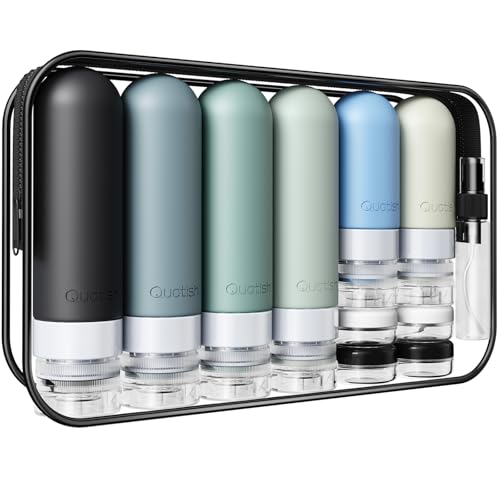
- TLR Rank8.6
TLR Rank is a ranking system developed by TravelLuggageReviews.com. TLR Rank has no relationship or impact from any manufacturers or sales agent websites. Learn more
- BrandQuatish

- TLR Rank8.4
TLR Rank is a ranking system developed by TravelLuggageReviews.com. TLR Rank has no relationship or impact from any manufacturers or sales agent websites. Learn more
- BrandTREKTOTE
Last update on 2026-10-24 / Affiliate links / Images, Product Titles, and Product Highlights from Amazon Product Advertising API
Understanding the 3.4-Ounce Rule and Container Capacity
When you pack a carry-on bag for a flight, airport security enforces a strict limit on all personal care fluids. Every liquid, gel, cream, paste, and aerosol must sit in a container that holds 3.4 ounces (100 milliliters) or less. Security screeners refer to container capacity, not the amount of fluid left in the bottle. If your bottle could hold 6 ounces when full, security officers will confiscate it at the checkpoint, even if only a tiny drop remains at the bottom.
The number 3.4 comes from the metric conversion of 100 milliliters. Most international aviation authorities use 100 milliliters as their global baseline. In the United States, 100 milliliters converts to roughly 3.38 fluid ounces, which transportation rules round up to 3.4 ounces on official packaging guidelines. Because of this worldwide standard, manufacturers of travel toiletries design their small bottles to meet or sit just below this volume threshold.
The rules apply strictly to bags you bring into the airplane cabin. These items stay with you in the overhead bin or underneath the seat in front of you. In contrast, checked luggage (the large suitcases you drop off at the airline ticket counter before going through security) has no such volume restriction for standard toiletries. You can pack full-sized shampoo bottles, standard body wash jugs, and regular hairspray cans in your checked bags without running into the 3.4-ounce cap.
Security screeners check container labels rapidly as items slide through the X-ray machine. If a bottle lacks an embossed or printed size mark, screeners must use their own judgment. An unlabelled bottle that looks even slightly larger than 3.4 ounces often gets diverted to secondary screening. That diversion slows down your walk to the gate and puts your expensive skincare products at risk of immediate disposal.
How to Pack Your Carry-On Toiletries Step by Step
Airport security simplifies this packing process through what screeners call the 3-1-1 rule. The numbers stand for 3.4-ounce containers, placed inside 1 clear quart-sized bag, with a limit of 1 bag per passenger. Following this procedure in the right sequence keeps your bags moving smoothly through the security conveyor belt.
- Check the printed volume on every bottle before packing. Look for the manufacturer stamp on the back or bottom of the bottle showing 3.4 ounces or 100 milliliters or less. Reason: Airport screeners verify container capacity on the label first, and bottles without clear measurements or bottles over the limit get pulled for manual inspection.
- Separate your solid toiletries from your liquids, gels, and creams. Keep items like stick deodorant, bar soap, lip balm sticks, and dry hair styling wax in your regular toiletry kit. Reason: Solid items do not count toward your liquid allowance, so setting them aside saves valuable space in your single quart-sized bag.
- Pack all small liquid containers into one clear, quart-sized resealable bag. Arrange your bottles neatly inside a transparent bag measuring roughly 7 inches by 8 inches or 1 quart in volume. Reason: Security guidelines only permit one clear bag per traveler, and the bag must zip or seal shut completely without bursting at the seams.
- Position the clear liquids bag near the top opening of your carry-on luggage. Place the bag in an exterior zippered pocket or right beneath the main zipper of your backpack or roller suitcase. Reason: Standard security lanes often require you to pull this clear bag out and place it flat in a plastic screening bin, and easy access prevents delays in line.
- Transfer any oversized personal care products into your checked suitcase. Move all standard-size lotions, large perfume bottles, and salon hair products into your large checked luggage before you leave home. Reason: Bags checked at the airline counter are exempt from the 3.4-ounce rule, which protects your expensive products from being thrown in the airport trash bin.
Giving yourself an extra five minutes at home to verify these five steps removes the stress of repacking on the airport floor. If you travel with family members, remember that each ticketed passenger receives their own quart-bag allowance. You can distribute shared items, like sunscreen or children's liquid body wash, across multiple quart bags as long as each traveler carries their own single bag.
Liquids, Gels, Pastes, and Solids: What Must Go in the Bag
Many travelers run into trouble at the security checkpoint because they assume liquid only means watery substances. Airport security uses a much broader definition. A reliable rule of thumb used by airport screeners is simple: if you can pour it, pump it, squeeze it, spread it, smear it, or spray it, it falls under the liquid restriction.
Pastes and thick creams surprise flyers more than any other category. Toothpaste is a paste, which means your tube must be 3.4 ounces or smaller. Peanut butter, hazelnut spreads, rich night creams, liquid foundation makeup, and heavy body butters all count as liquids. If a substance holds its own shape in a jar but spreads easily with a butter knife or fingertip, screeners treat it like a liquid.
Aerosols (spray cans under pressure) also fall under the liquid rules. This group includes travel-size hairspray, dry shampoo, shaving foam, and spray-on deodorant. These pressurized cans must carry clear labels showing 3.4 ounces or less. They also require protective caps over the nozzles so the spray valve cannot trigger accidentally inside your luggage during the flight.
True solids remain completely exempt from the 3-1-1 bag. Solid stick deodorant can be any size you want, and you can pack it anywhere in your carry-on bag. The same freedom applies to bar soaps, solid perfume sticks, powdered makeup compacts, dry shampoo powders, and oral care tablets. If you want to maximize space in your small quart bag, switching from liquid body wash to a solid bar of soap or from tube toothpaste to chewable toothpaste tablets frees up room for liquid items you cannot easily replace.
Some products sit directly on the dividing line between liquid and solid. Roll-on deodorant with a liquid rollerball must go inside your clear quart bag, but a standard white chalky stick deodorant does not. Gel lip gloss in a squeeze tube belongs in the liquids bag, while a standard waxy lip balm stick can stay in your pocket. When you feel unsure about a specific texture, placing the item in your quart bag is always the safer choice.
Why a Half-Full Big Bottle Still Gets Thrown Out
One of the most frustrating experiences at airport security happens when an officer discards a full-sized bottle that only holds a small splash of product. A traveler might carry a 6-ounce bottle of expensive salon conditioner with barely an ounce of liquid left at the bottom. To the traveler, the fluid clearly equals less than 3.4 ounces. To the security officer, the container violates safety rules.
Security checkpoints process thousands of passengers every hour. Officers do not have the time, tools, or authority to measure remaining fluid levels with graduated cylinders or scales. They cannot verify whether a half-empty bottle holds 3 ounces or 4 ounces. Instead, security agencies instruct their staff to inspect container capacity. The volume listed on the bottle label serves as the sole measurement standard.
If you bring an oversized container to the conveyor belt, you face three inconvenient choices. You can step out of the security line, return to the airline ticket counter, and pay to check your bag. You can visit an airport post office or shipping kiosk, if the terminal has one before the checkpoint, to mail the bottle home. Or you can surrender the item to security staff, who will drop it into the disposal bin immediately.
Stepping out of line to check a bag creates severe travel risks. If you are rushing to make a tight flight connection or traveling on flexible airline passes where timing is unpredictable, leaving the line can cause you to miss your departure entirely. Travelers who manage complex standby itineraries and understand what non-rev travel involves know that holding your place in the boarding line matters far more than saving an oversized bottle of lotion. While unexpected travel disruptions happen, and knowing what a travel waiver covers can help you rebook after missed flights, losing your seat over a bottle of shampoo is an entirely avoidable mistake.
To avoid losing your personal care products, decant your favorite liquids at home. Squeeze your lotions, face serums, and hair gels into small, clearly marked travel bottles before you leave for the airport. This simple habit keeps your favorite products in your bag and keeps you moving forward to your departure gate.
How to Choose Travel Containers and Ready-Made Kits
Selecting the right travel accessories simplifies packing and keeps your luggage clean. Airplanes experience significant cabin pressure drops as they climb to cruising altitude. That pressure change causes air pockets inside bottles to expand, which can force liquids out through loose caps and coat your clothes in shampoo. Investing in dedicated travel gear prevents these messy accidents.
When shopping for reusable bottles, look for soft silicone squeeze tubes or durable plastic containers equipped with multi-layer leak seals. Silicone bottles work well for thick liquids like conditioner, shampoo, and heavy moisturizing creams because you can squeeze out every drop without shaking the container. For thin, watery liquids like face toner or micellar water, rigid clear plastic bottles with screw-on disc caps or secure pump locks provide a tighter seal that resists accidental spills under pressure.
Check the exterior markings on any reusable containers before you buy them. The best travel bottles feature raised, embossed measurements showing both fluid ounces (such as 2 oz or 3 oz) and milliliters (such as 60 ml or 90 ml) directly on the bottle body. Permanent raised markings never rub off in your bag, providing instant visual proof to any airport security screener who inspects your kit.
Pre-assembled hygiene kits offer another convenient option for busy travelers. These sets come packed with travel-size toothpaste, shampoo, body wash, and deodorant inside a clear, compliant zippered pouch. When browsing ready-made sets, verify that every liquid container inside the pouch sits at or below the 3.4-ounce threshold. Choose kits housed in sturdy, transparent bags with reinforced stitching and smooth zippers, which will hold up across multiple trips without tearing open inside your luggage.
FAQs
Does regular stick deodorant count toward the liquid limit?
No, standard solid stick deodorant does not count as a liquid and does not need to go inside your clear quart-sized bag. You can pack any size solid stick deodorant anywhere inside your carry-on luggage. Gel deodorants, liquid roll-ons, and aerosol spray deodorants do count as liquids and must meet the 3.4-ounce limit.
Can two travelers share one quart-sized bag?
Yes, two travelers can share a single quart bag if all their small containers fit comfortably inside it. Airport security limits each passenger to a maximum of one clear quart bag, but there is no rule requiring every traveler to use their own bag. Sharing a bag is common for couples or parents traveling with young children.
Are prescription liquid medications subject to the 3.4-ounce rule?
Prescription liquid medications, medically necessary items, and baby formula are exempt from the 3.4-ounce limit in carry-on bags. You may bring these liquids in reasonable quantities larger than 3.4 ounces, and they do not need to fit inside your clear quart-sized bag. You must declare these items to security officers at the start of screening for separate inspection.
Can you pack full-size liquids in a checked bag?
Yes, you can pack full-size liquid toiletries in your checked luggage without volume caps. Checked bags travel in the cargo hold of the plane and bypass passenger checkpoint liquid restrictions. Make sure to seal bottle caps tightly and pack liquids inside sealed plastic bags to protect your clothing from leaks caused by cabin pressure shifts.


Best Affordable Carry On Luggage 2026 - 11 Most Loving

The 12 Best Carry On Luggage For Bad Back 2026 - Top Choices

Best Tandem Double Buggy 2026 - 11 Best Rating

Top 12 Kids Rolling Suitcases for Fun and Easy Travel

The Ultimate Guide to Choosing the Best 8 Wheel Suitcase

Best Lightest carry on luggage with wheels in 2026

Top Airport Traveling Suitcases: Our 11 Best Picks

The Best Prams For Rough Terrain - (2026 Top Choice)










