
How to Fold a Button-Down Shirt for Travel Without Wrinkles

The best method is to button the front, lay the shirt facedown on a flat surface, and fold the sides and sleeves inward before bringing the bottom up in thirds. That crisp finish only holds if the fabric stays pulled gently taut before every fold, which stops creases from setting in under pressure. Taking an extra moment to smooth the front button strip keeps the whole shirt flat and wearable right out of your bag.
Your exact approach depends on the fabric and the type of luggage you carry. Stiff cotton dress shirts need a wide, flat fold to shield the collar, while casual synthetics travel well when rolled. A rigid suitcase keeps neat edges intact, whereas a soft duffel can squash shirts unless you slide in a stiff packing folder for protection. Here are the exact steps to fold and pack your shirt so it stays smooth from check-in to arrival.

- TLR Rank10.0
TLR Rank is a ranking system developed by TravelLuggageReviews.com. TLR Rank has no relationship or impact from any manufacturers or sales agent websites. Learn more
- BrandGeniusidea
- TLR Rank10.0
TLR Rank is a ranking system developed by TravelLuggageReviews.com. TLR Rank has no relationship or impact from any manufacturers or sales agent websites. Learn more
- BrandGarneck

- TLR Rank9.6
TLR Rank is a ranking system developed by TravelLuggageReviews.com. TLR Rank has no relationship or impact from any manufacturers or sales agent websites. Learn more
- BrandZJIVQO

- TLR Rank9.2
TLR Rank is a ranking system developed by TravelLuggageReviews.com. TLR Rank has no relationship or impact from any manufacturers or sales agent websites. Learn more
- BrandPonhog

- TLR Rank9.2
TLR Rank is a ranking system developed by TravelLuggageReviews.com. TLR Rank has no relationship or impact from any manufacturers or sales agent websites. Learn more
- BrandThule

- TLR Rank9.2
TLR Rank is a ranking system developed by TravelLuggageReviews.com. TLR Rank has no relationship or impact from any manufacturers or sales agent websites. Learn more
- BrandEagle Creek

- TLR Rank9.0
TLR Rank is a ranking system developed by TravelLuggageReviews.com. TLR Rank has no relationship or impact from any manufacturers or sales agent websites. Learn more
- BrandGeniusidea

- TLR Rank8.8
TLR Rank is a ranking system developed by TravelLuggageReviews.com. TLR Rank has no relationship or impact from any manufacturers or sales agent websites. Learn more
- BrandVosaplk

- TLR Rank8.8
TLR Rank is a ranking system developed by TravelLuggageReviews.com. TLR Rank has no relationship or impact from any manufacturers or sales agent websites. Learn more
- BrandShonpy

- TLR Rank8.4
TLR Rank is a ranking system developed by TravelLuggageReviews.com. TLR Rank has no relationship or impact from any manufacturers or sales agent websites. Learn more
- BrandHomoyoyo

- TLR Rank8.2
TLR Rank is a ranking system developed by TravelLuggageReviews.com. TLR Rank has no relationship or impact from any manufacturers or sales agent websites. Learn more
- BrandHousehold Essentials
Last update on 2026-10-24 / Affiliate links / Images, Product Titles, and Product Highlights from Amazon Product Advertising API
Buttoning and smoothing fabric prevents set-in creases
Packing a button-down shirt without wrinkles begins before you make a single fold. If you fold a shirt while it still holds wrinkles or warmth from an iron, the pressure of your luggage bakes those creases deep into the fabric. Taking two minutes to prep the garment ensures every fold lands clean and stays smooth.
You do not need to fasten every single button down the front. Buttoning every other button saves time when packing and unpacking while keeping the placket (the front button strip) straight and aligned. Always fasten the top collar button to help the collar hold its structure, and button both sleeve cuffs so they lie flat.
- Fasten alternating buttons: Button the collar button, the third button down, and the bottom button. This keeps the placket straight without puckering.
- Check your collar stays: Make sure the plastic or metal stiffeners inside the collar points are in place. Stays prevent collar points from curling back or bending under suitcase pressure.
- Clear a wide, hard surface: Always fold on a clean dining table, desk, or hard floor. Folding shirts on a soft mattress causes the fabric to sag unevenly, which introduces crooked folds.
- Let the fabric cool completely: Never fold a shirt straight off an ironing board or directly from a warm dryer. Warm cotton fibers mold easily into whatever shape you press them into. Let the shirt hang for ten minutes until the cloth reaches room temperature.
- Smooth from center to edge: Before folding, run your flat palms across the front and back panels to push out air pockets and straighten the side seams.
Smoothing the fabric taut across a firm surface prevents bunched material from hiding under the back panels. When the base layer is completely flat, your travel folds will stay crisp.
A flat fold keeps dress shirts crisp and wearable
The classic flat fold is the best method for formal dress shirts, heavy twill, and stiff business poplin. This method mirrors how fine shirtmakers package garments, protecting the collar and preventing horizontal crease lines across the upper chest. Follow these six steps to fold your shirt properly.
- Place the shirt facedown on your work surface. Spread the shirt out flat with the back facing up toward you. Smooth out the back fabric, pull the side seams straight, and extend both sleeves straight out to the sides to form a neat cross shape.
- Fold the first side panel inward across the back. Place one hand at the shoulder seam halfway between the collar and the sleeve seam. Fold that outer third of the shirt body over the back, running a straight vertical fold from the shoulder band down to the bottom hem. This fold should cross neatly over the yoke (the shoulder band across the back).
- Align the sleeve along the outer edge. Take the sleeve on that folded side and lay it straight down along the newly created outer fold line. Keep the sleeve parallel to the shirt edge so the cuff points straight down toward the bottom hem. Avoid angling the sleeve diagonally across the middle, which presses deep creases into the center back.
- Fold the second side inward to mirror the first. Bring the opposite side of the shirt body across the back by the exact same distance. Lay the second sleeve straight down along the outer edge. You should now see a neat, narrow rectangle on your work table with the sleeves resting side by side. Make sure the placket (the front button strip) remains straight and centered underneath.
- Fold the bottom hem upward in sections. For standard carry-on bags, fold the bottom third of the shirt upward over the sleeves. Smooth the fabric with your palms, then fold that doubled section up once more so the bottom fold rests just beneath the collar band. Folding the shirt in thirds keeps the overall package compact while avoiding a hard fold directly across the center of your chest.
- Turn the shirt faceup and inspect the collar. Flip the folded shirt over with both hands supporting the bottom fold and the collar. Gently shape the collar points with your fingers so they sit flat against the chest. The front placket should be straight, centered, and free of bunched fabric.
Take extra care not to pull the fabric too tightly when folding the sleeves inward. Pulling too hard stretches the front panel around the button strip, creating ripple marks across your chest once you put the shirt on.
Rolling works best for casual shirts and tight bags
Rolling is an effective packing technique, but it does not work for every kind of button-down shirt. The roll method works best for casual button-down shirts made of chambray, flannel, linen, or synthetic stretch fabrics. These materials have natural texture or elasticity that bounce back quickly when unrolled.
Never roll stiff cotton dress shirts with fused collars. Formal shirts feature rigid interlinings inside the collar band and cuffs that cannot bend smoothly into a circle. Forcing a stiff dress shirt into a tight roll crushes the collar stand and creates wavy ripples along the front button strip.
To roll a casual button-down shirt correctly, start by buttoning every other button. Lay the shirt facedown, fold both sides and sleeves inward exactly as you would for a flat fold, but make the side folds slightly narrower. Smooth the fabric from the bottom hem to the collar to eliminate air pockets.
Begin rolling from the bottom hem upward toward the shoulders. Keep the roll firm and even, but do not stretch or pull the fabric tightly. Pulling the fabric too tight stretches the seams and leaves tension marks across the chest. Stop rolling when you reach the base of the collar. Let the collar rest naturally against the outside of the roll rather than rolling over the collar points.
Rolled shirts tuck easily into luggage corners, duffel bags, or weekend backpacks. This technique is especially useful for travelers moving with limited bag space, such as those flying under standby rules or what is non rev travel guidelines where overhead bin space can disappear before boarding.
Pack shirts near the top to avoid crushing
How you arrange your suitcase determines whether your shirts stay flat or arrive crushed. Luggage shifts during transit, and heavy items naturally sink toward the bottom of the bag. If you pack a heavy toiletry kit or spare shoes on top of a folded dress shirt, the weight acts like an iron pressing wrinkles directly into the fabric.
Use a simple three-tier packing system to protect your shirts from luggage pressure:
- The base layer: Place your heaviest, rigid items at the bottom of the suitcase near the wheels. This includes dress shoes, boots, sneakers, toiletry kits, and denim jeans.
- The middle layer: Pack soft, resilient garments in the middle to create a level mattress. T-shirts, athletic shorts, knit sweaters, and rolled socks fill the gaps and create a smooth, flat foundation.
- The top layer: Lay your folded button-down shirts flat across the top of the middle layer. Being on top shields the shirts from heavy pressure and keeps the collars from flattening against hard gear.
You can protect the collar shape by using the rolled belt trick. Take a sturdy leather belt, roll it into a clean coil, and tuck it directly inside the collar opening. The rolled belt serves as a rigid internal core that keeps the collar band from collapsing when the suitcase lid is zipped shut.
If you pack multiple button-down shirts, alternate their direction. Place the first shirt faceup with the collar pointing toward the top handle of your bag. Lay the second shirt directly on top, but reverse it so the collar rests over the bottom hem of the first shirt. Alternating collars prevents the shirts from building into a tall, lopsided stack that pinches against the suitcase lid.
You can also place a dry cleaner plastic bag between folded shirts. The thin, slick plastic allows garments to slide against each other when your bag moves, stopping the friction that causes deep fabric wrinkles. Delays or last-minute bag checks happen often on busy trips, so knowing what is a travel waiver can help you navigate itinerary changes while keeping your luggage packed properly.
When you arrive at your hotel or rental, unpack your button-down shirts right away. Hang them on wide plastic or wooden hangers to allow minor packing lines to fall out naturally. If a light travel crease appears, hang the shirt on the bathroom door hook while running a hot shower for ten minutes. The warm ambient steam softens the cotton fibers and removes surface creases without requiring an iron.
Garment folders and boards provide rigid travel protection
Even the neatest hand folds can shift when a suitcase is tossed onto an airport baggage ramp or squeezed into an overhead bin. Using dedicated travel gear gives your shirts a rigid outer shield that holds their shape regardless of how much your luggage moves during transit.
A garment folder is a stiff travel case that holds folded shirts flat inside your luggage. It consists of a rigid backplate, a folding guide, and four fabric wings that wrap tightly around a stack of clothes. Garment folders clamp up to several shirts into a single solid block. Because the shirts cannot slide against each other, travel friction is eliminated, and the shirts arrive ready to wear.
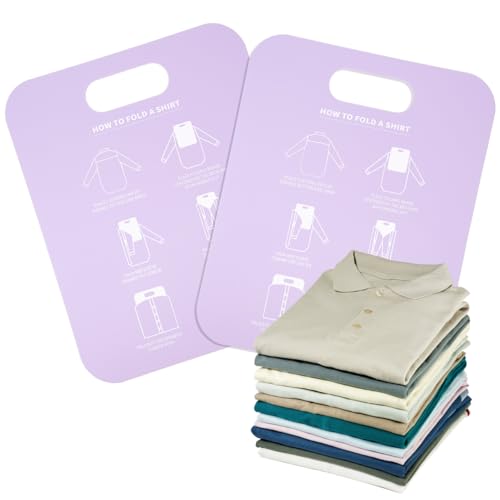
A folding board is another practical tool. It is a flat, lightweight plastic panel designed with folding hinges or standardized cutouts. Placing a folding board across the back of your shirt gives you an exact line to fold against. This ensures every shirt in your stack folds down to the exact same width and length, making your packing stacks uniform and easy to organize.
When choosing packing gear for your button-down shirts, check these key features before buying:
- Carry-on dimensions: Check the interior dimensions of your carry-on luggage. Your travel folder or board should lie completely flat inside the main compartment without bending at the corners or pressing into the zipper line.
- Compression flap design: Look for garment folders with adjustable fabric wings secured by strong hook-and-loop fasteners. Adjustable wings allow you to secure a single shirt as snugly as a stack of six without over-compressing the collars.
- Rigid backplate support: Make sure the folder includes a stiff backing board. A flexible folder will bend under suitcase pressure, defeating the purpose of the organizer.
- Lightweight materials: Choose folders constructed from lightweight ripstop fabric or thin plastic composites so the organizer adds minimal weight to your luggage allowance.
If you travel regularly for business conferences, weddings, or formal events, a rigid garment folder keeps your shirts looking sharp and saves you from spending your trip searching for an iron.
See also: how to fold a button up shirt for travel.


Best Affordable Carry On Luggage 2026 - 11 Most Loving

The 12 Best Carry On Luggage For Bad Back 2026 - Top Choices

Best Tandem Double Buggy 2026 - 11 Best Rating

Top 12 Kids Rolling Suitcases for Fun and Easy Travel

The Ultimate Guide to Choosing the Best 8 Wheel Suitcase

Best Lightest carry on luggage with wheels in 2026

Top Airport Traveling Suitcases: Our 11 Best Picks

The Best Prams For Rough Terrain - (2026 Top Choice)










